Placer County city weighs limits on where tobacco and vape products can be sold
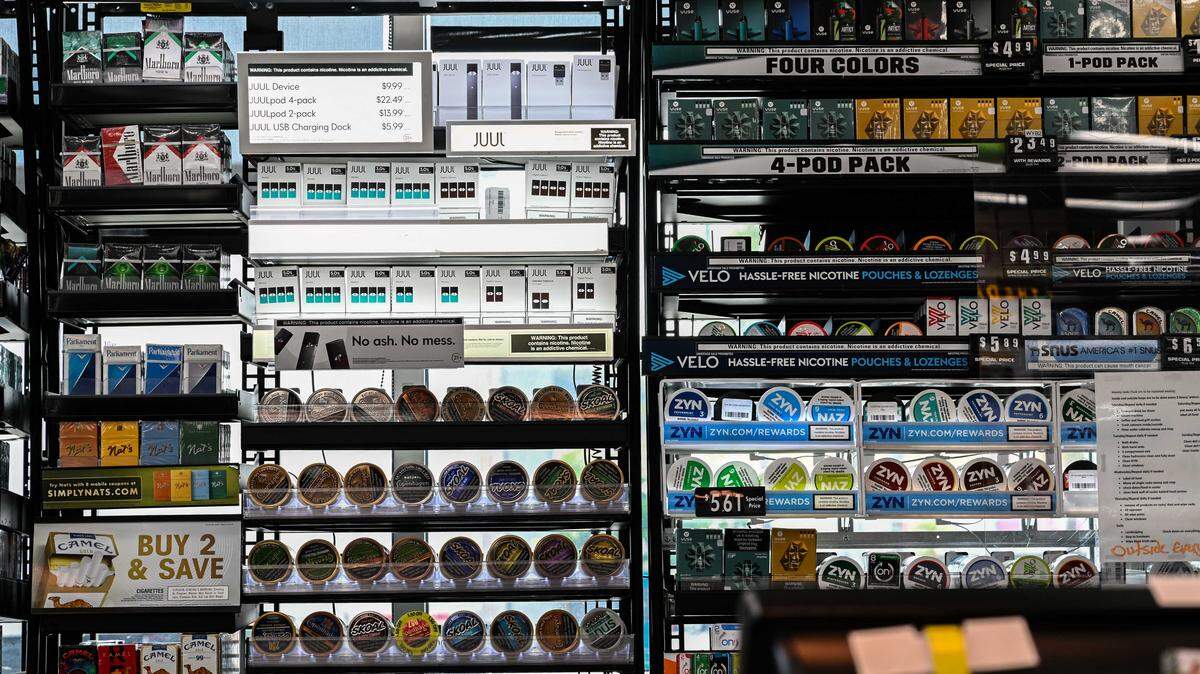
Lincoln officials have proposed new regulations aimed at limiting youth access to tobacco and vape products after city leaders debated Tuesday night how far rules on retailers should go.
California law makes it illegal to sell, give or furnish tobacco products or electronic smoking devices to anyone younger than 21. However, state law does not criminalize possession or use of those products by someone under 21.
The discussion began with a City Council presentation Nov. 18 on regulating tobacco and vape retailers. The presentation from the City Attorney’s Office said Lincoln has 24 tobacco and vape retailers, including six dedicated smoke shops as well as gas stations, grocery stores, pharmacies and liquor stores that sell tobacco products.
Lincoln has a higher per-capita concentration of tobacco retailers than Sacramento.
Adjusted for population, Lincoln has about one tobacco retailer for every 2,344 residents, compared with roughly one for every 1,399 residents in Sacramento — which is about nine times larger than Lincoln. Roughly 12,000 Lincoln residents are under 18, compared with about 123,000 in Sacramento, meaning Lincoln has about one tobacco retailer for every 500 minors while Sacramento has roughly one retailer for every 300 minors.
The Lincoln Police Department said the conversation about regulating tobacco and vape retailers was prompted by concerns from community members and parents about youth access.
“We take those concerns seriously and parents have shared firsthand accounts of juveniles being able to access and purchase these products locally,” the department said through a city spokesperson after the meeting.
Western Placer Unified School District officials said they have not been in contact with the city regarding the proposed ordinance and declined to comment on student incidents involving tobacco or vape products.
Following the presentation, council members directed staff to prepare a draft ordinance.
The first draft, presented at Tuesday’s meeting, included a requirement that retailers obtain a mandatory local tobacco retail license. It would prohibit new licenses within 1,000 feet of a school, public park or another tobacco retailer. Existing retailers could continue as legal nonconforming uses unless the business was discontinued for 180 days.
The draft also would prohibit the sale of certain non-tobacco items, including nitrous oxide, commonly known as “whippits,” kratom, a herbal stimulant, and 7-hydroxymitragynine, a potent compound found in kratom.
The proposal would ban self-service displays, third-party delivery services, and the sale of drug paraphernalia or nitrous oxide. All tobacco and vape products would be required to be stored in fully enclosed, transparent glass cases accessible only to employees.
The city anticipates administrative costs for processing licenses and publishing the ordinance, along with ongoing enforcement and inspection costs by the police department and code enforcement.
Police said the ordinance would give officers additional tools for compliance checks and prevention efforts.
“If adopted, the ordinance would not change our core daily mission, but it would provide additional tools to support enforcement and prevention efforts, particular during compliance checks and inspections,” the department said. “It would also create more opportunities for education and outreach with retailers and strengthen our ability to enhance public safety for youth in the City of Lincoln.”
During the council discussion Tuesday, officials debated the proposed 1,000-foot buffer. Councilmember John Reedy said he was concerned about the distance requirements, particularly around parks and elementary schools, and worried they did not align with the city’s mission. He suggested expanding the distance to 2,000 feet around middle and high schools in a future draft.
Mayor Richard Pearl said the council was not ready to move forward and directed staff to revise the proposal.
“Creating an ordinance or policy on any matter requires careful thought and rigorous community vetting,” Pearl said. “The intent of the proposed ordinance was, and will be, to provide reasonable protections from some of the potentially negative issues associated with this use that we have experienced locally.”
The City Council planned to continue the conversation on the ordinance at its March 10 meeting.
This story was originally published February 12, 2026 at 5:00 AM.