
Early summerlike weather tests California workers and state’s ability to protect them
AI-generated summary reviewed by our newsroom.
- Cal‑OSHA warns of early heat wave and urges employers to protect workers.
- Law requires water, shade, cool‑downs and training with specific temp triggers.
- Staffing shortfalls and just 23 bilingual inspectors hinder enforcement.
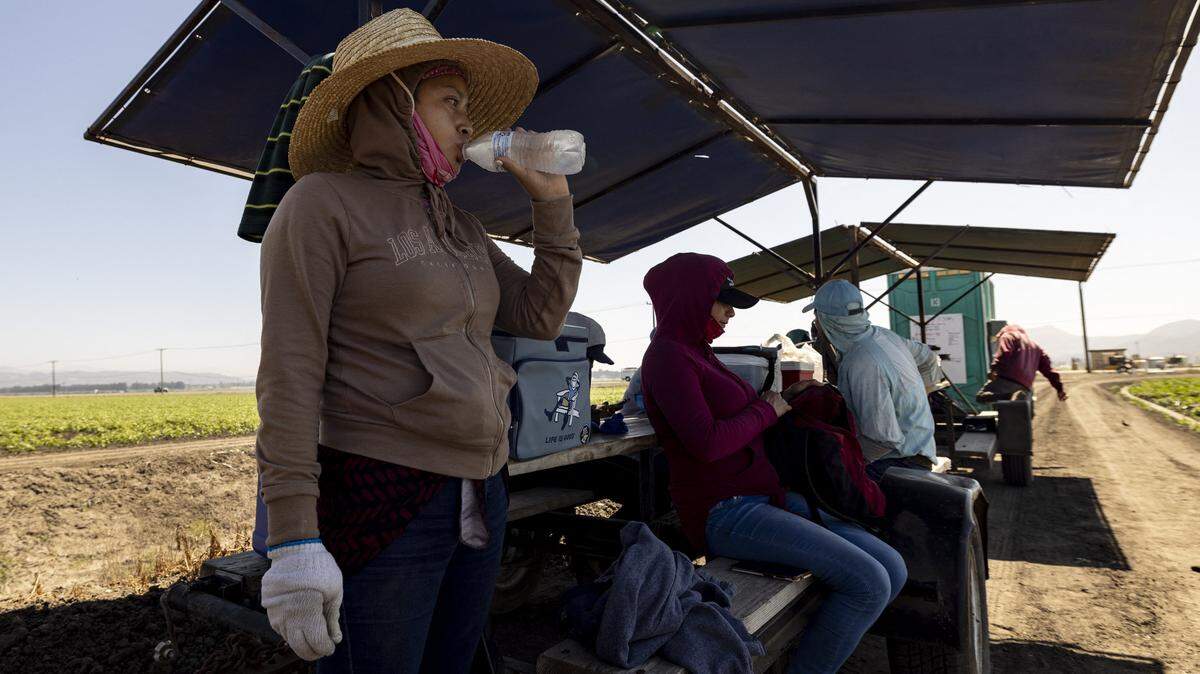
California’s worker protection agency issued a warning Wednesday about the dangers of the current heat spell hitting the state just at the start of spring, urging employers to protect workers as unusually high temperatures spread across the region.
In its alert, Cal-OSHA said that even though the summerlike heat unusual, climate change is making what were once considered freak events more likely.
“As California experiences more frequent and severe weather patterns, heat events are extending earlier into the year,” the agency said in its news alert. “Employers must remain vigilant in protecting workers and be prepared for any increase in temperatures.”
To prevent heat illness at outdoor worksites, the alert said, under California law employers must provide workers with fresh water, access to shade (which must be available when temperatures reach 80 degrees or higher) and, whenever requested, cool-down rest breaks in addition to regular breaks.
For indoor workplaces where temperatures reach 82 degrees, employers must take steps to protect workers from heat illness. Requirements include providing water, rest breaks, cool-down areas, and training.
The forecast calls for temperatures in the 80s.
Prudent warning
Adam Dean, a political scientist who researches labor conditions at the George Washington University and has studied California’s heat illness regulations, said issuing the advisory was a prudent move because an off-season heat event can be more dangerous.
“The first day of working in extreme heat is the riskiest for workers,” Dean said. “There is high turnover in low-wage sectors like agriculture, construction and transportation, so many people working in those jobs today may not have received any heat-related training yet. According to OSHA, 50% of heat-related worker deaths occur on the first day of work, and 70% occur during the first week.”
Dean said some of the most vulnerable workers are employed in agriculture, construction and transportation. “Delivery trucks that lack air conditioning can get well over 100 degrees — maybe as high as 120 or even 140 degrees,” he said. “That’s obviously extremely risky and dangerous.”
A California paradox
California is a paradox when it comes to protecting workers from what can be deadly heat illness. The state has among the most stringent protections in the nation and was the first to adopt an outdoor heat standard in 2005.
But a scathing audit last year by the state auditor found that severe staffing shortages have meant the majority of the agency’s workplace investigations are conducted by letter rather than in person —an approach that relies on employers largely policing themselves.
Garrett Brown is a former safety and health officer at Cal-OSHA who served as special assistant to former Cal-OSHA Chief Ellen Widess between 2011 and 2014 and publishes a watchdog newsletter. He said staffing shortages are a major problem when it comes to enforcing heat regulations.
Brown said 35% of the agency’s inspector positions are vacant, and nine enforcement offices around the state have vacancy rates of 50% or more.
“The years-long under-staffing of Cal-OSHA field inspectors means the agency is crippled in its ability to protect workers — both outdoors and indoors — from this week’s extreme heat event,” Brown said.
Adding to the problem, Brown said, is that Cal-OSHA has only 23 bilingual inspectors for 19 million workers the state. “(This makes) “effective communication with Spanish-speaking farmworkers, construction laborers, and warehouse workers difficult,” he said.
Dean said he read the state auditor’s findings and found them concerning. Still, he said, California should be commended for its tough regulations, which have been strengthened several times since 2005 to close loopholes.
State’s requirements save lives
In December, the journal Health Affairs published a study, “California’s Heat Standard and Heat-Related Deaths Among Outdoor Workers,” by Dean and his colleague Jamie McCallum.
Dean said California’s first-in-the-nation approach has saved lives.
“We looked at heat-related deaths among outdoor workers in California and compared them to death rates in neighboring states — Nevada, Arizona, and Oregon — which didn’t have heat standards during the study period from 1999 to 2020.,” he said “The good news is that a heat standard can work. We found that California’s heat standard was associated with a 33% reduction in heat-related deaths among outdoor workers.
“The more sobering news is that there’s nothing automatic about passing a heat standard to magically reduce deaths,” he added. “You need to write the law carefully, without loopholes, and make sure the state is enforcing it.”
Dean said California closed several loopholes in 2015.
“They addressed issues that were limiting the effectiveness of the heat standard,” he said. “For example, instead of saying water must be provided, the updated regulations specified that it must be cold, drinkable and free. It’s kind of heartbreaking — you can imagine what was happening at worksites for that to need to be spelled out.”
This story was originally published March 20, 2026 at 10:00 AM.