
What should be next for Sacramento’s Chavez statue? Here are the artist’s thoughts
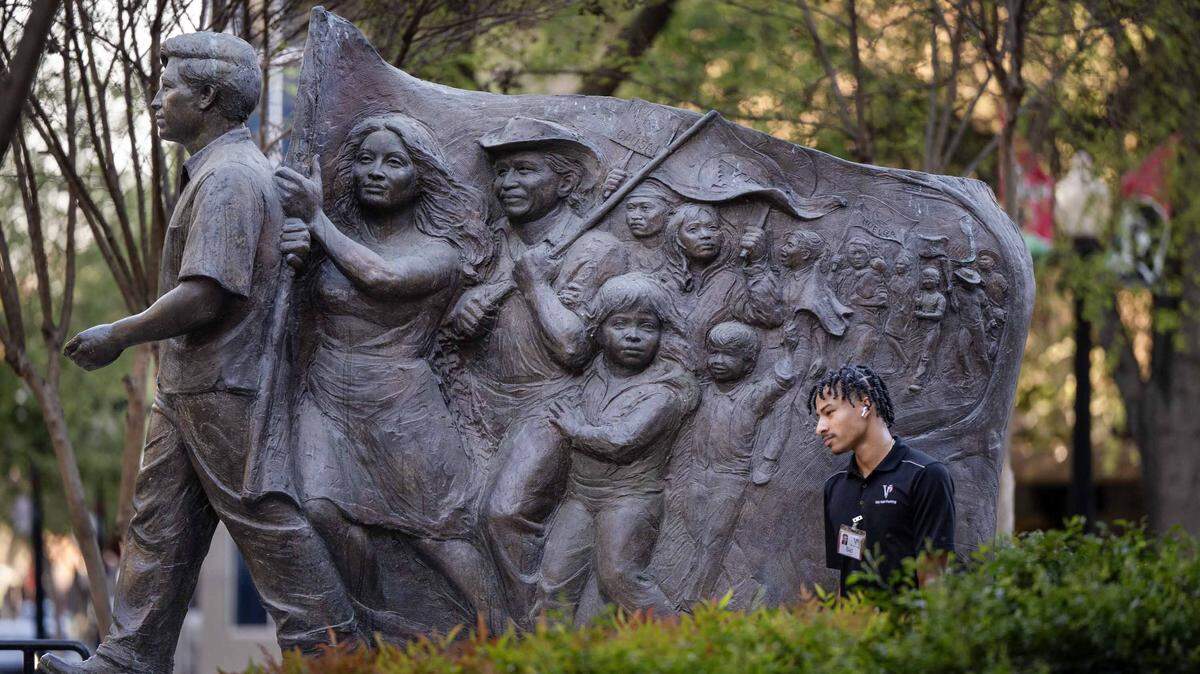
Three days before he died of cancer in 1999, Sacramento mayor Joe Serna Jr. blessed a memorial’s design. A 7-foot-tall bronze monument of Cesar Chavez would sit in the downtown park, Serna declared, bearing the labor leader’s name — a central location for celebrations, protests and marches.
Chavez inspired Serna. The former mayor plucked grapes, tomatoes, peaches and lettuce from Lodi fields before he embraced politics. Serna pushed in 1997 to rename the downtown park after Chavez.
A United Farm Workers union representative hung Chavez’s picture above Serna’s bed days before he died, according to The Sacramento Bee’s archives and city meeting minutes from the time, and the former mayor also devoted $80,000 for the sculpture in a square adjacent to City Hall.
Sexual abuse allegations levied against Chavez have reshaped how California remembers after being reported by the The New York Times earlier this month. Civil rights leader Dolores Huerta, who worked alongside Chavez, said she was raped and bore two of his children.
Now, California’s capital city must determine what’s next for Cesar E. Chavez Plaza and its sculpture commemorating the labor leader. Lisa Reinertson, the artist behind the monument, said Sacramento must weigh carefully its next steps while preserving the history of farmworkers memorialized in her work.
“I don’t know what will be decided about the sculpture,” she wrote in an email. “But I don’t want to see the history of this important movement be erased in a rush, knee-jerk reaction. We need to be thoughtful and sensitive to how people who are close to the Latino community in Sacramento feel about what is best.”
The focus on renaming public spaces misses farmworkers’ continued fight for better lives, according to Fabrizio Sasso, the executive director of the Sacramento Central Labor Council, who said talk of stripping Chavez’s name is symbolic and does not help farmworkers dying in fields or facing threats from employers.
“It kind of confounds me how everyone is missing the point,” he said.
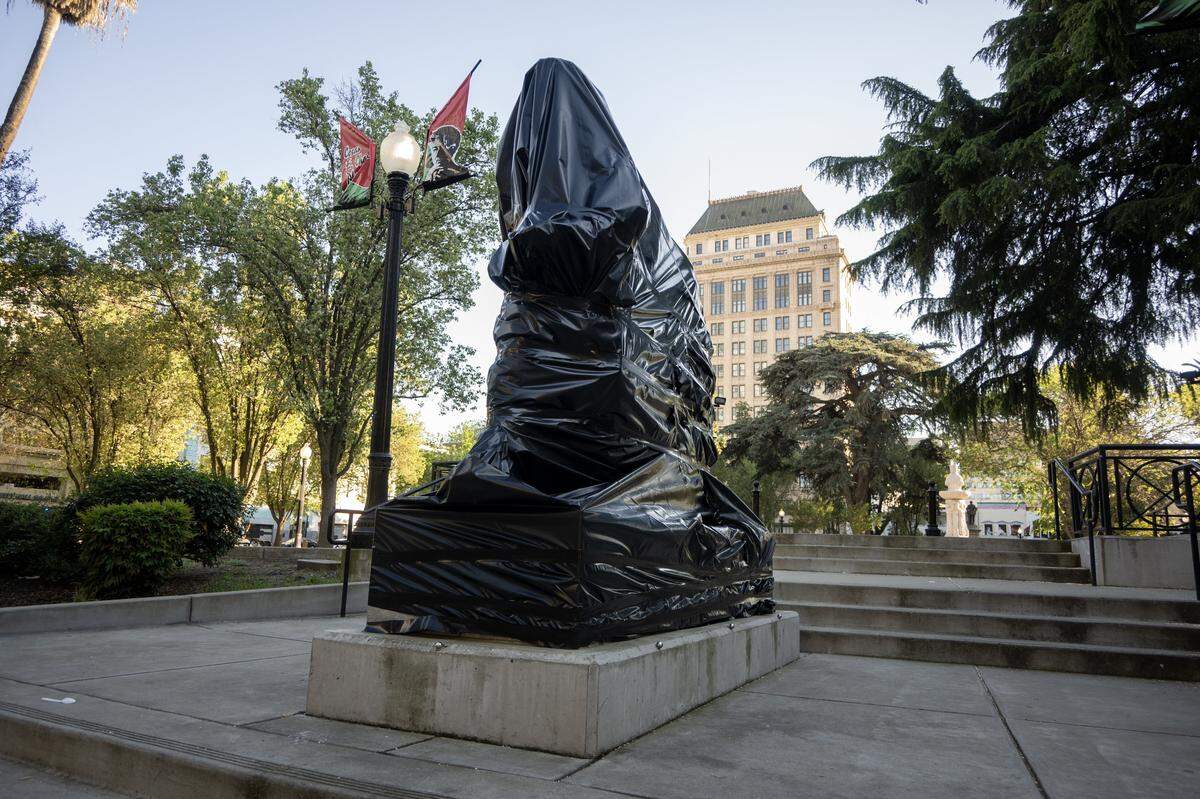
Sacramento Mayor Kevin McCarty appointed a subcommittee to determine how the plaza should be renamed. Sacramento City Manager Maraskeshia Smith directed city workers to wrap Chavez’s monument in black plastic, and on Friday ordered the removal of banners bearing his name that once hung on light posts around the plaza.
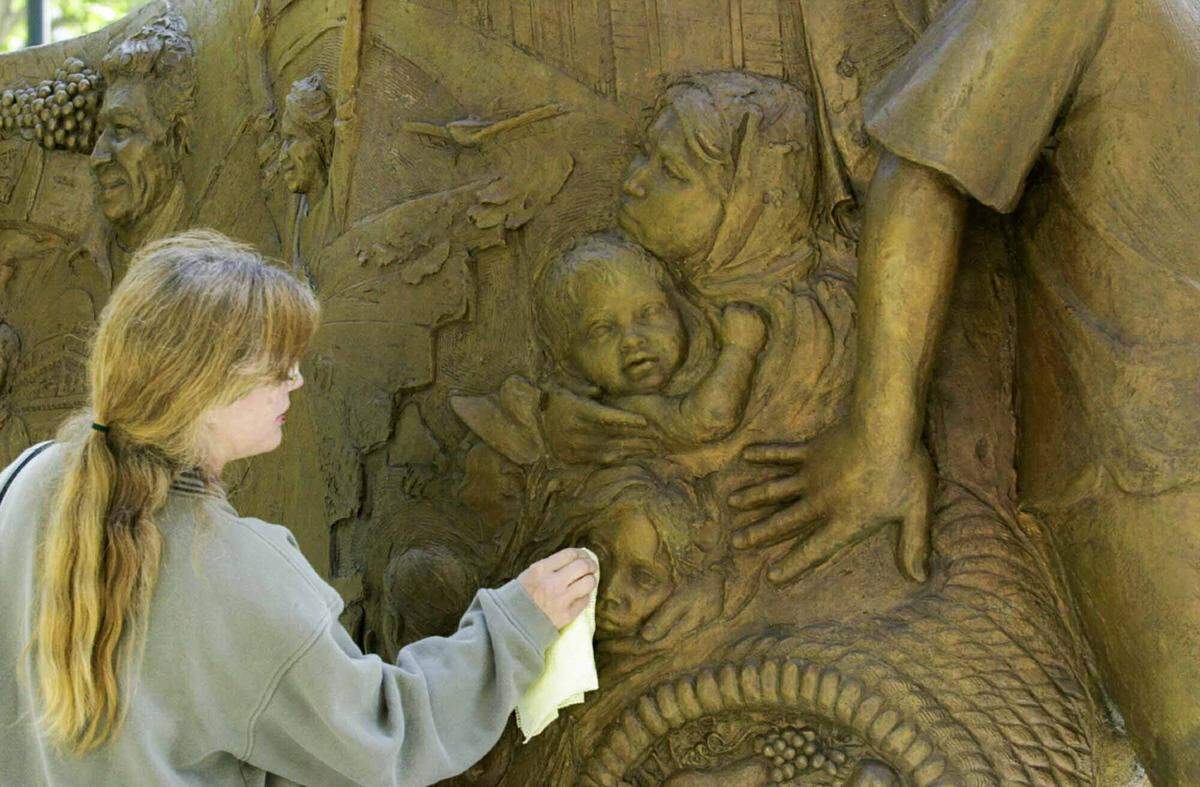
The Chavez sculpture in the park depicts a farmworker movement that is bigger than one man, according to Reinertson.
One side of the sculpture depicts a woman wielding a UFW flag and leading a procession of young and old. The opposite side features another UFW flag serving as a backdrop to Huerta holding a sign reading “Huelga,” or strike, Reinertson said.
Reinertson would prefer altering the sculpture if offered a choice. The memorial could be changed to remove Chavez’s image and keep the pieces commemorating the UFW movement, she wrote.
“I wanted the sculpture to be a permanent reminder of the struggles and the successes of the United Farm Workers,” she added.
“Like previous sculptures I created about Martin Luther King and the civil rights movement in which I incorporated narrative images of the history of the non-violent activism for justice in low relief onto the figure, I knew that the importance of the person was not as a lone hero, but as a leader of an entire movement of people fighting for justice, for decent wages and decent living conditions.”
The city of Sacramento commissioned the piece through a formal agreement, wrote city spokesperson Julie Hall. Any potential changes must follow this arrangement, she wrote.
Sacramento’s arts, culture and creative economy commission will also be involved to determine what’s next with the sculpture, a $96,000 commission paid for with public and private money.
“Each community should decide what change might bring the most healing when evaluating the names of holidays, events, monuments, streets or schools,” said Antonio De Lorea-Burst, a UFW spokesperson.
Reinertson was 11 years old when she watched her parents march from Delano to Sacramento alongside thousands who arrived at the state Capitol.
“There was no governor there, no political representatives to listen to the people who had spent weeks walking 300 miles to Sacramento, and had serious demands for justice,” she wrote.
Years later, she knew exactly how a sculpture should look. The bas-relief images portrayed a march ignored by Sacramento’s leadership in the 1960s, she wrote.
“The sculpture was never about creating a lone hero,” she wrote, “but was always about the whole movement, the whole community.”
Recognizing farmworkers in holidays and public spaces is a positive step, Sasso said, but it is more important to help farmworkers through legislation.
“We need real advocacy for all workers in the public,” he said, “and not dwell on the terrible actions of one person and have it apply to an entire segment of workers.”