Judge sanctions US Attorney’s Office for missing deadlines in immigration case
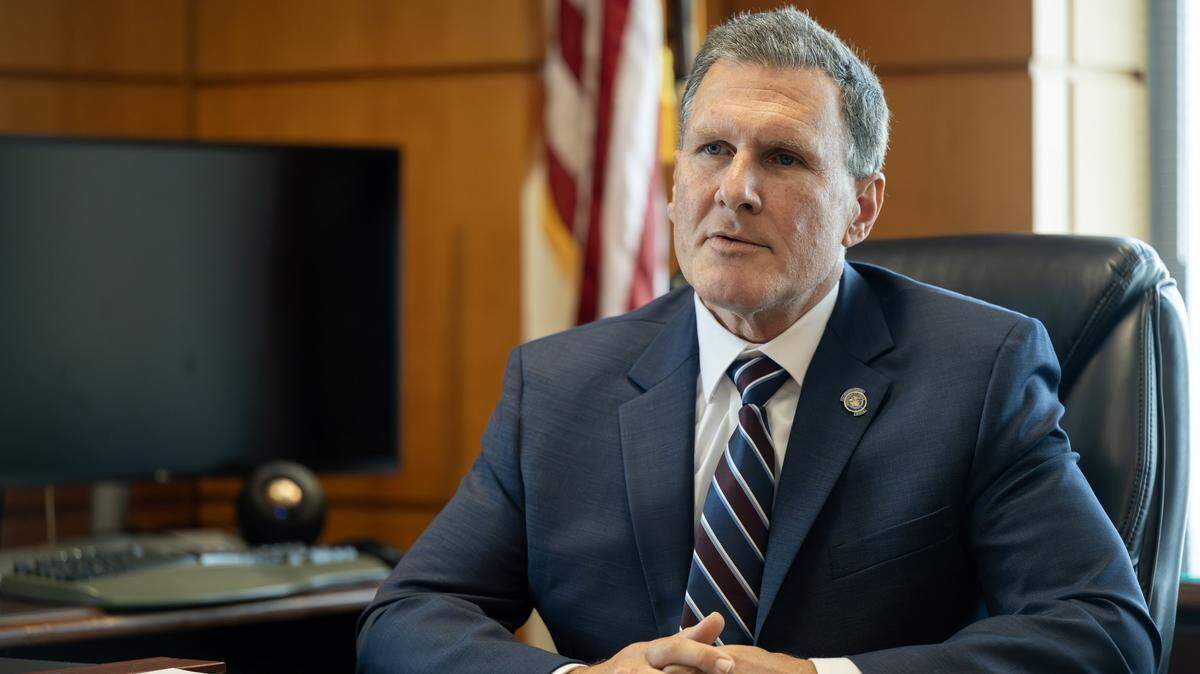
A federal judge in Sacramento on Friday removed his sanction against a prosecutor who missed multiple court-imposed deadlines in immigration cases, imposing the punishment instead on the local U.S. Attorney’s Office as a whole.
The new sanction ordered by U.S. District Judge Troy L. Nunley, chief judge of Sacramento’s federal court, was an acknowledgement that the errors were part of a systemic problem, caused by the crush of more than 3,000 cases challenging the detention of unauthorized immigrants being held in facilities in the Central Valley.
The cases have overwhelmed the Valley’s federal court system, which has only six judges to serve a region home to 8.5 million people that stretches from Bakersfield to the Oregon border. The U.S. Attorney’s Office, which is responsible for defending the government, has had to bring on additional prosecutors to handle the work.
The cases are burdening the system because the federal judiciary is not typically the venue for immigration cases, which are heard in separate administrative courts run by the Department of Justice. But federal courts are the only venue for people who have been arrested by the U.S. government to challenge their detentions, and the Trump administration’s policy of incarcerating immigrants rather than releasing them on a form of parole has punted thousands of cases into these already busy courts.
In a highly unusual pleading obtained by The Sacramento Bee in April, U.S. Attorney Eric Grant said the prosecutor, Jonathan Yu, was a hard worker who had been assigned more than 300 cases since joining his office’s newly established immigration case unit. Grant asked Nunley to sanction his office instead — or himself personally.
“His failure to comply with the court’s orders was not willful, but the result of a mistake,” Grant said in his pleading. “It was the strain of the system that is not keeping up with the overwhelming burden.”
On Friday, Nunley responded, removing the sanction against Yu and assessing it instead against Grant’s office. He ordered the U.S. Attorney’s Office to also pay the $250 fine associated with it.
“In the interest of addressing the root cause of the deficiencies, the court will direct that the sanction be imposed on the United States Attorney’s Office,” Nunley wrote in his order.
The sanction grew out of the case of Eblis Alexander Yanez Tovar, who was described in court documents as having entered the United States without authorization in 2023.
Tovar, who lived in Nevada and was the sole provider for his wife and four children, was pulled over in an undisclosed location for failing to appear in court for a traffic ticket, Nunley’s original sanction order said. He was sent to a detention center in Kern County, and his lawyer filed a demand for his release, known as a habeas corpus petition, in federal court in Sacramento in March.
Nunley ordered Tovar’s release on April 3 and ordered Yu to show proof that his ruling was carried out. Yu missed the deadline to file documents showing Tovar had been let go and later missed another deadline set by the judge for proof that the detainee’s passport and driver’s license had been returned to him. He also missed deadlines in other cases, Nunley said in his order filed Friday.
But while Nunley removed the sanction against Yu, he also issued a warning to the prosecutor. Future missteps, he said, would be viewed as deliberate, resulting in sanctions against both the office and the individual attorney.
“Compliance with court orders is not optional and must be prioritized above competing demands and resources,” Nunley wrote.
“A pattern of unchecked and unaddressed mistakes in complying with court orders will be viewed as a deliberate and strategic choice.”
This story was originally published May 1, 2026 at 12:04 PM.