Sacramento commission cutbacks could jeopardize millions for road safety, advocates say
The Sacramento City Council is set to consider a proposal Tuesday that could make it harder to get funding for road safety projects across the city.
Council members were scheduled to vote during a 5 p.m. meeting on whether to recommend canceling up to half of the annual meetings for most city commissions, including the Active Transportation Commission, in the next fiscal year. The cancellations will save about $35,000, according to meeting materials.
The Planning Commission and the Housing Code Advisory and Appeals Board were the only two entities specifically spared from the proposed reductions. The City Council is expected to make a final decision on the cuts as part of its 2026-27 budget, which must be adopted by July 1.
At the May 12 City Council budget workshop, Councilmember Eric Guerra directed staff to explore reducing the number of meetings held by city commissions and boards. He explored the idea, as well as other possibilities for cuts, as both a way to restore the Ethel MacLeod Hart Senior Center and as part of a broader savings package.
“I mentioned earlier reducing the commissions — not eliminating them, but reducing how often they meet,” said Guerra, who represents Tahoe Park and other eastern neighborhoods in the city. “The one I want to be cautious about is the Planning Commission. We need to make sure we can process the applications that need to move through the system.
“But we should look at reducing commission meetings and stipends.” At the same meeting, North Natomas Lisa Kalpan opposed the move saying, in part, “I’m not really supportive of reducing commission meeting time because these commissions are the community’s voice, and they continue to advocate for these issues.”
In response to the request, staff proposed cutting up to five meetings per commission in the next fiscal year, along with other cost-saving measures such as freezing community ambassador stipends, to help close the city’s projected $66 million budget gap. Savings from fewer meetings would come from reduced commissioner stipends and lower overtime costs in the City Clerk’s Office.
“This will also allow for other organizational efficiencies,” staff wrote in a presentation to be shown to the council.
The suggested meetings cut comes after at least 20 people have died in Sacramento vehicle crashes this year — the final year before Sacramento reaches its deadline for its decade-old “Vision Zero” goal.
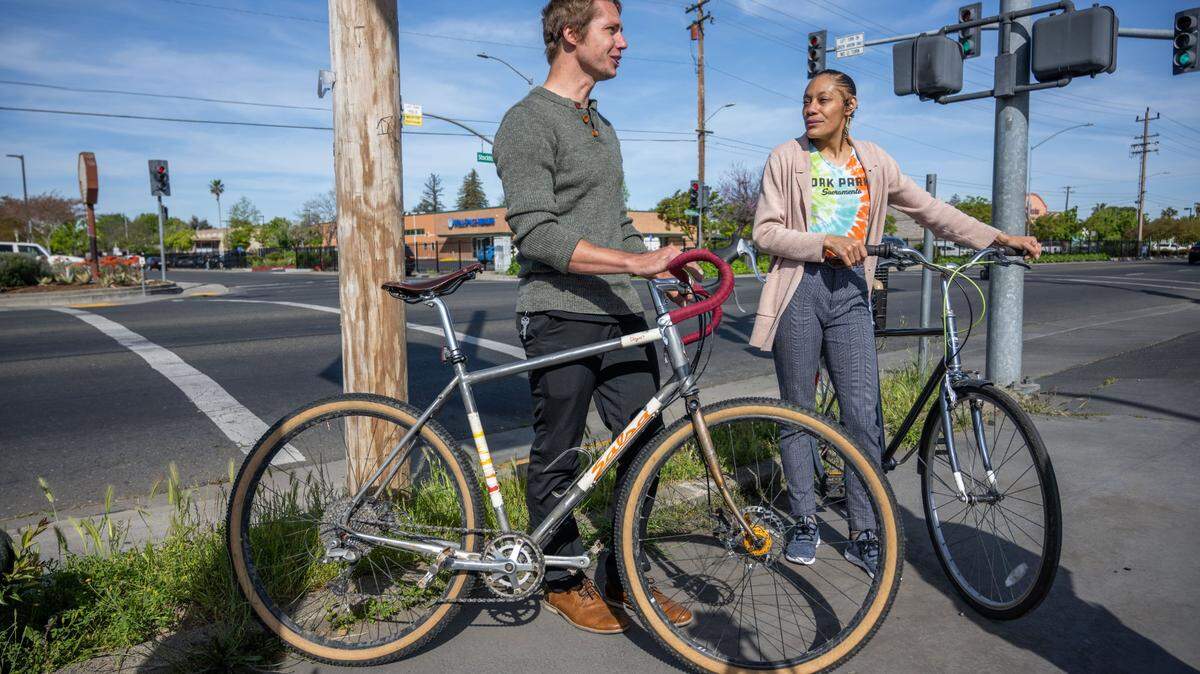
The Active Transportation Commission advises the City Council on policies, programs and grant applications related to walking, bicycling and other alternatives to driving. The 12-member panel meets 10 times a year and includes Slow Down Sacramento founder and board chair Isaac Gonzalez and Sacramento Area Bicycle Advocates Executive Director Debra Banks.
Gonzalez said reducing meetings could have broader consequences because many state and federal grants require public hearings and commission review before applications can be submitted.
In other words, he said, “it has to go through our commission in order to be a competitive grant.” He added that commissioners receive a $50 stipend for each meeting.
“If we aren’t able to do that at all, or less of that, then we would potentially be less competitive for limited grant dollars,” Gonzalez said. “Which means that projects that are vital to safety within our city could remain unfunded longer, and people could die.”
Gonzalez said the city could lose far more in grant funding than it would save by canceling meetings.
Slow Down Sacramento estimated the city could miss out on millions of dollars in outside funding if the proposal is adopted, according to an email urging residents to oppose the cuts.
Other commissions, 30 of which are listed on the city’s website not counting planning and housing codes, could face similar challenges if the council directs staff to include the reductions as part of its final budget proposal. According to the city’s current list of boards and commissions, those bodies have a combined 35 open seats.
Former Sacramento City Councilmember Katie Valenzuela said she was disappointed that the city was targeting a relatively inexpensive part of local government.
“With all of the things the city spends money on, I’m disappointed to see that such a low-lift and low-cost function of our government is on the chopping block,” Valenzuela said.
Valenzuela said the city recruits “incredible volunteers” to serve on commissions and that reducing meetings “doesn’t feel like a good way to promote community engagement, or more informed decision-making.”
The Active Transportation Commission’s meetings are capped at 2½ hours, though staff have recommended shortening them to two hours, Gonzalez said.
“The staff likes to fill our agenda up with necessary items, so they can do their work,” he said. “If we suddenly have less meetings, we just can’t do all the work that we used to.”
The issue carries added weight because Sacramento’s Department of Public Works relies heavily on state and federal grants to fund transportation improvements.
Although the city adopted Vision Zero in 2017, it has not significantly increased local funding for traffic safety projects.
A 2022 city estimate found Sacramento faced a $5 billion backlog of transportation improvements, including roughly $3 billion on streets where people had been killed or seriously injured. Transportation Planning Manager Jennifer Donlon Wyant said in March that construction costs had since increased significantly.
The Active Transportation Commission is also urging the city to fund the eight proposals included in its 2025 annual report. The proposals — including safer street designs, school travel programs and stricter traffic controls — would cost an estimated $8.2 million in the first year.
The City Council had not planned to discuss the commission staff report during an April meeting, but Councilmember Caity Maple, who represents Oak Park and Parkway, pulled the item for public comment.
Maple did not immediately respond to a request for comment.
Councilmember Roger Dickinson, who represents North Sacramento, said Tuesday that he “would prefer not to reduce the meetings,” especially because the savings are “not really a very large amount of money.”
The meetings of the commissions, including the Measure U Community Advisory Commission, are important public forums, he added.
Dickinson believes staff have found alternatives to reducing the commission meetings. He declined to elaborate on staff choices but proposed taking more from the Economic Uncertainty Reserve.
The Bee’s Ariane Lange contributed to this story.
This story was originally published May 19, 2026 at 12:17 PM.
CORRECTION: This story was updated to reflect that council members directed staff to explore cutting commission meetings during a May 12 budget workshop.