A brother and Sacramento veterans remember the dead on Memorial Day and beyond
Jim Gines wasn’t sure what led his brother to a second voluntary stint in the Vietnam War or, nearly 60 years after it happened, the exact circumstances of his death.
Gines’ brother Manuel Gines, a United States Army Specialist Fourth Class from Sacramento, died outside of combat at 21 on June 1, 1968. The Sacramento Bee reported a few days later that Manuel Gines had been “stationed in Saigon but was on a mission out of that area when he was killed.”
Jim Gines said he’d heard a rumor that his brother, who was assigned to a job related to water purification, was working in a trench when a rifle accidentally discharged, though he added “we never did get that verified.”
Whatever happened, it made Manuel Gines one of 5,822 Californians to die or go missing while serving in the Vietnam War. Today, his name is found on both the California Vietnam Veterans Memorial near the state Capitol and the Vietnam Memorial in Washington, D.C.
Memorial Day, a holiday dedicated to U.S. military members who died in wartime, might conjure up images of brave soldiers making heroic sacrifices, the territory of films like “Saving Private Ryan” or “Glory.”
But people like Manuel Gines who had lower-profile deaths in unpopular conflicts are just as much a part of the holiday and a reminder of the terrible cost of war. So are people like Jim Gines, who at 83 still lives in the Sacramento area and runs into friends of his brother.
“I’ll see ‘em on the streets every once in a while,” he said. “They always remember him.”
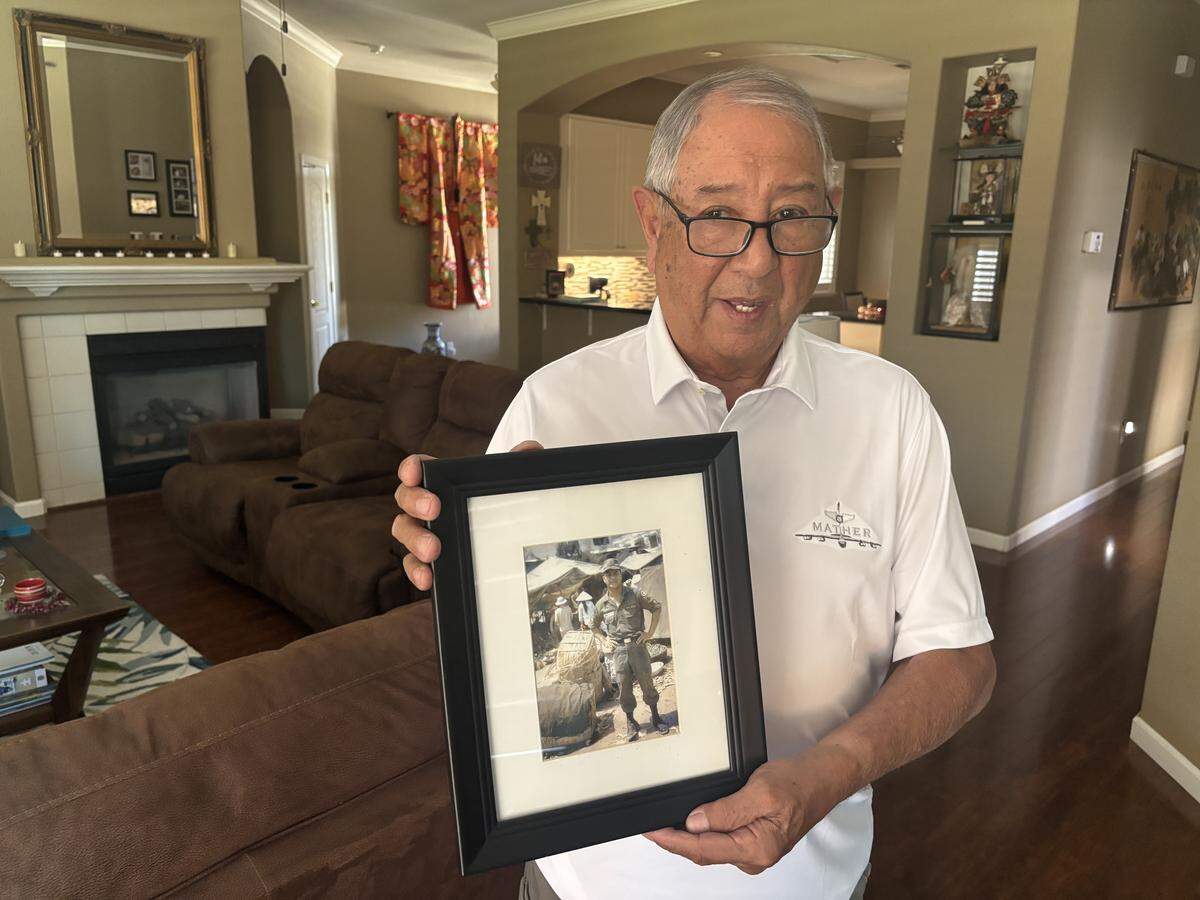
Who Manuel Gines was
Phil Rios recalled how hard his Johnson High School football teammate Manuel Gines could hit as a middle linebacker.
Manuel Gines was small, maybe 5’8”, and, to Rios, didn’t have the size to play football beyond high school. Still, with his good looks, personality and athletic ability, Manuel Gines was popular at Johnson. He served in student government and excelled on the gridiron as a fleet-footed and deceptively strong defender.
“He had kind of a thin stature but the power he had as middle linebacker, he surprised people,” Rios said. “When he hit you, he hit you and he took you down.”
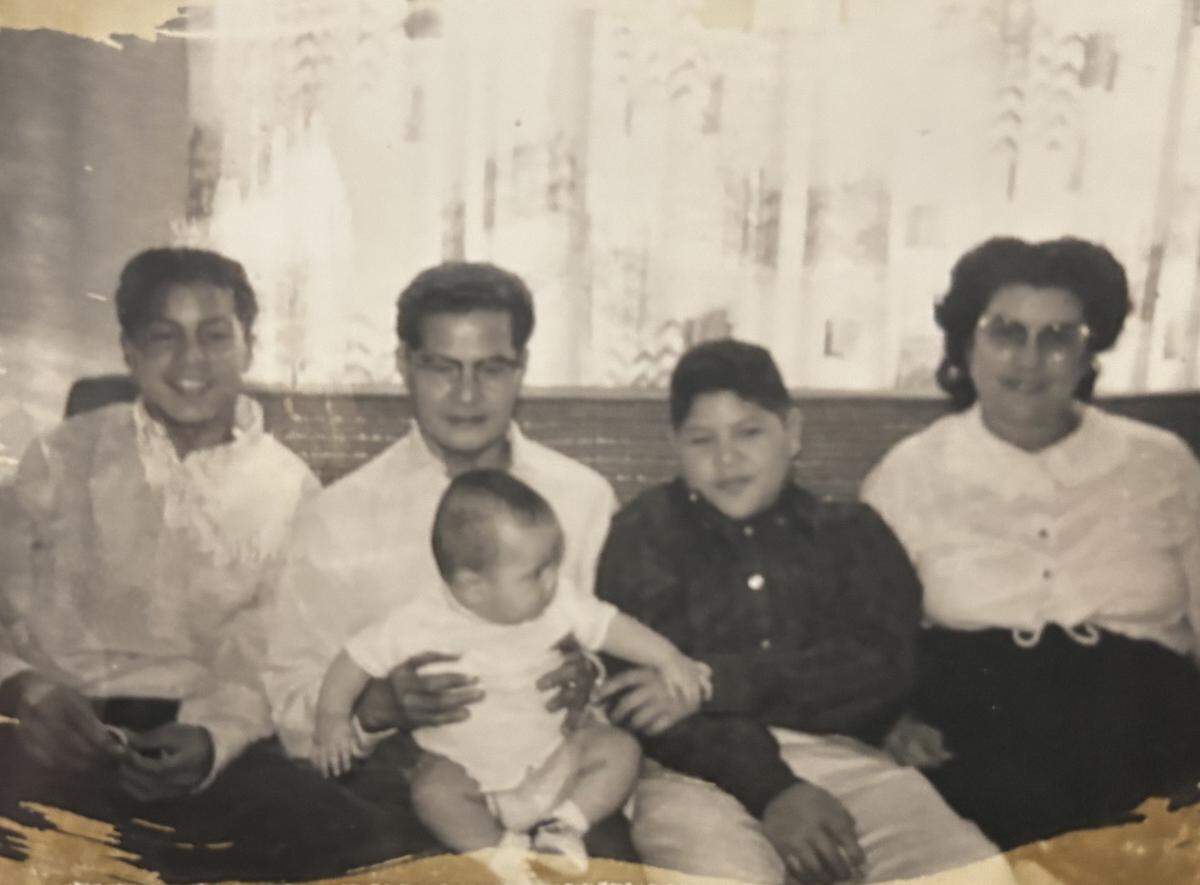
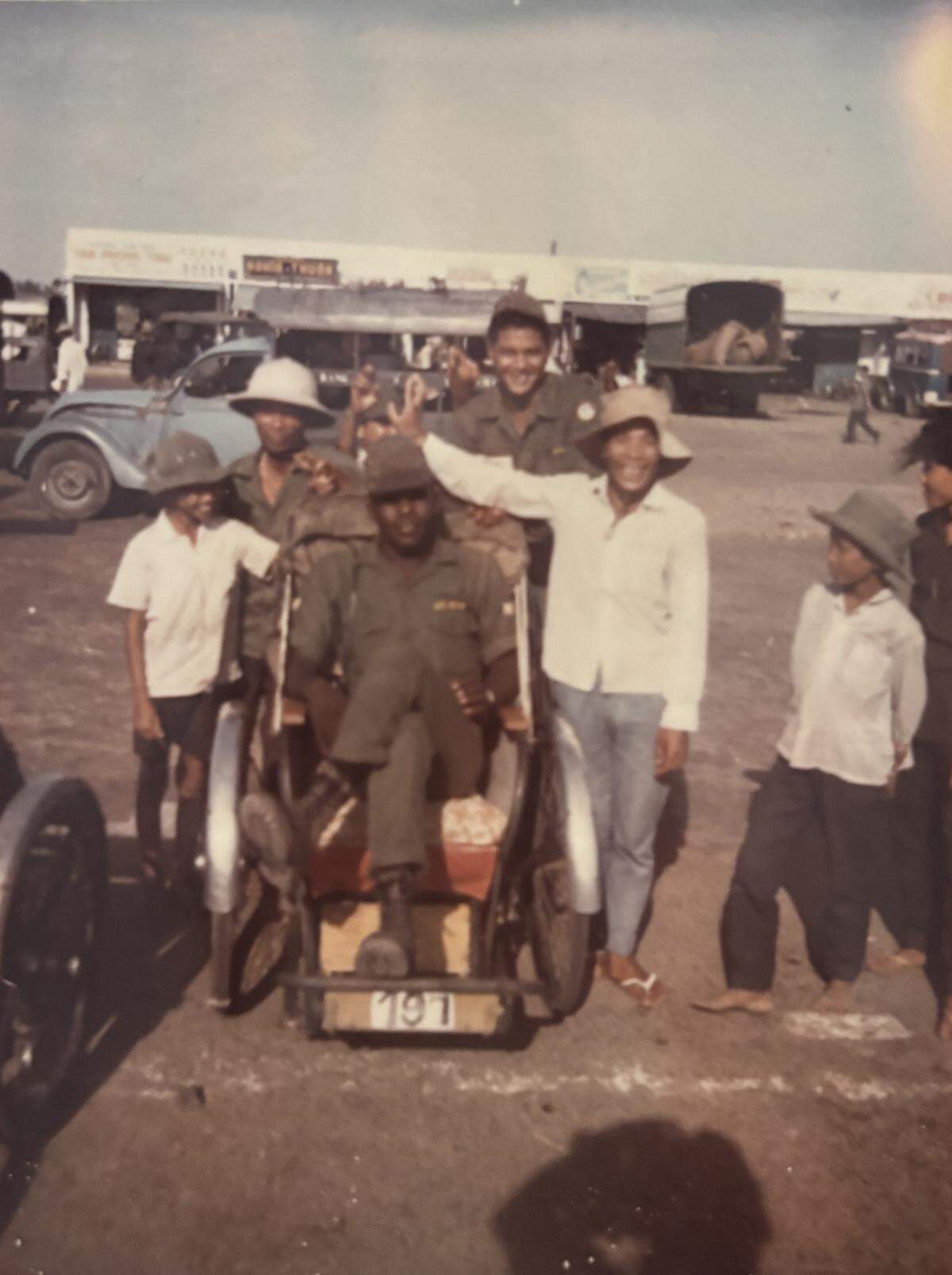
After graduating from Johnson in June 1965, Manuel Gines attended Sacramento City College for a time and volunteered for his first tour of duty in Vietnam around 1966.
His father James C. Gines had served in World War II. Jim Gines was also a veteran. So was his older half-brother Richard Tornea Jr., born through their mother’s previous marriage. Manuel Gines’ youngest brother, Frederick Gines, died of leukemia in 1963 at 14.
“Me and my older brother tried to talk him into going into the Air Force, but he didn’t want to spend that long, so he joined the Army,” Jim Gines said of Manuel Gines.
In general, volunteering was common in the early part of the Vietnam War, after President Lyndon Johnson rallied U.S. involvement following the Gulf of Tonkin incident in August 1964.
Larry Berman, a UC Davis emeritus professor who has written extensively on the Vietnam War, said that by 1968, the United States had 585,000 troops in Vietnam and the war “had gone south.”
But in 1964 or 1965, he added, “the war was really considered some sort of noble cause to fight communism and to stop the reds from reaching San Francisco. There (were) a lot of patriotic young men who signed up to answer the call of their president.”
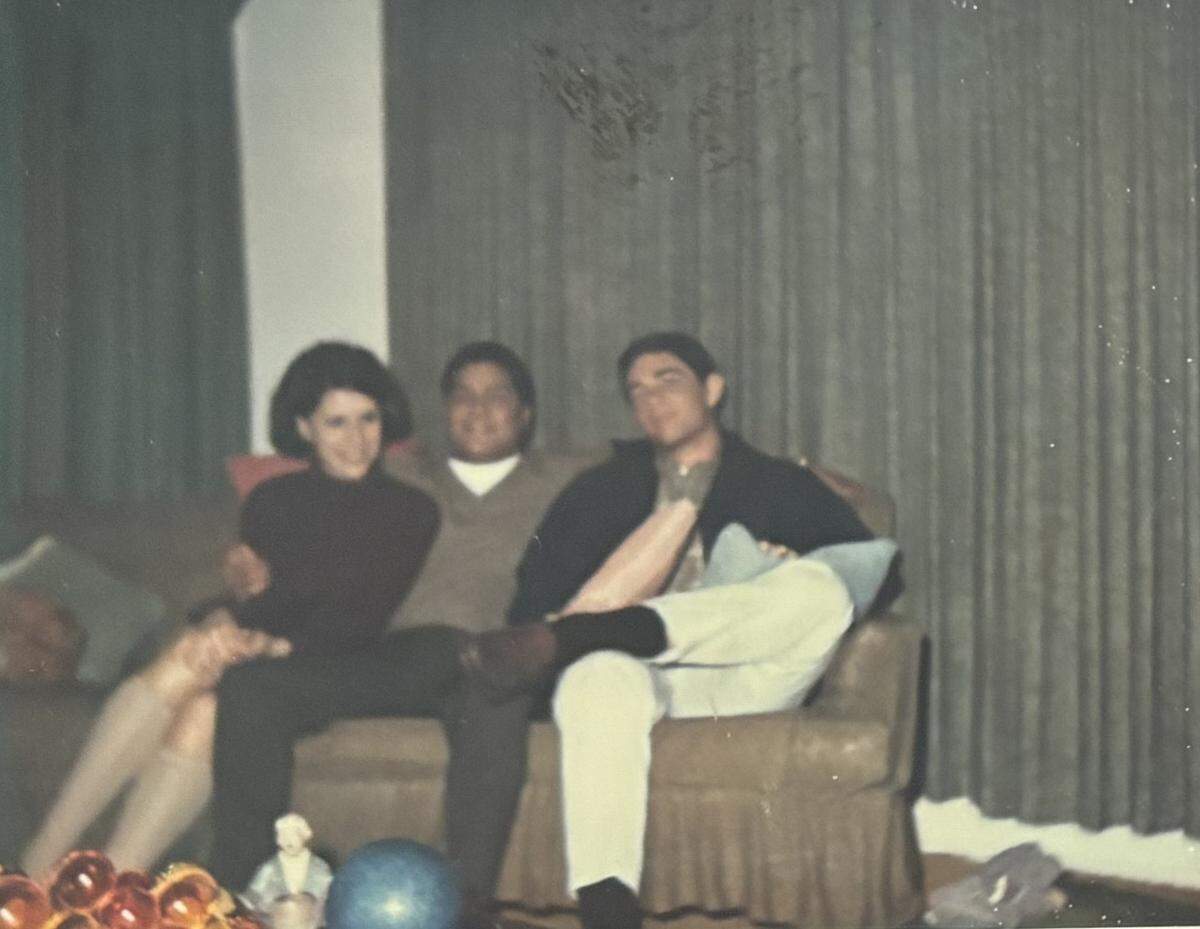
Art Ybarra, a childhood friend of Manuel Gines, said he volunteered for the U.S. Marine Corps shortly before the war broke out. Ybarra went to Vietnam “to get away from home,” he said and had returned to the U.S. by the time of Manuel Gines’ death.
“I felt so bad after he died, I volunteered right back myself,” Ybarra said.
The Pentagon Papers that were publicized in 1971 would show that the war was likely unwinnable and that leaders like Johnson had misled the public about its necessity. Young men who served in Vietnam, whether voluntarily or through the draft, were in a thankless spot.
“These young men were put in an untenable situation and it’s not their fault,” said Joseph Palermo, a Sacramento State history professor.
By 1971, though, it was already too late for men like Manuel Gines.
He got through his initial one-year service commitment for Vietnam and, in time, returned to Sacramento. Another close childhood friend, Paul Schulz saw him after he returned from his first tour of duty. “It was the same Manuel as always, giggling, full of piss and vinegar,” Schulz said.
After a few months, Manuel Gines headed back for his second tour of duty around April 1968. There are different stories for why he went back, including that he’d had difficulty in a romantic relationship.
Jim Gines saw his brother at a family get-together not long before he returned to Vietnam.
“I shared with him my displeasure with him going over,” Jim Gines said. “But it was his decision so we wanted just to support him.”
Following Manuel Gines’ death, Ybarra and Schulz visited his mother a couple of times.
“She’d just totally break down when we’d get there, because she remembered all the times we had together,” Schulz said. “After about the second visit over there of her breaking down, I told Art, I said, ‘I’m not going back over there and put her through this, you know what I mean?’ And he says, ‘I totally agree.’”
Reading the names
Rios hadn’t been aware when he returned for his 10-year high school reunion in 1975 that Manuel Gines had been one of 11 Johnson alums who’d been killed in the Vietnam War. A ceremony was held during the reunion to remember the men.
“There was a pain in my heart,” Rios said. “I had a hard time catching my breath.”
In the era before social media, people weren’t always up on what had happened with those who’d been in their lives at different points. Even Manuel Gines’ second cousin Tony Funtanilla didn’t learn of his death initially, as he was also serving in Vietnam at the time.
“They chose not to tell me because they didn’t want it to influence my survival,” Funtanilla said.
By the time of the reunion, Rios had been drafted and served during the Vietnam War. He served as military police, escorting prisoners who were accused of crimes while on leave in the mainland U.S. back to Vietnam. Rios would stay in the military for more than 25 years, earning a Bronze Star during Operation Desert Storm.
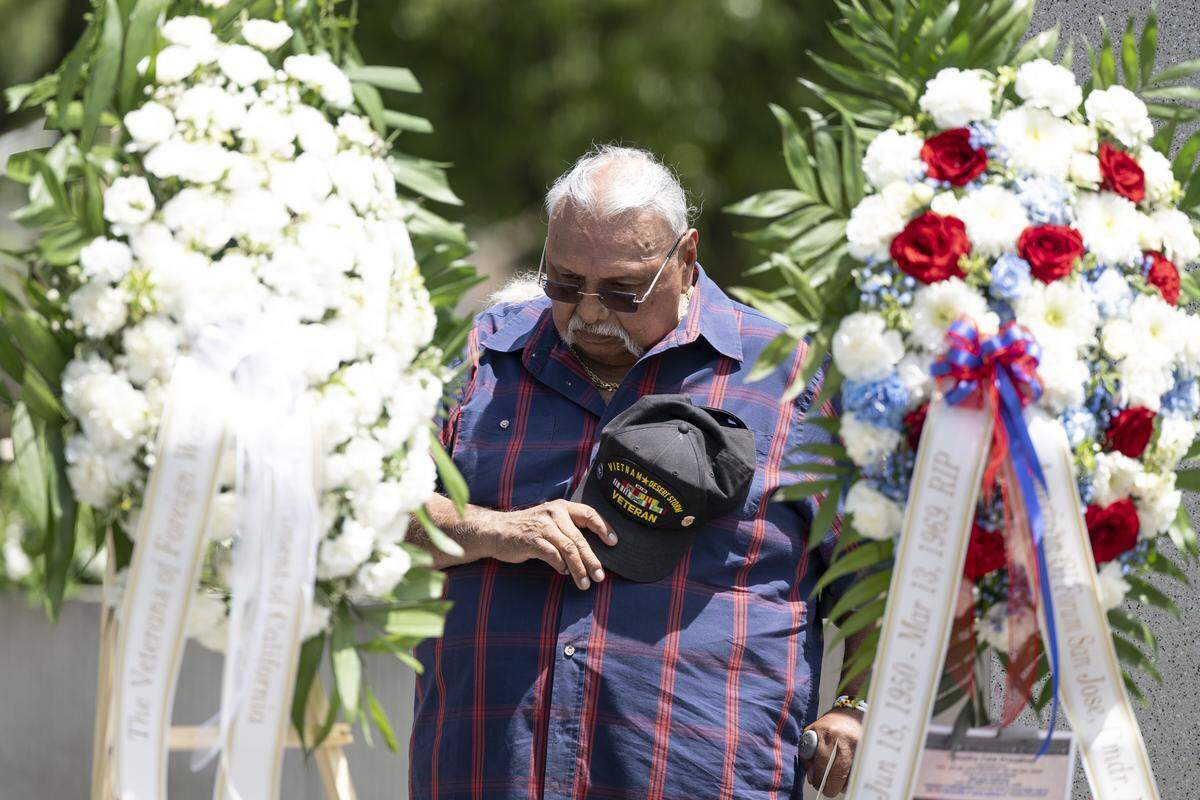
In 1999, Rios was elected to command a Veterans of Foreign Wars post in Granite Bay. Not long after, he organized a ceremony to honor a World War II veteran and his wife. Rios realized at this time that he could also incorporate a remembrance of Gines and the other 10 people from Johnson High who were killed in Vietnam.
“I thought, ‘I’m still hurting so I’ll say the 11 names,’” Rios said.
Some veterans expressed their displeasure to Rios afterward, telling him there were “other names on the wall.” This led to Rios getting a binder from the California Department of Veterans Affairs with names in alphabetical order of every Californian killed in Vietnam.
Rios began organizing a “Reading of the Names” during Memorial Day Weekend, having volunteers at the California Vietnam Veterans Memorial read aloud the names. The entire process takes about 10 hours, with volunteers trading off reading in 15-minute increments.
In the heyday of the readings, around 300 people would attend. Now, around 50 people make it out. “It hasn’t come back since COVID,” Rios said.
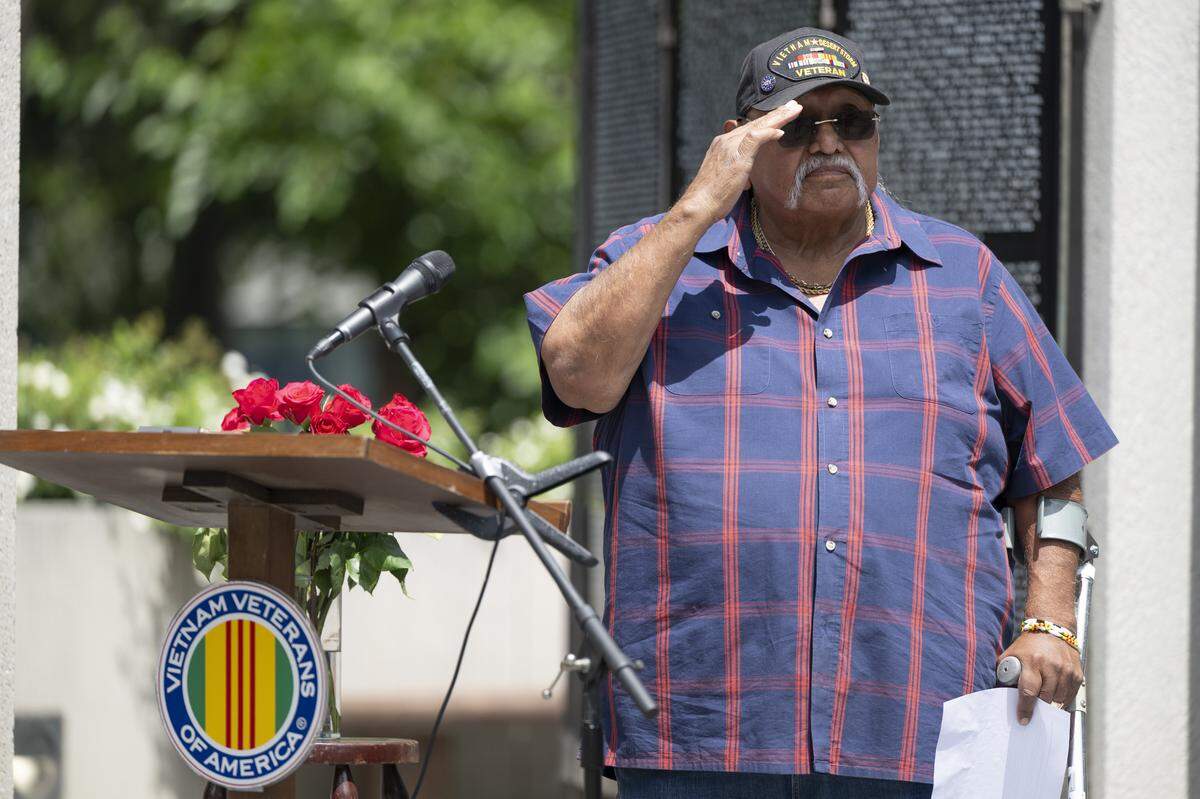
On Sunday, there were roughly 20 people on-hand around 8:30 a.m. when volunteers began the 26th annual “Reading of the Names.” This year’s event was organized by the Sacramento Valley chapter of the Vietnam Veterans of America.
Volunteer readers of names included Lance Izumi, an emeritus civilian aide to the Secretary of the Army. Izumi said prior to reading names that he would also be speaking at a free event 10 a.m. Monday at Memorial Auditorium.
Izumi planned to talk during the Monday event about local residents who died serving in the Korean War, Vietnam and the current war with Iran. Sacramento native and U.S. Army Reservist Robert Marzan died in Kuwait in March.
“Local Sacramentans have, when the country called, they stepped up and answered,” Izumi said. “So I think it’s important to recognize their sacrifice.”
Rios, who is now 78, said his great niece asked him why he gets as emotional and involved as he does around this time of year. He thought back on his time with Manuel Gines, from kindergarten to junior high to high school, their playing football together, their double-dating.
“We were closer, I think, than any generation ever,” Rios said. “So when Manuel died, I just never could get over it. He didn’t come home alive. I did. That bothered me.”
Dealing with trauma
Following his time in Vietnam, Rios struggled with drug and alcohol use before cleaning up his life. He said he was sober for more than a decade before relapsing around the time of his Desert Storm service and that he has now been sober for 34 years.
For Vietnam veterans, suffering has sometimes endured long beyond the end of the war. Berman noted that he is writing a book on Agent Orange, which was sprayed prolifically in Vietnam and more than half a century following the war’s end in 1975 is continuing to kill veterans.
“Even today amongst these kinds of veterans there is a deep frustration that the government has not done enough to compensate them and their families for what the war did to them,” Berman said.
Those who knew Manuel Gines wonder what might have been in store for his life. Phil Rios said that Manuel Gines could have been a CEO. Jim Gines said that his brother would have been “in supervision or management as a mentor.”
At the California Vietnam Veterans Memorial near the state Capitol, Manuel Gines is the 41st name engraved of about 150 people from Sacramento who died or went missing serving in the war.
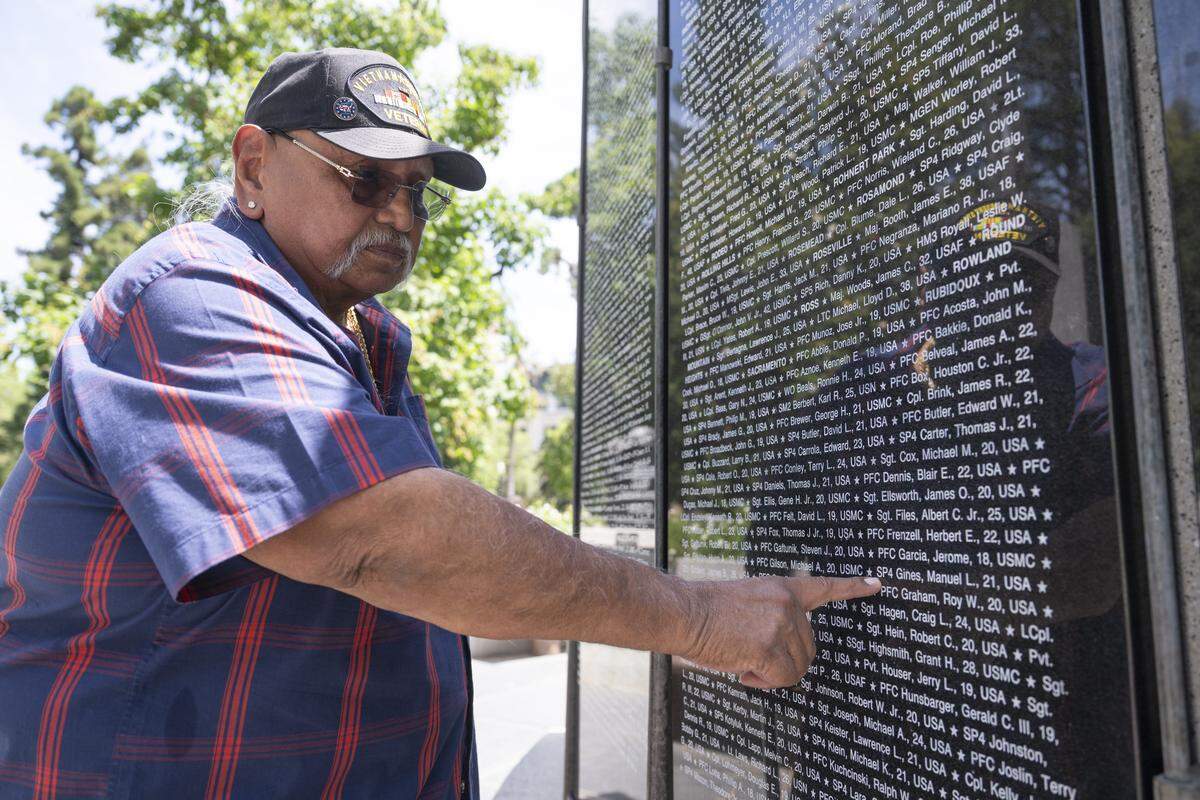
In the office of his Sacramento-area home, Jim Gines has a memorial with flags and photos in honor of Manuel Gines and their half-brother who also served in the military and died two years ago at 90.
“I think about them all the time,” Jim Gines said.
But there are limits to how much Jim Gines mentally indulges the war. Funtanilla found faith following the war and has written multiple books about both topics.
“He spends a lot of time thinking about Vietnam,” Jim Gines said. “I don’t think about it that much.”
Two years ago, Jim Gines went with his wife to the Vietnam Memorial Wall in Washington, D.C. He etched the name of his brother, one of 58,281 officially on the wall, representing the total number of U.S. dead or missing in the war. Jim Gines has mixed emotions about his brother being on the wall.
“I’m proud of him because he was my brother,” Jim Gines said. “I’m sad for the reason he died. I look back on things… and it was a lot of young guys that died that shouldn’t have died. They shouldn’t have been there that long.”
This story was originally published May 24, 2026 at 2:25 PM.