Major League Baseball expansion in Sacramento? City has sought pro teams before
Gregg Lukenbill had 285 buses and a stubborn desire to bring Major League Baseball to Sacramento when he marched on Oakland.
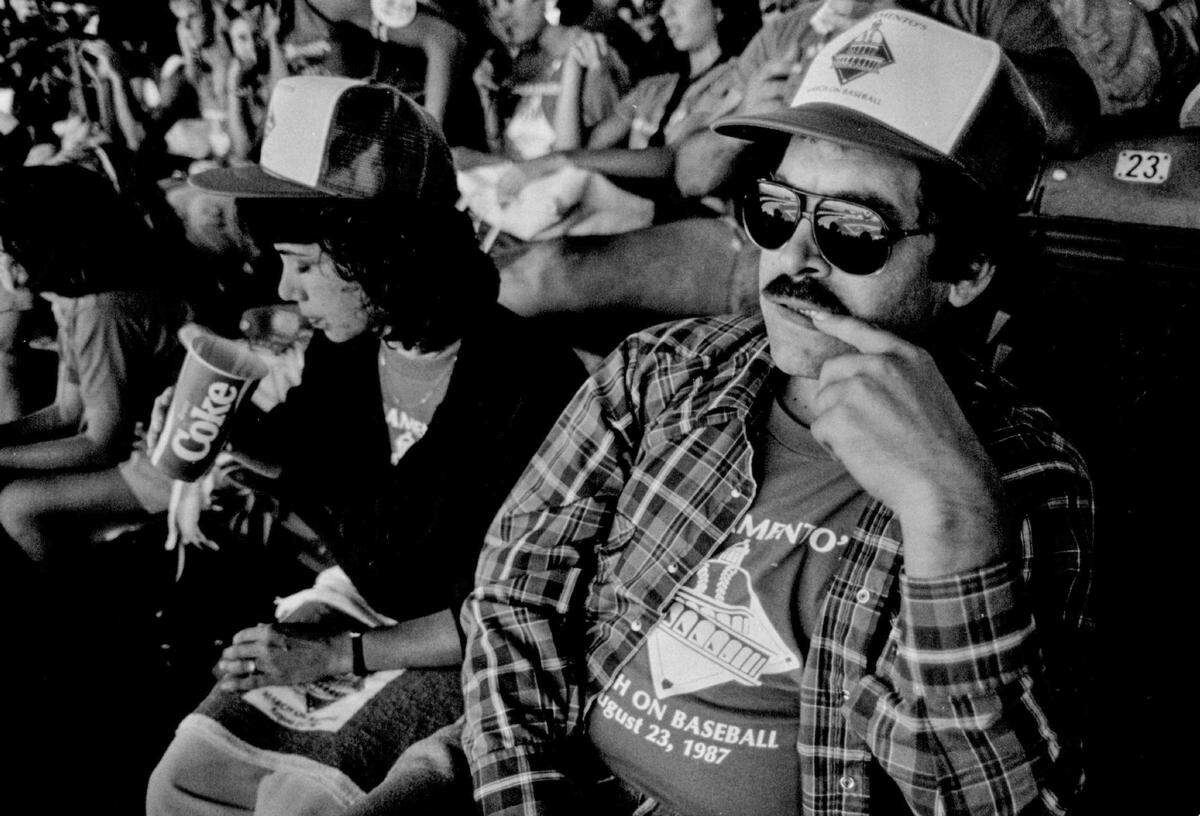
It was Aug. 23, 1987, and the Athletics were playing the New York Yankees at Oakland Coliseum. Lukenbill was 33 and general partner of the Sacramento Kings, the NBA franchise he had led the effort to move west from Kansas City two years prior. But he hadn’t shaken longtime hopes to bring an MLB franchise to Sacramento.
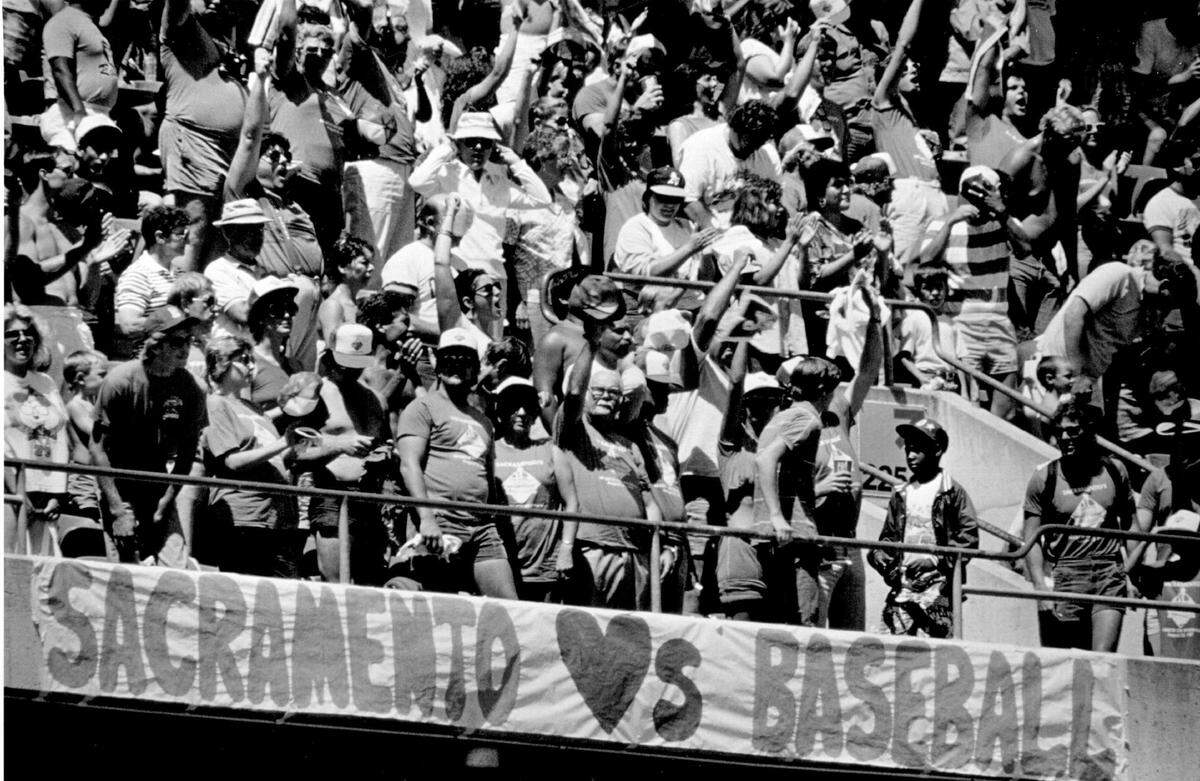
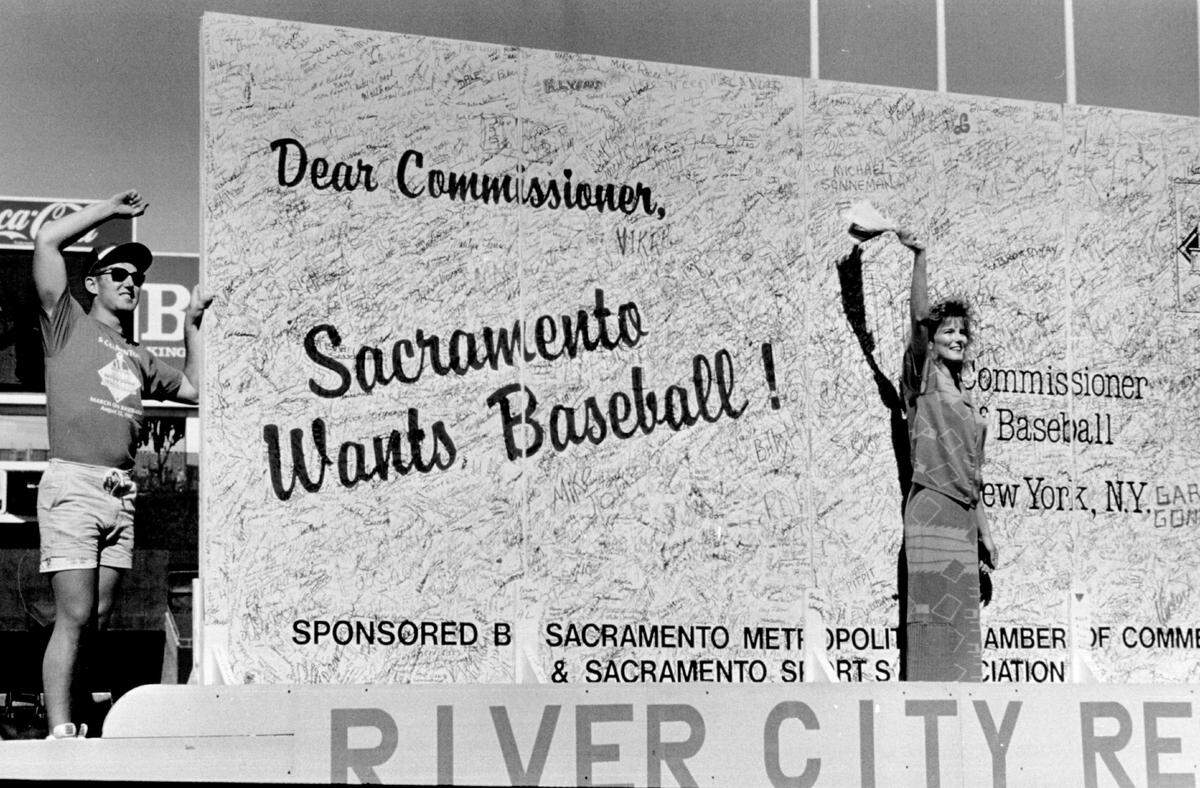
So Lukenbill led the “March on Baseball,” taking approximately 21,000 people, including Kings personnel, to the Coliseum. The invading force sat in the stands wearing blue and made a statement on Sacramento’s interest in hosting an MLB team. “They can’t turn us down if we do everything right,” Lukenbill told The Bee at the time. “It would be insane not to give us a team.”
The Sacramento region has been temporarily hosting the A’s since the beginning of the 2025 season, after team owner John Fisher reached an agreement with current Kings general partner Vivek Ranadive ahead of the planned A’s move to Las Vegas.
As local leaders gathered Thursday for a press conference about the region’s desire to land a permanent MLB expansion franchise, it’s worth noting: Efforts to bring baseball and other sports to the area go back longer than people might know.
Bringing Major League Baseball to Sacramento
Charlie Finley’s offer of what it would take to buy his Oakland Athletics didn’t work for Lukenbill and his partner Frank McCormack.
It was the late 1970s and Lukenbill, a young developer, and McCormack, his former middle school teacher, were starting their efforts through the Sacramento Sports Association to bring a Major League Baseball franchise to town. This would eventually evolve into the Kings’ relocation to Sacramento.
“All I was trying to do was raise a bar on who we were,” said Lukenbill, a Sacramento native who is now 71 and lives in East Sacramento.
Pro baseball hopes in the region arguably date to the 1950s when the Sacramento Solons of the old Pacific Coast League played under an open classification, a strategy by the league to get it recognized as a third major circuit.
Baseball was also never far from Lukenbill’s mind when he owned the Kings, which lasted until Jim Thomas bought the team in the early 1990s.
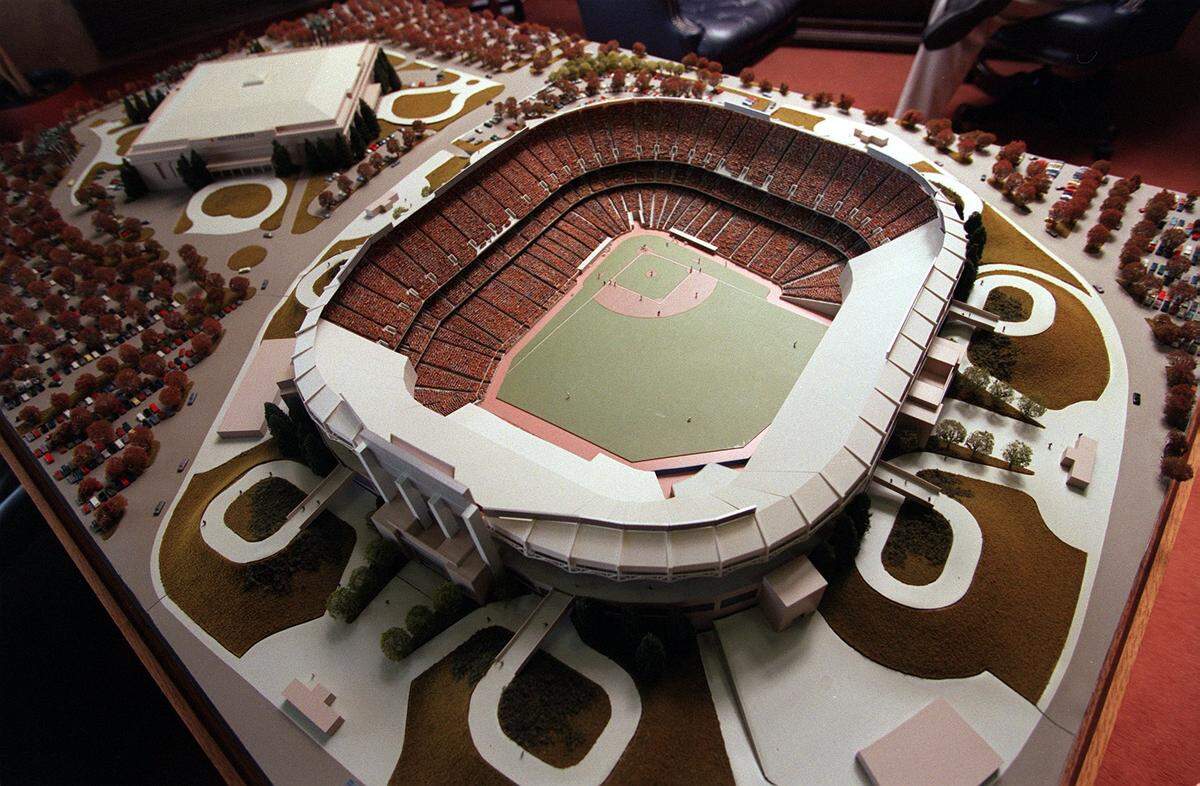
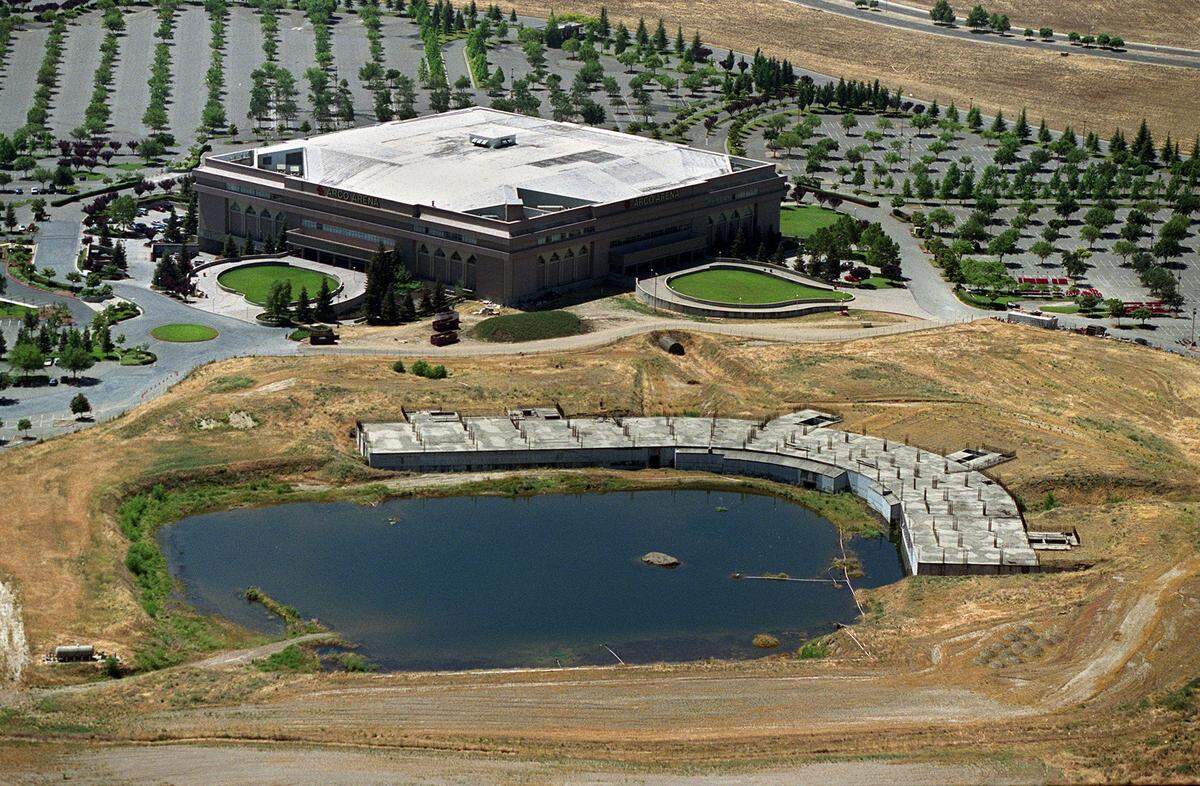
Adjacent to Arco Arena in Natomas, Lukenbill started construction on a stadium that could have seated as many as 65,000 fans and accommodated football and baseball. The stadium was never finished, though elements of it remain visible on Google maps.
Initially, Lukenbill and McCormack looked to build a 32,500-seat stadium at a 133-acre Bradshaw Road site. They approached Finley who offered to sell them his team, according to a 1979 column by Bee sports columnist Bill Conlin.
“Finley suggested to the Sacramento entrepreneurs that they might want to play half their home games at Sacramento, the other half in Alameda Coliseum,” Conlin wrote.
Conlin reported that Finley’s offered for Lukenbill and McCormack to buy the A’s for around $15 million. Lukenbill remembered the price being $10 million.
By 1983, the word was starting to get out on Sacramento’s potential for pro sports. Rick Dittmar, a spokesman for the Sacramento Metropolitan Chamber of Commerce’s Blue Ribbon Major League Sports Committee, told the Sacramento Union that his group had heard from owners or officials of MLB, the NFL and professional soccer that the city was “one of the logical” hosts with the right facilities.
Lukenbill met with then-San Francisco Giants owner Bob Lurie in the mid-1980s when Lurie was trying to replace his team’s home, Candlestick Park. “He told me at the time if they didn’t get a stadium built on his first effort in San Francisco, that he would … get back to me and try and work something out,” Lukenbill said.
Lurie was skeptical of whether Sacramento would work as an expansion market when he talked to the San Francisco Examiner in 1987.
“I don’t really know the economics of Sacramento,” Lurie told the Examiner. “I do know that it’s a great place with a lot of dedicated people, but I can’t imagine that there would be three teams within this area.”
But Lukenbill and his “March on Baseball” would not be deterred by skepticism.
Among the people who rode the buses to Oakland for the march was longtime Kings radio announcer Gary Gerould. “With teams in the Bay Area, both in Oakland and San Francisco, you had to figure it was an extreme long shot that there would be a third team in Northern California,” Gerould said. “But hey, I mean, stranger things have happened.”
Attendance to the march wasn’t compulsory for Kings players. LaSalle Thompson said he was likely out of town, which was common for Kings players during the summer. But Thompson said the idea of Major League Baseball locally would have been sound.
“Baseball starts in April and ends in October, so the seasons wouldn’t really overlap,” Thompson said. “It would have been a good thing for Sacramento, these sporting events year-round, but for whatever reason it didn’t work out.”
Flirting with the Raiders
Amy Trask had just gotten back to her hotel room in downtown Sacramento when she felt the Loma Prieta earthquake on Oct. 17, 1989.
Trask, then a front office executive for the Los Angeles Raiders, was in Sacramento discussing building a stadium for the team in town. It wasn’t the only time that Trask visited Sacramento to talk about the team relocating there.
The Raiders had played for many years in Oakland before moving to L.A. in 1982, but it didn’t take long for owner Al Davis to start looking elsewhere. Enter Sacramento.
“Those discussions were not simply performative,” said Trask, who went on to serve as CEO of the Raiders, working with the team until 2013. “We were not engaging in discussions to create leverage elsewhere. We had a sincere interest in evaluating opportunities in Sacramento.”
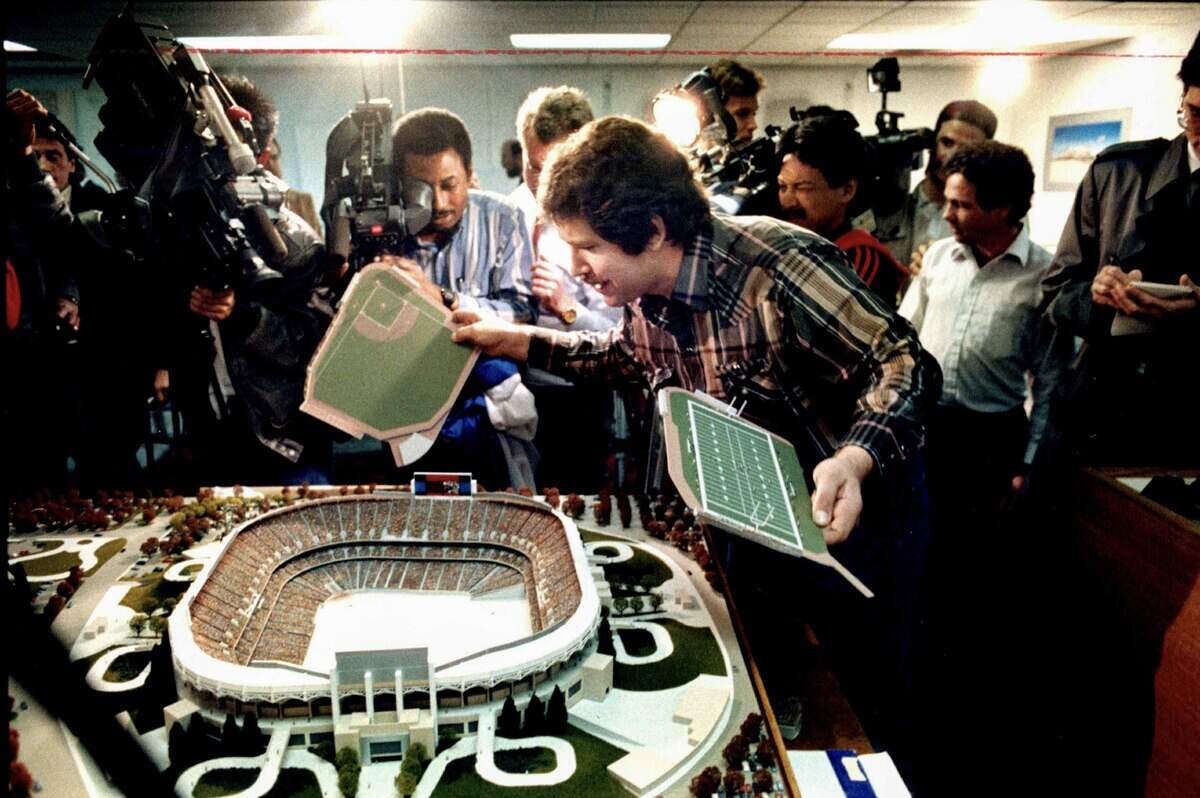
Trask had just returned to her hotel room when she got to experience a Sacramento tradition: feeling a far-off earthquake. “It was sort of a gentle rocking, not really an abrupt or a hard shake,” Trask said. “But it was very clear that it was an earthquake.”
By this point, some progress had been made in bringing the Raiders to town. The Sacramento City Council had voted 9-0 to offer $50 million in public funds. The city agreed to debt service of $122.3 million that would have lasted more than 20 years.
“I thought the Kings coming here was big the way it transformed the city,” then-Councilman Douglas N. Pope said at the time. “If we get a National Football League team, that transformation will be something all of us won’t believe.”
As with the “March on Baseball,” public support had already built for the idea, with the meeting drawing 1,000 people to the Sacramento Convention Center and Lukenbill receiving a standing ovation.
Not everyone welcomed the idea, with then-Sacramento Mayor Anne Rudin saying two-thirds of letter-writers were opposed. Rudin had also expressed reservations in 1984, when the Kings’ move to Sacramento was gaining momentum.
“A stadium is ephemeral,” Rudin said then. “You can get a team today and tomorrow it’s gone. There is an appeal to major league sports that I think fools people into thinking it’s something that’s going to benefit the city. I think that’s doubtful.”
In the end, Davis pivoted in early 1990 to moving the team back to Oakland, with Sacramento’s $50 million offer expiring not long before plans were announced. Later that year, Davis shifted his plans once more, agreeing to a long-term lease to stay in Los Angeles.
The Raiders would eventually return to Oakland in 1995 before moving to Las Vegas in 2020.
Finding a second team for Sacramento
Lukenbill was years removed from his time as general partner of the Kings, but he still had development work, access to 100 acres of land near Arco Arena and a plan to pitch: bringing Major League Soccer to Sacramento.
It was the year 2000 or thereabouts. Elsewhere in the region, the Triple-A Sacramento River Cats would be starting their first season of play at Raley Field in West Sacramento. Bee reporting at the time noted that Lukenbill and an attorney, Dick Hyde, showed the land near Arco Arena to MLS officials.
“I had a deal with Joe Serna to go after the soccer team and I think I could have pulled it off,” Lukenbill said. “It would have been a great deal.”
He blamed other political forces for the deal not coming together. It wouldn’t be the region’s only dalliance with Major League Soccer, with Sacramento being awarded an expansion franchise in 2019 before funding issues scuttled the deal.
Throughout the Kings’ 41 seasons in Sacramento, a persistent pastime has been looking for a second pro team for the city or region. At the moment, it’s the A’s.
Even if that team follows through on its plans to head to Las Vegas in another year or two and MLB expansion doesn’t happen, interest could remain in the region for pro sports. Sacramento boasts a top 20 television market. There are around 2 million people in the region. And there are people like Gerould who welcome the idea of an MLB expansion effort.
“It’s a very ambitious undertaking and I would consider it a long shot, but I’m all for it,” Gerould said.
Another person who sounded supportive of the idea: Lukenbill, who noted the potential population growth in Sacramento.
“If there was ever a time to pull the trigger on this, it would be in the next four or five years,” Lukenbill said. “Because the market’s supposed to be over 3 million people by 2050.”
This story was originally published May 28, 2026 at 11:56 AM.
CORRECTION: This story was updated on June 8, 2026 to clarify the proposed of sale prince of the A’s in the late 1970’s.