West Sacramento launches into national contest for Major League Baseball expansion
Regional officials thrust West Sacramento into the national competition for a Major League Baseball expansion team Thursday, making a case that, armed with public funding, $800 million in land and private investment and an unconventional audition of sorts as a temporary host to the Athletics, the city can prove itself a worthy, permanent home for the league.
The Greater Sacramento Economic Council said in a news release that it expects $1 billion in public investment from the city of West Sacramento through tax increment financing, hotel tax revenue and other sources. Officials from the United Auburn Indian Community and Shingle Springs Band of Miwok Indians confirmed that the tribes are each committing $250 million.
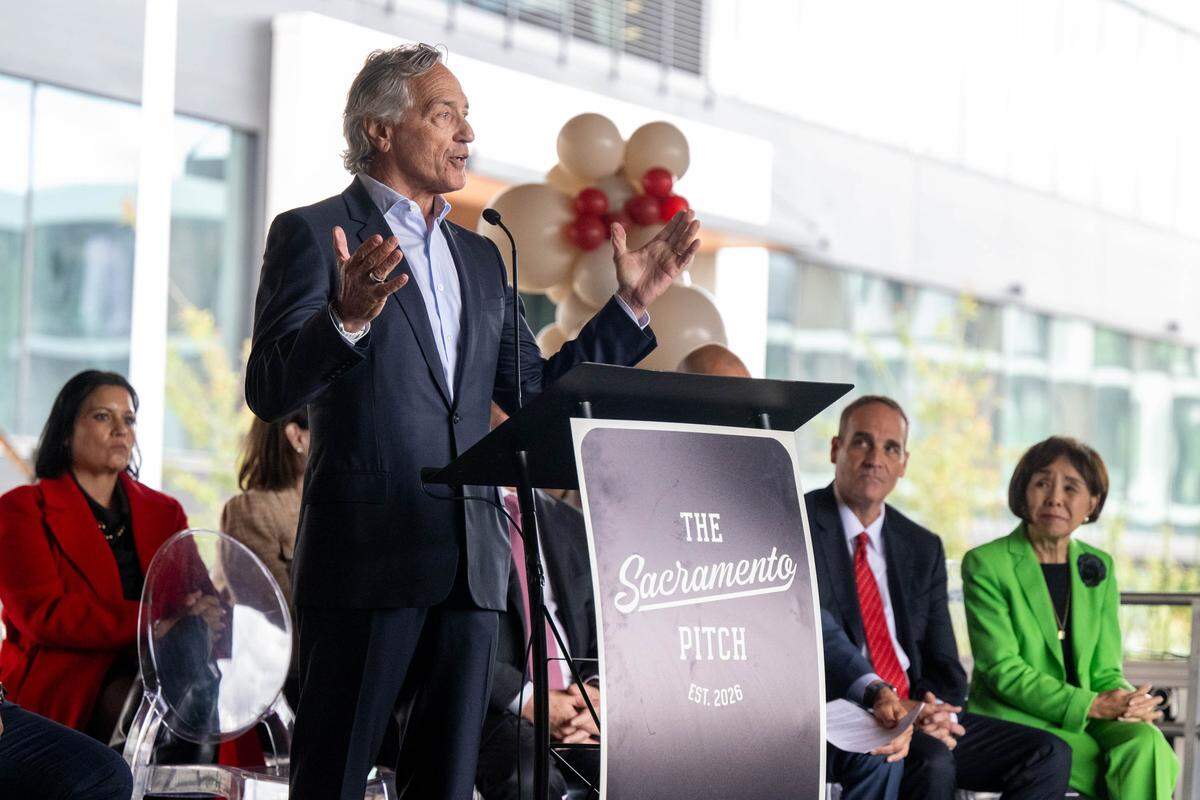
“This is the beginning of a long effort,” said Mark Friedman, founder and chairman of Fulcrum Property and board chair of the Greater Sacramento Economic Council, during a news conference Thursday. “We’re confident in our vision and the momentum that we’ve built. When Major League Baseball is ready to expand, Sacramento will be ready to compete and will be ready to win.”
Although the league has not formally begun the process to expand, cities across the country have begun laying the groundwork to stand out in any future contest, setting up tax incentives for theoretical stadium projects and pulling together coalitions of local supporters and deep-pocketed patrons to support the cause.
MLB observers believe the league will look to establish one new team in the West and one in the East, suggesting Portland, Oregon; Salt Lake City and Vancouver, British Columbia, as likely competitors for West Sacramento.
The city has years ahead to make its case. The league’s commissioner, Rob Manfred, has said he wants a process in place to expand the league — to 32 teams, from 30 — by the time he retires, expected in 2029.
“This region has earned its place in the major leagues, and frankly, MLB could use Sacramento,” Sacramento Mayor Kevin McCarty said in Thursday’s news conference. “We’re one of the largest and fastest growing markets in the western United States.”
Fulcrum and its land
The economic council said a steering committee, dubbed the Sacramento Pitch, will spearhead the local effort, chaired by Friedman.
Friedman’s firm, Fulcrum Property, started buying land in West Sacramento in 2004, when the riverfront was dominated by warehouses, and is responsible for much of the development around the ballpark. Friedman was also part of a group of investors who bought stakes in the Kings in 2013, with businessman Vivek Ranadivé, to help keep the team in Sacramento. Ranadivé bought out Friedman and a handful of other minority owners in 2021.
The Kings are a majority owner in the minor-league River Cats, the San Francisco Giants-affiliated triple-A team that has played in West Sacramento since 2000, and now shares its ballpark with the A’s.
Leaders in West Sacramento have signaled in recent months that they believe they can appeal to investors and league officials on a practical level, citing a track record of shepherding civic improvements that have helped the city grow faster than neighboring Sacramento.
The Bridge District, where the ballpark sits, was an industrial area for decades. Over time, with a steady drumbeat of infrastructure work and investment, it has become more connected to downtown Sacramento, dotted with local restaurants and new housing complexes.
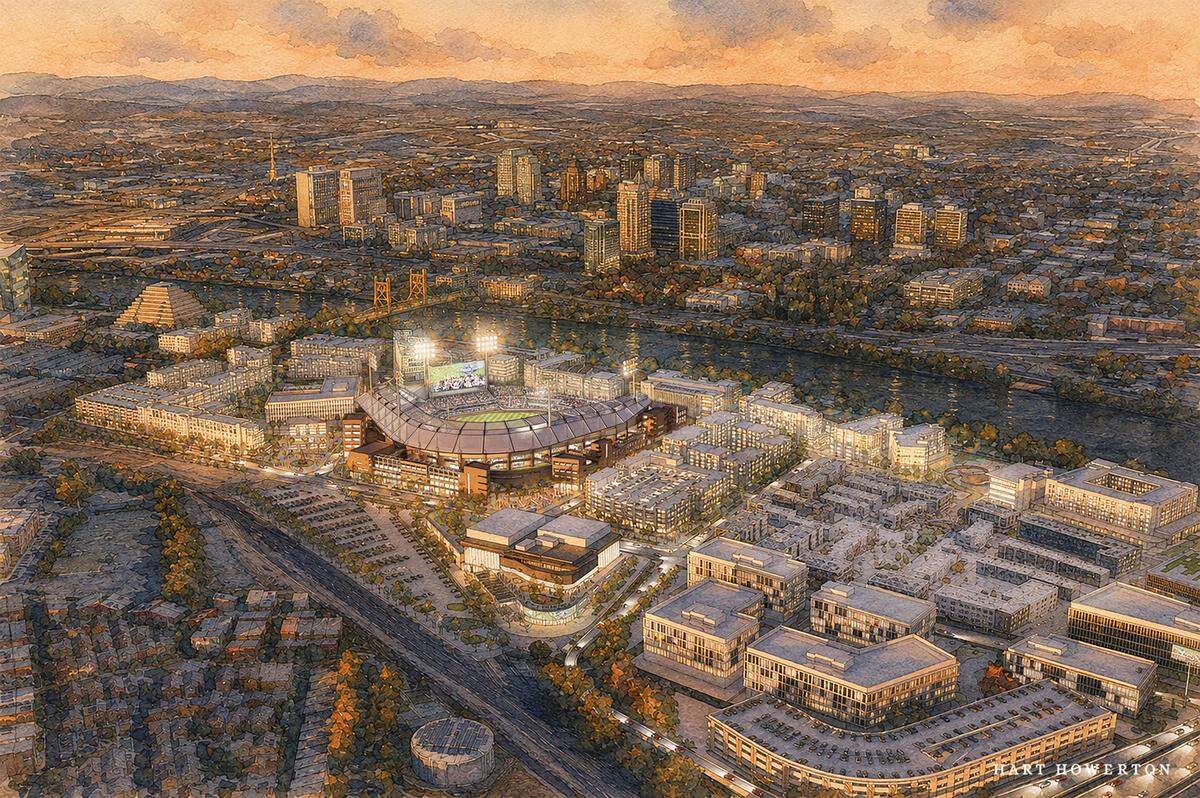
The city has laid the foundation, in the area surrounding the ballpark, for the types of projects that are typically built around major sports venues, with flexible entitlements that would allow construction of entertainment, housing, hotels, retail and office space. City Manager Aaron Laurel said recently that while West Sacramento has grown large enough to pull off major projects, it’s still small enough to be nimble, and could make an effort like Major League Baseball its top priority.
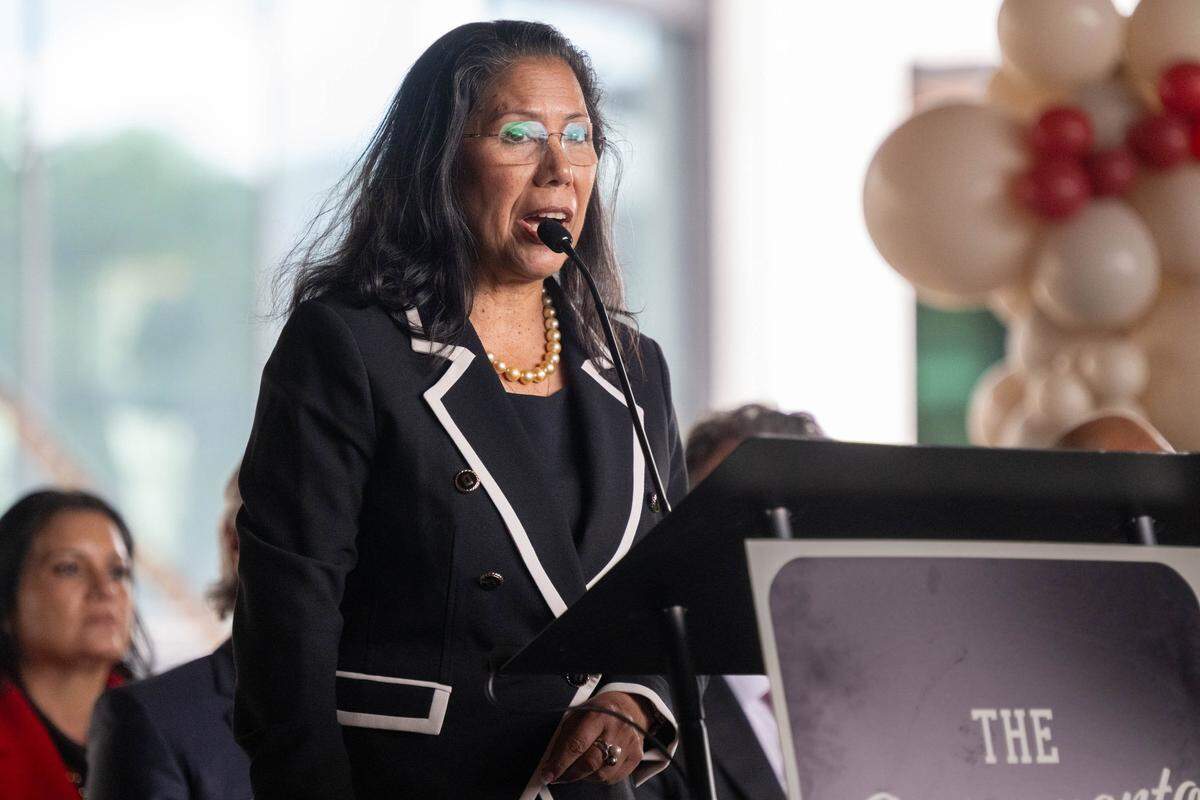
West Sacramento Mayor Martha Guerrero told The Sacramento Bee last month that she believes the league wants to see “a reliable, steady local government who is ready to get to work, and has the experience to do that.”
Due to quirks of history and property tax law, West Sacramento could also create a more lucrative incentive for a stadium project than Sacramento, or many other California cities.
Such an incentive would use expected increases in property tax revenues — as the land is built out with a stadium and other amenities — to repay some of developers’ costs for a new ballpark. Property tax dollars within a city are divvied up between schools, the county, the city and special districts. When West Sacramento incorporated in the 1980s, it was struggling with infrastructure woes and other consequences of long-term disinvestment, and leaders were able to negotiate for a much larger share of property tax than other cities.
As a result, West Sacramento receives about 40% of the property tax generated within its city limits, compared to 21% in Sacramento, giving it a larger share to dedicate to a potential tax incentive.
The economic council said the public funding contemplated in its plan would not affect the city’s general fund or require a vote by taxpayers.
Selling tickets for 150 home games
Manfred, the league’s commissioner, said this week that there are markets “in the United States, in North America — quite frankly, in Canada and Mexico” that want Major League Baseball. He considers it incumbent upon him to deliver, he said during an appearance on “The Pat McAfee Show” on Wednesday.
Plus, he has previously said, expanding to 32 teams would cut down teams’ travel, create more geographic rivalries and reduce the interleague play between National League and American League teams, which today is near-constant.
The Sacramento region has potential shortfalls, like a lack of large, corporate headquarters, which leagues look for in cities as a pool of customers for sponsorships, suites and luxury seats.

But the region has a strong television market, and officials will argue that West Sacramento has proved a capable host to the Athletics, and to the River Cats over the past 26 years. The team has led minor league baseball in attendance 10 times.
Attendance will be a closely-watched metric in the city’s informal tryout for the major leagues. When Sacramento Mayor Kevin McCarty asked A’s leadership, last year, about what it would take to bring a permanent MLB team to the region, he said the answer was simple: Sell tickets.
A’s home games last season averaged around 9,500 paid attendees, compared to the roughly 12,000 needed for a sellout. Meanwhile, attendance at River Cats home games dipped about 21%, according to a Bee analysis.
Still, the teams were in a unique position of attempting to fill a single ballpark for 150 home games in a single year. Baseball is already a long season relative to other professional sports, making for a formidable task in ticket sales.
The Bee’s Chris Biderman contributed to this story.
This story was originally published May 28, 2026 at 9:14 AM.