Sacramento police chief speaks of equity, protests and death threats as he’s set to retire
READ MORE
Sacramento’s Police Chief
Sacramento named the city’s first woman to lead the police department on Dec. 10, 2021. As Kathy Lester steps into the new role, police Chief Daniel Hahn talks about his retirement in an interview with The Bee.
Expand All

Sacramento police chief speaks of equity, protests and death threats as he’s set to retire
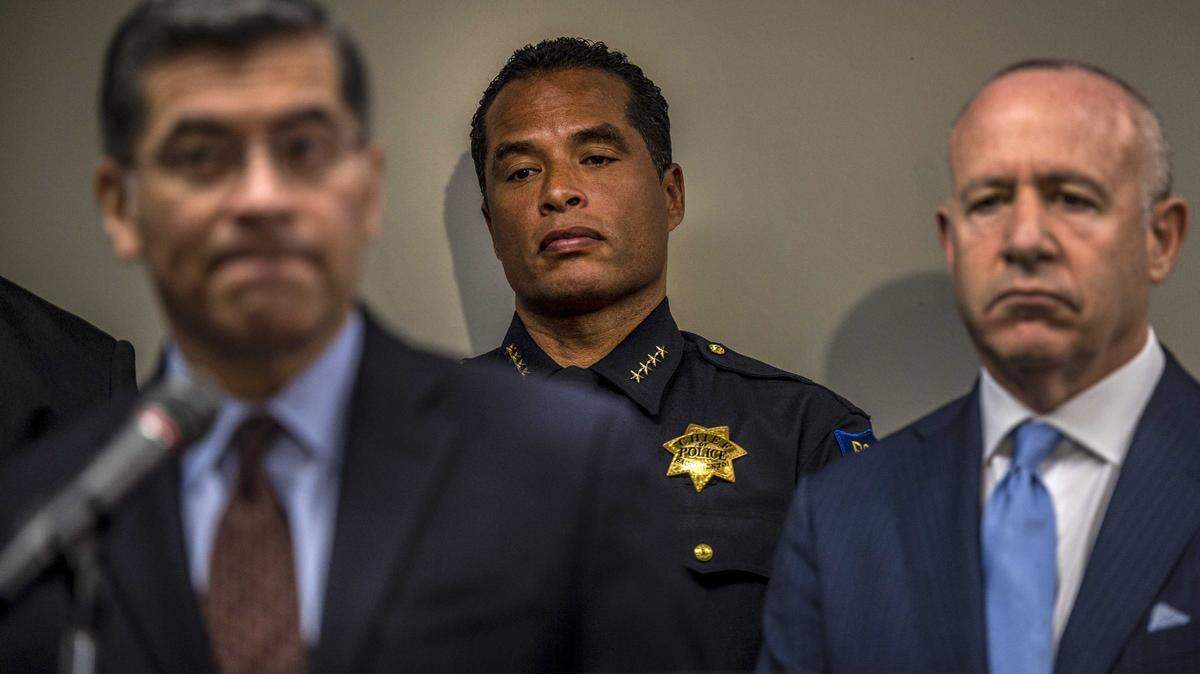
Some hoped for better from Sacramento’s first Black PD chief. Was that his fault or ours?
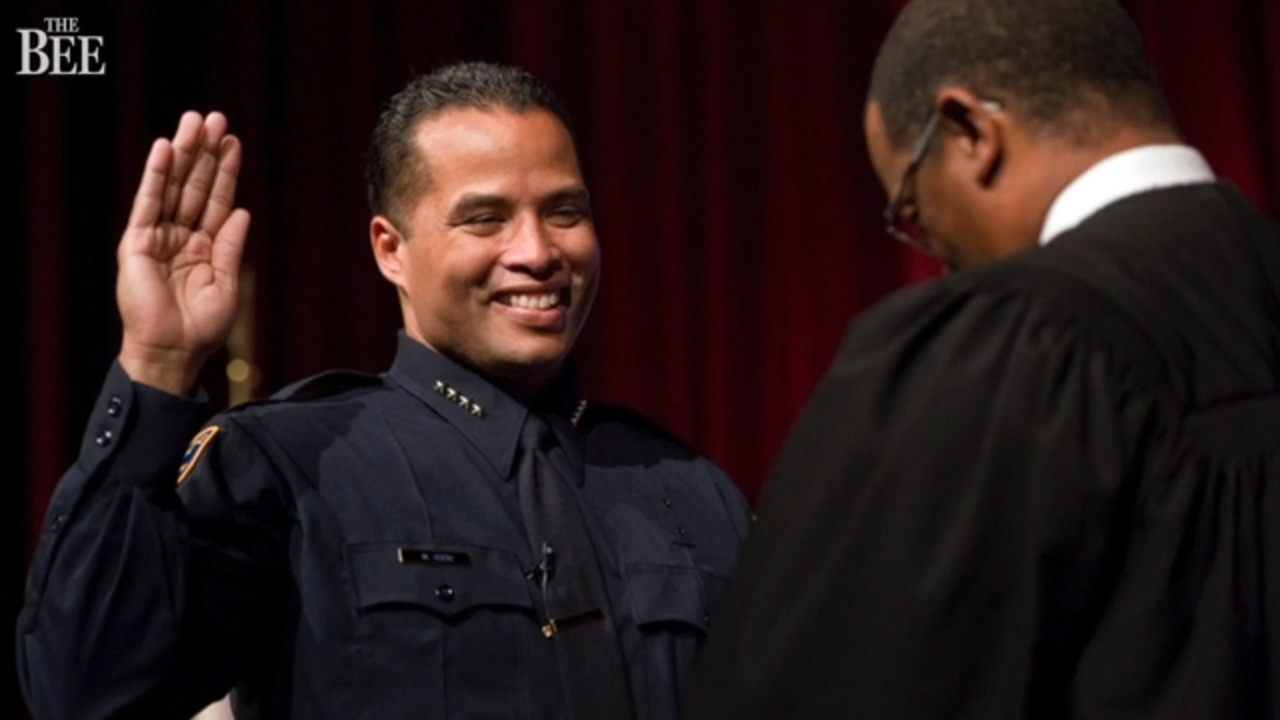
Video: Retiring police Chief Daniel Hahn talks crime, death threats, special moments
Sacramento names first woman to lead police department. Who is new Chief Kathy Lester?
The past four years in Sacramento have seen high-profile police killings of unarmed men and mass protests. Crime is on the rise, as it is in many big cities. The city and its police department have adopted significant police reforms, yet some community activists contend city leaders have not been bold enough or invested an appropriate amount in community programs.
It has been a turbulent run for Daniel Hahn, a Sacramento native and the city’s first Black police chief. Hahn will retire at the end of this month. The city announced his successor, current Deputy Chief of Operations Kathy Lester, Friday. She is the first woman to head the department.
As Hahn reflects on his time leading the Sacramento Police Department, he sees a department and city that have made significant progress on key issues, yet have plenty of work ahead. He’s worked in law enforcement for 34 years, but now is the time to retire — the last two years, he said, have been difficult. They have also been tumultuous for police departments across the country, as protests spotlighted issues about race and police accountability. As a chief in this cauldron of emotions, Hahn faced demanding expectations from his department and the community.
“I love the city, and I love this police department,” he said. “I love being a Black man, and I love being a police officer. You can be both.”
He said his department of roughly 1,100 employees has improved while adapting to city-enacted police reforms.
“I think we’re at a good place right now — not a perfect place, not a place that doesn’t require a continued improvement,” Hahn told The Sacramento Bee in an extensive interview from his office.
At the same time, officers continue to pull guns off the street while responding to a climbing number of shootings and carrying out efforts to connect with residents still struggling with the effects of a global pandemic.
“We’re at a spot right now I think is good for me in my personal life and professional life and good for this department and good for the city (to retire),” he said. “We’ve taken on a lot of changes.”
Potential threats at home
Hahn also opened up about turmoil he and his family have faced. Death threats made against him required armed police officers to guard his home. He said his fear intensified while he and his wife were at work and his children were home attending school during the pandemic.
“I think things have happened that I guess I always thought were possible, but it’s something else when it actually happens,” Hahn said. “I’ve had legitimate death threats where people have my home address and threatened to do it at my home, have literally said things like, ‘Hope your kids aren’t with you when I do it, because I’ll have to take them out too.’”
Hahn said people have threatened to harm him or conduct protests at his home. He said the right to protest should be protected, although his department and other local law enforcement agencies were criticized by activists for their response to social justice protests in the summer of 2020.
Still, Hahn said he believes a protest at someone’s home should be “off-limits,” and protests that resulted in damage at the homes of Mayor Darrell Steinberg and City Manager Howard Chan last year only exacerbated his worries.
“So, at some point, I have to also take into consideration how long am I going to put my family through this? How long am I going to have my wife scared for her safety, my safety, our daughters’ safety?” Hahn said.
One of the defining moments of his career — and one that sparked two waves of mass protests — was the police shooting of Stephon Clark, an unarmed Black man killed in his grandmother’s backyard in March 2018.
The officers who said they mistook Clark’s cellphone for a gun fired 20 bullets, hitting the 22-year-old man seven times. No charges were filed against either officer after several investigations.
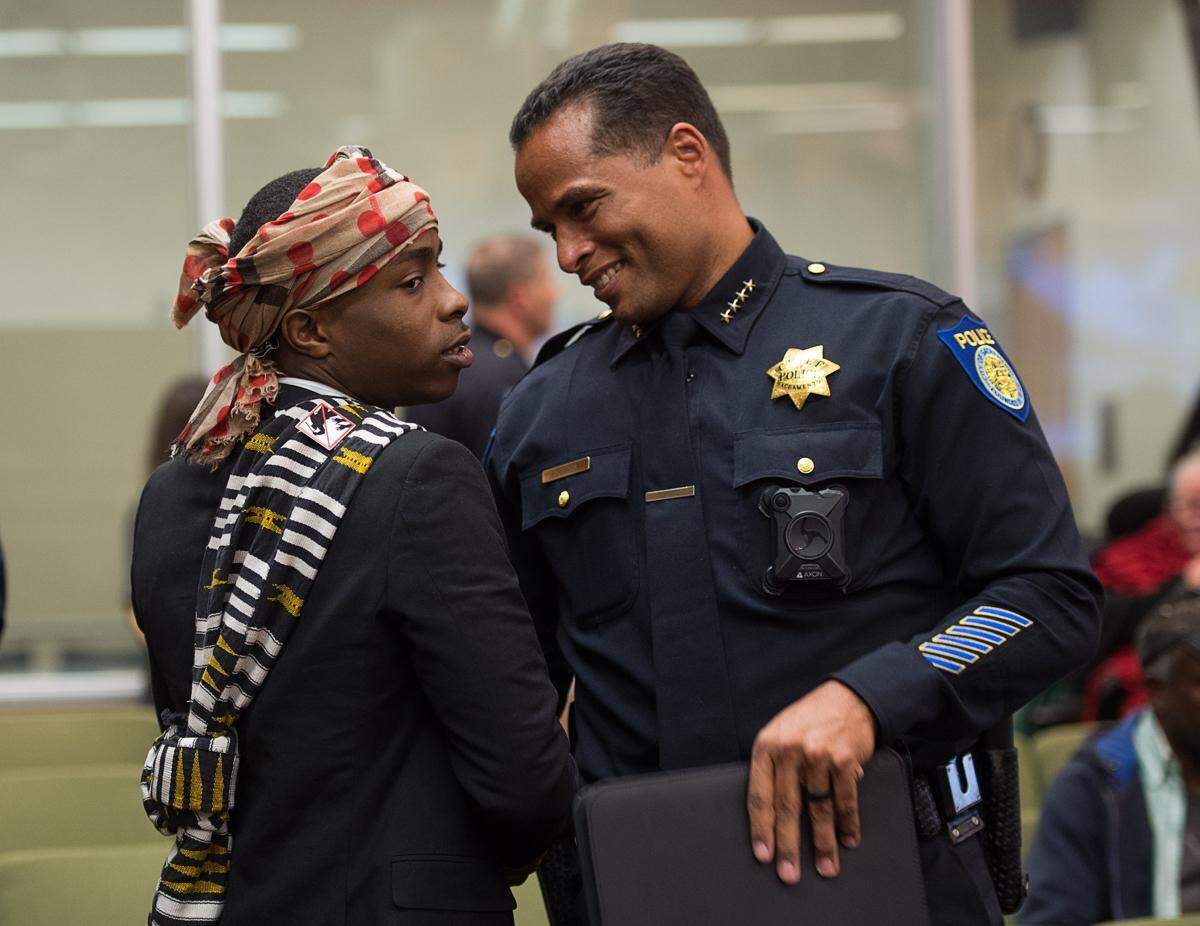
After Clark’s death, Hahn repeatedly met with activists and community members to hear their complaints and consider police reforms.
Stevante Clark, Stephon’s brother and a community activist, at times had a cordial relationship with Hahn, at least publicly. After learning of the chief’s retirement in August, Clark said he was glad to hear Hahn was leaving the department.
“I love the chief, but I’m glad he stepped down,” Clark said. “As a Black man, we thought he was going to represent us and our cause and our fights, and it feels like as a Black man, he did not.”
Clark was extremely disappointed the city didn’t fire the two officers. The city manager decides whether to fire officers, but the police chief makes recommendations, according to the city charter.
Leaving Roseville, returning home
Hahn grew up in the city’s Oak Park neighborhood, where he was raised by his adoptive mother, Mary Hahn. He began his law enforcement career in Sacramento at the age of 19 as a community service officer and rose to the rank of police captain.
He moved on and worked for more than six years as the police chief in Roseville. He said he could have retired with full benefits three years ago, but that he had no intention of leaving the department during a pandemic while there were protests in the streets.
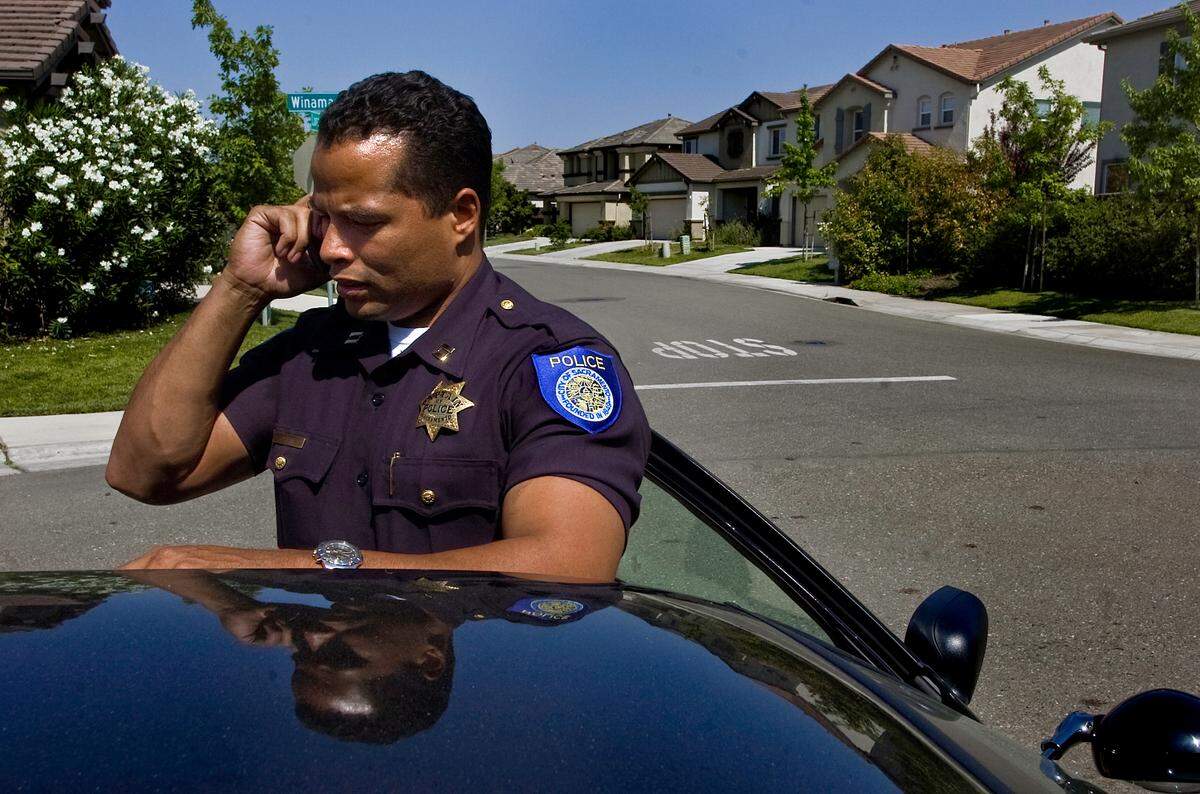
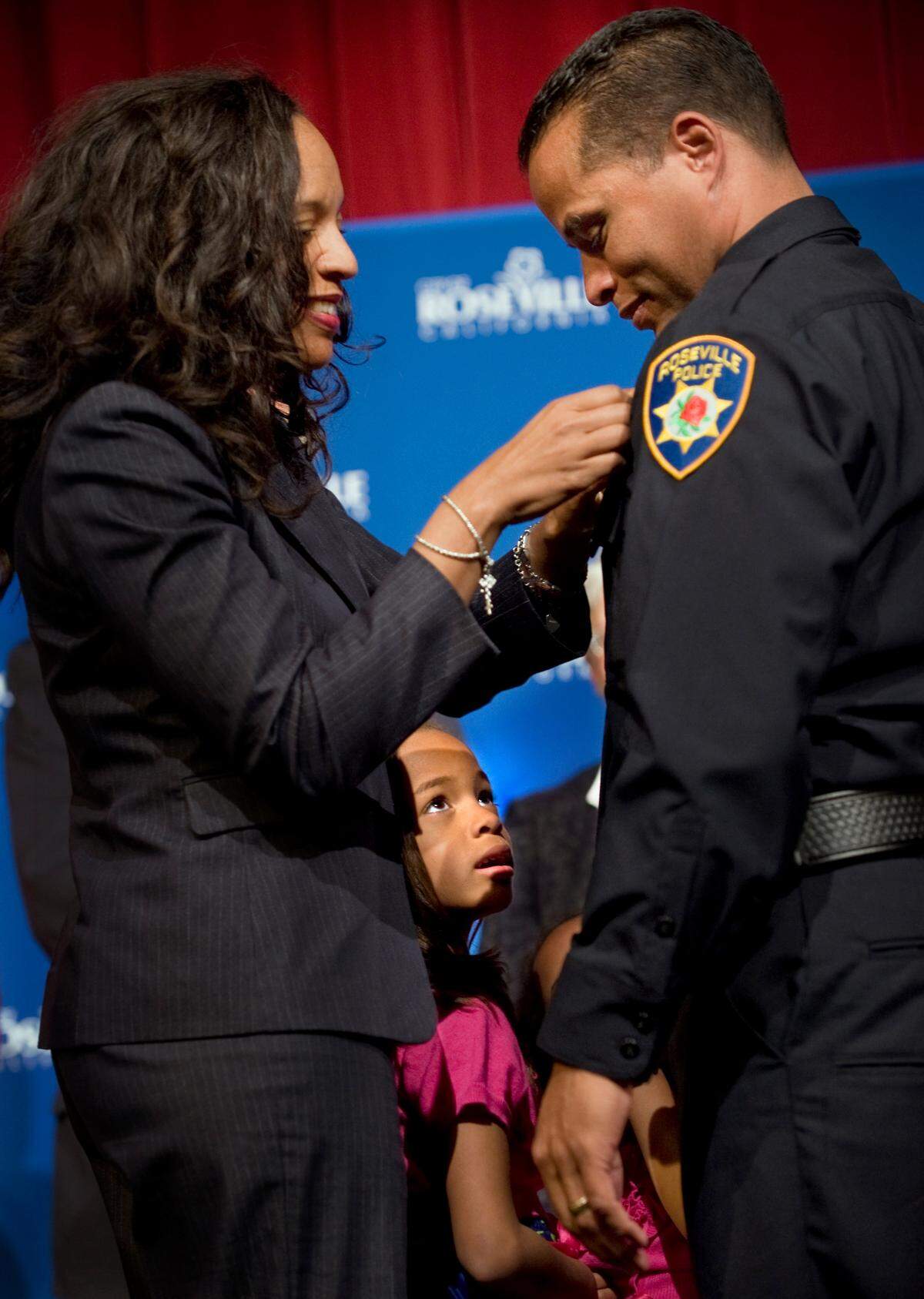
Hahn said there were challenging times in Roseville, too. But he knew he had to return to help Sacramento improve its police department, especially as it responded to the turmoil surrounding the death of Joseph Mann.
“As I sat in my office in Roseville during the whole Joseph Mann situation in the north area, I was sitting in my chair thinking, ‘I should be in my city right now,’” Hahn remembered. “I don’t belong here. I belong there.”
Mann, 50, was shot to death by Sacramento police officers in July 2016 after 911 callers reported a man armed with a knife and gun was acting erratically. Authorities later determined Mann had a knife with a 3.5-inch blade. They never found a gun.
The first police officers who arrived that day in North Sacramento remained calm and tried to de-escalate the situation, video of the police shooting showed. Two officers arrived four minutes later and tried to run over Mann before chasing him on foot and shooting him 14 times.
The officers who shot Mann, John Tennis and Randy Lozoya, no longer work for the department. Tennis was fired, and Lozoya was told he also could have been fired, but he had already taken disability retirement in April 2017.
In an October 2017 termination letter signed by Hahn, the Police Department told Tennis, “Your actions constituted incompetence; inefficiency; inexcusable neglect of duty; willful disobedience of a lawful rule, order or direction; disruption and discredit to your employment and the public service and is cause for disciplinary action.”
Hahn was hired in August 2017 as Sacramento’s 45th police chief. His swearing-in ceremony was held at the University Union Ballroom at Sacramento State, his alma mater. He provided a lot of promise to Sacramento residents seeking change in the Police Department.
Hahn said he succeeded in helping the department connect with the community, but divisions that have deepened during the past two years throughout the country will stall progress.
“We have got to come together and start listening to each other and figuring out ways to move forward, because we are leaving people behind.,” Hahn said. “We’ve always left people behind. … We’re going to leave neighborhoods behind like the neighborhood I grew up in.”
Steinberg has praised Hahn for embracing transparency and accountability for the Police Department, including a policy to release all body-camera video within 30 days of police shootings.
The mayor wants the next police chief to continue on the path that Hahn laid out and not be afraid to confront the injustices of the past and the present. He said it made sense to have someone who grew up in Sacramento lead its Police Department.
“I think that was one of his strengths, and that he knew the community so well,” Steinberg told The Bee.
Sonia Lewis, with Liberation For Black Sacramento, said she wasn’t surprised to learn Hahn was retiring, calling his hiring in 2017 “tokenism to appease the Black and brown community” and placate those demanding real police reform.
“He was used in a way to kind of silence the Black community,” Lewis said. ”I knew that he would not last in this position.”
And Lewis said she’s not “knocking” Hahn because she believes the police chief had good intentions when he took the job. She said real police reform needs to come from the offices of the mayor and the city manager, and Hahn was not allowed to “clean house” and get rid of “bad apples” and “bad actors” at the police department.
She said Hahn would have worked better as a consultant to the department, partnering with a progressive-minded police chief who could have held the job longer. She said any police chief needs at least 10 years to change a department’s culture.
“They are just a cog in the wheel,” Lewis told The Bee. “We know what it feels like to hit that glass ceiling. … At the end of the day, you take off that uniform and you’re just a Black man, too.”
Protests and calls for reform
In the aftermath of George Floyd’s murder at the hands of police in Minneapolis, as well as multiple high-profile killings of Black men by Sacramento police, protests in the summer of 2020 demanded police reforms and a shift of taxpayer dollars from police budgets to community-oriented efforts.
Hahn said the time is now to make long-lasting change.
“We all too often said that these are unprecedented times that we’ve seen in Sacramento and across the country. They are not; these are not unprecedented times,” Hahn said about the often-repeated phrase of 2020. “This has happened before over and over and over again in cities across our country over the same issues of equity and inequity and race and difference. And we just never seem to really get to the root or have a strong desire to get to the root.”
.JPG "IMG_LEDE_IMG_1115.jpeg_3_1_32IDKNGF_L568531879 (1).JPG")
The Police Department revised its use-of-force policy in September 2019, adding required intervention techniques when dealing with people who appear to be mentally ill.
In June 2020, the Police Department revised its policy, removing the “carotid” neck restraint as an acceptable use of force in response to Floyd’s murder by a police officer using the same restraint technique.
Later that summer, the Sacramento City Council approved a plan to create the Department of Community Response, which was designed to send trained staff instead of police officers to respond to mental health crises, the homeless and other nonviolent calls.
Earlier this year, the City Council adopted a new use-of-deadly-force policy for police with new language that reads: “A peace officer is justified in using deadly force upon another person only as a last resort when reasonable alternatives have been exhausted or are not feasible and the officer reasonably believes, based on the totality of the circumstances, that such force is necessary.”
Chan, the city manager and the person who will decide who replaces Hahn, said he needs another police chief with many of Hahn’s qualities, someone with a “thick skin” who can accept criticism while motivating department employees to “buy in” to changes that transform it into a more “public-facing” police agency.
The city manager said Hahn spearheaded efforts to create more transparency and accountability in police work, and it wasn’t just “lip service.”
In June 2020, Hahn initiated a meeting of more than a dozen California Black law enforcement leaders at the state Capitol to discuss the role law enforcement plays in racial inequality. The police chiefs, including Hahn, called on state lawmakers to change laws so they could immediately fire officers for egregious behavior, with appeals only after the decisions were final.
Chan said there were no state lawmakers who stepped up and offered to sponsor the legislation, and the police reform effort never gained traction.
“I’m grateful that he’s given four years of his life to come back to his hometown to make it better, because he has made it better,” Chan told The Bee. “We’re not a perfect police department, but we’re pretty darn good.”
This story was originally published December 12, 2021 at 5:00 AM.