Sacramento investigator details online child sex abuse case with ‘hundred-plus victims’
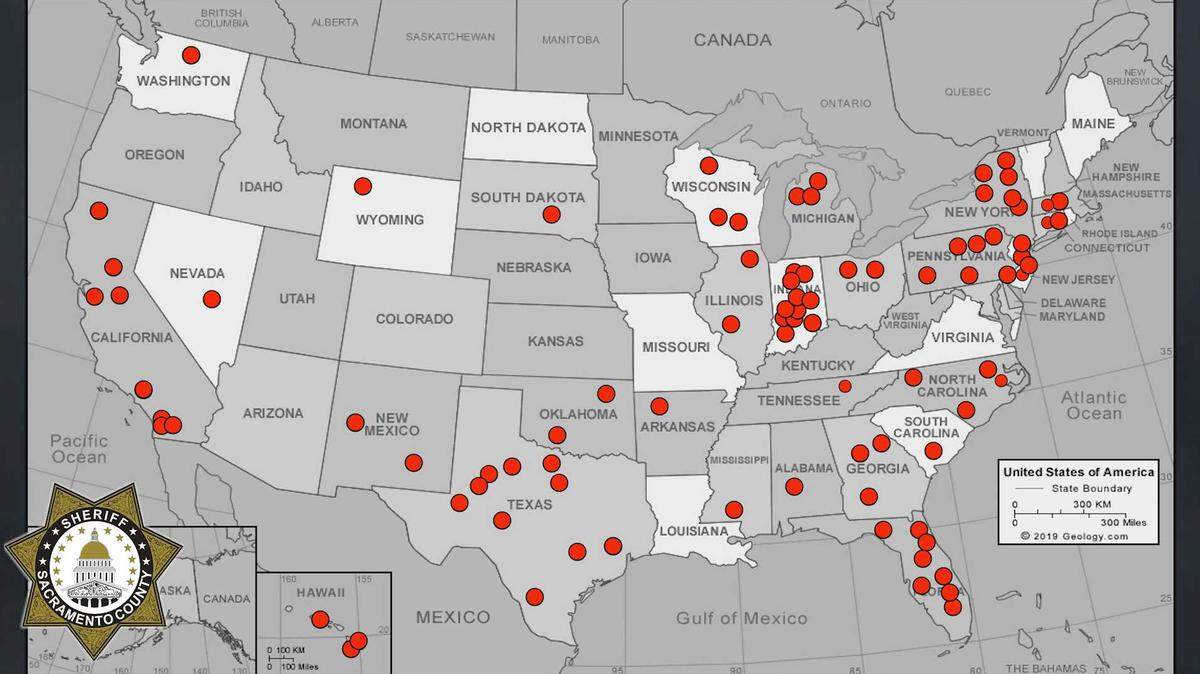
When Sacramento County Sheriff’s Sgt. Juan Hidalgo and his investigators first received a tip of a person uploading child porn onto the internet, he did not expect they would find more than 100 potential victims of child sexual abuse.
Hidalgo thought they would just find evidence of suspected child porn distribution, as they have in many other cases. But they also found a Sacramento County man suspected of using social media to lure children into performing sexual acts online at his direction; children as young as 6 years old.
“And then as the detective continued to do his investigation and look further into what we had, he was able to find more victims, and then it just kind of spread and spread into a hundred-plus victims,” said Hidalgo, who supervises a regional task force dedicated to finding child sexual predators online.
Hidalgo was speaking of the case of 24-year-old Demetrius Carl Davis, who was arrested last week. Davis faces 32 felony counts of committing a lewd or lascivious act with a child younger than 14 years old, in a case filed by the Sacramento County District Attorney’s Office.
Davis could face other charges in federal court or in other jurisdictions. Sacramento County sheriff’s officials said Davis is accused of victimizing over 80 children throughout the United States; children from California and 25 other states, including Texas, Indiana, Florida and New York.
Investigators from Hidalgo’s cyber task force are working with the U.S. Department of Homeland Security to help identify at least 15 other children from six other countries who have been allegedly victimized by Davis. And they believe there could be others, since Hidalgo said Davis communicated with well over 100 children online.
Task force funding not in California budget
It’s painstaking investigative work that could go on for months before an arrest is made, as the task force searches through forensic analysis and numerous digital files. But Hidalgo said state funding to train and equip the task force could go away, possibly ending their ability to keep up with an ever-changing digital world that predators hide in as they prey on unsuspecting children.
Hidalgo and Sacramento County Undersheriff Jim Barnes have urged California residents to contact Gov. Gavin Newsom’s office, as well as their local state lawmaker, and make sure task force funding is included in the governor’s updated budget proposal later this month. The state funding also equips and trains regional investigative teams in San Jose, Fresno, Los Angeles and San Diego.
“This is what the task force was created for; to have all these people working together for one purpose,” Hidalgo told The Sacramento Bee. “And that’s the purpose of saving children.”
Hidalgo supervises the Sacramento Valley High-Tech Crimes Task Force, which has an Identity Theft team, a Digital Forensics team and the Internet Crimes Against Children team.
The Internet Crimes team, which investigated Davis, serves 30 counties in Northern California from Stanislaus County to the Oregon border. It has trained and equipped investigators at about 100 law enforcement agencies throughout the region, giving them the capability of investigating online child predator cases in their area.
But Hidalgo also supervises about 20 investigators in Sacramento, taking on cases in the largest metro area in the task force’s region. It was one of his Internet Crimes investigators following up on a tip that led to Davis’ arrest.
The cyber tip came from the National Center For Missing and Exploited Children; a report of an online account suspected of uploading child sexual abuse material onto the internet.
The tip is just one of thousands the task force receives each year, and that annual number keeps increasing. Hidalgo said the task force received about 3,000 tips in 2019, about 7,000 in 2021 and about 3,000 so far this year. He said they’re on track to receive about 10,000 tips this year.
He said the task force determines which tips they can follow up on immediately and assign them to investigators in other areas or his investigators based in Sacramento. They include investigators from the Sacramento Police, Sacramento County Probation and Folsom Police, along with law enforcement agencies in Placer and San Joaquin counties and federal investigators.
Child porn shared online
In Davis’ case, Hidalgo said it was “known child porn” that matched images stored in a huge database kept by the center to keep track of child porn shared online. When it’s “unknown child porn,” that means someone might be illegally producing photos or video of children being sexually abused, he said.
That’s why Hidalgo said he wasn’t expecting to find more than 100 potential victims when they served a search warrant at Davis’ home on Dec. 1. The task force arrived with 18 to 20 investigators to secure the home and start searching through every digital device or storage device they could find.
The task force also arrived with a large group of investigators last week, when they served a search warrant at the home of a North Sacramento father accused of sending a video showing him engaged in a sexual act with a small child. Hidalgo said the father was arrested that same day after investigators discovered the victim lived in the same home with the suspect.
Hidalgo said the need to arrive with so many investigators is to help secure the area and detain the suspects. Child sexual abuse allegations are serious, he said, and suspects accused of such crimes might respond with violence when investigators knock on their door.
“We are prepared for the worst because these types of offenses are not only going to put someone in prison, but it’s also going to be that the community’s going to look at that person in a different light,” Hidalgo said.
The task force also has a dog trained to sniff through a home, vehicles or any other location to find hidden digital devices. Computers, laptops, tablets and even cell phones might be easy to find. But it’s small thumb drives and other tiny storage devices, such as micro SIM cards, that Hidalgo’s investigators are worried they could miss.
“They can be up to 500 gigabytes to a terabyte and how much information you can store on them; they’re the size of half a centimeter. You can put that anywhere,” Hidalgo said.
The task force also brings along a forensics van with equipment that allows them to immediately begin searching through those digital devices, previewing incriminating images while at the scene. The van also has space to interview children and other witnesses and suspects, gathering information that could be later used in court.

Cell phones typically used to commit these crimes
In these investigations, the task force usually finds child porn the suspects save from their interactions with children online.
“‘Collection,’ is what they call it,” Hidalgo said.
In the Davis investigation, Hidalgo said investigators found most of it on his cell phone.
“A majority of these crimes tend to occur on a phone because it’s smaller,” Hidalgo said. “You can keep it to yourself, especially if you live with others. Not many people share their phones with others.”
One of the most difficult parts of these investigations is calling families to let them know their children might have been victimized by a child sex predator. After using online records to track down the children Davis allegedly victimized, it was up to Detective Daniel Heaton to make the calls.
“It is heart-wrenching to see their reactions of these almost 100 families and there’s more that we’re going to have to talk to,” Heaton told Fox 40 last week.
Hidalgo, who has been the task force supervisor for two and a half years, has had to make those calls before.
“A lot of times they’re in denial. A lot of times they don’t believe that something like this could happen to them,” Hidalgo said. ”They don’t think that this is going on. They believe they’ve done a great job as far as going through or reviewing their social media accounts.”
The task force investigators in these calls then describe the illicit images, not the pornographic images, and specifically the description of the child to convince their parents. If the parents remain in denial, Hidalgo said they notify local law enforcement officials to speak to the parents in person. Sometimes, it’s those local authorities who interview the child for the investigation.
It’s not just social media accounts either. Predators also hang out on online gaming platforms searching for children to victimize.
Hidalgo said it’s usually not the popular social media and gaming sites adults are familiar with; predators look for sites more popular with children. He said online predators might find children on a more popular site and lure them onto lesser known sites, where incriminating evidence can be more easily hidden.
“A lot of parents don’t realize that their children are communicating and talking to people they don’t know and who act as people in that age group,” Hidalgo said. ”Those people can be anywhere in the world and they remain anonymous.”
He said online sexual predators are not anything new, but digital devices have become much more prevalent in recent years as online gaming and social media apps offer users a way to interact with each other anonymously.
“You give your child a phone with the internet, it’s like leaving the window wide open at your house. It’s a window to the whole world,” said sheriff’s spokesman Sgt. Rodney Grassmann. “You wouldn’t leave your 8-year-old child on a busy street corner in San Francisco unsupervised, or any street corner.”