3 deadly shootings unfolded outside Sacramento bars this year. What happens downtown at 2 a.m.?
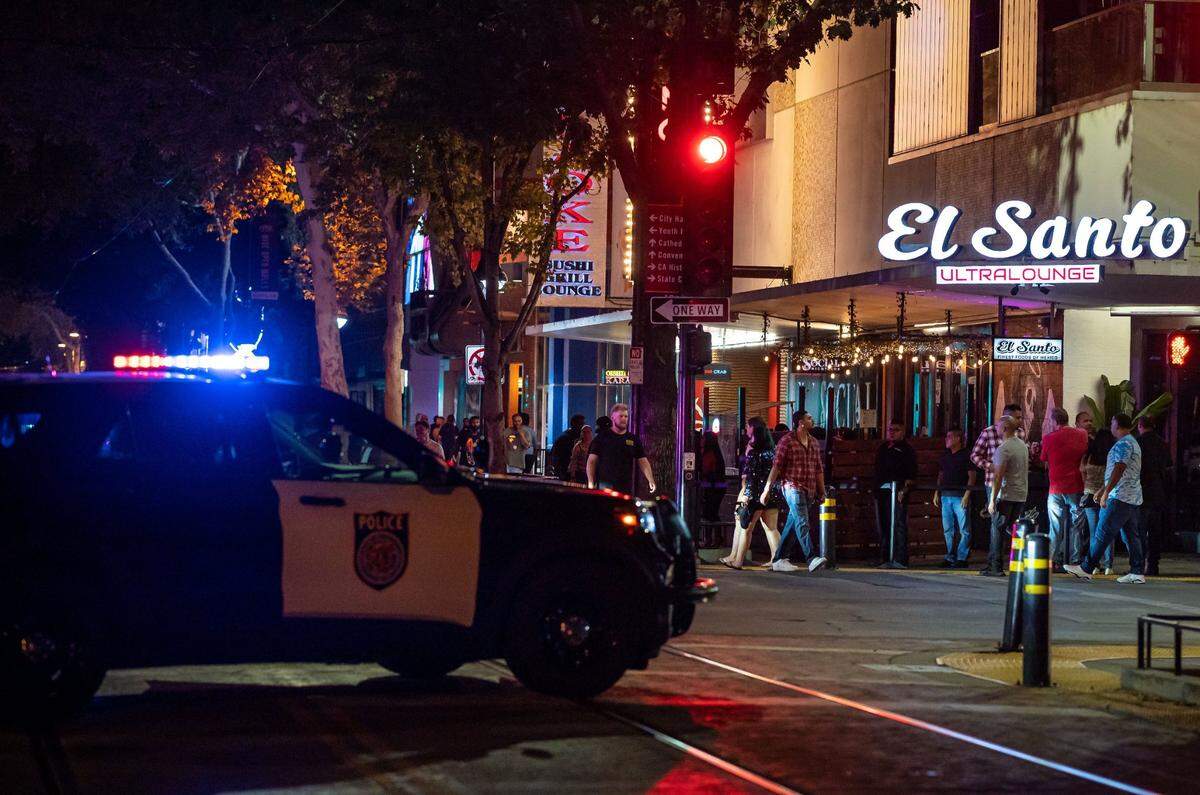
“Adios, boys and girls! The patio’s closed,” an El Santo Restaurant & Ultralounge security guard called out, as the lights came on and the downtown club’s taqueros shut down their grills.
Saturday’s night out had spilled over into 1:30 a.m. on Sunday, and bars throughout midtown and downtown Sacramento were ushering people out before the 2 a.m. state-imposed shutdown.
Not everyone was ready to go home, though. By 1:50 a.m., a line of cars choked off the corner of 10th and K streets outside El Santo, with young men revving engines, hanging out of the passenger windows and looking for dates.
That’s as far as they could get on that hot August night.
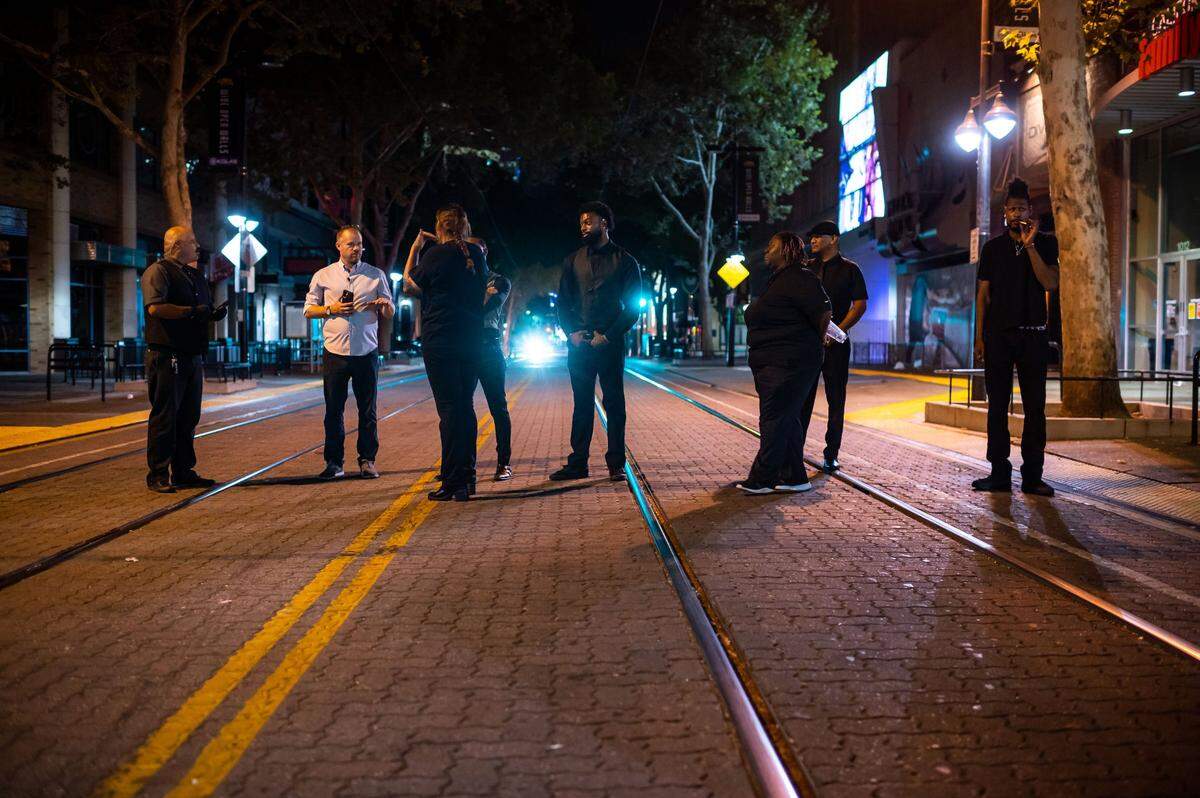
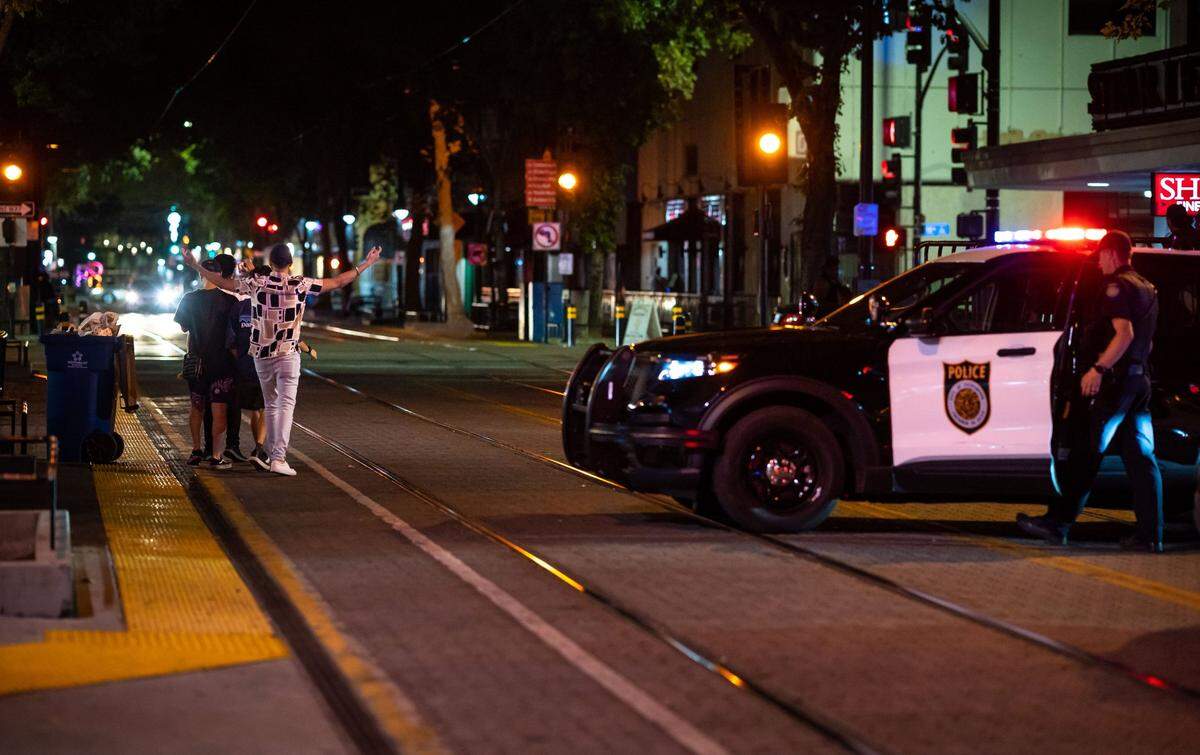
In a show of force designed to clear people out of downtown, police blocked off 10th and L streets. Another line of security guards dressed in black stood across the middle of K street outside Dive Bar and District 30, flashlights on strobe, yelling at anyone who tried to walk down that way to turn around.
The message was clear: whatever you’re going to do, you can’t do it here.
The night’s heavy-handed and brightly lit enforcement exemplified the city’s recent push to restore a sense of safety downtown after the deadliest shooting in Sacramento history unfolded on an April night about 2 a.m. near the corner of 10th and K when alleged gang members opened fire on each other, killing six and wounding 12.

Since then, two more fatal shootings took place outside midtown bars in the final hour or so before closing time, underscoring the risk of the “volatile” moments when clubs clear out.
Sacramento has a lot riding on the downtown district. It poured hundreds of millions of dollars into the neighborhood with a plan to redevelop it alongside the Golden 1 Center. COVID-19 dealt downtown a serious blow, and then the April shootings sent a chilling message just as the scene came back to life from its pandemic lull.
Today, the city is taking the shootings seriously, investing in visible enforcement outside clubs. This week it announced the appointment of Tina Lee-Vogt as the new nighttime economy manager to improve safety while focusing on the businesses that should thrive after dark.
Officers also are helping prosecute alleged shooters from the April killings. Three suspects — Mtula Payton and brothers Smiley and Dandrae Martin — face murder and other charges in that shooting.
“We do not have our heads in the sand or dismiss the challenges that we face in our city and especially in our central city,” Mayor Darrell Steinberg said at a news conference earlier this month, just after the most recent deadly shooting. “Because we know the central city is the heart of, not just of the city, but the region. It’s the center of our drive to build a more cosmopolitan economy.”
Sacramento Bee reporters visited downtown at closing hour three times in recent months to get a sense of how the city and downtown clubs are managing crowds after the violence.
Police showed the heaviest footprint in July, one week after a shooting outside Mix Downtown at 16th and L streets left one man dead and five more people wounded. Officers that night parked patrol vehicles near nightclubs and bars, including at the intersection of 10th and K streets. They directed their headlights squarely at El Santo and Social Nightclub about 1:45 a.m. as crowds left the businesses.
In August, police and private security guards worked together to clear 10th and K at closing time.
And, last month, one week after a shooting outside BarWest at 27th and J streets left one man dead and led to illegal gun possession charges against another, officers worked in teams to help people injured in accidents on a routine Saturday night. If anyone was on edge over the recent gun violence, it wasn’t evident in the people waiting to get into bars and nightclubs.
Interviews with club-goers and bar owners showed that many people heading downtown late at night are well aware of the recent violence. They’re comfortable going out late, and eager to enjoy nightlife after the pandemic shutdowns.
That’s a sign the city hasn’t lost its investment in downtown just yet.
“People ask, is it safe to be in downtown or midtown Sacramento? I still believe it is, while acknowledging people’s genuine and understandable concerns,“ Steinberg said.
Why stay out until 2 a.m.?
After the April shooting, Steinberg implored people to come downtown for Kings games, shows or restaurants but to leave before 2 a.m., drawing criticism from some.
California law mandates that bars close by 2 a.m., and most start kicking people out 30 to 45 minutes prior to make sure they comply. For many young people, a full night out means bar-hopping between a few different venues or coming out when bars are already full after 10 p.m., both of which will keep groups out until closing time.
Like many Sacramentans of a certain age, the 62-year-old mayor couldn’t really fathom why people needed to stay out that late.
“A lot of young people want to be out until 1 or 2 in the morning … I understand and respect that,” Steinberg said. “But I do think there is something to this idea that not much good happens late, late at night.”
Getting dressed up and staying out late at a bar is many peoples’ de facto move to celebrate a birthday, a promotion, a friend coming back into town. Those late hours are when many clubs feel liveliest, when they have the most energy.
Thomas Thorpe went out every three weeks or so before the COVID-19 pandemic; now, it’s about once every two months. That’s mostly due to inflation and growing older, he said.
Still, Thorpe was downtown for one last big night out before his Sacramento State classes started up in late August. Favorite bars like Faces Nightclub or Coin-Op Game Room take on a different feel late at night, he said, one that can’t be experienced while still getting to bed early.
“It’s just a completely different social aspect, you know? People are actually cutting loose and everything. It’s not just, ‘everyone’s going to work after (in the morning),’” Thorpe said.
A growing restaurant scene has helped make downtown and midtown Sacramento places to be. Those places often make their biggest profits on alcohol sales. It’s little wonder that Polanco Cantina goes from a relatively quiet dining room overlooking Golden 1 Center to blasting Sacramento native Saweetie’s hip-hop songs around 10 p.m., or that Lowbrau’s line for gin-and-tonics around 11 far exceeds its happy hour rush for duck fat fries.
Sacramento nightclubs were forced to shut down for much of 2020 and early 2021, but still had to pay rent on thousands of square feet in the city’s most popular entertainment districts.
Even with COVID-19 less threatening these days, the scene hasn’t recovered in full, socialite Jackson Yniguez said. And gun violence is a factor.
“Before COVID, (every bar had) a line everywhere. But since COVID, it’s so dead now. Especially with the shootings and stuff, nobody wants to go out anymore,” Yniguez said.
A relatively muted bar scene doesn’t stop Yniguez from going out three nights per week to watering holes such as Park Ultra Lounge, The Mercantile Saloon and LowBrau. But it’s a driving factor behind the Sacramento native’s upcoming move to New York City, he said.
Late night police work
The downtown core appeared relatively calm last Friday night when two Sacramento police officers gave a reporter a behind-the-scenes look at the department’s downtown tactics.
From their perspective, Officers Chad Lewis and Ryan Woo, said downtown nightlife hasn’t changed much in recent years. They acknowledged the crowds look somewhat smaller and business isn’t quite as good as it was before the COVID-19 pandemic.
On a weekend night, an extra 10 to 20 officers could work in the downtown area simply because of the large amounts of vehicle traffic and people walking around and heading to nightlife businesses.
Aside from patrol officers, members of the Police Department’s Entertainment Team are expected to work downtown on weekends. More officers operate in “tac cars” handling directed enforcement on issues such as gang activity or working with community groups in intervention efforts downtown.
“It’s not all willy-nilly, ‘Let’s just go out there and see what’s going on,” Lewis said about directed enforcement. ”They’re responding to a pattern that’s been established. It’s just problem-oriented policing.”
Woo was assigned to patrol the downtown area when he first joined the Police Department about four years ago. Fights, disturbance calls, reports of domestic violence, traffic stops — that’s what usually keeps officers busy on downtown weekend nights.
“The downtown officers, obviously, they know the area. They know where the problems are going to come at 2 o’clock. They know where the bars are,” Woo said. “It’s not really different from any other area, other than the types of calls you’re going to.”
Last week, they stood along K street in front of the Crest Theatre. A man told them there was an injured woman down the street. The officers found a young woman with her knees scraped and bloodied.
She was riding on an electric scooter and had crashed, falling to the ground. Two of her friends, both of them nurses, cared for her as restaurant employees offered them water and paper towels for her wounds. The officers eventually called for an ambulance, persuading her to seek medical attention to make sure her injuries weren’t serious.
Later that night, Lewis stopped to talk to a man in a heated dispute outside BarWest. His friends were pulling on him, trying to get him to calm down. They vouched for their friend to the officer and promised to get him home.
Shortly before 2 a.m., Lewis and Woo heard a call on their police radios of an officer in distress near the corner of 10th and K streets. Lewis and Woo raced from midtown in their unmarked police vehicle with the siren and emergency lights, slowing to look for other vehicle traffic at each intersection before they arrived on 10th Street.
Police vehicles crowded the area. Lewis said the officer who called for help got out of his vehicle to stop a fight, then he became surrounded by onlookers and feared for his safety. As other officers arrived, the crowd dispersed and the situation calmed down.
Lewis said there’s no written handbook on how to patrol the downtown area. He said officers do what they can to present a visible deterrent to violence as large crowds linger outside bars after closing. Some type of beef inside could spill onto the street, and the officers want to stop it before it starts.
Sacramento bars police their patrons
What more can Sacramento bars and clubs do to mitigate violence? Because, really, they’re already doing a lot.
Bars with entertainment permits are required to have ID scanners, many of which are programmed to flag all users when a problematic patron gets 86’d from any affiliated bar.
El Santo Cantina uses such a system, has security guards pat people down before entering and charges a $20 cover. Like most clubs along K Street, it also has a dress code meant to up the ambiance and deter gang conflicts.
On a recent night, a group of about 10 people lined up around 1:15 a.m. outside The Boiling Crab, all wearing bright red clothing — hats, jackets, sweatshirts, all of which wouldn’t have been permitted inside most clubs.
One of them started talking to two women who had just come out of a nearby bar. Another man intervened, introduced himself, then threw his arm around one of the women and ushered her and her friend away.
That was it — no audible threats, no violence. But it’s not hard to see how hot emotions or conflict between groups could have caused things to shake out differently.
A half-dozen clubs either declined to comment on security or didn’t respond to requests for comment. One that would, Tiger Restaurant & Lounge, has emerged as a late-night hotspot over the last few years — without any serious conflicts.
Getting people to see Tiger as a community space rather than simply an intoxication station has helped security personnel quell incidents before they escalate, co-operator Tony Christ said. The restaurant and bar at 722 K St. hosts dinners with celebrity chefs and winemakers, local art shows and even Sacramento Asian Pacific Chamber of Commerce events.
“When we have our brunches, people bring their parents. When people come to dinner, they are coming with their grandparents, right?” Christ said. “And the grandparents leave at 7, and (younger people) stay, and sometimes the mom stays. Sometimes she’s there until 11 or 12, and then she leaves and the kids stay there for the whole night.”
Tiger is also one of the few trendy downtown spots run mostly by Black people, who have their own views on security restrictions they say are rooted in racial discrimination. There’s no dress code for Tiger’s customers or staff, and music varies as much as the clientele.
That’s been historically missing in Sacramento’s nightlife scene, said Ryan Royster, a city native who now co-owns frequent Tiger collaborator Last Supper Society.
“Truly creating something that’s welcoming to all demographics — people feel that. You can’t fake that authenticity. You can smell it from a mile away if it’s off,” Royster said. “It seems like people safeguard and protect the space more ... it’s not going to some place where they trash it and leave, because they feel it’s for them.”
This story was originally published October 7, 2022 at 5:00 AM with the headline "3 deadly shootings unfolded outside Sacramento bars this year. What happens downtown at 2 a.m.?."