
Death or life? Jurors deliberate sentence for killer of Sacramento officer Tara O’Sullivan
Tara O’Sullivan, the centerpiece of her family, the best friend to nearly a dozen, the paragon of a hero to hundreds, died in the end alone.
The 26-year-old rookie police officer cheerfully chirped “dog” when arriving at a North Sacramento home with her training partner, Sacramento police Officer Daniel Chipp.
Chipp knocked on the residence and relayed to Adel Ramos inside: He wasn’t in trouble or under arrest.
But Ramos, hunkered in what Deputy District Attorney Jeff Hightower called a “murder hole,” shot the back of O’Sullivan’s head with an assault rifle on June 19, 2019. She immediately fell as 150 rounds by Ramos scattered through the neighborhood, preventing her rescue, Hightower said.
“This is also not an attempt to understand why Mr. Ramos did what he did,” Hightower said, who also called Ramos depraved. “These acts are inexplicable. They are heinous, they are vile and there is no understanding to be had.”
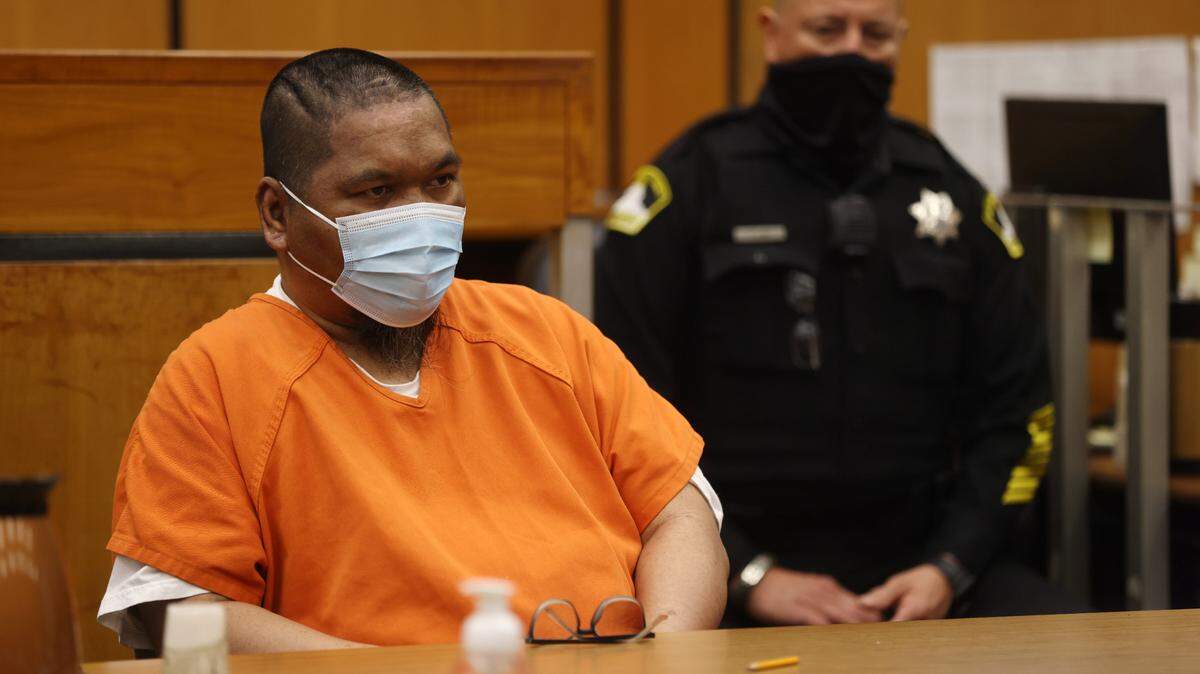
A jury of seven women and five men began deliberations Tuesday after hearing closing arguments in Sacramento Superior Court. They now weigh whether Ramos, 51, should be sentenced to die or spend his life in prison without parole.
Ramos pleaded guilty in August to one count of first-degree murder, seven counts of attempted murder of peace officers, two counts of unlawfully possessing an assault weapon and three counts of intentionally converting a firearm into a weapon.
Capital cases are broken up into two phases: Jurors must consider if the defendant committed the crime and then decide if the death penalty is appropriate. In this instance, Ramos pleaded to the charges, bypassing the conviction phase of the trial.
Defense attorney Pete Kmeto implored jurors to understand that Ramos has suffered lifelong trauma and to set aside emotion. The death penalty will not remedy the grief endured by the O’Sullivan family, he said.
“(O’Sullivan) was a beautiful person with all kinds of potential,” Kmeto said to jurors. “You have cried along with (the O’Sullivan family). But because she was a better person than Adel Ramos,” this consideration cannot be the basis of voting for the death penalty, Kmeto argued.
O’Sullivan’s final moments after ‘ambush’
Five women on the jury appeared to cry watching the last moments of O’Sullivan’s life captured on a body-worn camera. Numerous audience members — which included Sacramento Police Chief Kathy Lester, family members and police officers — also bore witness to the footage in pain, though several family members had left the courtroom to avoid seeing O’Sullivan’s last breaths.
Chipp yelled “shots fired” while O’Sullivan immediately went down. Her labored breathing sounded for more than 10 minutes while backup was called and Ramos continued to fire to prevent her rescue, Hightower said.
“This is an ambush, an execution, an attempt to kill anybody who tried to help her,” Hightower said.
As O’Sullivan died, Ramos yelled taunts and called her a derogatory name.
“Are you dead yet, b----?” Ramos yelled, according to Hightower.
Ramos had surveillance footage looped back to him. Numerous modified weapons were stashed around his home — as if he expected to engage in a firefight with law enforcement, Hightower said, adding Ramos was ready for war.
Many in the Sacramento region suffered from this incident, not just those attempting to save O’Sullivan, Hightower argued.
Chipp returned home that night, took off his uniform and knew he would never wear it again. The dream of becoming a police officer, harbored by Chipp since he was 5 years old, died that day, Hightower said.
Officers testified about suffering trauma after the incident, entering counseling or medically retiring, Hightower said.
Kmeto, the defense attorney, argued that Ramos suffered repeated trauma as a child. As a 6-year-old, Ramos saw his father die from a stabbing in the Philippines and tried to plug the bleeding stabbing wounds. Ramos’ drunken uncles beat him, Kmeto said.
And, as an adult, he suffered from a drug addiction. Ramos was high on methamphetamine at the time of the incident, Kmeto said.
The defense attorney also requested jurors to consider Ramos as a whole person and not judge him based on that “one bad day.”
As a father, Ramos took his son to Disneyland, fishing and taught him how to ride a bike. Ramos also accepted responsibility for the murder by pleading to the charges, Kmeto said.
“There’s not much more any person can do,” he said.
This story was originally published November 5, 2024 at 2:14 PM.
CORRECTION: A previous version of this story incorrectly described where the bullet struck Tara O’Sullivan.