Fentanyl killed their kids. These Placer County moms bond over a shared ‘nightmare’
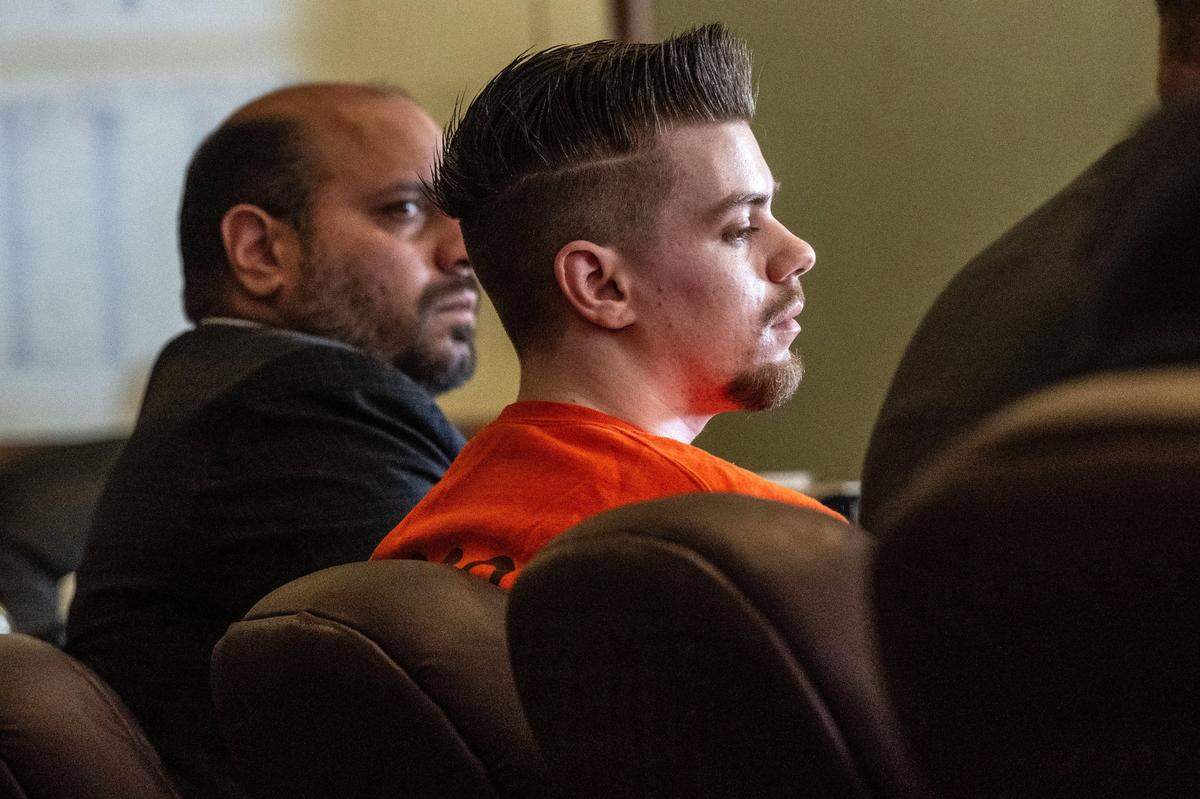
Elizabeth Dillender readied herself before she walked up to a bank of news cameras outside the Historic Courthouse in Auburn shortly after the man convicted of selling a lethal dose of fentanyl to her son was sentenced to 20 years to life in prison.
In the previous three years, her family endured the death of her son Kade Kristopher Webb, 20, numerous court hearings and two trials. It relived the emotional trauma as the Placer County District Attorney’s Office prosecuted Carson David Schewe, the first defendant in the county charged with murder in a fentanyl death.
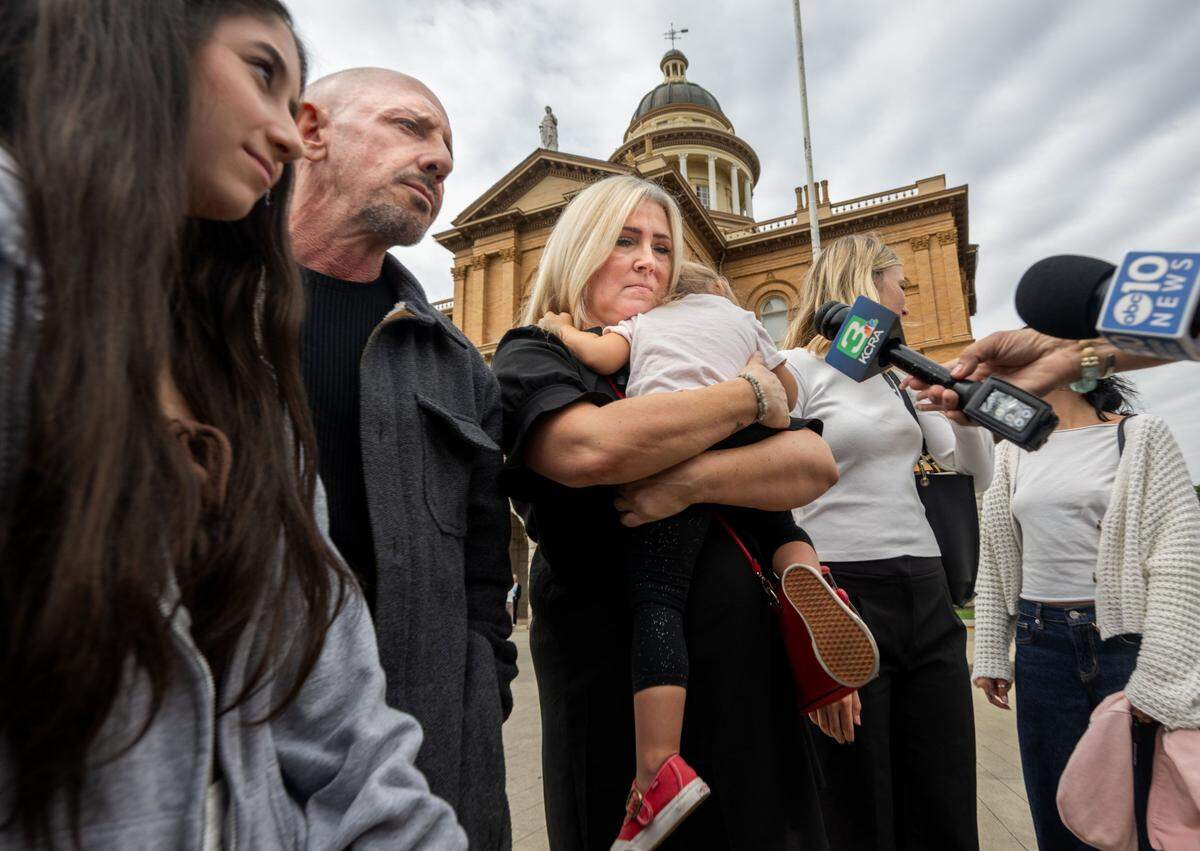
Standing next to her outside the courthouse that day in early December were Laura Didier, Regina Leah Chavez and Laura Collanton, all mothers of young people in Placer County who died after ingesting fentanyl.
“When I walk into the courtroom, I’m searching for them because it’s their hands I want to hold,” Dillender said.”It is a bonding thing, because we all lost our child the same way… Our kids were murdered.”
These grieving mothers have grown close the past few years, tied to each other with a bond of shared trauma, friendship and emotional support.
They maintain an ongoing group text message, updating each other, joking with each other, crying together and propping each other up with kind words of encouragement as they continue to process the deaths of their children. They go for walks together or meet for coffee, anything needed to help one another get through the day.
They routinely monitor their calendars, keeping track of holidays and dates throughout the year that might be difficult for their counterparts. Even though they never met each other’s departed children, they know their birthdays and the anniversaries of their deaths.
The mothers connect to participate in public awareness campaigns, sharing their stories to warn young people and their families about fentanyl, the deadly drug often sold illicitly by dealers as prescription pills on social media accounts.
They have become vocal advocates for fentanyl awareness for young people, treatment for those struggling with addiction and prosecution of those selling fentanyl.
Dillender said she and other moms have developed an “neverending friendship,” like a best friend you’ve known since high school. No topic is off limits. She said she’ll discuss with the other moms things she might not share with her own family because they also have been through enough.
“Every day is like Groundhog Day. It’s the same nightmare,” Dillender said. “I’m not the only one.”
Including Schewe, Placer County District Attorney Morgan Gire and his prosecutors have filed murder charges against six defendants accused of selling fentanyl to people who later died from the drug.
Placer DA aligns with moms of fentanyl victims
Gire and other prosecutors in California have taken a new approach to fentanyl deaths: filing murder charges against people who sell or provide fentanyl to someone who later dies from ingesting the drugs.
Prosecutors said Schewe on Dec. 3, 2021, sold the fentanyl to Webb, who died shortly after from an overdose in a Roseville Safeway bathroom. Webb had just been released from a drug rehab facility after completing treatment for addiction and was planning to attend his cousin’s wedding.
Schewe became the first person in Placer County found guilty of murder in a fentanyl death by a jury. Three other men, all in their 20s, have agreed to plea deals with Gire’s prosecutors since. Each were convicted of homicide in connection with a fentanyl death. Two other murder cases are still pending, including a case filed earlier this year.
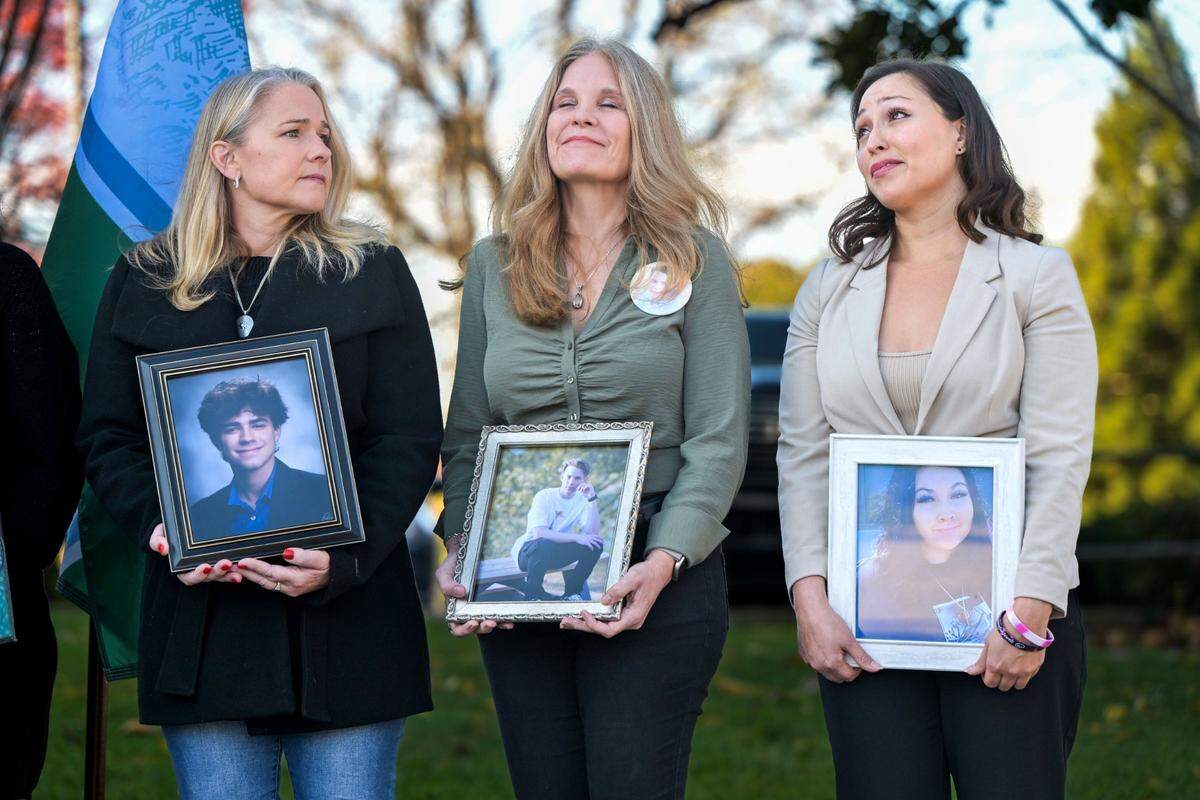
The District Attorney’s Office has invited the mothers of these fentanyl victims to offer their insight as it creates a guide for crime survivors and their families as they go through the court system seeking justice. The four moms stood holding framed photos of their children near Gire as he spoke in December at the news conference following Schewe’s sentencing.
“And that is my final message to those who think that it’s a good idea to come into Placer County and sell this poison,” Gire said at the news conference. “Look behind me. You don’t wanna mess with these mamas behind me.”
Fentanyl is a powerful and potentially addictive drug that is up to 50 times stronger than heroin. Two milligrams of fentanyl can be lethal depending on a person’s body size, tolerance and past usage, according to the U.S. Drug Enforcement Administration.
Drug dealers mix fentanyl, because of its potency and low cost, with other drugs including heroin, methamphetamine and cocaine, which increases the likelihood of a fatal dose, according to the DEA. It’s possible for someone to take a pill without knowing it contains fentanyl or whether it contains a lethal dose of fentanyl.
Nearly 108,000 people nationally died from a drug overdose in 2022 and about 82,000 of those deaths (or 76%) involved opioids, according to a March 2024 published report from the U.S. Centers for Disease Control and Prevention. The number of people who died from an opioid overdose in 2022 was 10 times the number in 1999; however, opioid overdose death rates were relatively stable from 2021 to 2022.
The 2024 CDC analysis on drug overdose deaths also found that the rate of overdose deaths involving synthetic opioids other than methadone (primarily illegally made fentanyl and alterations of medically prescribed fentanyl) increased approximately 4% from 2021 to 2022.
The CDC has identified three distinct waves of increases in opioid overdose deaths over the past 25 years, with each wave driven by different types of opioids. The first wave began with increased prescribing of opioids in the 1990s followed by the second wave beginning in 2010 with rapid increases in heroin overdose deaths that have been declining in recent years, a 36% drop from 2021 to 2022.
The third wave, the CDC report said, began in 2013 with substantial increases in overdose deaths involving synthetic opioids, particularly those involving illegally made fentanyl that has saturated the illegal drug supply. Fentanyl is often found in powder form or pressed into counterfeit pills and can be mixed into other drugs.
High profile criminal cases in the Sacramento region have involved evidence showing young people using their social media accounts, such as Snapchat, to sell or and find fentanyl to buy. Fentanyl can be sold as pills, some online dealers claiming the pills are Xanax, Percocet and Oxycodone.
.JPG "SAC_9787_HA_240814_Prop36 (1).JPG")
Mothers bonded over grief
Didier met the other moms and said she immediately connected with them over an “indescribable pain” they’ve all gone through. Didier said she could easily see what these other mothers went through, “because I lived it.”
She said it started with their friendship, but they’re “part of this sisterhood now.”
“It’s a very traumatic and specific way to lose a child,” Didier said. “It’s a bond we’ve developed, because we can understand what we’re going through.”
Her son, Zachary Didier, 17, was a student athlete at Whitney High School in Rocklin in December 2020 when he purchased what he thought was Percocet from Virgil Xavier Bordner on Snapchat. Didier died Dec. 27, 2020, after ingesting the fentanyl.
Bordner pleaded no contest to involuntary manslaughter and two counts of selling drugs to a minor and was sentenced in September 2022 to 17 years in prison for Didier’s death.
Laura and Chris Didier, the Rocklin teen’s parents, joined Placer County’s public awareness campaign “1 Pill Can Kill,” to warn other parents and their children about the dangers of fentanyl. They’ve discussed the death of their son in a two-episode podcast.
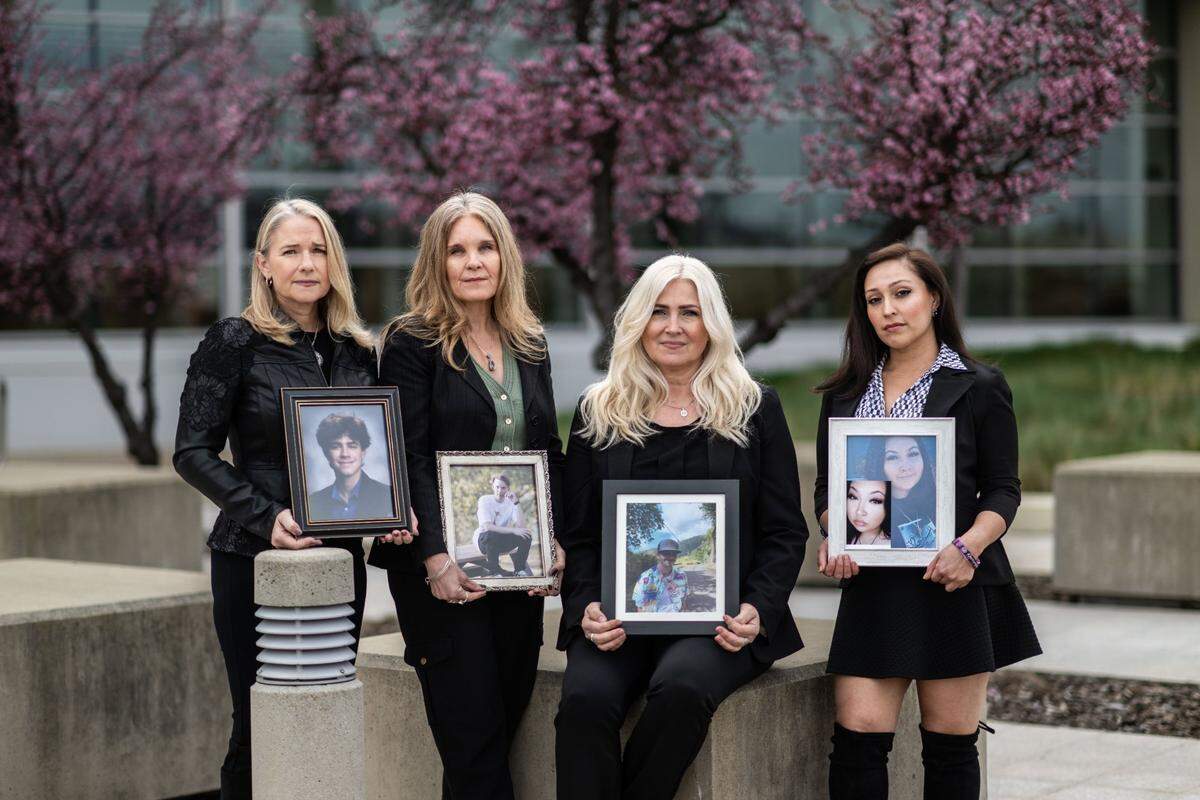
The other moms also joined the fentanyl awareness campaign, and they have spoken to students and parents at campus assemblies at each high school and middle school in the county including multiple return visits to some campuses.
Speaking at Bordner’s sentencing hearing, Chris Didier said his son had no known history of drug addiction or depression.
“I know he did not want to die, but his decision to self-medicate with what he thought was a non-lethal prescription pill cost him his life,” the father said in court. “The actions of the defendant providing counterfeit pills have greatly affected our lives in the worst possible way.”
Laura Didier said others may have difficulty understanding because fentanyl deaths are “wrapped in trauma and a stigma.” She said a common knee-jerk reaction she hears is that her son must have been involved in risky behavior to die from fentanyl poisoning.
That’s simply not true, she said, and that kind of thinking could cause parents to ignore how pervasive fentanyl can be. Didier said she doesn’t feel her son is more worthy of sympathy, but she wants to get through to parents that fentanyl deaths among young people can be the result of an “impulsive choice” or simply “boredom.”
“It can be so easy for them to be taken advantage of,” Didier said. “I would’ve never thought this would’ve happened to my kid… When I lost Zach, I had never heard of this.”
Didier now also works as a director of outreach for Song For Charlie, a national family-run nonprofit dedicated to raising awareness about “fentapills’ – fake pills made with fentanyl.
The nonprofit was founded by Ed and Mary Ternan, parents of Charlie Ternan, 22, who died in May 2020 after ingesting one fentanyl pill he bought online believing it was Percocet. His family has said he had been prescribed Percocet after his 2018 back surgery and bought the fentapill online because his back was hurting.
Didier and the Song for Charlie team partner with experts, educators and other influencers to reach young people ages 13 to 24. The nonprofit’s web site says their programs discuss self-medication and casual drug use in the fentanyl era while encouraging healthier strategies for coping with stress.
“We want to make them feel empowered through knowledge and make them feel loved,” Didier said. “We say ‘Connect to protect.’”
Mourning deaths of children out loud
Chavez was still awaiting the conclusion of the criminal case in her daughter Jewels’ death, when she decided to attend the sentencing in the death of Didier’s son.
At the time, she still didn’t feel ready to speak about her grief to others outside her own family. She felt “secluded,” because losing a child to fentanyl seemed like nobody would be able to relate to her. But she decided to go to the sentencing hearing anyway and met Didier for the first time.
“I felt it was important to show up,” Chavez said. “I introduced myself to Laura (Didier) in the midst of everything happening that day. It was just an instant connection. It’s a pain that only we know.”
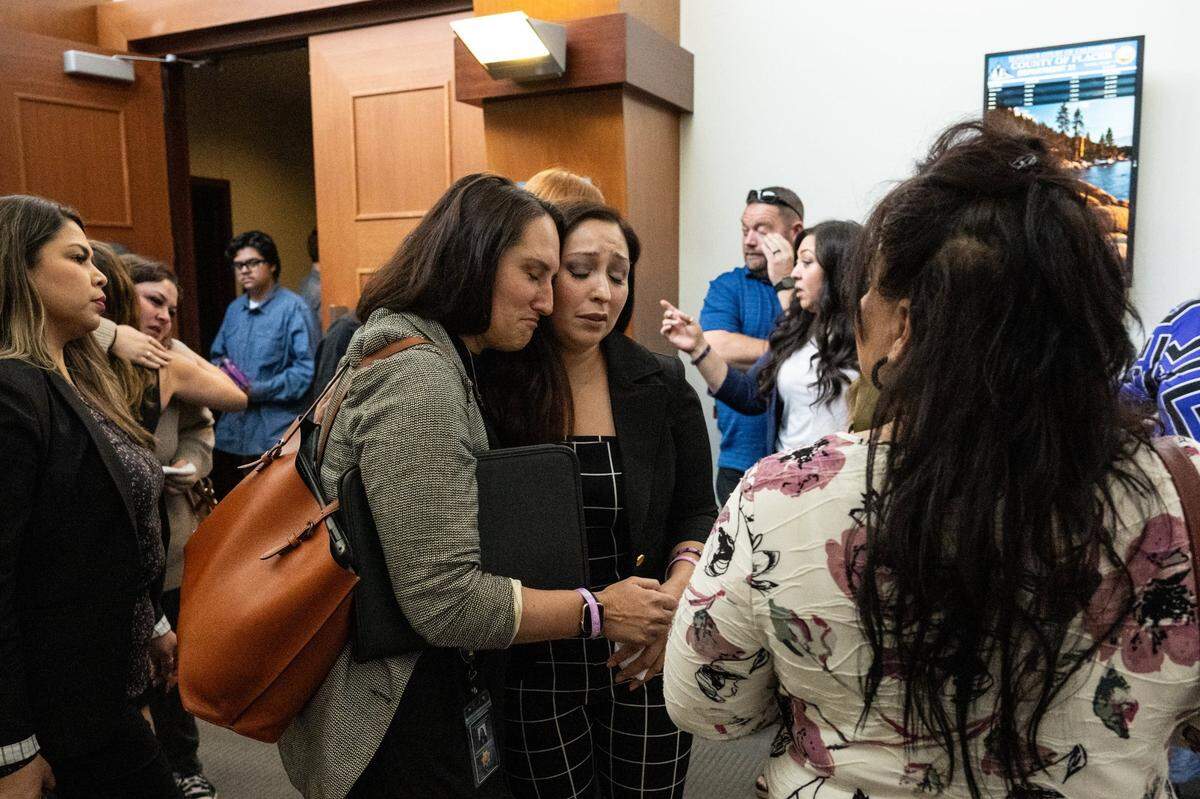
She said she knew “mourning my daughter out loud” could put a face to fentanyl deaths, so their children wouldn’t be just remembered as a statistic. Chavez said the moms’ public awareness efforts can push police to treat fentanyl deaths as potential homicide investigations.
“We don’t want people to be alone,” Chavez said about her and the other moms. “They comforted me. We’ve been such a force for each other.”
She said she was given enough time to process her daughter’s death, before she started participating in “1 Pill Can Kill” campaign events. It can still be tough at times, because she said it’s reliving the trauma to speak to young people about her daughter’s death.
“It’s heartbreaking and uncomfortable,” Chavez said. “There’s always tears; there’s always hugs.”
Jewels Marie Wolf, 15, was found dead in her bedroom June 19, 2022, from fentanyl poisoning. The Roseville mother said in court that Nathaniel Evan Cabacungan, then 20, gave her daughter a deadly opioid dose and abandoned her in the room until her brother found her dead later that night.
At his October 2023 sentencing hearing, Chavez called Cabacungan “inhumane and dangerous” as the convicted man sat a few feet away in the courtroom. Cabacungan pleaded guilty to second-degree murder and solicitation of a minor to use or sell a narcotic and was sentenced to 15 years to life in prison.
But these public awareness events, including two assemblies at schools her daughter attended, can be uplifting speaking to high school students, Chavez said. She knows her daughter would have wanted her mom to help others.
“That’s what keeps me going,” Chavez said. “We want people to talk about our children. We never want them to be forgotten.”
The four moms are part of the District Attorney’s Office’s (Em)power + Resilience Project, a peer-to-peer support network for survivors of crime and victims’ families. The network offers them resources, training and opportunities to help them.
Dillender, Didier, Chavez and Collanton want others to receive the same type of support they’ve received from the DA’s Office and from each other.
The moms are offering their insight and experience to help the DA’s Office put together a guide for other victims and their families as they go through the criminal court process. This guide would help explain court acronyms, victim impact statements, types of hearing and other useful information.
Moms show up in court for each other
The moms have shown up in court for important hearings to support each other, and now they’re planning to show up for Collanton. She’s certainly been there for the other moms.
In late January, authorities arrested Christopher Kegan Williams, a Sacramento County man who has been charged with murder and possessing drugs for sale in the death of Collanton’s son, 20-year-old Spencer Newsom.
After Williams’ arraignment hearing, Gire told news reporters that his office alleges Williams provided the fentanyl that killed Newsom.
On Sept. 21, 2020, Newsom was found dead in his Roseville apartment. He was the oldest of three siblings, had finished his EMT training at Sierra College and was accepted to the fire academy and scheduled to start January 2021.
The investigation of Newsom’s death, Gire said, remained active but took more than four years to make an arrest. He said the long wait was “aggravating” for Newsom’s family, but evidence can take time to process.
“Sometimes, leads develop into further avenues of investigation, and we don’t file a case until we feel we can prove it beyond a reasonable doubt,” Gire said.
The other moms checked on Collanton all weekend after the Placer County Sheriff’s Office announced Williams’ arrest. They wanted to know if she was OK, and offered their help.
Colllanton said she recognized it was now her turn to go through the criminal court process as she seeks justice for her son’s death. She knows well what her friends, the other moms of fentanyl victims, went through in the judicial process.
She also knows too well how people on social media quickly blame their children and them as parents after learning a young person died from fentanyl poisoning.
“You have to put on your suit of armor. That’s the brutality of it,” Collanton said. “Have some empathy. Don’t just sit in front of your computer and launch grenades.”
She said she didn’t know anyone else who had lost a child the way her son died until her husband reached out to Didier in hopes of connecting the two grieving moms. Collanton called it an “instant friendship” when she met Didier.
“We have each other’s backs,” Collanton said about the moms. “We have a good dynamic.”
Reliving the trauma that goes along with sharing the story of her son’s death is tough, Collanton said, but she realized discussing how deadly fentanyl is can help prevent other deaths. And it keeps the memory of her son alive.
“Spencer is not here in the world, but boy his name is,” Collanton said. “He won’t be able to save lives as a firefighter, but he’s going to save lives indirectly through me.”
Arresting and prosecuting fentanyl dealers alone won’t make the synthetic opioid go away, Collanton said, so enforcement has to be partnered with legislative changes, education and addiction treatment.
She said so many parents have that “not my kid” mentality, an assumption they should never make.
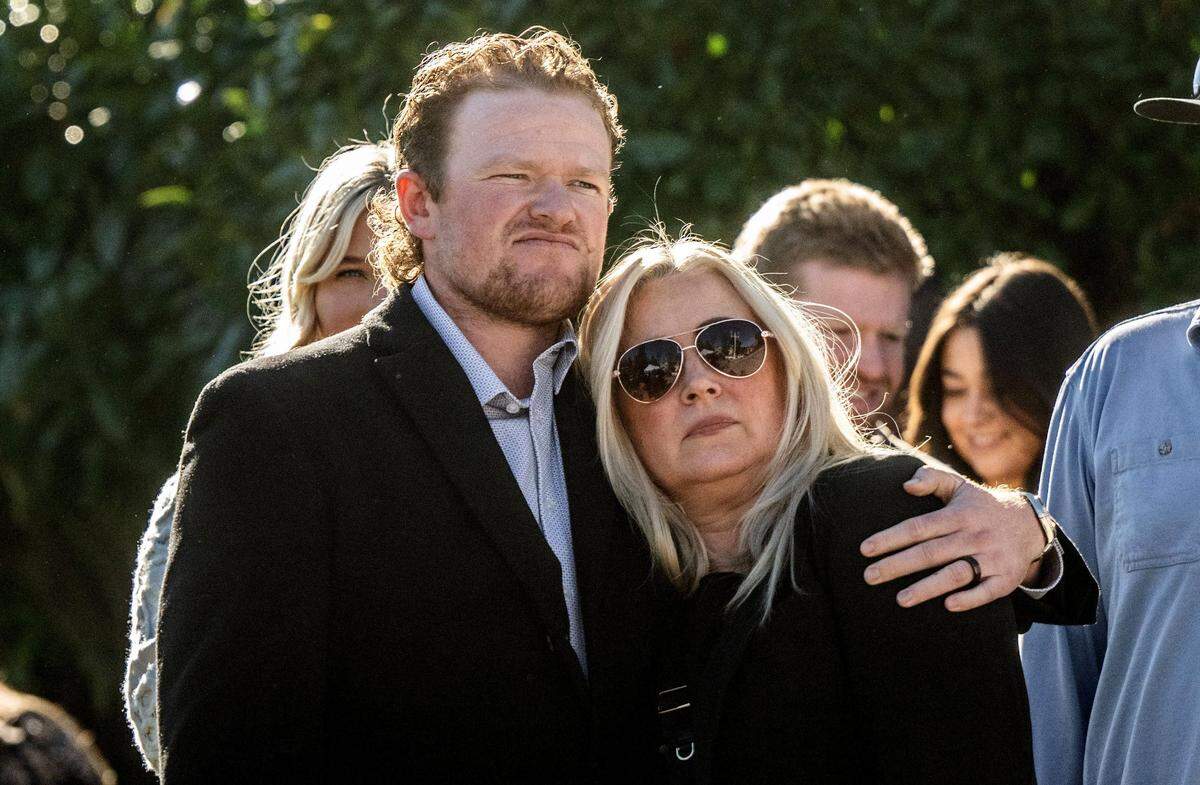
Dillender said she and other moms plan on being there in court to support Collanton, who spent a lot of time helping her as she endured two trials before the case in her son’s death ended with a conviction. The first trial ended four days after it began, because a lab failed to provide a report detailing a summary of results from blood tests.
The delays, rescheduling and the mistrial were frustrating for Dillender, and she said she will give Collanton whatever help she needs to get through it.
“It’s different when you’re the one who has to sit there and hear details about your child’s death,” Dillender said about Collanton. “She’s stronger now and determined.”
This story was originally published March 20, 2025 at 5:00 AM.