
Hong Kong protests spur California and other U.S. universities to seek political help
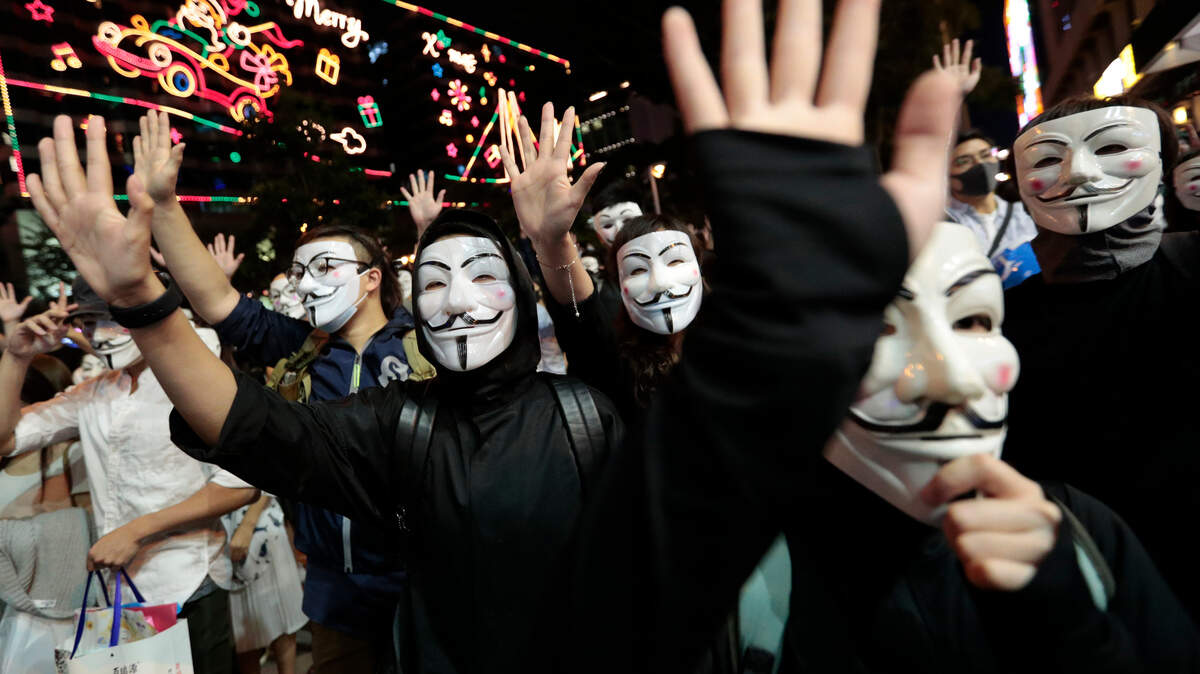
Students from the nine California universities joined with 49 other colleges across the nation to release a statement urging politicians to address escalating tensions at the Hong Kong protests.
The statement – written by students, faculty and alumni – asked policymakers worldwide, especially those in the United States, to pressure Hong Kong Chief Executive Carrie Lam and police to “call off violent crackdown on pro-democracy protesters.”
Davis4HK, a student group supporting the Hong Kong protest at University of California, Davis, made a video at a rally in San Francisco to read the statement.
The statement addresses the standoff between the police and about 200 protesters trapped at Hong Kong Polytechnic University, currently in its fourth day. Universities have become the new protest sites amid the sixth month of the ongoing pro-democracy protests in the semi-autonomous city. Last week, Chinese troops, known as the People’s Liberation Army, were deployed to clear roadblocks outside another university – the first time they became directly involved in Hong Kong political events.
The police besieging Polytechnic University has threatened to use live ammunition on campus as protesters set armored vehicles ablaze with Molotov cocktails.
The joint statement also urged Lam to respond to the four demands by the protesters, including an inquiry into police brutality and misconduct and release arrested protesters.
The statement was drafted and edited by collective effort within a short period of time, following a suggestion by students as violence erupted at the university, said Benjamin, Davis4HK organizer. He requested to be identified only with his first name to prevent his family from being tracked.
Thousands of Twitter users, many from Hong Kong, retweeted the statement.
Gaskin, a student organizer from Hong Kong representing UC Santa Cruz, said the statement sends a strong message to protesters at Polytechnic University that people from all over the U.S. are supporting them. He also asked to be identified only by a nickname due to retaliation fears by the Chinese government and other students.
“We are doing everything on our end to support the protesters and pass the (Hong Kong Human Rights and Democracy) bill, and to use our resources as students here to spread the message and contact senators to help the movement abroad,” he said.
The Hong Kong Human Rights and Democracy Act, an act that imposes economic sanctions on politicians and officials responsible for human rights violations in Hong Kong, passed Senate on Tuesday. Many Hong Kong protesters, as well as Hong Kong pro-democracy organization Demosistō, have been pushing for the bill to pass.
Gaskin said the bill’s passing is a historical moment and a big step for protesters, though there’s a long way to go for the demands.
“Peaceful protests don’t work anymore,” he said. “We (Hong Kong) became a police state, and it’s out of Carrie Lam’s control. To continue our battle we are calling for every bit of outside help.”
Gaskin said he felt touched calling friends back home in Hong Kong and let them know people abroad are concerned about Hong Kong and many are doing what they can to support them.
“Even if we are not there back home, we are still with them,” he said.