
Sacramento City Unified rejects budget cuts. New school board will inherit financial crisis
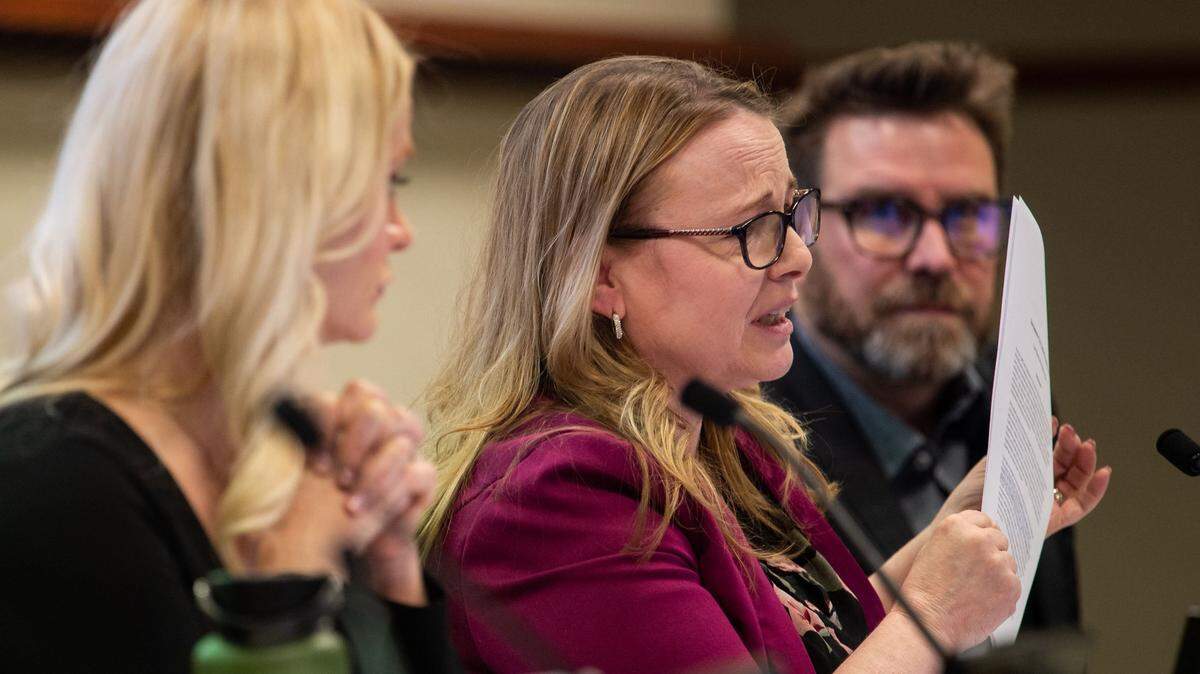
After hours of deliberation, public comment and two failed motions, Sacramento City Unified board members voted to reject $18 million in budget cuts late Thursday night.
The board voted instead to focus on negotiating savings with labor groups and setting a $35 million target. The cuts are expected to be revisited in February.
It was one of the last decisions outgoing board members voted on. Board President Jessie Ryan, who led her last board meeting, introduced the motion after board members Lisa Murawski and Christina Pritchett introduced motions that weren’t approved.
Five members, including student board member Isa Sheikh, voted to reject the proposed budget cuts. Murawski, who had proposed an amended motion to approve some of the cuts, abstained. Trustees Leticia Garcia and Mai Vang voted no.
Several board members, including Michael Minnick, said implementing health care benefit changes would be the best way for the district to repair its $56 million budget deficit by 2022 and prevent a state takeover.
“I am not going to vote to decimate our programs for kids so adults can have really expensive health insurance,” Minnick said. “We know what we need to do, we need to negotiate health care costs.”
The cuts proposed in the Fiscal Recovery Plan would have been to positions and programs that need support from the district’s general fund. It would have included $1.749 million in reductions to positions, including assistant principals, social workers and counselors, and $2.253 million in cuts to professional development and supplies. More than $14 million was also on the chopping block that would have eliminated programs like the free IB and AP testing, college and career visits, transportation for non-special education students and additional cuts to the GATE, VAPA and music programs.
The district was expected to have a balanced budget by Dec. 31, but that would only have been possible by increasing revenue or decreasing expenses as proposed in the Fiscal Recovery Plan.
Nearly 200 students, parents, teachers and community members shared public comment during the virtual board meeting — largely asking for the district to reconsider the cuts. By then, several board members began showing opposition to the budget reductions, citing concerns over cutting vital programs, particularly during a pandemic.
Some parents and students from the district’s small high schools shared concerns that the budget cuts would have slashed their teaching staff in half, potentially closing schools like Arthur A. Benjamin Health Professions High School.
“When you are looking at these cuts, these cuts wont make a dent (in the budget deficit),” Vang said. “We need to find a long-term solution.”
Vang and others recognized that voting to revisit potential cuts would mean that the newly-elected school board would inherit the action items. Three new board members, Jamee VIlla, Chinua Rhodes and Lavinia Grace Phillips, will be sworn into office during the Dec. 17 school board meeting. Thursday’s meeting was the last board meeting for Ryan, Vang and Minnick.
In her presentation to the school board, Chief Business Officer Rose Ramos shared that the district will meet its minimum reserve requirement for the current and next year, but will not meet its minimum reserve requirements for the 2022-2023 year. The district certified its budget as negative, and Sacramento Office of Education is expected to give the budget a negative certification.
Based on the district’s current projections, the district faces a $56 million deficit by 2022-2023.
Sacramento City Unified needs a $56 million ongoing solution to” balance the budget, satisfy the state-mandated 2% reserve, avoid fiscal insolvency,” the district said.
Ramos said school districts could expect more expenses due to additional unfunded COVID-19 expenses in the future and a continued decline in enrollment.
Sacramento City Unified is experiencing a decline in enrollment, significantly more than previous years. Prior to the COVID-19 pandemic the district projected to lose 200 students each year. The district currently serves about 39,000 students — 1,500 fewer than their projection.
Ramos said that while about a dozen schools are impacted by a decline in enrollment, kindergartners represent the bulk of the districts loss.
“We have seen this throughout the state,” said Ramos. “Some families have chosen not to enroll their kindergartners and TK (students).”
The district estimates a $15 million projected loss of revenue due to its declining enrollment.
“We have been hearing that the state is looking a lot better and passing on that funding to K-12,” Ramos said. “We don’t know what that looks like. We have an opportunity to recover enrollment and sufficiently restore the district’s fiscal stability. A lot of of this will be clarified in January 2021 when the governor proposes the budget for the year.”
Sacramento City Teachers Association leaders David Fisher and Nikki Milevsky said the district’s deficit projections have been off for several years and administrative salaries — like that of the superintendent — are too high.
In September, the district and FCMAT, the Fiscal Crisis and Management Assistance Team, reported millions of dollars in budget surplus, due to savings from the coronavirus pandemic and over-budgeting on the district’s part. Ramos said a one-time surplus doesn’t affect the current structural deficit and that financial troubles still loom.
“Next week three new members join the school board members, who we expect will bring a strong sense of equity and justice, and demand fiscal accountability from district administrators, who have proven time and again their inability to provide accurate budget numbers,” read a statement from the SCTA.
This story was originally published December 11, 2020 at 3:32 PM.