
Writers of California’s ethnic studies draft ask state to remove their names from curriculum
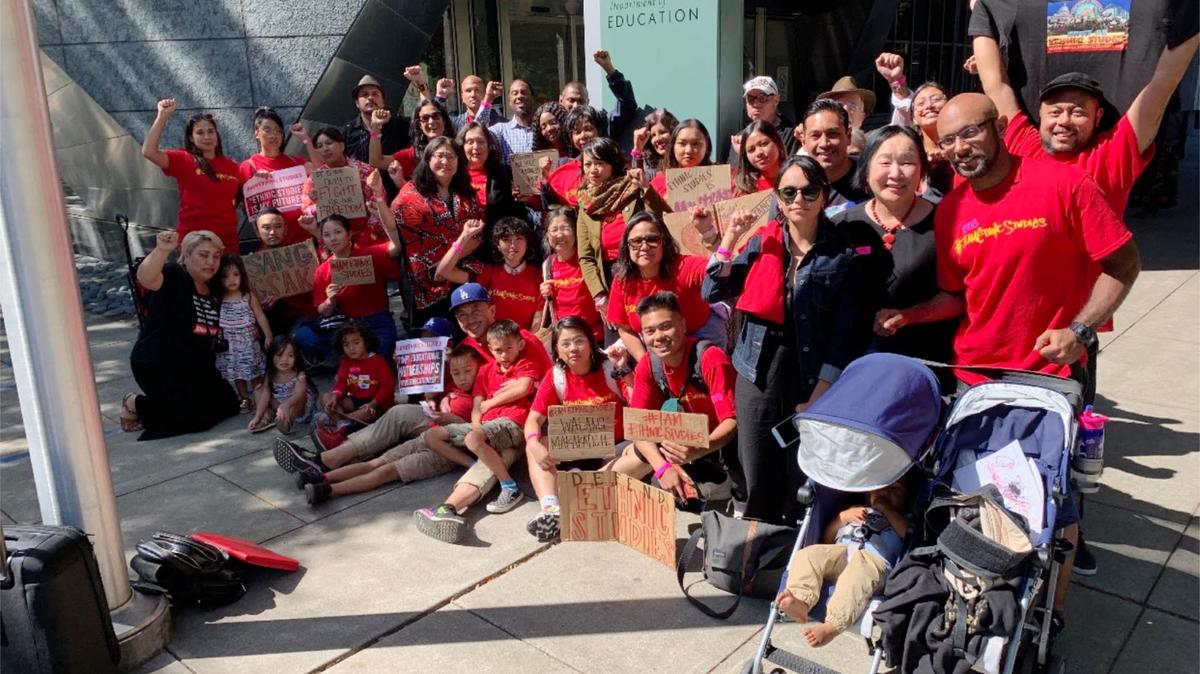
The original writers and former advisory members of California’s Ethnic Studies Model Curriculum draft demanded that their names be removed from the revised document, according to a letter sent to the state Department of Education.
All 20 teachers and educators informed the state of their decision on Wednesday, stating that the current draft no longer reflected the work they put into the curriculum, and that ethnic studies teachers felt silenced when advocating for racially and politically underrepresented groups.
“We were not fully consulted throughout the process of the curriculum development and significant parts of the curricular text do not fully reflect the work of past or present ethnic studies teachers/educators. Ethnic studies guiding principles, knowledge, frameworks, pedagogies and community histories have been compromised due to political and media pressure,” read the letter.
The letter writers said the decision was based on the “best interests of California’s students.”
The Ethnic Studies Model Curriculum serves as a guidance document to help school districts interested in adopting lesson plans. The curriculum cover four areas: Black/African American studies, Chicano/a studies, Native American studies and Asian American studies. But the original writers said the model curriculum is insufficient. The curriculum went through several drafts, as critics labeled it as divisive, Palestinian narratives — considered by ethnic studies educators to be central to Arab American studies — were removed.
Arab American studies was placed in the bridge, along with Jewish American studies, Armenian American studies and Sikh American studies — communities that were vying for inclusion in the curriculum. Thurmond told The Sacramento Bee in November that the additional lessons give the state more opportunities to include additional narratives and experiences into the curriculum from a wider range of ethnic groups to combat stereotypes and hate.
“The California Department of Education is grateful for the work of the former Ethnic Studies Model Curriculum advisory committee and all other stakeholders who developed the first draft of the ESMC,” read a statement from state education officials. “After this draft was developed, we have welcomed the public’s feedback and anticipated there would be a high level of interest in the ESMC’s development. The current draft of the Ethnic Studies Model Curriculum, scheduled to be considered by the State Board of Education in March, includes more than 200 edits made by the Instructional Quality Commission in response to over 57,000 public comments over 18 months.”
The state said its committed to creating curriculum that serves all California students and encourages critical thinking about complex issues of race and identity.
Several organizations and community groups praised the edits in the draft, and others were critical of the line edits, saying that it erased the plights of marginalized people.
“As is often the case when Black, Indigenous, and people of color gain power, attacks on ethnic studies have plagued the discipline since its earliest days,” political activist and professor Angela Davis said during a webinar where the announcement was made. “Today’s fight to maintain the integrity of the ESMC is the next phase of the fight to defend ethnic studies.”
The model curriculum will serve as guidance for the nearly 1,000 California school districts — some of which have adopted ethnic studies requirements for their students.
Gov. Gavin Newsom vetoed a bill in October that would have made ethnic studies a requirement for high school graduation; State Superintendent of Instruction Tony Thurmond said at the time he was hopeful a more robust bill would be introduced in the future.
State law requires the state Board of Education to take final action on the model curriculum by March 31.
This story was originally published February 4, 2021 at 10:07 AM.