
School enrollment is falling in Sacramento and across California, and not just because of COVID
California’s population is falling. And the decline is especially pronounced in the state’s K-12 schools, which are eyeing the numbers as not only representing the total students they teach, but the money they receive to do so.
It’s school funding math: Fewer students could equal fewer dollars.
Total school enrollment fell by about 110,000 students last year to about 5.9 million, continuing a decline that began in the Great Recession. In 2009, about 6.2 million students were enrolled in California schools.
The drop is especially pronounced in big, urban school districts, such as Sacramento City Unified. Its enrollment fell by about 2,800 students from 2019-20 to 2021-22, dropping to 43,800. In 2009, about 48,000 students attended school in the district.
The pandemic, migration to the suburbs and other states, and a shift away from urban school districts have all contributed to the state’s declining enrollment.
The decline could have major effects on school funding because the state schools receive money on a per pupil basis. And financially distressed school districts like Sacramento City Unified may have to slash programs as more students leave urban schools.
That’s why Democratic leaders in the Capitol are pushing different funding packages to help schools manage their declining enrollment.
One, proposed by Gov. Gavin Newsom, would boost their funding while maintaining the state’s current system for school financing. Another bill by Sen. Anthony Portantino, D- La Cañada Flintridge, would raise school funding by ending a practice of docking funding when students miss class.
Urban school districts “are facing significant challenges,” Portantino said. “The after-effects of COVID means they certainly need the resources.”
California’s falling birth rate
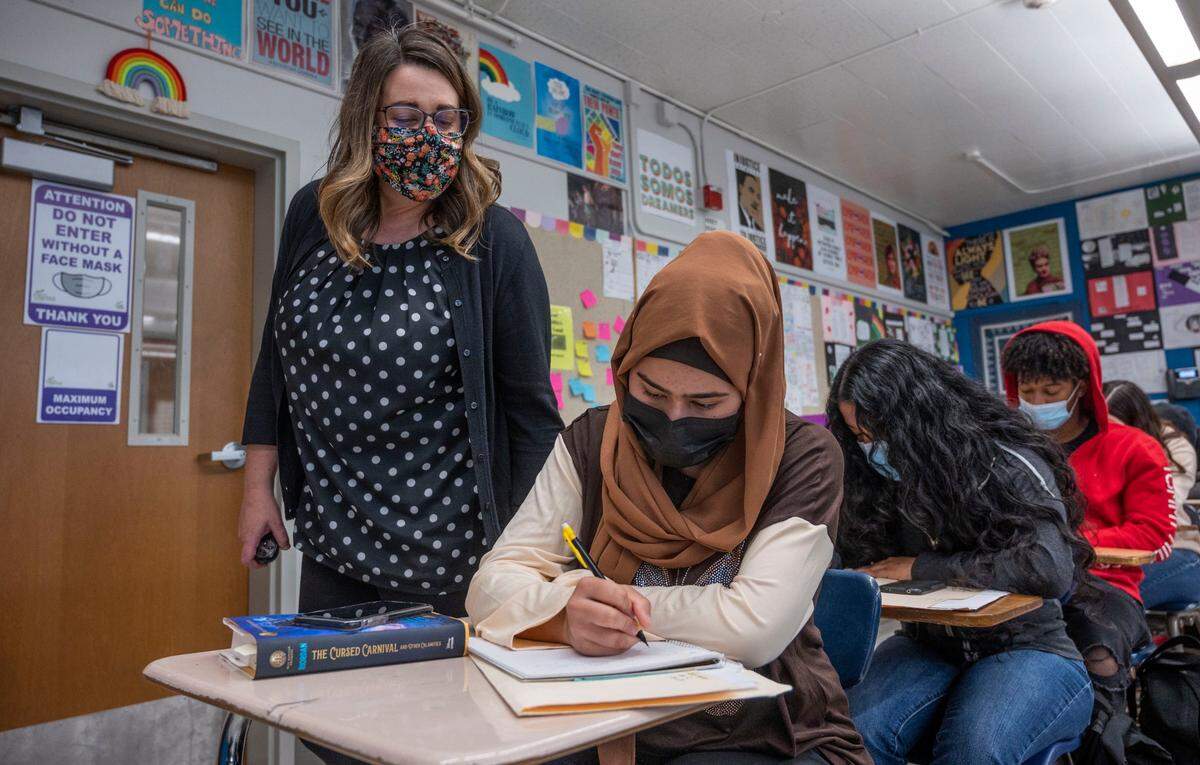
Sacramento County’s declining birth rate is part of the story. Between 2007 to 2019, the number of births to Hispanic mothers fell by 23%, to white mothers by 17% and to Black mothers by 12%, according to the Centers for Disease Control and Prevention. The number of births to Asian mothers stayed relatively the same.
But declining birth rates, and the slight decline in California’s overall population, are not the only factors.
In general, large urban districts have been losing students faster than others, said California education lobbyist and president of Capitol Advisors Group, Kevin Gordon. Gordon’s lobbying firm represents 700 of the state’s 1,000 public school districts.
Some districts took a harder hit in enrollment than others, and the enrollment declines are oftentimes a result of migration from urban areas into less expensive suburban and rural areas, he said.
“People realized with working from home and distance learning, they don’t need to be in the city,” Gordon said. “And that affects the trends district by district, which would exacerbate the overall decline statewide.”
COVID-19 has contributed to the decline in enrollment, too. Many districts experienced a drop in kindergarten enrollment as parents kept their youngest school-aged children home during the height of the pandemic.
The state marked billions of dollars in relief dollars into schools – money that went to technology, teacher retention and COVID-19 health and safety protocols. But schools were slow to reopen their campuses, and although state data suggest the numbers weren’t significant, some parents became frustrated and either chose to homeschool their children or sent them them to private schools. And some families also chose homeschooling and private schools over concerns about public school curriculum and topics.
Where are families going?
The numbers across Sacramento County also reflect a larger picture of what is taking place across the Sacramento region.
Several urban school districts in the Sacramento region saw large enrollment declines from 2019-20 to 2021-22 while several suburban school districts saw enrollment gains, suggesting that some parents may be moving their children to the suburbs.
U.S. Census Bureau data show that about 20,000 children up to age 17 left Sacramento County to live in Placer or El Dorado counties from 2011 through 2020. That’s nearly double the 11,000 children who moved in the other direction, moving from Placer or El Dorado to Sacramento.
The biggest increases were in Western Placer Unified, which gained 632 students, and Natomas Unified, which added 498 students.
Families are also leaving the state, reflecting concerns about affordability for many families in California.
Tina Sullivan and her family moved to Tulsa, Okla., in January. Her two children attended Rocklin Unified and Eureka Unified. Sullivan said several factors prompted their move: politics, taxes, and mask and vaccine mandates.
But Sullivan cited affordability as one of the key motivators. As lifelong renters in Roseville and Rocklin, she said she was never able to afford a home. She purchased a 3,000 square foot home on a quarter acre property with a pool for $380,000.
The median home price in Placer County in April was $715,000.
“We made a trip in 2020 to 10 states to specifically decide where we wanted to move too, Sullivan said. “When we hit Broken Arrow (in Oklahoma), it felt like home. It had that feeling that California used to hold for me. People waved at us, strangers would strike up conversations like they knew us forever. Kids were outside in all the neighborhoods we drove through playing.
“It was a beautiful thing to see.”
Will the kindergartners return?
Schools might recover some of their pandemic enrollment losses next fall as more families send their kids back to class.
Gordon, the education lobbyist, said the 2021-2022 school year saw the steepest decline because parents kept young school-age children out of public school amid fears of COVID-19 and inconsistent quarantine schedules.
Like many districts, Sacramento City Unified said it saw fewer kindergartners enroll in schools this year compared to previous years, a direct result of the pandemic. Those family decisions dropped Sacramento City’s numbers.
“Parents decided it was not worth sending their kids to preschool, transitional kindergarten and kindergarten,” Gordon said. “They are not mandatory instructional programs, so they decided not to send them.”
Largest dip in enrollment was for Black students
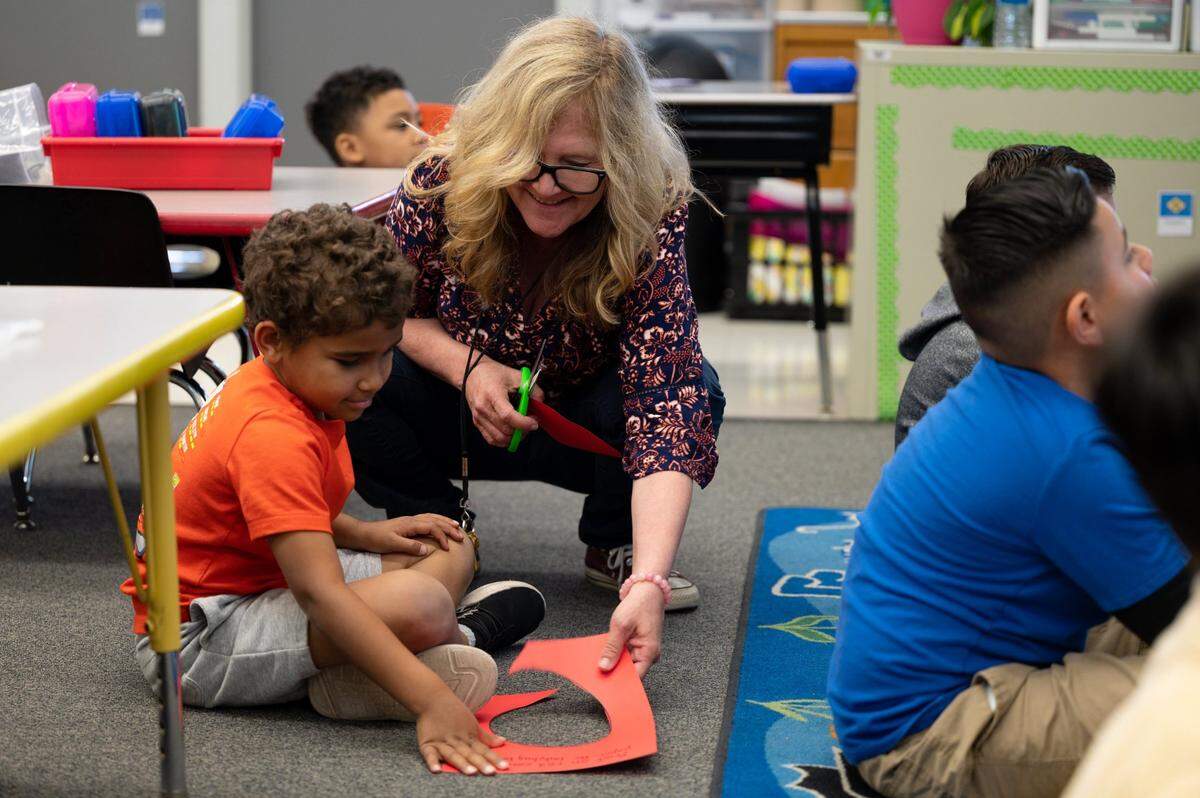
Gordon said enrollment numbers dropped particularly in communities of color, and among English language learners and impoverished areas.
In Sacramento, Black students made up a disproportionate share of an enrollment decline, reflecting demographic shifts around the region and California.
The district saw Black student enrollment decline by 1,014 from 2019-20 to 2021-22 — a loss of 15% of Black students in just two years, according to the latest data from the California Department of Education. Black students make up 13% of the Sacramento City Unified population.
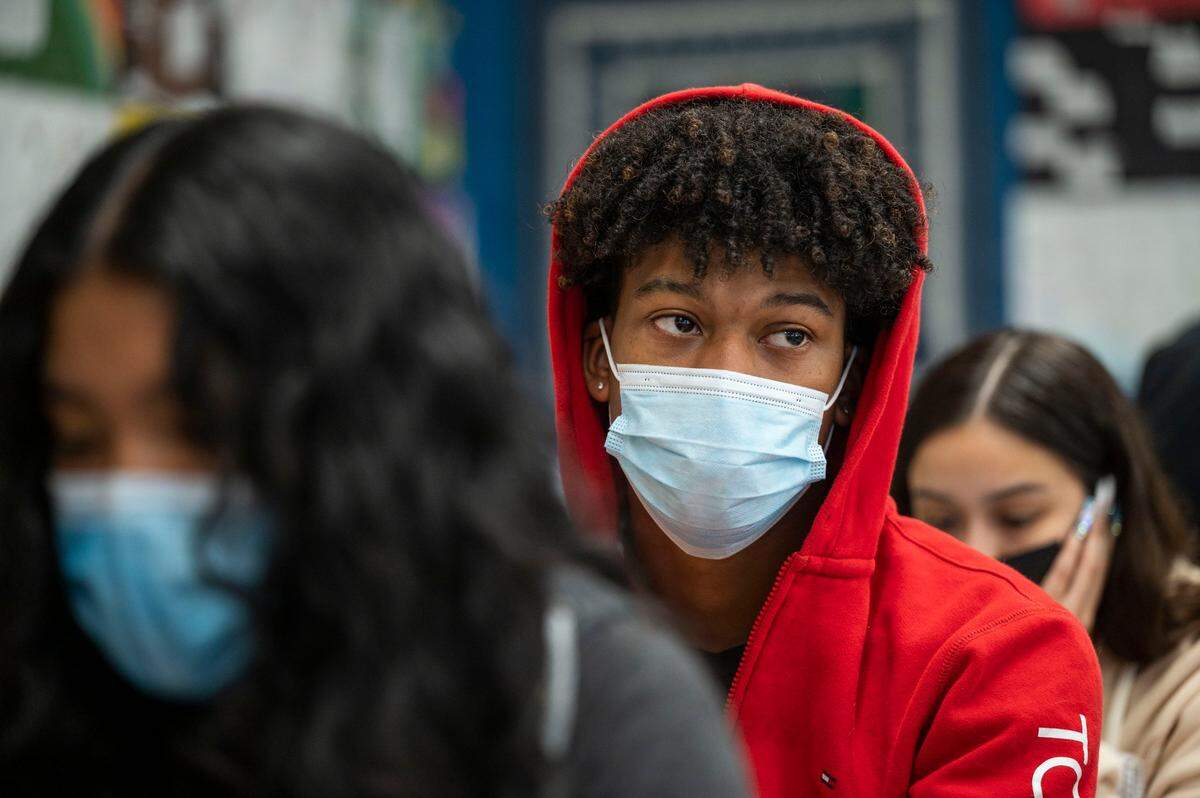
The district lost 10% of its white students, 4% of its Hispanic students and 3% of its Asian and Pacific Islander students. The district lost 11% of its Native American students — amounting to 25 students. The district did see a 1% increase in enrollment for students who identified with more than one race.
District officials said that about 25% of the Black students who left graduated, and 10% of the students moved out of state.
Nearby districts also saw Black student enrollment decline, but not as quickly. Black enrollment in Sacramento County school districts other than Sacramento City Unified fell by about 600, or 3%, from 2019-20 to 2021-22.
The loss of so many Black students is an acceleration of a prior trend. From 2009-10 to 2019-20, the district saw Black enrollment drop by about 1,800, an average of roughly 180 fewer students each year. The district lost about 620 Black students from 2019-20 to 2020-21, and another 400 Black students from 2020-21 to 2021-22.
Darryl White, chair of the Black Parallel School Board, said distance learning throughout the pandemic exacerbated problems that Black families have long complained about.
“When a family is trying to make ends meet, working two jobs, how do you find the time to resolve babysitting issues and virtual learning and get to work at the same time?” White said.
He added that some Black families have left the district to homeschool their children.
A dozen of the district’s schools saw Black enrollment decline by at least 30 students during the last two school years, including Sol Aureus College Preparatory; Luther Burbank High; John H. Still; Sam Brannan Middle and Sacramento Charter High.
Mariah Rembert, a Black Sacramento City Unified parent, is considering homeschooling for her son. Her first-grade son, who is on the autism spectrum, is given additional resources at A.M. Winn Elementary school, including a support teacher. But months into the school year, the support teacher was no longer helping in the classroom, Rembert said.
“It wasn’t hard to get the support he needs like occupational therapy and speech, but in-class support has been extremely hard,” Rembert said.
What does a decline mean for schools financially?
When schools lose students, they don’t simply drop expenses at the same rate. They may still be employing the same number of teachers, and they still must keep their classrooms open.
“They lose the per-pupil money, but not the expenses,” Gordon said.
Currently schools are funded by daily attendance, meaning they lose money students miss class. If a student doesn’t show up for a week, the school loses even more.
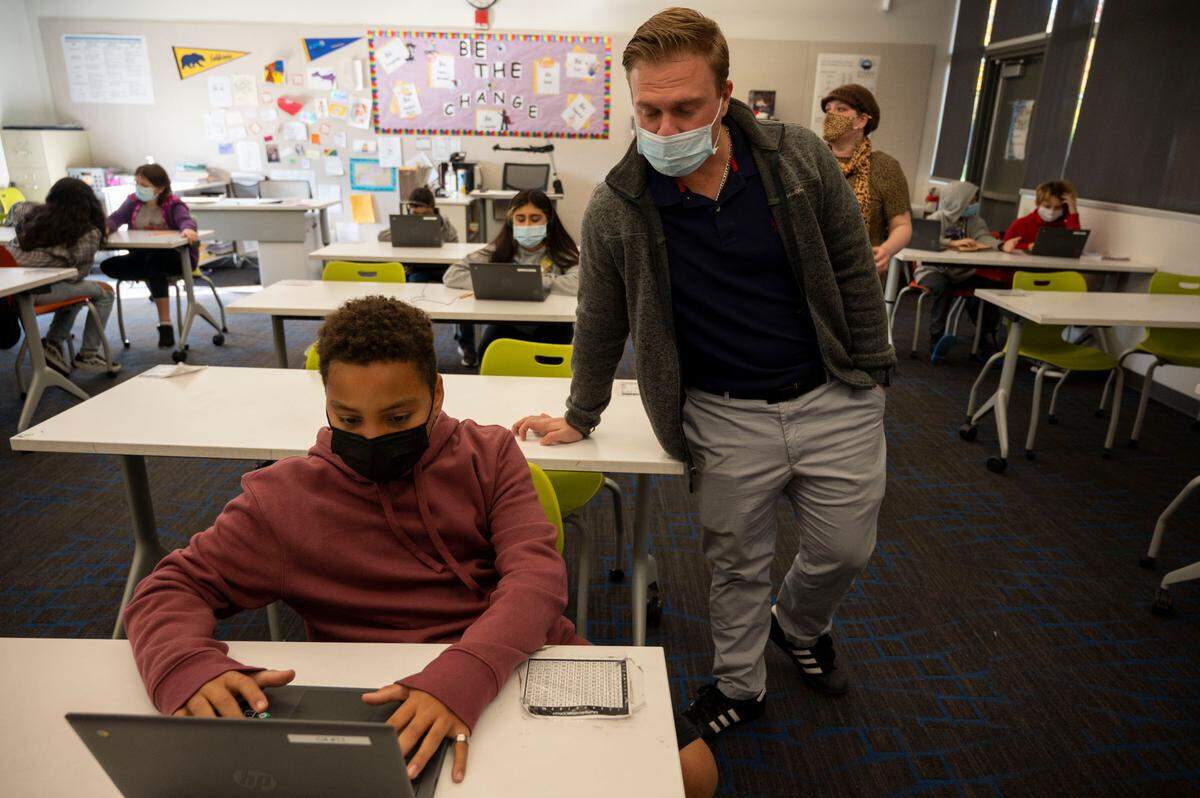
Sen. Portantino’s proposal, Senate Bill 830, would change how districts are funded from daily attendance to yearly enrollment. That would raise overall school funding by about $3 billion a year. Most states allocate school funding by enrollment, not attendance.
Sacramento City Unified, for example, would receive more than $23 million under this bill, as its enrollment numbers amount to 2,200 more students than their average daily attendance. Elk Grove Unified would receive an additional $24 million, and San Juan nearly $20 million.
“The model we use is just used by a handful of states. When you have a budget for a classroom of 20 based on enrollment, and only 18 students show up, you still have the cost of 20 students in the classroom. And the state takes it away from you? That’s ridiculous,” Portantino said.
Newsom proposed an additional $3.3 billion in funding to compensate schools in response to the rapid changes in daily attendance. He wants schools to receive state funds for attendance numbers based on a school district’s three-year attendance average, instead of just one year.
Districts like Sacramento City Unified are keeping an eye on the changes and how they could affect their schools.
“We are tracking numerous bills proposed in the state Legislature on how to best fund schools through this trend over the next several years,” district officials said. “SCUSD is committed to not only offering a quality education despite these trends, but will be exploring ways to grow enrollment at our schools through new programs, creativity, community partnerships, and the support of our elected officials.”
Gordon, the education lobbyist, projects that school enrollment could bounce back in the fall, as families return to their normal lives and schedules.
But Gordon doesn’t expect it to be a solution.
“It doesn’t reverse the overall declining enrollment,” he said.
Sullivan, the mom who left for Oklahoma, said that while California is returning to normalcy after the first two years of the pandemic, she and her family have no plans to return.
“When we hit Broken Arrow, it felt like home,” Sullivan said. “People waved at us, strangers would strike up conversations like they knew us forever. It had that feeling that California used to hold for me.”
This story was originally published June 5, 2022 at 5:00 AM.