Sacramento City schools to cut 60 admins in face of $80M shortfall
More than 50 administrators at the Sacramento City Unified School District are slated to lose their jobs as the district deals with a looming financial crisis.
Because of a $43 million shortfall caused by unbudgeted spending last school year and a projected $80 million deficit by the 2027-28 school year, the district must submit a fiscal solvency plan to the Sacramento County Office of Education to prevent further county, or possibly state, intervention.
The board approved a fiscal solvency plan Thursday night that included an objective to reduce the number of full-time-equivalent administrators from 328 to 270 by the 2026-27 school year, saving the district about $14 million.
It has not been determined which departments or positions will be affected by the staff reduction.
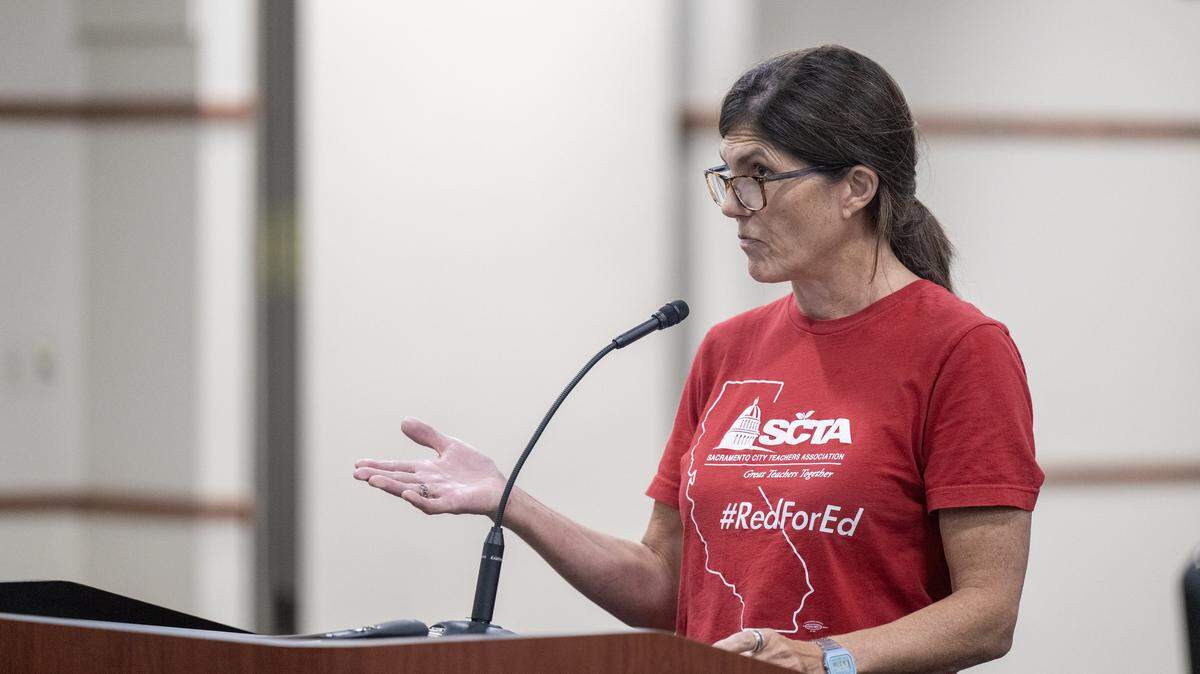
Teachers union President Nikki Milevsky encouraged the board to reduce the number of administrators to better match pre-pandemic levels of staffing, when the school district had about 10,000 more students than it does today. She named a number of departments, including curriculum and instruction and career technical education as places with bloated staffing.
“Obviously, fixing the district’s budget requires more than realigning the number of administrators, but the staffing of the certificated positions is determined by enrollment, and enrollment drops,” Milevsky said. “Staffing drops. … In contrast, the staffing of administrators has no connection to the enrollment.”
Chief Business Officer Janea Marking was directed by the board to reduce administrators after a special meeting discussing the fiscal solvency plan the previous week. Trustees were tasked with approving the final version of the plan Thursday night to submit to the county before the Dec. 1 deadline.
Communicating the ‘why’
Why 270? It’s around the number of administrators the district had prior to the COVID-19 pandemic, according to a district spokesperson. But in Marking’s final words to the board before she leaves the district for the Bay Area, she made a personal plea to the board to reevaluate whether it was the right number.
“Consider that staff and community deserve to understand the why,” she said. “Why is this, 270, the right number that sets us up for success going forward? It needs to be more than reverting back to pre-COVID, because so much has changed since then.”
The majority of administrative positions added since 2020 were in human resources to respond to corrective actions mandated by the state, a reimagined safe schools department after the elimination of school resource officers and special education behavioral services, which has faced increased demand since returning from the pandemic, Marking said.
“If the directive is to get back to the same number of unrepresented staff as before the pandemic, does all of this work go away?” Marking said. “If it does, how will services and (legal) compliance not suffer?”
Ultimately, the board approved the solvency plan with the administrative reduction in place, but expressed sorrow for the impending job losses.
“At the end of the day, we are in a position where we do need to make cuts,” trustee Taylor Kayatta said. “I believe the message we are trying to send to our staff and community is that we are trying to set a priority for what we are keeping after the cuts.”
After the meeting, Milevsky said that the directive will help correct Serna Center overstaffing that she said “hasn’t significantly impacted our students’ educational experience for the better.”
“The budget shortfall is really disappointing, but we also think it’s an opportunity to realign where the district’s been spending this money, and as we prioritize our schools,” Milevsky said. “We need to prioritize our schools with the funding, too.”
In an interview after the meeting, Marking said that it was essential to right-size staff, but that she wanted to see the board be “measured and communicative,” because the directive made nonunion-represented staff feel singled out.
“I don’t think the board is intentionally trying to undervalue anyone,” she said. “We all have to make hard decisions. And so I’m encouraging them to really think about, like, communicating the ‘why.’”
This story was originally published November 21, 2025 at 12:24 AM.