
Rental assistance and tiny homes: Sacramento outlines $62 million homeless spending plan
Sacramento officials on Monday said they intend to create a nearly $5 million rental assistance program to help people who are falling behind on bills and on the cusp of becoming homeless.
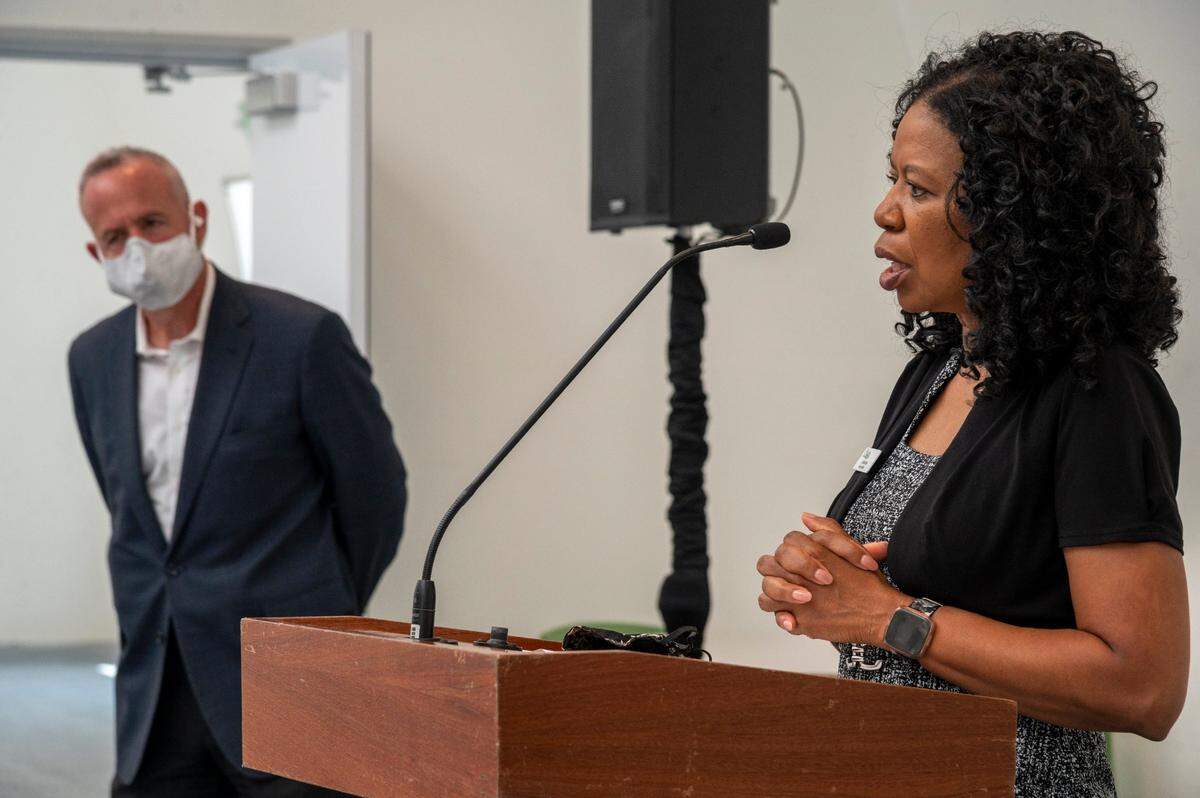
Mayor Darrell Steinberg and a host of city housing program leaders announced the initiative Monday morning as part of a broader $62 million package to reduce the number of people experiencing homelessness in Sacramento.
The plan attaches dollar figures to several initiatives Steinberg and others have talked about in recent months, including acquiring tiny homes for unsheltered people, creating a sobering center for those addicted to methamphetamine, and ramping up a long-discussed plan to convert motels into longer-term housing options.
“COVID has made the homeless problem even worse,” Steinberg said at a news conference. “So we are deciding as a city that we must and we will tackle it on all fronts.”
An emergency rental assistance program would immediately help people who have fallen behind on rent for a variety of reasons, said La Shelle Dozier, executive director of the Sacramento Housing and Redevelopment Agency.
Short-term funding like that has been in high demand, especially recently as Congress has failed to agree on a new round of stimulus checks for people who are out of work because of the pandemic.
“This is critical,” Dozier said. “We cannot, absolutely cannot, allow people to end up in a situation of homelessness because they don’t have the resources to pay their rent.”
The Sacramento City Council will discuss the proposed spending at Tuesday’s meeting.
Monday’s announcement came at a newly built “navigation center” known as the Sprung structure on Meadowview Road next to the Pannell Community Center. The tent-styled center is set to open early next month and will be able to house up to 100 women who are transitioning from homelessness to permanent housing — capacity will initially be limited to about 50 because of COVID-19.
With cubicle-style beds, a sprawling dining area and bathrooms and laundry facilities in modified shipping containers, Steinberg and others intend the complex to be a model that could be replicated elsewhere in the city, including under the W-X freeway.
Steinberg also wants to spend $4 million for tiny homes that could be put in various sites around the city, a plan he suggested last month that was viewed as a potential new partnership between homeless activists who have long called for that kind of project and city officials who have been reluctant to support the effort.
Money for all of the proposals would come from a range of funding sources, including about $15.66 million from the federal CARES Act stimulus program.
The largest slice of funding would stem from some $26.2 million in applications Sacramento filed with the state for funding under Project Homekey — the latest iteration of Gov. Gavin Newsom’s Project Roomkey that has housed people experiencing homeless in hotels in an effort to slow the spread of COVID-19.
“We will do better,” Steinberg said. “Sixty-two million is a good start.”
The funding includes start-up costs and operational expenses. Asked about long-term funding, Steinberg said they’ll require additional local, state and federal help.
“I’m confident that the Biden Administration will make housing and homelessness the priority that it should be,” Steinberg said. “And I’m confident that Gov. Newsom and the legislature will continue to make these issues a priority — and the city will, and the county will.”
‘Perfect storm for death’
As city officials announced the host of funding initiatives, organizers gathered at a Poor People’s Campaign rally just a few miles away and demanded the city stop evicting people living in encampments like the one on Stockton Boulevard.
Residents there on Monday morning started packing up their belongings after they said they were told by police to clear the area. Several said they had no place to go and opted to move their possessions to the sidewalk just outside the encampment’s fence.
“We don’t choose to be homeless,” said Donta Williams, a resident of the encampment and plaintiff in a case against the Sacramento Police Department. “Homelessness is nationwide, it could happen to anybody. You could lose your job tomorrow and become homeless.”
The suit was filed by a coalition of activists in May, alleging the city and county violated a county public health order and federal guidelines by clearing homeless encampments amid the coronavirus pandemic.
Organizers on Monday said police had ordered residents to clear the area on August 13, giving them until August 17 to vacate the premises.
A Sacramento police spokesperson did not immediately return a request for comment Monday.
On Tuesday morning, Sgt. Sabrina Briggs said the notice to vacate was posted after the property owner asked the police to help remove people who were refusing to leave private property. “The police department will still assist private property owners with trespassers if they do not leave on their own,” Briggs said.
Organizer Kevin Carter said that the homelessness crisis is heightened amid record breaking temperatures. “We’re in the middle of COVID-19. We’re also in the middle of a heatwave. That is the perfect storm for death,” he said.
Faye Wilson Kennedy said the cooling centers closest to the encampment which have been set up to provide people respite from the heat — 2.5 and two others 5 miles away — did not aid residents who did not wish to leave their belongings unattended.
“We are grateful for the cooling centers, but the cooling centers are too far for people to walk to,” Kennedy said.
This story was originally published August 17, 2020 at 2:37 PM.