She sued after Sacramento trashed her homeless encampment. Here’s what happened
A homeless woman lost her $12,000 small claims lawsuit after a judge ruled that six or seven days’ notice for the sweep gave Sacramento officials license to destroy personal property left in and around her encampment.
The lawsuit was unusual in the capital city, where homeless people have little recourse to challenge city policies about throwing away their belongings.
In November, Elizabeth Williams filed her small claims suit against Sacramento, asking for $12,239 in damages. The sum included $5,239.43 in lost property and an additional $7,000 for emotional distress.
“A huge amount of property of people experiencing homelessness is taken, seized, and destroyed every year. It’s very unfair to put the burden of proving the harm of that onto the homeless individuals,” said Eric Tars, an attorney and the senior policy director at the National Homelessness Law Center. “This case demonstrates the difficulty of making those claims.”
In other municipalities such as San Francisco, homeless people have successfully sued local governments for losses incurred during encampment sweeps in small claims court.
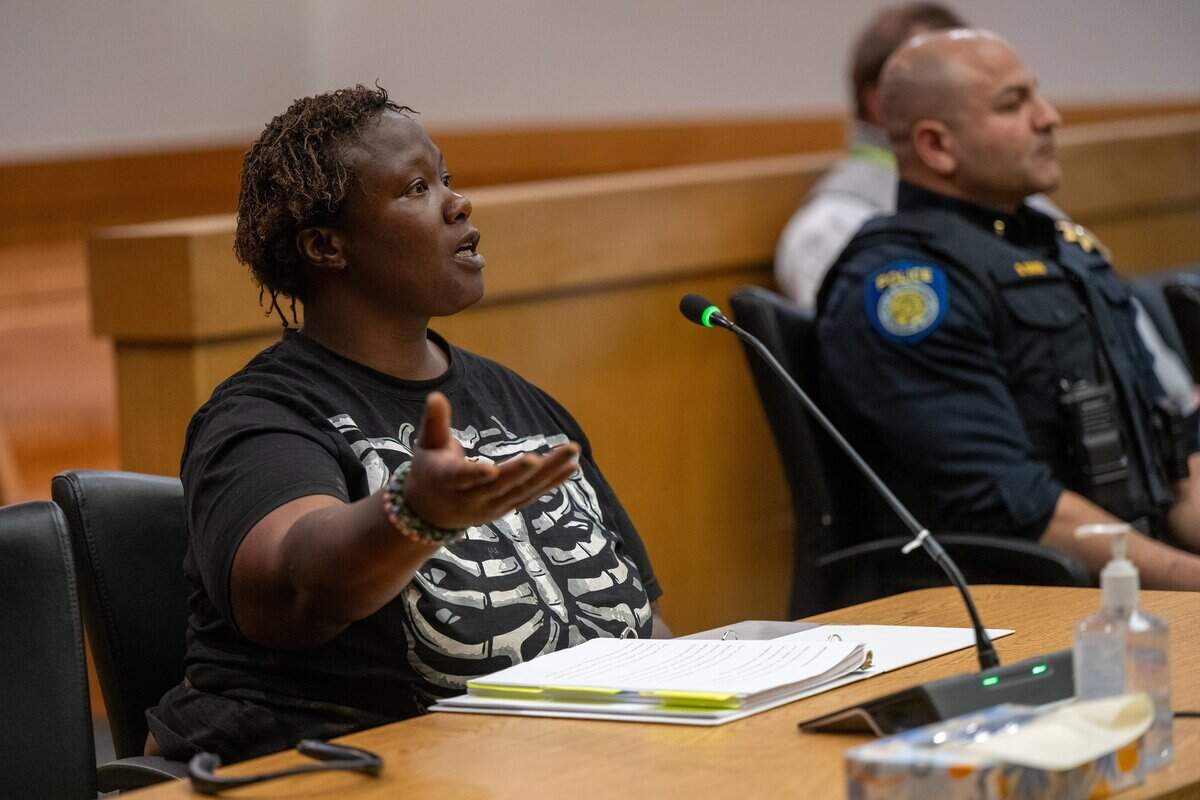
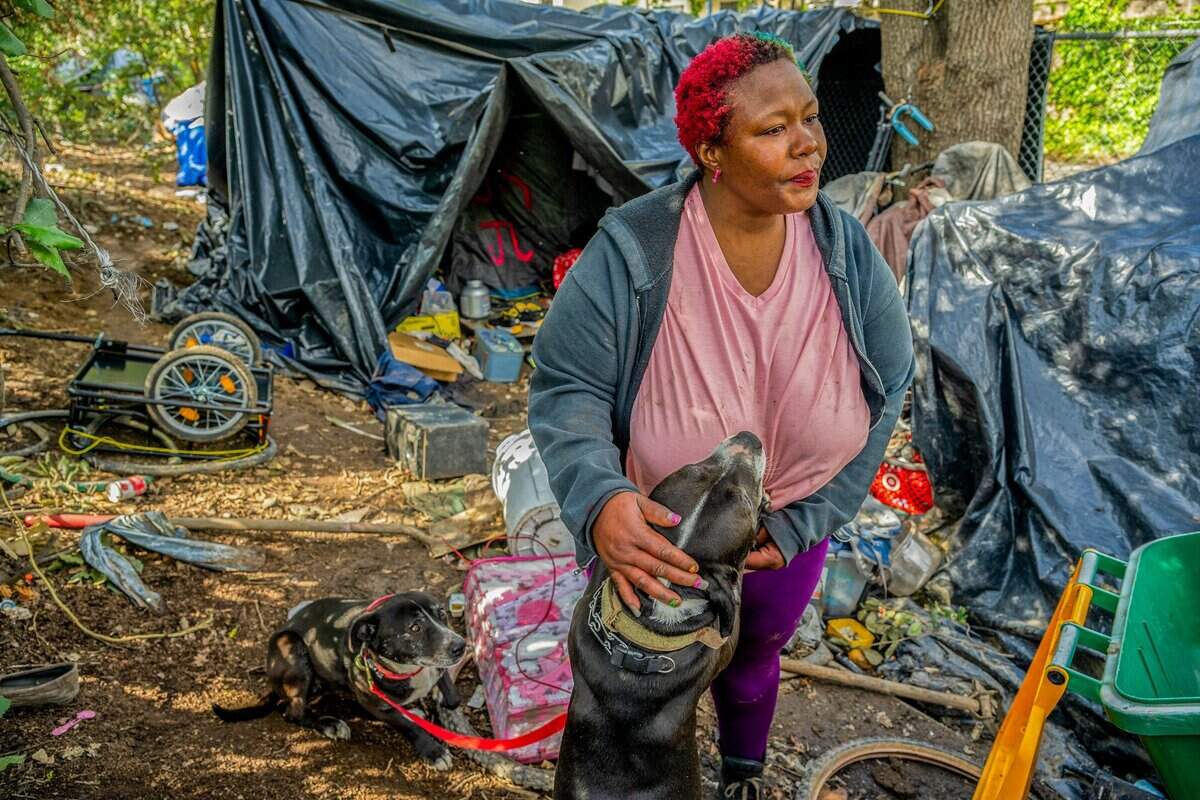
Williams followed their example in Sacramento. Court documents show that in two 2025 sweeps, the city threw out her medication, her ID, her CalFresh card, her tent, her blankets and the laptop she used to take GED classes and to attend virtual therapy appointments and rehab. Without a laptop, she dropped out of the GED program and stopped going to her therapy appointments.
“The sweep set me back in every possible way. Losing everything means I have to focus on rebuilding a safe place to sleep, rather than following up with my doctors or housing navigator,” Williams said in a declaration. “I don’t even have my ID anymore if I were to get an apartment tomorrow.”
A meticulous receipt-saver, Williams used extensive documentation of her expenses to bolster her small claims case. The city argued that because she had received notice of each sweep, items that had not been moved by the time Sacramento police arrived to help “abate” the South Natomas encampment could reasonably be thrown away.
Spokesperson Jennifer Singer said this week the city was pleased with the small claims outcome but declined to comment further on the case, directing inquiries to the arguments Sacramento made in court.
Those arguments largely resonated with judge Stephen Lau, who said that six or seven days’ notice to move all of Williams’ belongings was reasonable under the Fourth Amendment, which prohibits unreasonable searches and seizures.
A lieutenant with the Sacramento Police Department said in a sworn declaration that Williams received four days’ notice for the first sweep and did not specify the notice period for the second.
“Whether it was four days or six or seven days, the fact that she was still there both times demonstrates that she had nowhere else to go,” Tars said.“That’s not a sign of intransigence; that’s a sign of hopelessness.”
What did judge, city say about sweeps?
Lau wrote in his opinion that prior case law did not require municipalities to store all of a person’s property, particularly when homeless people received notice of sweeps.
The judge said that the receipts Williams provided — along with the police bodycam footage submitted by the city — did not prove with a preponderance of evidence that Williams’ belongings were unsoiled and not near any hazardous materials when Sacramento workers opted to throw them away: In other words, she hadn’t really proven that her items weren’t trash at the time that Sacramento police came to the encampment. The city maintains that it has no duty to store perishable items and trash or hazardous materials, and Tars said that courts have agreed with that position. Sacramento argued in court that most of her items were soiled and therefore garbage.
Lau wrote that he hadn’t seen real evidence that the items she lost — such as her sleeping bags, tents and clothes — were unsoiled at the time that the sweep occurred. In hours of footage, police were not shown cataloging every item of her property, though they were shown going through some of her things and finding some soiled items.

The city of Sacramento went further in its argument, saying that the items Williams said were destroyed may not have existed at all. There was, a court document said, no evidence that her belongings had “any objective compensatory value.”
The filing suggested that perhaps her items had been stolen by another person at the encampment, “if they existed at all,” and that because she had so many items and “most of the items” were “dilapidated and soiled,” a majority of her things could not be examined or stored in the first place.
Although the city submitted the Sacramento Police Department’s homeless encampment sweep guidelines to the court, Lau wrote that the document was, to some degree, irrelevant to the case at hand. He said that because they were just internal guidelines, they did not create any “constitutional duties,” even if officers violated them. According to their internal document, officers must sort — and store — non-refuse items left behind at an encampment sweep when the person is taken into police custody, as Williams was.
The guidelines also say that if those items do not all fit in one 55-gallon bag, then a sergeant must weigh in on what to store and what to throw away.
There are few “bright lines” governing cities’ responsibilities in case law surrounding homeless encampment evictions, Tars said, and although it’s been established in the courts that cities cannot throw away items just because they are large, judges have not laid out exactly how much property municipalities are required to safely store once it’s been confiscated. The 55-gallon bag standard in Sacramento, he said, did not surprise him: He said it showed that the convenience of the city was being prioritized, and the point of view of a person living outside had not been accounted for.
“It’s not about what is reasonable to expect a human individual to survive with,” Tars said. “If you asked any housed person to collect all of the things that are most necessary for them to survive, to thrive, their memorabilia, I would challenge you to find anyone to fit all their most precious, necessary belongings into a 55-gallon bag.”
As for emotional damages, city representatives wrote that Sacramento was not liable because the sweeps and everything that followed in Williams’ life were “a predictable outcome of a defendant’s negligent action.”
Lau did not address Williams’ emotional damages claim except to briefly dismiss it.
Williams argued that she had been traumatized not just by the property loss, but also by the time she spent behind bars over charges related to living outside. In connection with both sweeps, she was arrested and briefly jailed for storing personal property in public.
Police bodycam footage that the city submitted to the court shows Williams becoming upset each time police told her she would be going to jail.
As she panicked at the sweep in February 2025, Sergeant Scott Hall assured her on camera, “I promise you, I’m gonna help you with all this stuff.”
According to her lawsuit, the city threw away almost everything she owned.
What happened in other sweeps cases?
Williams filed her case in Sacramento County’s small claims court, but many municipalities — including Sacramento — have faced higher-profile lawsuits in federal court.
In Lavan v. City of Los Angeles, Los Angeles acknowledged in 2012 that it had destroyed homeless people’s property in sweeps without an option for storage or an avenue for appeal. Siding with the homeless plaintiffs, the circuit judges wrote that L.A. had been asking the court for an “exception to the requirements of due process for the belongings of homeless persons.”
L.A. said it had been enforcing municipal code, which barred people from leaving “any merchandise, baggage or any article of personal property upon any parkway or sidewalk.” Unlike Williams, the plaintiffs in Lavan had not received advance notice of the sweeps.
More recently, in 2020, the U.S. District Court for the Central District of California granted an injunction in Garcia v. City of Los Angeles prohibiting L.A. from destroying homeless people’s bulky items because of their size. A local ordinance contained a bulky item provision that directed city personnel to seize and destroy property that did not fully fit into a 60-gallon container.
L.A. had been confiscating and destroying items considered “bulky” even when the homeless owners were actively attempting to move them away from camp sites.
In Garcia, the court wrote, “The question here is not whether the City can ‘limit the size of items that a person can store in a finite public space,’ … but whether it can seize and destroy items because they are of a particular size.”
In its Garcia counterarguments, Los Angeles said it had insufficient space to store large items. The court responded, “Accepting the City’s position would mean that once City storage facilities, or lost and found boxes, or evidence lockers were full, any property seized thereafter by the government could be summarily destroyed. That does not comport with the Fourth Amendment.”
Like Los Angeles, Sacramento has property storage limitations, an audit recently found. A report the city released in April said that the Sacramento Police Department’s “retention of homeless property strains storage capacity. … Managing homeless property requires significant storage space and staff time and resources, limiting the department’s ability to carry out other essential evidence management responsibilities.”
In Williams’ case, Lau wrote that she did not prove that officers acted unreasonably when they chose what to store and what to throw away. He said that she could have moved at least some of her items in advance of the encampment eviction because she received notice. He added that the bodycam footage showed Williams did not take opportunities to tell officers more specifically what items she wanted them to store during each of the sweeps, but that the videos suggest they did store the few items she pointed out as being most important.
In February, she referred a sergeant to a box of gemstones, and in June, she asked an officer to store her laptop and cellphone. In her declaration, Williams said she was able to retrieve the gemstones, among some other items, in February; in June, she said she did not get the laptop or phone back. Bodycam footage shows an officer setting aside her laptop and phone in June, but a property receipt provided by the city does not specify whether a laptop and phone were among the items that made it to the property storage facility. It says only that a “bag” and two bikes were stored, with no description of the bag’s contents.
“The officers’ sorting process was not granular,” the small claims judge wrote, “but nevertheless appeared reasonable given the limited information provided by (Williams), the volume of property at issue, and health and safety concerns that arose from hazardous items discovered.”
Notice plays a large role in Williams’ case and in other lawsuits over encampment evictions.
Tars, the attorney, said that judges have not established a clear standard for reasonable advance notice. In several important cases, courts have said that municipalities cannot destroy homeless people’s property without any warning at all, and he said he’s seen some consensus that 72 hours appears to be the bare minimum. Best practices, he said, would require at least several weeks to allow social services workers time to determine how to move people off the streets in a way that would lead to longer-term success.
In small claims court, Sacramento’s representatives inconsistently reported how much notice city workers gave to Williams. During two evidentiary hearings, both sides established that Williams received “six or seven days’” notice for each sweep. However, in a sworn declaration filed with the suit, Lieutenant Sameer Sood says that Williams received only four days’ notice for the February sweep and a nonspecific “several days’” for the second. Lau referenced only the verbal account in his order.
Tars said that the whole case showed a systemic failure.
“Rather than investing in helping her, the city keeps giving her tickets, keeps throwing her in jail,” he said, and then releasing her with “fewer resources than she had before.”
Multiple jail stints haven’t stabilized Williams. A year and a half after her first arrest in February 2025, she still lives on the streets.
This story was originally published July 8, 2026 at 10:30 AM.