What really happens at Sacramento homeless sweeps? We got police bodycam videos
READ MORE
Sacramento homeless sweeps
A homeless Sacramento woman sued the city for property destroyed in homeless sweeps.
Expand All
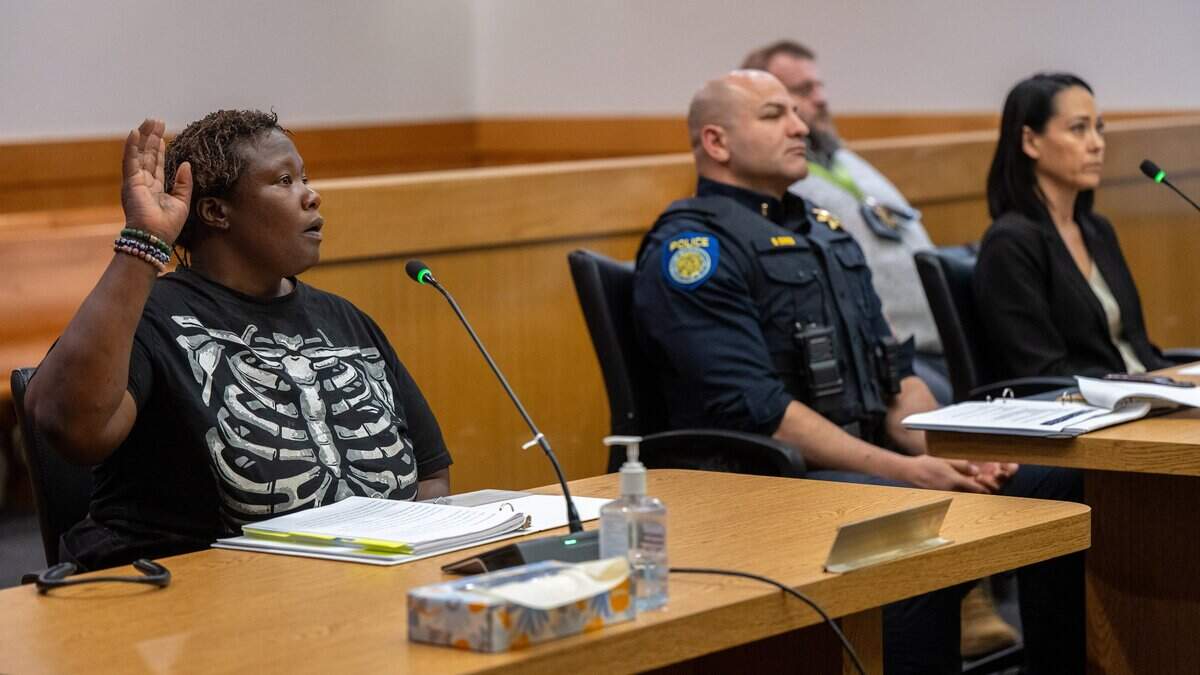
She sued after Sacramento trashed her homeless encampment. Here’s what happened
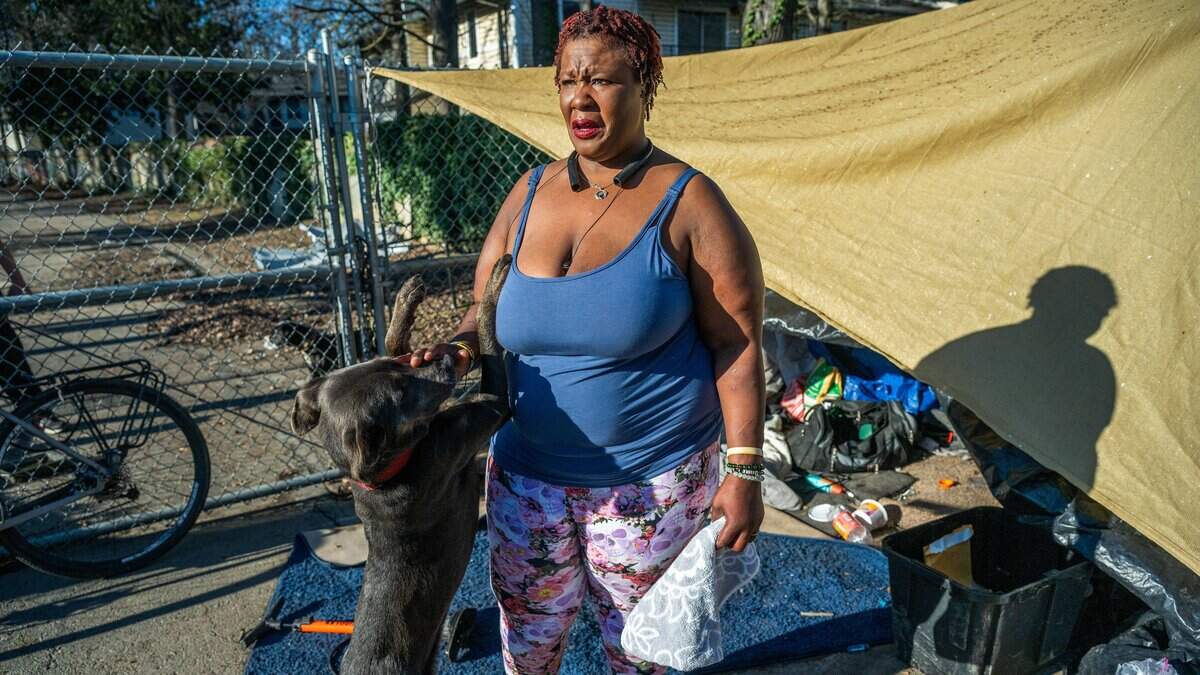
Sacramento police can punish homeless people for sleeping with a blanket
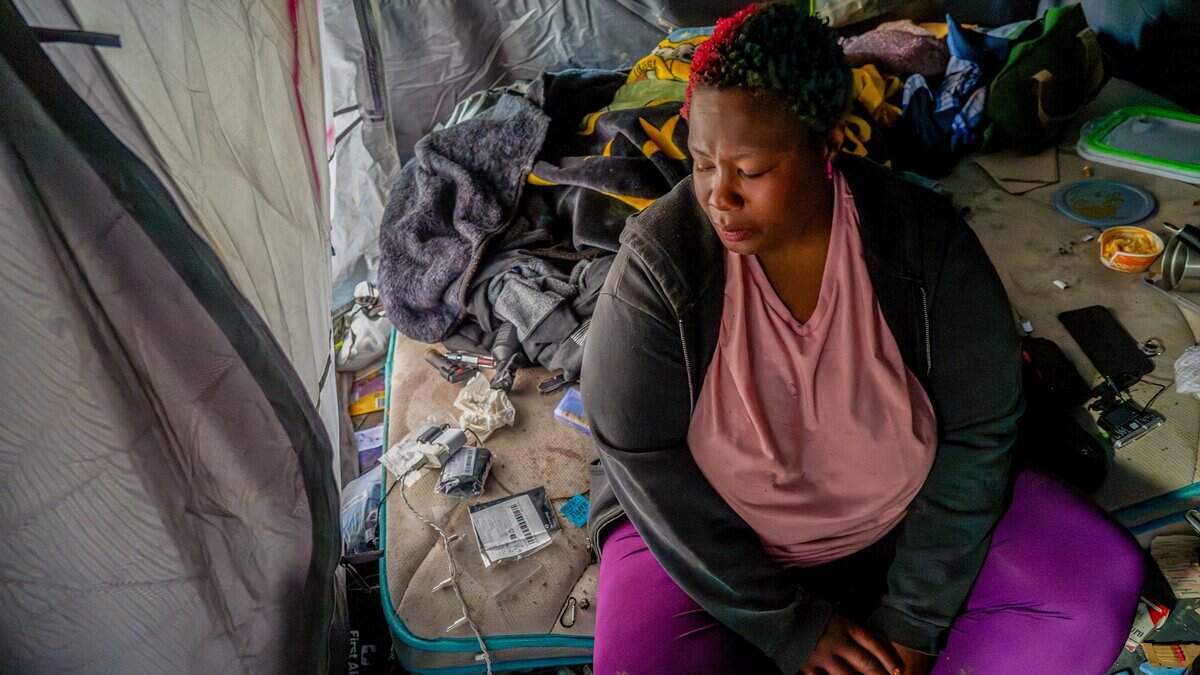
What really happens at Sacramento homeless sweeps? We got police bodycam videos
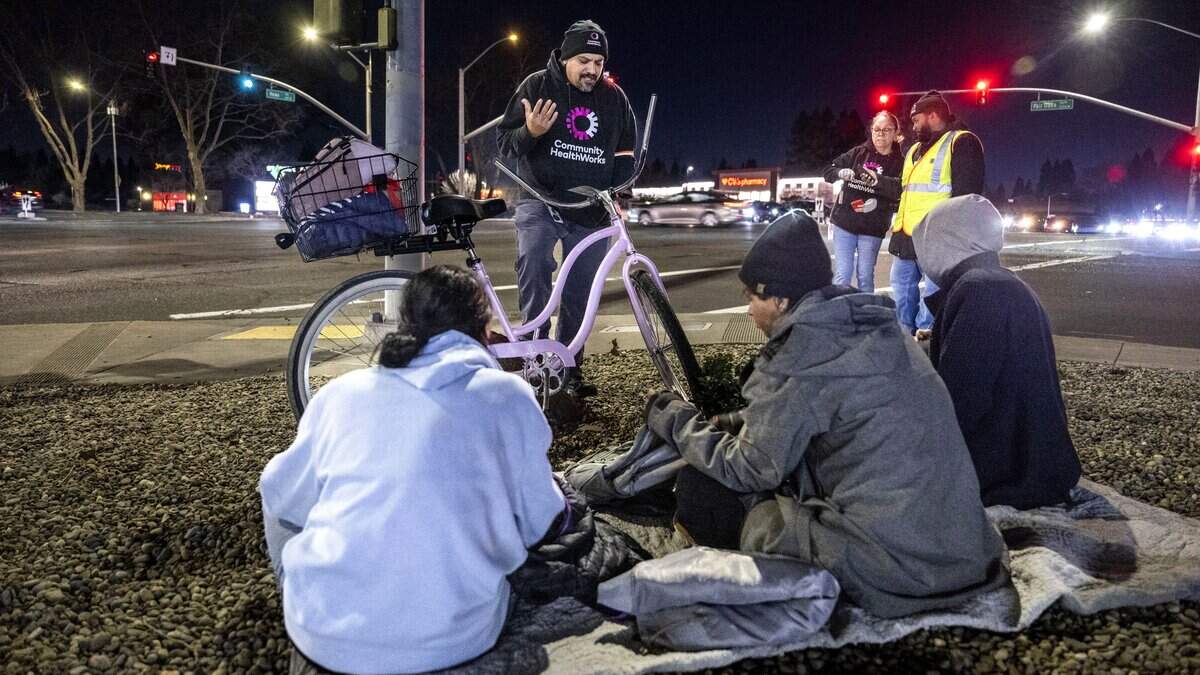
Homeless count in Sacramento County increases 13% from 2024, report shows
She sued Sacramento for destroying her property in a homeless sweep. Can she win?
Sacramento police bodycam footage from two homeless encampment sweeps show new patterns of enforcement — and the contradictions inherent in criminalizing “camping” when homelessness is technically not a crime.
As part of a small claims lawsuit, the city released more than seven hours of bodycam footage from two encampment evictions involving the same woman last year.
In the footage, reviewed by The Sacramento Bee, city police officers lay out a homeless enforcement regime that one officer says has become “zero-tolerance.”
As police note in the videos, this stricter approach to camping was a change for Sacramento — adopted following the 2024 Supreme Court decision known as Grants Pass, which allows municipalities to treat living outside as a crime even when the person has nowhere else to go. The changes were reinforced by Gov. Gavin Newsom’s calls for greater enforcement of anti-camping ordinances in 2025.
On camera, law enforcement personnel also misrepresent how much personal property they will store for the woman, Elizabeth Williams, during both sweeps. Internal guidelines provided to the court as part of the lawsuit show that officers are limited in storing items that do not fit in a 55-gallon bag — 9 gallons less than a medium-size municipal garbage bin in Sacramento.
The footage shows many revealing moments:
A sergeant says that if Williams doesn’t want to accept the specific shelter offered that day, “You can go to jail.”
An officer tells Williams and a second woman, Regina Camacho, “It’s illegal to be homeless.”
The same officer tells Williams and Camacho, “They’ve taken a zero-tolerance on camping and anything associated with it in Sacramento. So, I mean, we can’t really do anything at this point.” He explains, “I have to enforce this right now. … I’m saying camping in general. It’s come down from (the) Supreme Court, Grants Pass, Newsom’s harping down on it now.”
An officer cites a homeless man for storing property that he is physically moving in a cart. The interaction occurs several hundred feet away from the man’s previous campsite.
The sergeant tells Williams at a February 2025 sweep, “Nope, we’re not gonna throw your stuff away” and “I promise you, I’m gonna help you with all this stuff.” Court documents show that the city threw away almost all of her belongings that day, including her laptop, her tent and her blankets — items that generally should be stored under written Sacramento police guidelines.
At the second sweep in June 2025, an officer says that Williams’ “life essentials are gonna be booked at a property warehouse, and the rest of it’s gonna be thrown away.” Court documents show that the city threw away almost all her belongings that day, too, including a second laptop, her new tent and her new blankets.
The Sacramento Police Department declined to comment on the footage in May, citing the ongoing litigation in small claims court. After the case was decided in the city’s favor in June, the department again declined to comment, redirecting questions to the city.
A spokesperson for the city, Jennifer Singer, said that Sacramento was “pleased” by the victory, and declined to comment further on the case or on officers’ interactions with Williams and other people shown in the video.
Encampment sweeps have become commonplace across California, including in Sacramento, where the city has argued that they are necessary to preserve public health as well as access to public spaces.
The sweeps also take up significant resources. An April report from Sacramento’s city auditor looking at the Police Department’s Evidence and Property Section — which is responsible for storing homeless people’s property — found that the department spends “about $587,825 annually on collecting, storing, and disposing of (property) collected from people experiencing homelessness.” There are about 2,620 “homeless-related incidents” in the city annually, according to the report, or about seven per day.
The auditor wrote that homeless property takes up “a significant amount of storage space” and that “retrieval rates are low.”
In addition to issues with property storage, recent data show that arrests of homeless people are commonplace in the California capital: One-third of people booked into the Sacramento County jail system are unhoused.
What happened at the February sweep?
On the morning of Feb. 24, 2025, police arrived at a homeless encampment off of West El Camino Avenue near Interstate 5. Footage shows a sergeant approaching Williams, who is sitting. Her belongings are mostly packed in plastic bins and other containers lined up along the sidewalk, with one section of items partially blocking the sidewalk. She has moved her items from the encampment, which is below street level, closer to the I-5 access road.
The sergeant, identified in the documents as Sergeant Scott Hall, tells Williams, “Everything we see here right now is against the law. It’s unlawful storage in the city of Sacramento.”
Williams says, “It’s not storing if it’s being moved,” and Hall says, “I know, but it’s not being moved this second.”
In a signed declaration filed with Williams’ lawsuit, Sacramento resident Desiree Loudon says she spoke with Williams that morning as well as with Hall, and told them she was on her way to help move Williams’ items.
After speaking with Williams, the video shows Hall moves away from her to discuss the sweep with officers.
Another officer asks, “What is her plan? What does she think is gonna happen?”
“‘I’m gonna find my phone, I’m calling people I know,” Hall replies. “It ain’t gonna happen, dude. It’s all B.S.”
In the footage, Hall also discusses then-recent changes to homeless enforcement policy that allows police to jail people if they refuse whatever shelter offer is available that day: “It’s like always,” he says. “We can help, but you gotta say yes to things, you gotta give up things, you gotta compromise on all these things, and that’s the only way we’re gonna help you. If not, you can go to jail.”
Another officer says Williams is “too comfortable.”
“Yeah,” Hall says. “She thinks it’s par for the course, and she’s just gonna move back in as soon as we go and make a couple false promises that she’s calling family and doing it all over again. You know? Same s---. But this is IMPACT 2025, and things don’t quite go that way anymore.”
He was referencing the police department’s IMPACT team, which focuses on enforcing city ordinances around homelessness, such as sidewalk obstruction, storing personal property in public and unlawful camping. Later in the footage, Hall says that Williams has accumulated too many items because “she’s never been dealt with appropriately.”
The police had previously been more restricted in how they could enforce anti-camping ordinances. From 2018 until 2024, Sacramento’s enforcement strategy was influenced by a 9th Circuit decision in Martin v. Boise. In that case, the court ruled that punishing people for being homeless when no alternative was available to them constituted cruel and unusual punishment.
In June 2024, the Supreme Court overturned the decision in Grants Pass v. Johnson.
In the video reviewed by The Bee, another law enforcement officer directly referenced that Supreme Court case — and the governor — as he drove Williams to jail after a sweep on June 5, 2025.
“I have to enforce this right now,” he says in bodycam footage. “But we gotta learn from this and make sure this doesn’t happen again. But it’s happened so many times that we have no choice. No, I’m saying camping in general. It’s come down from (the) Supreme Court, Grants Pass, Newsom’s harping down on it now.”
Just a few weeks prior to that exchange, Newsom had urged California cities to ban camping in the same location for more than three nights, and to ban blocking sidewalks and building any semi-permanent shelter structure.
Although Hall tells Williams she can be cited for storage because she’s not physically moving things at the time she’s speaking to officers, that logic doesn’t hold in another section of footage.
In footage filmed near Williams’ encampment at the June 2025 sweep, officers are seen citing a man for “storage” as he is physically moving his belongings in a cart, several hundred feet away from his prior campsite. The officer says he should take the man to jail, but adds, “All right, I’ll be nice today.”
What did police say about homeless woman’s things?
At both the sweep on Feb. 24, 2025, and the sweep on June 5, 2025, videos show that law enforcement officers assured Williams her belongings would be safely stored.
“I promise you, I’m gonna help you with all this stuff,” Hall says in footage from the February incident. Speaking to another officer, Hall says, “Some of this is gonna be safekept.” He adds, “And then we’ll deal with a few things that we think are non-life-essential.”
According to the Sacramento Police Department’s written Unlawful Camping Enforcement Guidelines, which the city filed as evidence in the lawsuit, “officers shall safeguard personal property.” If the homeless person is arrested, a designated “caretaker” can watch the items. If no such person is identified, then “the arrestee’s life necessities and personal property shall be booked for safekeeping.”
The guidelines break down property into three categories: “life necessities” such as IDs, medication, family memorabilia, clothes, tents and other basic survival gear; “personal property” that also includes anything “with objective value,” which officers are directed to ask about. The policy says perishable items and trash will be thrown away.
In the February sweep, a video shows Hall following protocol and asking Williams what to store. She says she wants a box of gemstones, which he locates while she sits in the back of a police cruiser. Williams later retrieved the gemstones from police storage, along with, the lawsuit says, a generator, a power station, a bike light and a bike cupholder.
All her other belongings were thrown away.
In June, an officer in the footage says, “Her life essentials are gonna be booked at a property warehouse, and the rest of it’s gonna be thrown away.” At that sweep, Williams was more specific about pointing out valuable items. She says, “Can you get my laptop in my backpack, please? Where I was sitting, I have a laptop in a backpack.”
Video shows an officer retrieving the laptop and placing it in the back of a truck. According to her small claims lawsuit, Williams never saw the laptop again. Apart from a few bags of items and her bike, she said in a signed declaration, almost everything she owned was destroyed.
‘It’s illegal to be homeless’
Publicly, the Sacramento Police Department maintains that homelessness itself is not a crime.
“It’s not a crime to be homeless, so technically zero people have gone (to jail) just for that,” Sgt. Dan Wiseman wrote to a Bee journalist on May 28, 2025.
However, that is not the position that one of the department’s officers took just over a week later. As he drove Williams and Camacho to jail on June 5, 2025, bodycam footage captured a man identified to the court as Officer Brent Smith saying, “It’s illegal to be homeless. You cannot have your stuff out there. If it is that important to you, you cannot have it outside.”
Smith had a somewhat confrontational exchange with the two women in the back of his police cruiser that day.
In the video, Smith asks Camacho why she’s still outside. Camacho explains to him that “not every shelter has an opening. It’s a f------ long process.” The officer says she could just take the resources offered by police and the Department of Community Response; she says that being arrested prevents her from getting into housing.
“Now I’m f----- because now I got a bench warrant,” she says. “What the f---, man? Now I gotta start all over again. You know how long it took me to get to where I’m at right now, that just got f-----? Two and a half years, bro. … Every time I get a leg up, you guys come kicking me the f--- down.”
Smith responds, “We’re victimizing ourself to make other people feel bad for us.”
Later in the drive, Smith tells her, “I’m from a different state where we don’t have all these resources. We don’t have any of this. Like, you’re in California, the most prosperous state. Has the fourth-biggest government.”
Camacho says, “It has the most homeless people in the country.”
Smith responds, “Yeah, because you take advantage of the system. Because y’all don’t get in trouble for it, but now that you are.”
He explains to the women that they were going to jail on “chickens---” charges. He said that despite the low-level nature of the offense, officers had no choice but to arrest them.
“We don’t have, really, say on what happens,” he says. “Like, they’ve taken a zero-tolerance on camping and anything associated with it in Sacramento. So, I mean, we can’t really do anything at this point.”
Toward the end of the ride, Camacho asks the officer, “How would you handle this situation, like, if you were me?”
Smith says, “I wouldn’t be in that situation, ma’am. ... You’re selfish. You cannot clutter the streets with what you have: That’s selfish.”
He then suggests that the women could get jobs and donate plasma.
This story was originally published July 8, 2026 at 10:30 AM.