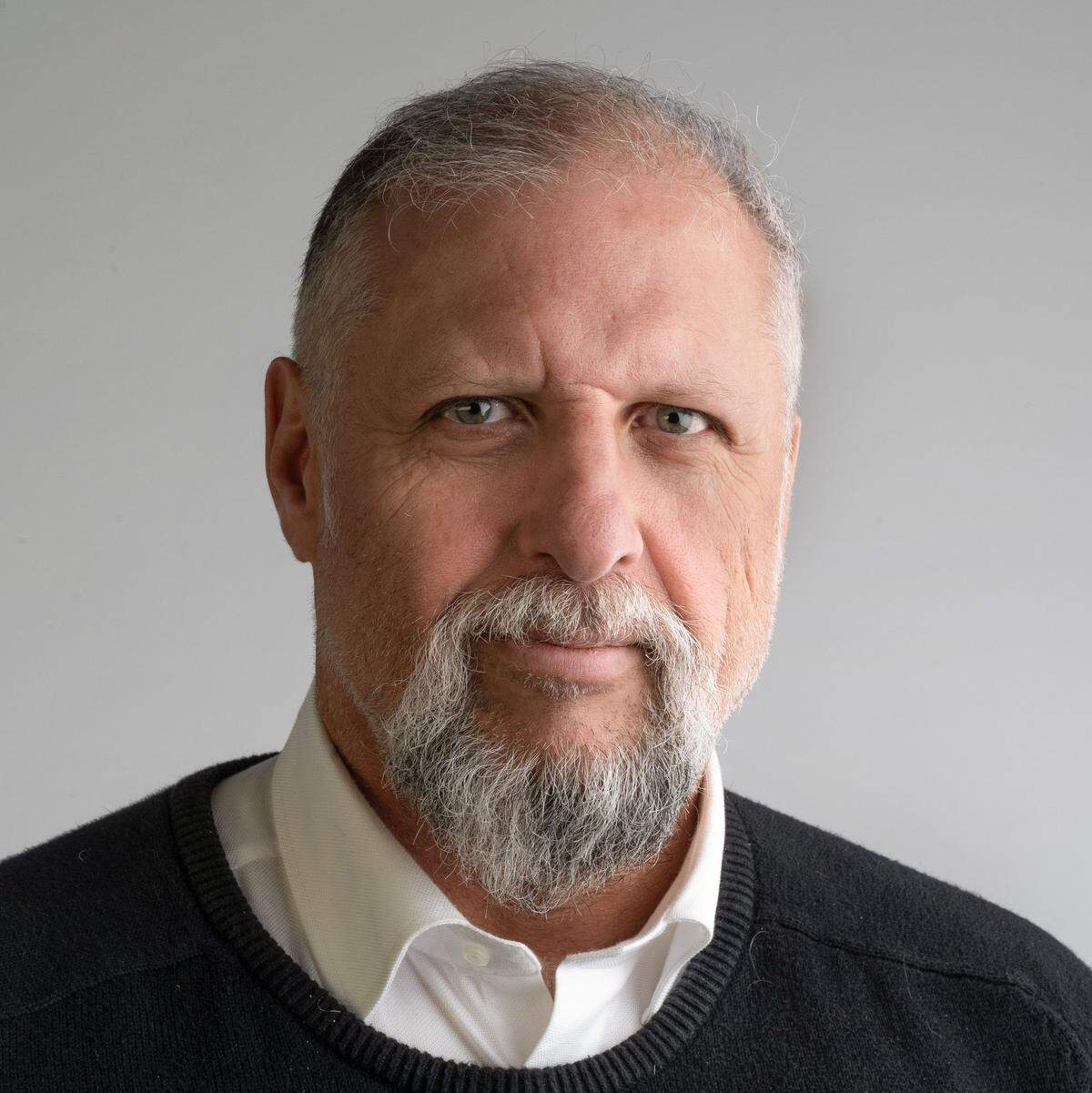
How a daughter of Hmong refugees seeks to make political history in Sacramento
If Mai Vang is elected to the Sacramento City Council on March 3 to represent south Sacramento, or if she forces a run-off and then prevails in the November general election, she would become a trailblazing elected official unlike any other since the state capital was incorporated in 1850.
The 34-year-old current trustee of the Sacramento City Unified School District would be the first woman from the Asian American Pacific Islander community elected to the City Council.
Vang would be the first Hmong person on the council, someone whose family fled the nation of Laos after the Vietnam War. She would be the first millennial on the council, signaling a passing of the baton to a new generation of leaders.
While it’s not uncommon for Sacramento to elect representatives born into poverty – current members Eric Guerra and Steve Hansen suffered childhood trauma and homelessness in their formative years – Vang’s personal story is poignant to the point of being cinematic.
That’s not to suggest that poverty or childhood pain should be compared or that one story of struggle is superior to others.
Councilwoman Angelique Ashby, for example, was once a single mom caring for her baby and putting herself through UC Davis while living a vulnerable existence as a very young person. There are more stories to be sure, but let’s not lose the point:
Mai Vang has lived an immigrant experience in Sacramento that has been defined by extreme poverty, a lack of educational attainment and a prevalence of mental health crises caused when the Hmong people were wrenched from all they knew. That Vang engineered her own deliverance – that she attained degrees at the University of San Francisco and UCLA and then came home to apply what she learned in her community – is the basis for her City Council run against prominent south Sacramento pastor Les Simmons.
“I’m proud of how far we’ve come in the 40 years since the Vietnam War,” Vang said. “Our community has folks who are teachers, principals and candidates like me who are running for office while carrying the hopes and dreams our parents had when they were fleeing the war.”
It’s laudable when Americans raise their hands to run for office. Despite being messy and sometimes ugly, and Vang has already encountered the underside of elective politics, this tradition represents renewal and hope.
But Vang’s ascension adds another dimension of upward mobility. It represents assimilation and agency of a community in Sacramento that has been largely invisible, except when there was bad news to be told. The Hmong population in America, both foreign born and U.S. born, has lived in higher rates of poverty than most immigrant groups. The high school drop out rate among Hmong students has hovered near 40 percent, one of the highest among immigrant groups.
Vang’s life could have easily mirrored these trends.
A child of Hmong refugees
Vang is the oldest of 16 children born to Hmong refugees who fled war-torn Laos as vanquished people who couldn’t safely stay in their homeland because they were marked. They had helped U.S. forces engaged in the Vietnam War and when that war was lost, the Hmong had to flee or die.
Hmong people were legally sponsored, sometimes by church and community groups, and then airlifted to America, often settling in poor neighborhoods where they became virtually shipwrecked. Vang grew up in Oak Park in the 1990s.
During that time, I remember being a young reporter in Sacramento when news stories about Hmong parents went like this: Humble people who didn’t speak English lost their grip on children swayed by an American culture that was antithetical to the structure of Hmong families organized like loving clans. Suddenly, family elders who once had the last word in tight knit family groups were displaced by American television, street violence and U.S. popular culture.
“Growing up I saw needles and condoms on the street and I really think I internalized poverty,” Vang said. “I just told myself I wanted to leave Sacramento. I didn’t want to be poor.”
Vang said she was torn by wanting to be the obedient Hmong daughter who cooked, cleaned and helped take care of her young siblings – while also wanting to escape.
“I was really ashamed at a young age. I was growing up in a house full of cockroaches and I’d go to school and I wasn’t the kid with the cool shoes,” she said. “I internalized it all deeply. I didn’t make the connection of why we were poor. I was looking at my parents and thinking, ‘Why are we poor?’”
At Sacramento High School, Vang benefited from the mentoring of African American educators such as former Sac High teacher Jean Crowder.
“At every stage of her life, Mai has had to persevere through adversity and overcome seemingly insurmountable challenges,” Crowder said in her endorsement of Vang. “Try to imagine how I felt when Mai stood up in front of my teaching colleagues and said, ‘Honestly Ms. Crowder, you saved my life. Before I met you, the idea that attending college or applying for scholarships as a solution for me to reach my potential in life was foreign to me and my future outlook was pretty desolate.’“
It was at the University of San Francisco that Vang first learned about how the Hmong people were recruited by the CIA to help the American war effort. She learned how her ancestors became pawns in a dirty war and how they had to remake their lives in the U.S.
“A light bulb went off,” she said. “If I had known that history, I wouldn’t have internalized it.”
A career in community organizing
A community organizer was born, though at first her advocacy was manifested in anger and resentment for the toll the war had taken on her people, her family and her.
“I asked my father why he never told me about this history and he said, ‘Because you never asked me,’” she said.
Her family’s focus was to turn the page and survive in America. Their focus was the future and – still a Hmong daughter in her heart – that became Vang’s focus as well.
She returned to Sacramento with advanced degrees because her family needed her. She ran for the Sacramento City Unified School District board because she wanted to lend her voice to education equity. She was supported by the Sacramento City Teachers Association in her school board run and then found herself caught between SCTA and the district administration in their years long battle each time a labor contract came due.
SCTA is extremely critical of Jorge Aguilar, SCUSD’s superintendent, but Vang recently joined a unanimous board decision to extend Aguilar’s contract. SCTA endorsed Simmons and donated more than $11,000 to his campaign.
“I believe in Superintendent Aguilar’s vision of equity,” Vang said.
SCUSD has suffered from instability in leadership. So even though it cost her the support of a powerful teachers union, Vang thought it was more important to grow a sense of stability in a district where the majority of students are African American and Latino and where there are significant numbers of AAPI kids.
“It’s really important to be a fierce advocate for students and I support the superintendent,” she said. “I know there are a lot of external forces, but we’re going to have to stay laser focused on that. A state takeover of the district cannot be an option.”
Vang is endorsed by Councilman Larry Carr, the district incumbent who is stepping down from the seat after serving since 2014. She’s been a homeowner in the district for seven years but has watched as people younger than her have struggled to pay their rent. She sees a food desert in Meadowview and wants to support urban farmers – many of them Hmong – who are working to fill the void.
She wants to create economic opportunities in her south Sacramento neighborhood so families can increase their disposable income and live healthier lives. Her life is informing her political run.
“It’s incredibly hard to buy homes and as a millennial, we are the generation that has to sort out that hot mess,” she said.
Her goal for her district is direct: “Stable families, clean and safe neighborhoods ... I want to bring resources back to the community. That’s why it was important for me to run.”
Regardless of the outcome on Election Day, Mai Vang’s story is already a victory.