
As gentrification spreads, how new restaurants are fighting for the soul of Oak Park
Old-school arcade games sit next to barred windows and a slightly faded seascape mural at Flowers Fish Market, a 35-year-old Oak Park seafood fry shack. A TV above an open bible plays the 1996 movie “Fled,” surrounded by posters bearing the likes of the Obamas and neighborhood rapper Mozzy as owner/chef Yvette Henderson slides oyster burgers and fried okra onto Styrofoam plates.
It’s a different scene inside Vibe Health Bar a half-mile away on Broadway, where young professionals surrounded by succulents and trendy metal chairs dig into veggie wraps and $8 smoothies. Cheekily-named items such as the About Last Night detox shot and Beez Nuts superfood bowl dot the menu, which encourages customers to ask about a “custom cleanse to meet (their) nutrition goals.”
Oak Park, particularly the northern part, has been in a well-documented state of transition over the last decade. Housing values have more than tripled, and modern buildings with boutiques and apartments have popped up on lots that had been empty for years. While some long-time residents applaud the change, many others worry that Oak Park – a neighborhood rich in African American history – is gentrifying.
No institution has illustrated the change as clearly as the neighborhood’s restaurants. They’re community gathering places and anthropological exhibits, local tourism destinations and active museums to one of Sacramento’s most historic neighborhoods.
Vibe Health Bar and its predecessor display perhaps the starkest contrast. Broadway Soul Food had just closed after a 35-year run at 3515 Broadway when then 29-year-old Roseville native Brandon Brodzky bought the building to open Vibe and sensory deprivation tank center Capitol Floats in 2015.
Vibe’s biggest initial criticism was that its lower-income neighbors wouldn’t be able to afford $8 smoothies and juices, said managing partner Jeff Greco, a Christian Brothers High School alumnus. Those complaints have faded as the health-focused cafe further ingrains itself in the neighborhood – and as the neighborhood changes, Greco said.
“We felt that if we could bring healthy food to the neighborhood it could be something really cool, because traditionally this is a neighborhood that hasn’t had access to that type of food,” Greco said. “We’d love to charge lower prices and open ourselves up to more people, but using the ingredients that we use, it’s impossible to do that and stay in business.”
That’s presumably less of an issue now that Oak Park is attracting wealthier residents. The median home price in Oak Park shot up from $62,000 in 2012 to $260,000 in 2019, a 320 percent increase. Nine new 1,400-square foot homes near the 34th Street/First Avenue intersection hit the market above $500,000 each in 2018 as Bay Area overflow continued to reach across Sacramento.
Sacramento State urban geography professor Robin Datel first started taking her classes on historical tours of Oak Park in 2003. It was “a food desert” back then, she said, but she knew of one or two old restaurants to take students to lunch on those trips.
Restaurant scarcity is no longer an issue. KC Kombucha, Fixins, Faria, and Oak Park Brewing Co. have opened in the Broadway Triangle in just the last seven months; Oak Park Pizza Project and Conscious Creamery are expected to join them in 2020.
Now it’s tougher to find a restaurant that lived through the old Oak Park and has kept its head above water as costs have risen. Because for all the edible benefits the neighborhood’s new restaurants bring to customers, they’re mostly meant for a clientele with certain economic means.
“There’s sort of a tipping point with gentrification, and you go from a nice mix of people from both income and race to it being increasingly well-off. And the commercial land uses are going to reflect that,” Datel said.
Komucha, vegan gelato, craft bread
Chris Beattie came to Oak Park after three years in the Bay Area, but the Ventura native doesn’t really count himself among the many transplants changing the face of Sacramento. He opened Faria Bakery, named for the Southern California beach he surfed as a kid, in October after selling naturally-leavened bread at local farmers markets for a year-and-a-half.
Beattie and his wife, a UC Davis Medical Center resident, live four blocks from Faria and often pass regular customers on evening walks, he said. Oak Park’s “special vibe” drew them in, and Faria’s seen nothing but support since opening, Beattie said.
“We didn’t just show up here one day and build this space out. People knew us, and it gave us a chance to connect with all members of the community,” he said from inside his bakery. “Everyone’s invested, not just in their business but in the community as well.”
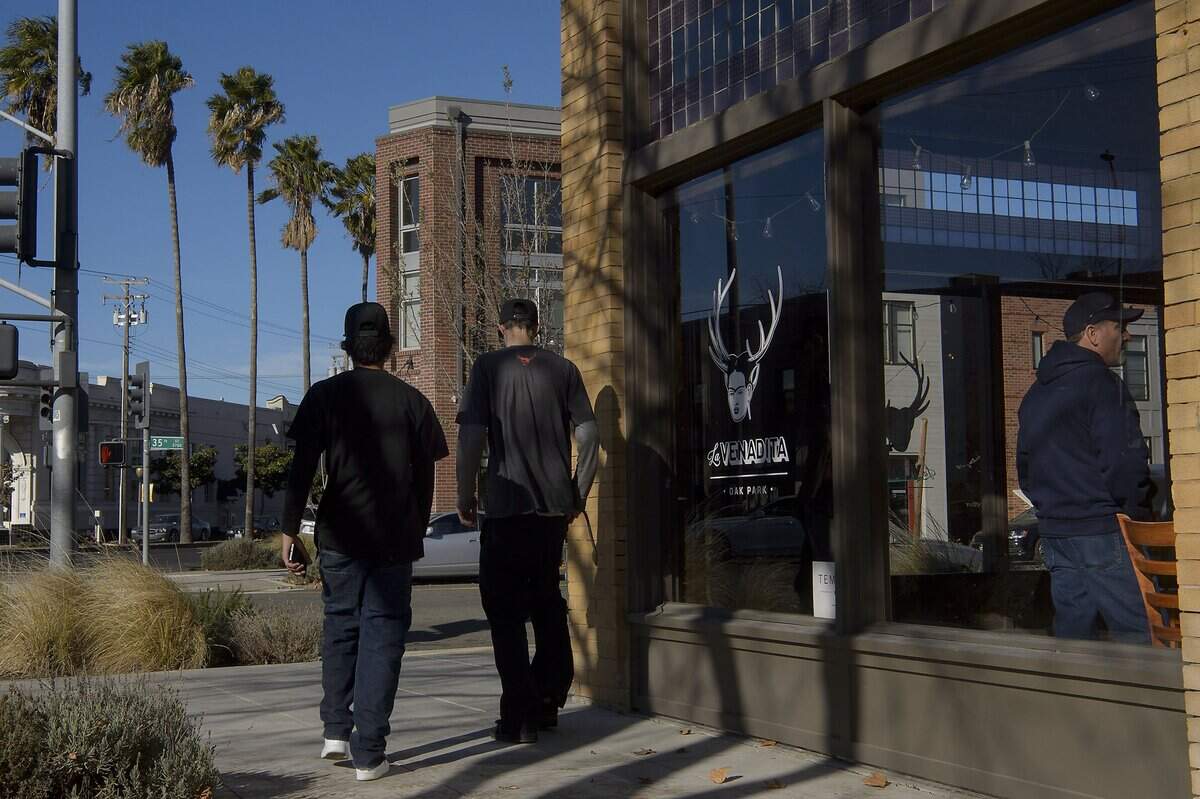
Naturally-leavened whole grains would have looked out of place in Oak Park 10 years ago. The same goes for Sacramento’s first kombucha bar (KC Kombucha), a vegan gelateria (Conscious Creamery) or $3.70 tacos (La Venadita). Oak Park is in the midst of arguably its biggest cultural change in the last 60 years, when it first started to resemble the neighborhood most longtime Sacramento residents know.
Oak Park was largely white and blue-collar until after World War II, when eminent domain seizures in downtown Sacramento’s west end coupled with white flight to the suburbs pushed swaths of black residents into the neighborhood.
While black life in Oak Park flourished — the neighborhood served as the epicenter for the civil rights movement in Sacramento, including the regional home of the Black Panthers — poverty and crime began rising in the 1960s as local manufacturing jobs disappeared.
That blight lasted through the latter half of the 20th century and into the 21st despite several revitalization efforts. Community activist Robbin Ware, who moved to Oak Park in 2001, recalled how the Sacramento City Council unanimously voted to force multiple neighborhood mini-marts to close because of crime happening outside.
“It was a war zone. Shootings, drugs and some killings,” Ware said. “I’m so appreciative of all the people that have transformed downtown Oak Park and this northern district. I really, really am.”
A handful of restaurants established themselves as community cornerstones during that time: Luigi’s Pizza has been open since 1953 at 3800 Stockton Blvd., and Louie’s lasted 29 years at 4605 Broadway until closing in 2017.
BEHIND THE STORY
MOREAbout this story
Sacramento’s historic Oak Park neighborhood has been in a state of gentrification for years. Home prices are skyrocketing and new businesses are popping up on long-dormant commercial corridors.
For some, expensive new restaurants are another sign of gentrification. But it’s not that simple in Oak Park, where chefs and business owners are trying to stay true to the neighborhood’s roots.
Tipping Point
This story is part of Tipping Point, our new project focused on telling the stories of the Sacramento region’s evolution. We have formed a team of reporters and editors who are writing weekly stories focused on the challenges and opportunities in the region.
We’ve brought you stories about how Woodland is changing as new residents move there from Davis, the viability of downtown’s restaurant scene and where the Sacramento region’s real estate market is headed.
Stay in the loop and subscribe to our Local News newsletter here: https://bit.ly/2KMNh2i
The neighborhood’s historical culinary star was Dunlap’s Dining Room, though. Founded in 1930 and run out of George and Anne Louise Dunlap’s home, its three-item menu (baked ham, fried chicken or T-bone steak) drew dignitaries such as Governors Frank Merriman and Earl Warren to 4322 Fourth Ave.
Dunlap’s was also indicative of the era’s racial politics. The Dunlaps were black but only served white customers in their home; people of any race could eat at their Dunlap’s Cafeteria outpost at the State Fair each summer.
Dunlap’s Dining Room closed in 1968 but was added to the National Registry of Historic Places in 1992. Its run is commemorated with memorabilia inside Fixins Soul Kitchen, the new soul food restaurant “celebrating the history & traditions of African American culture in a welcoming, inclusive environment,” according to its menu.
Oak Park’s hottest restaurant
Fixins has been one of the hottest restaurants in Sacramento since its August opening, and corporate chef Melvin “Boots” Johnson is already planning a national expansion. Johnson wants to open Fixins outposts in neighborhoods once rich in black culture that have since been subject to the same changes as Oak Park, such as midtown Detroit or his home base of Harlem.
For now, the restaurant’s black hats with white lettering reading “Make Racism Wrong Again” are only for sale in Oak Park.
“We’re putting the black back into Oak Park because it’s been so gentrified that the dynamics have changed,” Johnson said. “Every city has a gentrified neighborhood ... so it’s cool to put it right back into the middle of the center like, ‘Here, we’re still here, we’re still in the neighborhood.’”
Johnson sees Fixins as a bastion on a block with an increasing number of transplants, many of them white. Fixins draws customers from all over the city — it’s at nearly 600 Yelp reviews after just four months — but Johnson says he’s proudest when elderly black women eat his $18 oxtails or $16 fried catfish since they can often make their own variations at home.
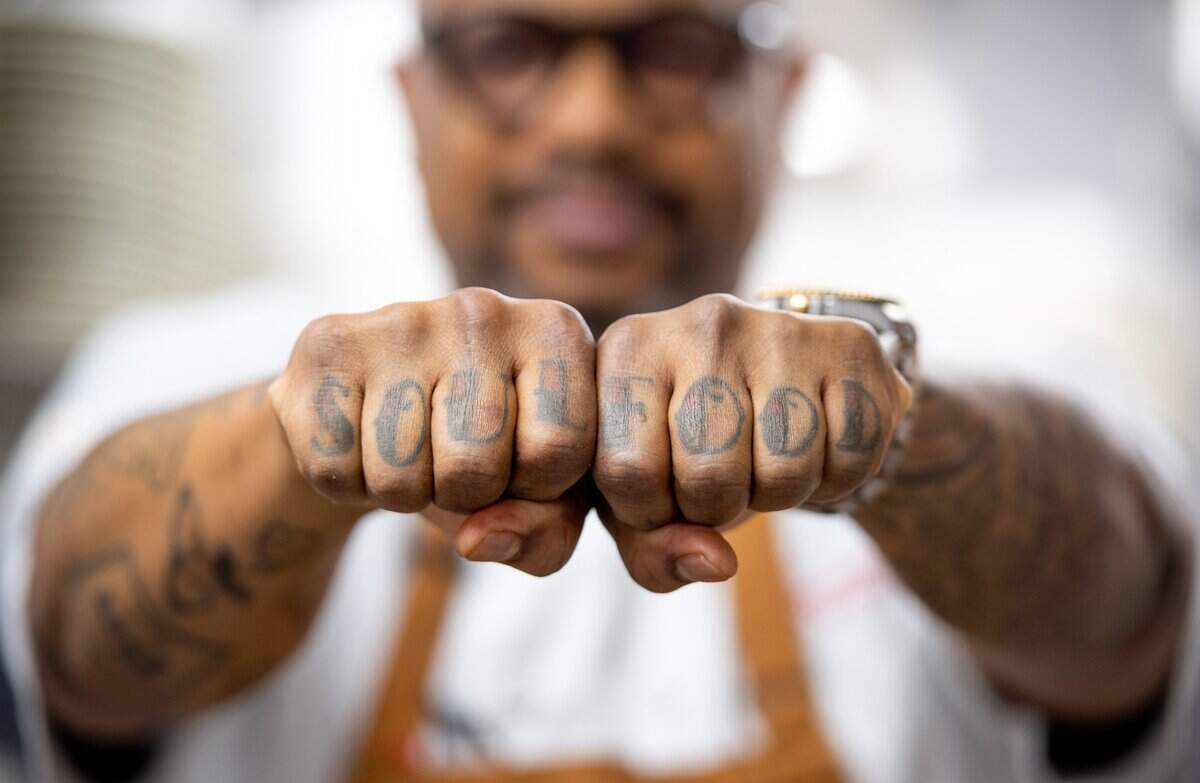
Several Fixins’ recipes come from longtime community members, in fact, and Sacramento High School students were preferred during the initial hiring process.
That preference isn’t too surprising, given their common bond: Oak Park native Kevin Johnson. The former NBA star, Sacramento mayor and St. Hope founder led the charge to convert his alma mater to a charter school in 2003, then bankrolled Fixins and Oak Park Brewing Co.’s openings last year.
Controversies — most notably sexual assault and harassment allegations — sullied Johnson’s name near the end of his mayoral tenure for many across Sacramento, but he’s still widely beloved in his old neighborhood, Ware said. It was Johnson who first brought in the Starbucks (now an Old Soul coffee shop) that established a social hub in the 40 Acres building at the corner of 35th Street and Broadway back in 2003.
That corner had a seedy reputation for a long time, and Boots Johnson heard people talking about drugs the last time he went into Fixins’ neighboring coffee shop. But instead of a dealer hawking product or police arresting someone, it was four “suits” talking about legal marijuana dispensaries, he said.
Restaurant like Fixins that nod to Oak Park’s past will be increasingly important as the neighborhood becomes increasingly gentrified, Boots Johnson said. As rising housing costs uproot low-income black families out of Oak Park, he wants to capture the soul of the way things were.
“(People) come back to Oak Park and they come to Fixins, and it’s how they remember back in the day,” Johnson said. “Their grandma used to live here, and the food’s kind of reminding them of that.”
This story was originally published January 2, 2020 at 5:00 AM.