
Welcome to Sac-Vegas: How Sacramento became the new casino capital of Northern California
Check out more of our stories in the Tipping Point series. Click here.
• • •
The dice were rolling, the slot machines were ringing, the music videos were relentless. Irene and James Godfrey, taking a leisurely stroll through Hard Rock Resort & Casino Sacramento, felt right at home.
The Godfreys, retirees in their 70s, said they don’t gamble much — maybe a couple hundred bucks a month between them — but do like to visit casinos. Their new favorite is Hard Rock, which opened in south Yuba County in October. They also drop in on Thunder Valley and others within a half hour or so of their home in Marysville.
“There’s so many casinos to choose from,” Irene Godfrey said. “We might as well be in Las Vegas or Tahoe or Reno, whatever.”
Don’t laugh. Greater Sacramento now rivals Reno as a gambling center.
Within about an hour’s drive of downtown Sacramento, from Cache Creek in Yolo County to Jackson Rancheria in Amador, gamblers can pick between six major tribal casinos. The gaming tribes of greater Sacramento operate nearly 13,000 slot machines, just a few hundred shy of the number of slots available in the Reno-Sparks market.
When it comes to slot machines — generally a casino’s most important revenue generator — Sacramento is poised to surpass Reno as early as 2021. That’s when another big casino is scheduled to open in the region, this one off Highway 99 in Elk Grove.
The explosion of tribal gaming in Northern California has already taken a big bite out of the competition across the state line: Gambling revenue at Reno-area casinos has shrunk by one-fifth since 2000, when California voters legalized full-fledged tribal gaming. Just recently one of Reno’s oldest standbys, Harrah’s, announced it’s going to be converted into a housing-office complex.
But what about the market in Sacramento? Now that they’ve built an industry that’s almost Reno’s equal, are the Sacramento area tribes in danger of over-saturating their market?
“I don’t think we’re there yet,” said Mark Birtha, president of Hard Rock Sacramento. But he added: “That’s always a consideration.”
Wall Street believes Hard Rock plunged into an already crowded market. Moody’s Investors Service, in a credit-rating report issued about a year before Hard Rock opened, said the new venue would “face intense competition from existing, well-established casinos that may have sizable marketing budgets and stronger balance sheets.”
Hard Rock vs. other Sacramento casinos
Hard Rock’s nearest competitor, about 20 miles away, is the region’s largest casino: Thunder Valley in Lincoln. It operates nearly 3,500 slot machines, more than any other in the area.
Eight years ago, Thunder Valley was insisting that a new casino in Wheatland would spell disaster. The United Auburn Indian Community, owner of Thunder Valley, went to court to try to keep the Estom Yumeka Maidu Tribe of the Enterprise Rancheria from opening a casino at the Yuba County location.
Auburn’s chairman at the time, David Keyser, wrote in a court affidavit that a casino in Wheatland would wreck his tribe’s hard-won gains in economic self-sufficiency.
If the casino opened, Auburn would have to consider “closing several grade levels at the tribal school, ceasing to pay college tuition for members, reducing or eliminating community services that help tribal members overcome disproportionately high levels of substance abuse and other personal problems,” he wrote.
Thunder Valley spokesman Doug Elmets said Keyser’s dire predictions would have come true if Thunder Valley hadn’t geared up for the competition. Thunder Valley expanded and refurbished its hotel, spent millions on a poker room, and expanded its outdoor theater. The Auburn tribe renegotiated its compact with the state so it could expand the size of its slot machine operation.
Now that Hard Rock has opened, Elmets said Thunder Valley hasn’t suffered.
“Last year was the best year in the history of Thunder Valley,” he said. “This year is projected to beat last year.”
Hard Rock was the second big casino to open in the region last year, following Harrah’s Northern California in Amador County. Together they raised the area slot machine population by 2,500, to almost 13,000. That’s a few hundred shy of the 13,478 slots chiming in the Reno-Sparks market.
Granted, Sacramento vs. Reno isn’t a completely fair comparison.
With more than 2.3 million people, greater Sacramento has more than five times the population. Its casinos can draw more easily from the Bay Area, where gambling is a rich part of the Asian-American culture. Several of the casinos run shuttles from the Bay Area. Cache Creek has marketing partnerships with the San Francisco 49ers while Thunder Valley was the major sponsor of a black-tie dinner last month for Lunar New Year in San Francisco.
The Sacramento market is different from Reno in one other way: Its casinos are spread out over a far greater geographical area. Cache Creek is a two-hour drive from Jackson Rancheria.
With all those potential customers — and elbow room — there’s little danger that the tribal casinos will devour each others’ businesses, said Ken Adams, a veteran industry consultant in Reno.
But he said the older casinos are bound to lose some customers to the newcomers — the only question is how many — and at some point the market is likely to max out.
“Is there a limit to it? Of course there’s a limit,” Adams said.
The Indian casino that nearly folded
Casino’s don’t come with guarantees — certainly not for the gamblers, and not for the owners, either. Just look at the 11-year-old Red Hawk Casino in Shingle Springs.
The $535 million casino, owned by the Shingle Springs Band of Miwok Indians, opened during the recession and struggled for years. Tribes’ gaming revenues aren’t public record, but testimony in a court case revealed that Red Hawk’s revenue in 2010, its second full year of operation, was just $214 million, or $100 million below what had been forecast.
Red Hawk was doing so poorly that when the tribe lost that lawsuit — a $30 million judgment to a former business partner — the tribe’s lawyers said the Shingle Springs band couldn’t pay and a “doomsday scenario” could force the casino out of business. Red Hawk skipped some payments on its bonds.
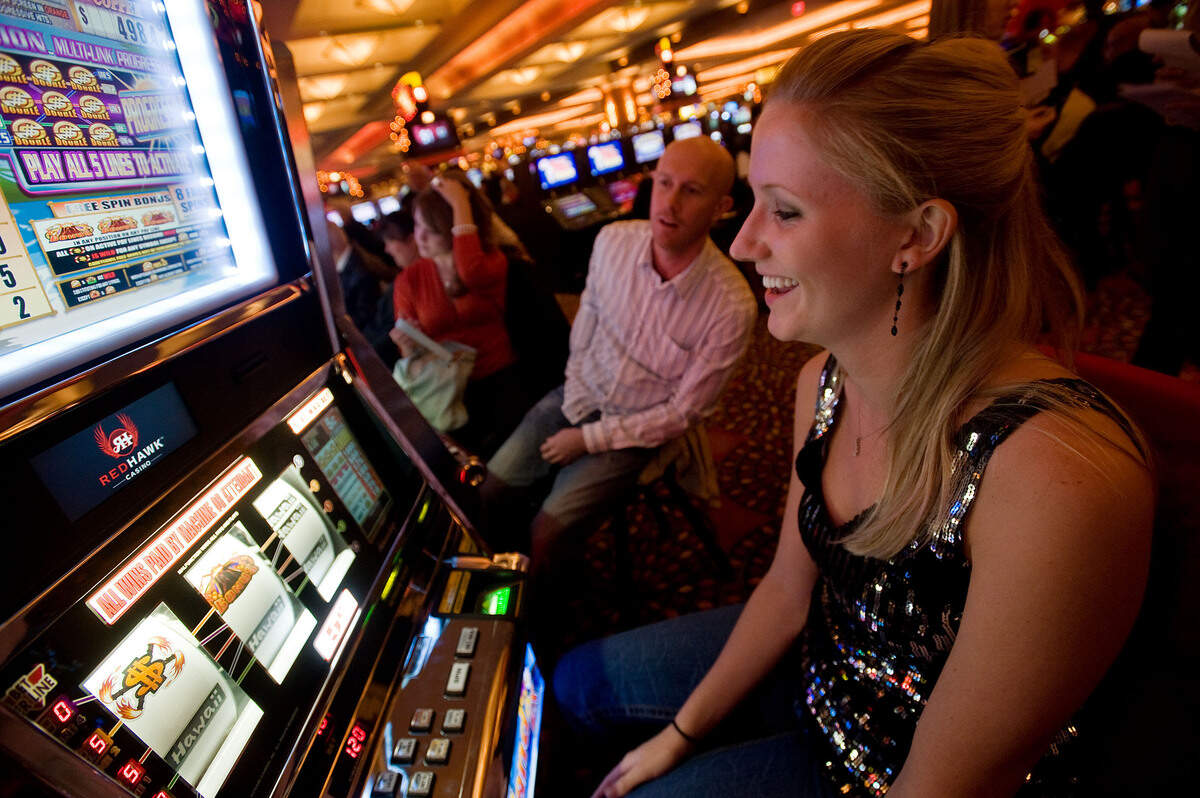
Help came from Sacramento. Gov. Jerry Brown and the Legislature gave the tribe a three-year breather on paying revenue to the state, and once payments resumed they were reduced considerably. The tribe restructured its debt, got the court judgment overturned on appeal and the casino is performing better. By 2016, annual revenue had jumped to $290 million, according to Moody’s Investors Service.
BEHIND THE STORY
MOREWhat is Tipping Point?
This is Tipping Point, our new initiative focused on telling the stories of the Sacramento region’s evolution. We have formed a team of reporters and editors who will write weekly stories focused on the challenges and opportunities in the region. We have more in the works.
Another team of journalists are organizing community forums to open a conversation about how we avoid the mistakes of San Francisco and Seattle, where progress for a few came at the expense of so many.
We will also remain rooted in our commitment to holding the powerful accountable.
To support our work telling the stories of the Sacramento region, please consider a subscription to The Bee to support work like this and local journalism. Subscribe here.
That represented a 35 percent increase in six years. Spokeswoman Emily Cady wouldn’t comment on Red Hawk’s current revenues.
Tribal gaming consultant Victor Rocha said other markets have become saturated with casinos. In the San Diego area, the $360 million Hollywood Casino Jamul-San Diego defaulted on a $48 million loan a year after its 2016 opening. The casino’s operator, a Pennsylvania company called Penn National Gaming Inc., announced in 2018 it was severing its ties with the casino and writing off $89 million worth of investments.
“It’s a real problem when people overbuild,” said Rocha, owner of Victor Strategies consulting firm in Hinsdale, Ill.
Big casino corporations descend on Sacramento
Until 20 years ago, tribal gaming in California largely consisted of humble bingo halls and wistful dreams of prosperity. After voters approved Proposition 1A in 2000, giant Vegas-style casinos began sprouting throughout the state.
Today more than 60 tribal casinos across California generate about $8 billion in annual revenue, according to a report last year by the Legislative Analyst’s Office. The report was issued before Hard Rock and Harrah’s opened in the Sacramento area.
The casino tribes’ mandated contributions to the state’s general fund, once as much as $330 million annually, have declined to almost nothing in recent years after a federal judge ruled that such payments represented an illegal tax. However, the casino owners still contribute to a pair of state-run fund that are used to help poorer tribes, pay for programs for problem gamblers and other purposes. The payments last year totaled more than $172 million.
The growth in gambling has lifted many tribes out of poverty while rising their political and economic profiles in the state. The United Auburn Indian Community, owner of Thunder Valley, owns Whitney Oaks Golf Club in nearby Rocklin. The Residence Inn hotel across from the Capitol in Sacramento is controlled by the San Manuel Band of Mission Indians in San Bernardino County.
Indian gaming has lured big-time corporate casino partners to Northern California. The Wheatland casino is owned by the Enterprise Rancheria — but it’s thoroughly a product of Hard Rock International, the global restaurant, hotel and casino brand. Since 2007 the Hard Rock brand has been property of the Seminole Tribe of Florida, one of the most successful gaming tribes in the country.
Hard Rock’s presence speaks well for the Wheatland casino’s prospects, Adams said.
“When somebody as big as Hard Rock decides to partner with the tribe ... they know what they’re doing,” the Reno consultant said.
At the other end of the Sacramento casino market sits tiny Amador County (population 39,000). This is where Las Vegas gambling giant Caesars Entertainment Corp. has staked its claim in the Northern California casino business. The company’s Harrah’s Northern California opened in Ione last May in partnership with the Buena Vista Rancheria of Me-Wuk Indians.
The casino’s marketing plan is to connect customers with Caesars resorts all over the country. Under the company’s rewards program, gamblers and diners earn points that can be used at casinos from Vegas to Atlantic City.
“It’s more about focusing on the power and the branding of Caesars rewards,” said Harrah’s general manager JC Rieger. “It’s something that we offer that’s not available (elsewhere) in the market.” He added “we’re very pleased with our performance to date.”
The location puts Harrah’s in direct competition with Jackson Rancheria, a tribe that’s been in the gambling business since it opened a bingo hall in 1984. The two casinos are 17 miles apart.
Jackson is a well-established player in the market, known for its comfort-food approach to gaming. Former chief executive Rich Hoffman became a local celebrity by starring in the casino’s comical TV commercials for years.
With Harrah’s opening, Jackson Rancheria undertook a bit of soul-searching. The upshot: Jackson Rancheria doesn’t plan to do anything differently.
“Our stance is, we’re not going to react, we’re going to stay the course,” said chief executive Crystal Jack. “We’ve had great success with appealing to a ‘locals’ market and we have very local players.” Nearly a year after Harrah’s opened, “we haven’t seen a significant effect on our business,” she said.
Before long both casinos could have more competition. About 40 miles from Harrah’s, the Wilton Rancheria tribe is planning a $500 million casino-hotel at the southern end of Elk Grove. A partnership with Boyd Gaming Corp.. of Las Vegas, the Wilton casino would operate just off busy Highway 99, at the location once set aside for a major shopping mall.
The 2,500 slot machines allowed under its state gaming compact would be nearly as many as Jackson and Harrah’s combined — and would vault the Sacramento area past Reno for total number of slots.
After spending years getting legal clearances, the Wilton tribe was hoping to get the casino open by the end of this year.
In January, however, tribal chairman Raymond “Chuckie” Hitchcock told the Elk Grove Citizen that the project is being redesigned and won’t break ground until spring of this year. He said the casino now expects to open in late 2021. He declined, through a spokesman, to comment for this story.
Overcoming lawsuits, lawmakers, other tribes
The construction of Oroville Dam in the 1960s marked the beginning of the State Water Project. It also submerged much of the Enterprise tribe’s land.
In 2002 the tribe’s 900 members, struggling with a 40 percent unemployment rate, acquired the rights to the casino land in Yuba County, about 40 miles south.
That was just the beginning. Nothing comes easily in Indian gaming, and tribes have to reach agreements with the federal, state and local governments. They usually have to endure years of litigation from anti-gambling organizations and residents complaining about the potential for traffic congestion, crime and other impacts.
The Enterprise tribe’s struggle to build what eventually became Hard Rock was more difficult than most. It took the U.S. Interior Department a full decade to agree to take the land into trust — the legal step necessary for a tribe to open a casino on land off its reservation.
Anti-gambling groups and two tribes — United Auburn, owner of Thunder Valley; and the Cachil Dehe Band of Wintun Indians, owner of Colusa Casino — sued to block the project. The courts dismissed the lawsuits, but the tribe ran into another roadblock: The California Legislature declined to ratify the gaming compact Enterprise had negotiated with Brown.
Without that compact, the tribe could only open a junior gambling operation. Instead of slot machines, it could only operate electronic bingo and the like.
The tribe broke ground on a small casino anyway. But it halted construction three months later, saying the lingering legal problems were hindering its ability to secure permanent financing.
The breakthrough came after a federal judge ruled the state was acting in bad faith by refusing to finalize the compact. The Interior Department intervened in 2016. Using its powers, it granted the tribe the right to open a full-fledged casino with slot machines. Hard Rock then moved in, and the finished product opened last October.
Hard Rock has wagered about $450 million on the Enterprise tribe and the Wheatland location. Officially known as Hard Rock Hotel & Casino Sacramento at Fire Mountain, it features nearly 1,600 slot machines, six restaurants, a ballroom and a 169-room hotel. Rock memorabilia is everywhere, including a motorcycle once owned by Eddie Van Halen, and rock videos on big screens complete the picture.
The main exterior entrance is dominated by a 55-foot-tall guitar — Hard Rock International’s logo — and the entire facility stands out in rural Yuba County. It sits next to the 20-year-old Toyota Amphitheatre — and little else. The two venues occupy a portion of a 900-acre parcel that was assembled in the late 1990s by a developer trying to build a speedway for auto racing.
But while the area around the casino looks remote, Hard Rock executives say the site is ready to take off.
“We know we’re in kind of a future growth zone here,” Birtha said, adding that some day the giant parcel will fill up with retailing, housing and other developments.
Hard Rock marked its grand opening last fall by promoting a concert at the amphitheater — veteran heavy metal band Def Leppard — and Birtha said the casino is talking to concert promoter Live Nation Inc., owner of the 18,000-seat amphitheater, about doing more shows together.
“It’s bringing new life to the area; it’s refreshing,” said Alicia Gaston, 44, a pet groomer who was visiting the casino recently. The area’s unemployment rate is 6.7 percent, nearly 3 points higher than California as a whole.
The Enterprise tribe’s deal with the Interior Department allows it add another 500 slot machines in two years — a development that Birtha said is already under discussion.
He added that Hard Rock is also talking about other expansions, including a spa, more hotel rooms and a parking garage.
“Those conversations are already happening,” Birtha said. “We look to build an integrated destination resort.”
This story was originally published March 5, 2020 at 5:00 AM.