
‘Like the Twilight Zone.’ Inside a vibrant Sacramento neighborhood devastated by the lockdown
Check out more our stories in the Tipping Point series. Click here.
• • •
Her salon has been closed for a month but Sara Rogers, the owner of Natural Glo Tanning in midtown Sacramento, drops by occasionally to check on things. She glances around the neighborhood and the anguish washes all over her.
Everywhere Rogers looks — the architecture firm on her right, the hair salon on her left, the ad agency and clothing boutiques across the street — she sees darkened windows and locked doors.
“It’s dead. It’s crazy. It’s eerie,” said Rogers, 33. “It’s like the Twilight Zone.”
This is life in the coronavirus age, in one small corner of Sacramento.
On a once-vibrant patch of the midtown grid — the 2200 and 2300 blocks of J Street — nearly every business has closed, from the barbershop to the pilates studio to the theater company that sent actors and technicians packing just as a promising new show was opening.
These two blocks, in the heart of one of the city’s most vital business districts, represent a microcosm of the economic devastation caused by COVID-19 and the “stay at home” orders issued by Sacramento County and Gov. Gavin Newsom.
Up and down the street, rents are going unpaid, paychecks are being eliminated and revenue is vanishing. Putting a precise number on the losses is difficult, but The Sacramento Bee counted at least 125 people on these two blocks — shop clerks, waitresses, business owners — who’ve lost their jobs, had their work hours curtailed or had to close their stores and lose income. The true number is undoubtedly higher, as several businesses couldn’t be reached for comment.
The greater unknown is what happens after the shutdown orders are lifted. Some people who make a living on J Street wonder if COVID-19 will leave long-lasting economic scars.
“I think people will be more cautious when it comes to business decisions, how much expense they’re willing to take on,” said Dave Herrera, a real estate agent with Colliers International who is trying to lease a storefront at 2201 J that was vacated by a dry cleaner a year ago. “How many employees do they need? How many square feet do they need?”
Most others who do business on J Street don’t have the luxury of looking that far into the future. They’re in a daily fight for survival: cutting deals with landlords, applying for the feds’ “paycheck protection program” and other forms of assistance, and struggling to stay positive.
“Whatever savings we have, now we’re spending it on the house mortgage and the (business) location rent,” said Idris Alekozay, owner of the shuttered Palace Hookah Lounge at 2321 J. “We don’t have any other source of income.”
Alekozay opened the lounge a little over a year ago, using the old Java City coffee shops as an inspiration — where students could do their homework and couples could hang out. Now, he’s had to let his three employees go and wonders how long he can make it.
“If this goes past June,” he said, “we probably will not be able to survive.”

Shutdown hits eclectic midtown
Hererra calls this stretch of J Street “a proven area that’s been good to its tenants.” Like much of midtown Sacramento, the neighborhood is where the ordinary meets the offbeat, a hodge-podge of unremarkable one- and two-story buildings whose occupants create a goofy, eclectic charm.
Before the coronavirus pandemic, a shopper could buy chocolates from See’s Candies, get tattooed, visit a chiropractor and choose between three beauty salons — without taking more than a few hundred steps. A two-story Craftsman, grandly called the Lioness Building, was completely occupied by trainers, yoga instructors and massage therapists — nine separate businesses under one roof.
“It’s just a great little vibe we get on J Street,” said Melina Brown, co-owner of Stylz Tattoos & Piercings. “It’s fun going to work. It’s fun to look out the window and see who’s going by. … It’s like a new street every day.”
BEHIND THE STORY
MOREWhy we reported this story
The coronavirus pandemic has devastated the Sacramento and California economies. Thousands of people have lost their jobs and are unable to pay their rents or mortgages. Longtime businesses are in danger of closing for good.
This story examines the real world impact of the crisis, told through the story of two midtown Sacramento blocks.
Click on the arrow in the upper right to read more.
What is Tipping Point
This story is part of Tipping Point, a journalism project focused on telling the stories of the Sacramento region’s evolution. We have formed a team of reporters and editors who are writing weekly stories focused on the challenges and opportunities in the region.
We’ve brought you stories about how Woodland is changing as new residents move there from Davis, the viability of downtown’s restaurant scene and where the Sacramento region’s real estate market is headed.
Stay in the loop and subscribe to our Tipping Point newsletter here.
Support local journalism. Support The Sacramento Bee
In-depth articles such as this are reported by journalists who live right here in the Sacramento area. And Sacramento Bee’s investigative journalism makes a difference in our communities and in our state. Your support makes it possible.
Subscribe today, and #ReadLocal with us.
The shutdown cost Brown, her business partner and four employees their jobs. Stylz paid its rent for April, “just to stay ahead of that as long as we could,” she said. But next month will be a different story.
“There’s only so much reserve we have in the tank,” Brown said. “I don’t think we can hang on past May.”
Her employees are scrambling as well. Sophie Kunert, who’s worked at Stylz for three years, has been able to earn money with her side business creating T-shirts and paintings. The income is “enough to pay the bills,” said Kunert, 23, but it doesn’t match what she was making at Stylz.
“I just miss tattooing and being around my clients,” she said.
The coronavirus pandemic has spared almost none of the businesses around here, large or small. The Mike’s Camera franchise, with 27 employees, is locked up just as tightly as the mom-and-pop Wild Poppy & Co. and Cotton Club clothing boutiques and Sunlight of the Spirit, a New Age book and gift store.
Even those businesses that are allowed to stay open are barely limping along.
Styleyes, an optical shop that’s been a fixture on J for nearly two decades, runs a two-week anniversary sale every April that generates about 20 percent of its annual revenue. This year the doors are locked, customers can enter by appointment only, the salespeople are wearing masks and gloves. Business is off by half.
Owner Eric Geiger has retained his two employees, but store hours have been slashed and he’s performing triage on which bills get paid and which bills “will just sit in a pile,” he said.
“I know I’m not the only one going through this, but it’s heartbreaking,” he said. “I’m not taking a paycheck anymore. I’ll survive but I don’t know if the company will.”
He hasn’t completely lost his sense of humor, though. Geiger decorates his display windows with dioramas of Barbie and Ken dolls, in different settings depending on the season but always wearing glasses.
These days they’re wearing masks as well.
Layoffs, telecommuting, a quiet street
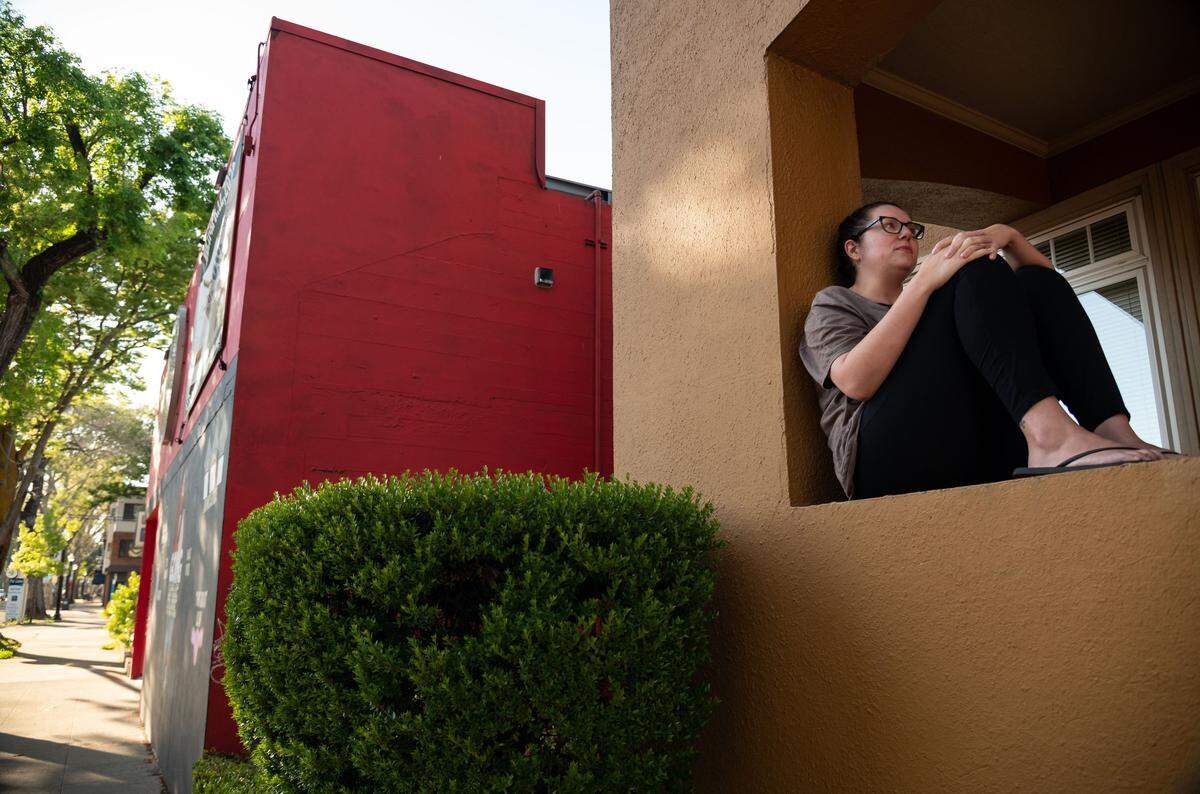
John Houston still comes to work most days. What else is he going to do?
Houston, 76, has been cutting hair on J Street for more than a half-century. He’s been at 2329 J for 30 years, and we’re guessing the look of the place hasn’t changed much over time: a barber pole in the window, photos of John Wayne, two wall-mounted deer heads facing each other and plenty of other bric-a-brac.
The shop is closed, of course, but Houston drops by to check the mail.
“I come down here for a couple of hours to answer the phone, let people know I’m alive and not going anywhere,” he said.
The view from his barber chair isn’t pretty.
“It’s a ghost town; there’s nothing out there, nothing out there at all,” he said.
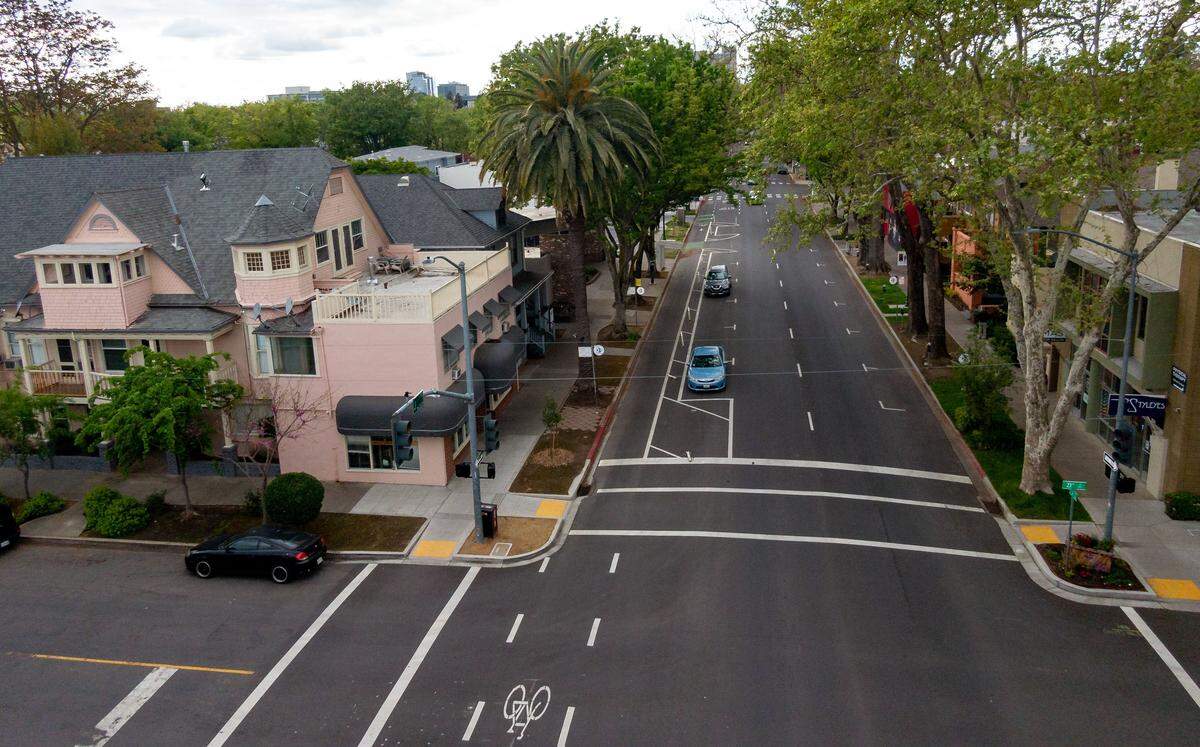
The professional offices in the neighborhood have largely emptied out. At least 30 office workers — lawyers, architects, advertising and PR executives and their staff — have been sent home to telecommute. Their absences reduce the neighborhood population even further.
“It’s a little bit eerie,” said Emily Yin, 25, a nurse who lives in one of the few apartment buildings in the neighborhood. “I hope that the business owners are doing OK. It’s sad. It’s definitely quieter at night.”
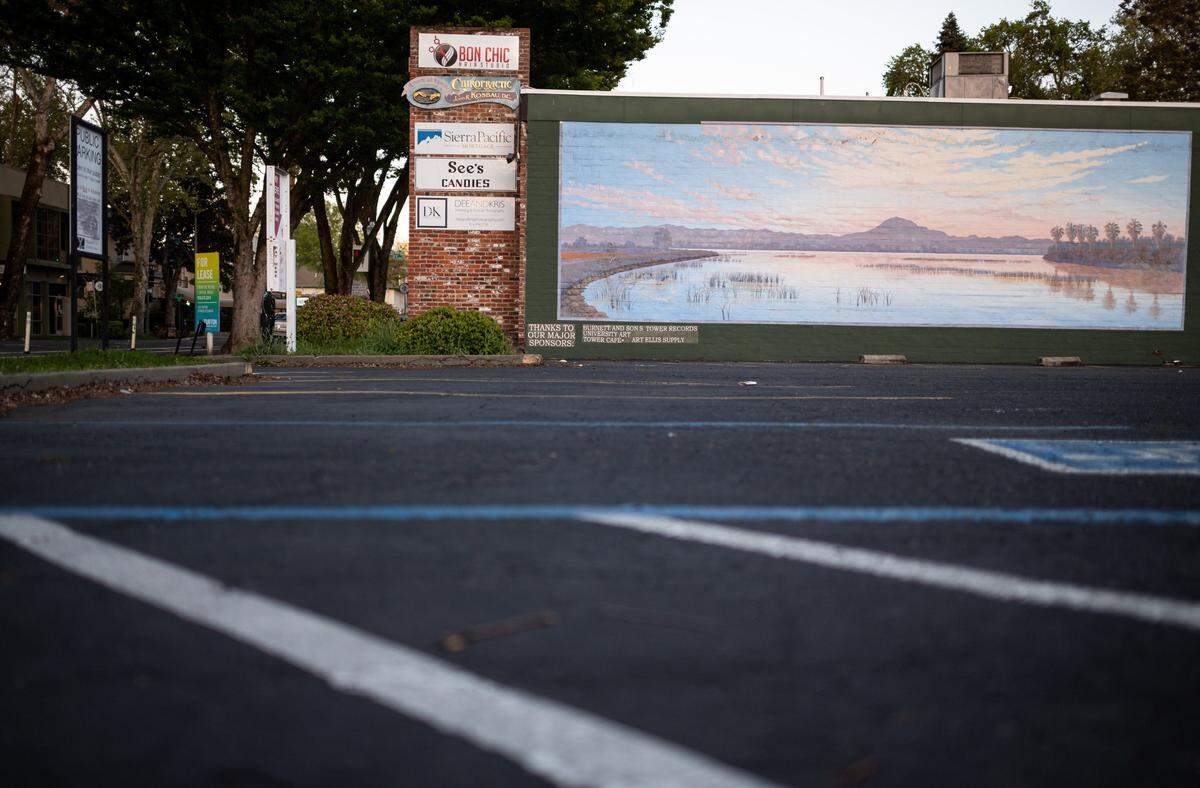
Parking meters sit idle. The public parking lot on the 2200 block is mostly empty. Crowds have disappeared from the sidewalks, save for the occasional homeless person or a pedestrian passing through.
Oddly enough, despite the emptiness, trash piles up anyway. Eric Golden, manager of Sierra Pacific Mortgage Co.’s branch at 2220 J, has appointed himself chief custodian.
Golden’s staff is mostly working remotely, leaving Golden and his Yorkie-Shih tzu mix Sophie to staff the office, sometimes with one other person.
Twice a day he takes Sophie for a walk around the neighborhood. He brings a trash bag to keep the sidewalks clean.
“With the store owners gone, nobody picks up the cups and the wrappers and, uh, the interesting stuff on the sidewalks,” Golden said. “I fill up one black garbage bag a day.”
E-commerce effect: Will business come back?
Phil Perry, co-owner of a public relations firm BPcubed Inc., stopped in the office at 2229 J the other day. He was working on an application for an emergency small-business loan and calculating some discouraging figures: The firm’s annual revenue of $800,000 will probably fall 40 percent.
Some other numbers popped into his head as he chatted with a reporter. Between rent, insurance and utilities, the three-person firm spends more than $6,000 a month maintaining an office it no longer uses — and is gradually learning to live without.
“If we start to get used to working from home, maybe that’s the model,” he said. “It’s going to be very interesting … if employers think it’s cheaper to have people working from home.”
Perry isn’t the only person wondering whether life on J Street will truly return to normal. Lauren Lundsten, the owner of Swanberg’s on J clothing store, said some merchants might disappear for good.
J Street businesses

Map: Nathaniel Levine • Satellite image: Google Earth Pro, 2018
“I think there’s going to be permanent change,” said Lundsten, who’s sitting on about $50,000 worth of inventory he can’t move. “This is going to do in some people. This is going to make some people say, ‘This is the last straw for me.’ ”
Lundsten’s business hasn’t fully recovered from the recession, in part because of the rise of e-commerce. Now online retailing has become more powerful than ever as quarantined consumers order from home — a situation that might not completely reverse itself once the pandemic passes.
“People are ordering online,” said Dan Dowling, who owns a commercial building a few doors down from Lundsten’s shop. “They’re realizing how easy it is to do. The need for brick and mortar will actually decrease.”
For now, the businesses with storefronts on J Street are doing what they can to bring money in the door and disprove such predictions. They’re adapting, innovating and trying to turn the web to their advantage.
Ben Cooke, who runs the Fleet Feet franchise, has furloughed 22 of his 30 employees but is taking online and phone orders. His staff will deliver shoes to customers’ homes or provide curbside pickup.
Cooke is also using Zoom video-conferencing to help customers choose what to order, although “there’s nothing like trying it on,” he said.
In normal times, Fleet Feet supplements its revenue by putting on road races that draw thousands of entrants. These days, it’s reduced to promoting virtual races: A $25 entry fee gets you a T-shirt and medal. You’re on the honor system for the actual running.
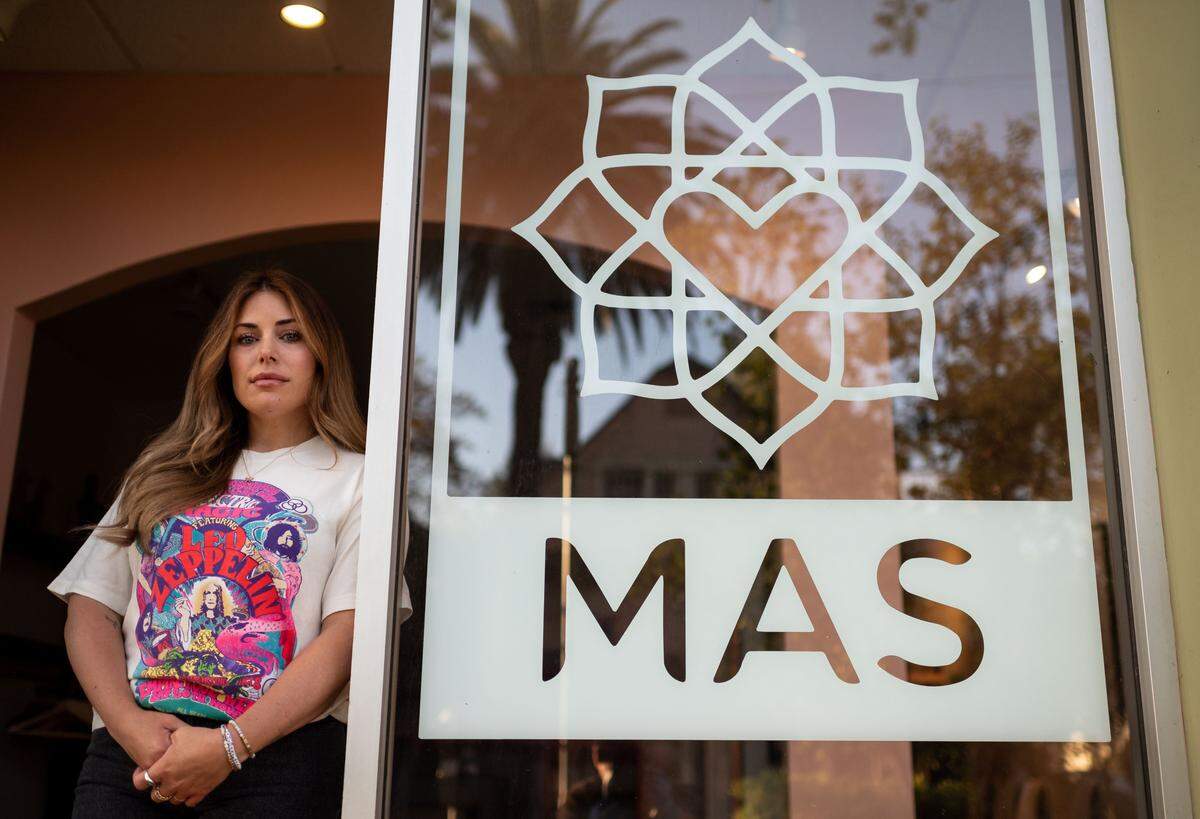
At Mas Amor beauty salon, owner Kayci Subia is dropping hair-coloring solutions at customers’ doorsteps or arranging for products to get shipped directly from the warehouse, so they can do their own dye jobs. The service includes free bowls and brushes.
Rose Zahnn, owner of Healthy Habits fitness studio, is using YouTube and Zoom to provide personal training sessions to her clients. She makes a point of airing the sessions from her studio, to create a sense of continuity.
“I hope it feels like the same cozy place,” Zahnn said.
But it’s hardly the same business. She and her neighbors are finding that making a living is a lot harder than ever.
Some of Zahnn’s clients, newly unemployed, are canceling their memberships. Between delivery costs and the donations of bowls and brushes, Mas Amor’s margins have shrunk dramatically on each sale.
“It’s about $25 profit per head of hair,” Subia said. She’s earning about half what she needs to cover her monthly expenses of about $3,200.
And at Fleet Feet, a store once so popular that customers sometimes had to sign in to get waited on, the business has all but collapsed.
“If we can squeak out 10 percent of what we used to do, that’s success right now,” Cooke said. “It’s not good.”
Coronavirus threatens a theater company
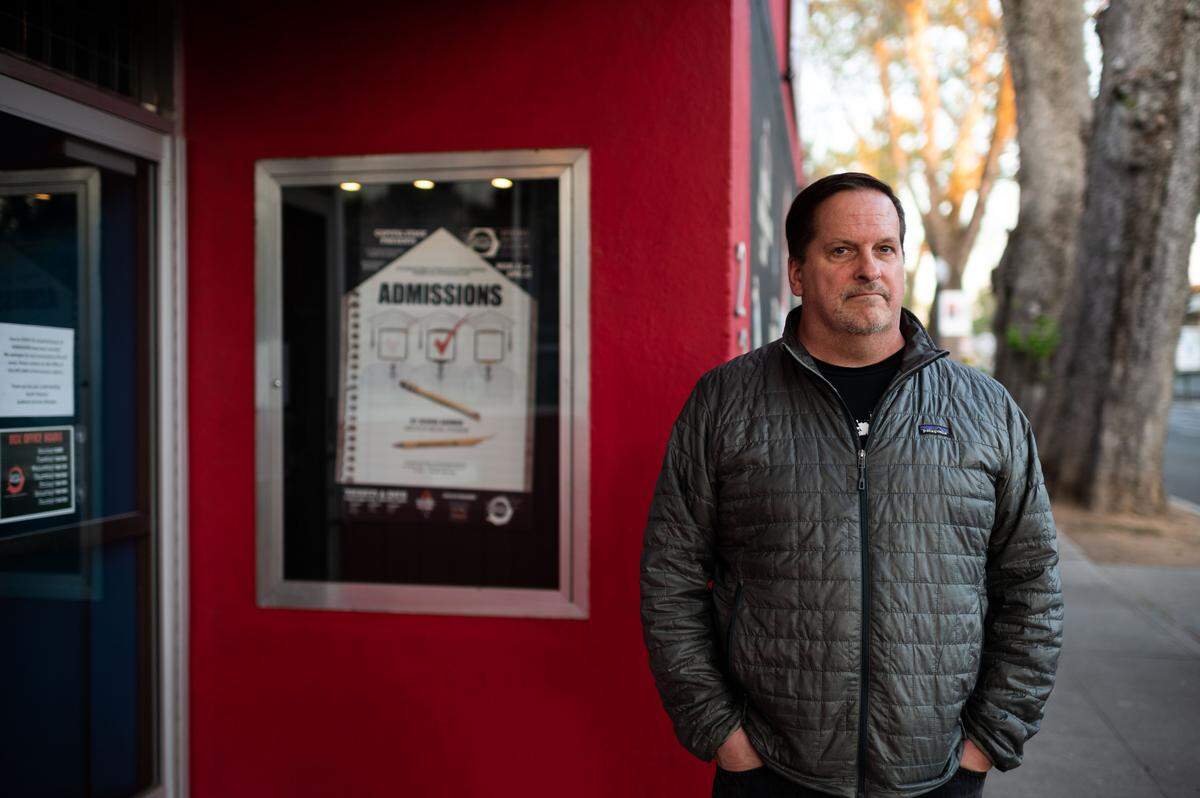
It was looking like another big run for Capital Stage. Ticket sales were strong for “Admissions,” a satirical look at a New England prep school. The preview show concluded to a standing ovation.
The next morning, as cast and crew gathered, they got the bad news from producing artistic director Michael Stevenson: The theater was closing down because of the coronavirus.
Everyone was stunned. They’d been so focused on rehearsals for two weeks, they were only dimly aware of what was going on in the outside world, said actress Amy Resnick. The actors trudged outside, gathered on the sidewalk, and tried to make sense of it.
“We all just stood there in a circle,” said Resnick, a five-year Capital Stage veteran who was to play the director of admissions at the school.
The shutdown scrapped 32 performances. Stevenson said a dozen people lost their jobs, including sound designers, lighting technicians and stage managers. Five actors lost their gigs, including three who had temporarily relocated to Sacramento for the show — two from Florida and a young man from New York for whom “Admissions” was his first significant role.
Resnick said she and others who belong to the actors’ union were paid for three weeks of work — one more week than Capital Stage was legally obligated to pay. That still left her “scrambling for the next month’s rent,” she said. “Most of us are paycheck to paycheck.”
Capital Stage’s finances aren’t doing so well, either. Its next show, “Pass Over,” a drama scheduled to begin April 29 about two young African-Americans fearful of police, has been scrubbed from the calendar as well. Thirteen people were scheduled to work on that show, including some who were working on “Admissions.”
A saving grace: Stevenson and a skeleton crew of three part-time employees have persuaded many of Capital Stage’s 2,278 subscribers to forego refunds and convert their ticket purchases into tax-deductible donations.
Beyond that, Capital Stage is selling tickets for a show scheduled to begin June 17. The show, a drama about basketball and international culture clashes, is called “The Great Leap” — a title that’s taken on added meaning as Stevenson wonders whether the show will go on.
“We’re holding that out as a hope,” he said.
Meanwhile, “Admissions” has been pushed back to Oct. 14. Resnick said she’ll be in the cast.
Restaurant looks beyond the pandemic
Resnick, 59, lives in Oakland but stays with theater patrons in Sacramento when performing at Capital Stage and views the J Street neighborhood as her second home. She buys chocolate at See’s Candies across the street, buys gifts at a nearby shop and has her favorite restaurants.
“There’s a few businesses that I love and frequent,” she said.
Like Fleet Feet and Mike’s Camera, Capital Stage is one of the neighborhood’s unofficial anchor tenants — the businesses that bring traffic to the area.
Another drawing card is the Cornerstone Cafe, a comfortable gathering spot at 2326 J.
“It’s usually a busy street,” said Lundsten, owner of Swanberg’s on J. “The Cornerstone brings a lot of people in, a lot of cops for breakfast. And they’re not there.”
The police officers and most customers have disappeared from the Cornerstone. The restaurant is open for takeout only. Owner Amy Jang said she had to furlough all but a handful of her 20 employees.
“Of course it’s slow,” said Jang, who’s negotiating a payment plan with her landlord. “Business has dropped nearly 90 percent.”
About the only steady customers are the workers from Michelotti Engineering, a contracting firm that’s renovating the ground floor of a squat-looking two-story building on the corner of 23rd and J.
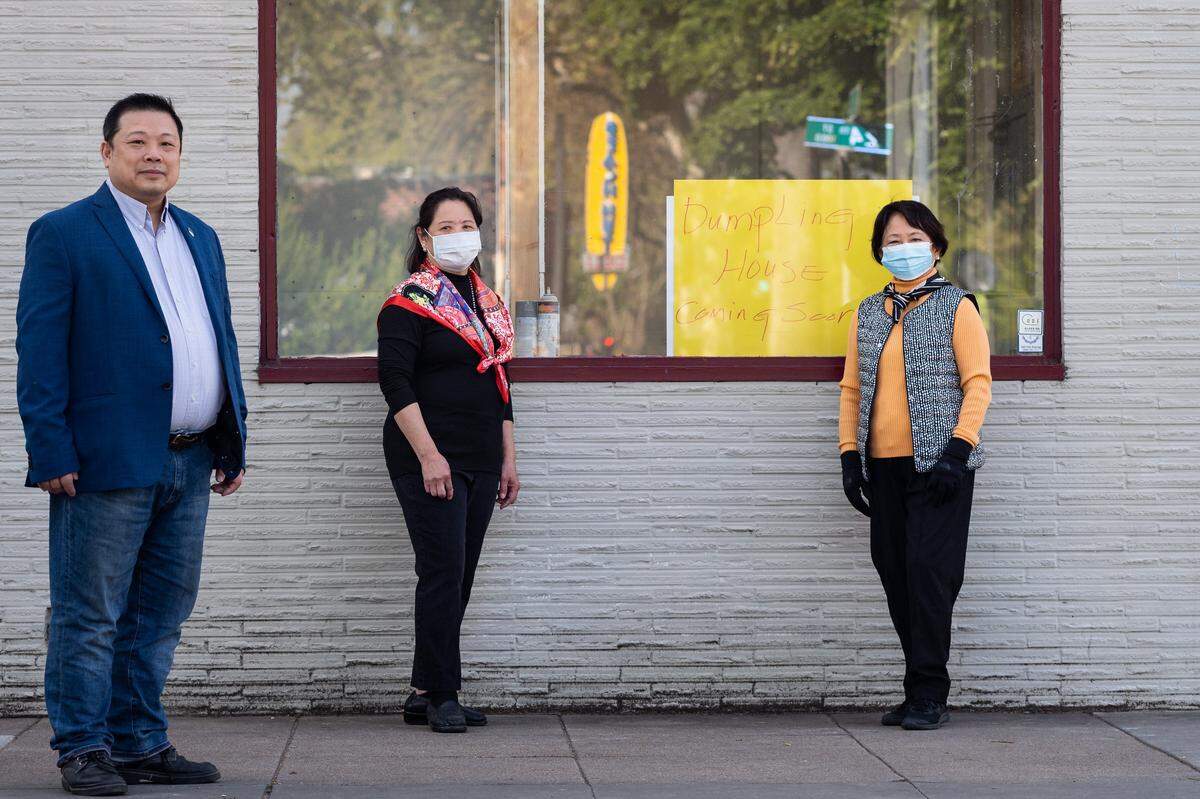
A former gun shop, the 1,100 square-foot space is being turned into a restaurant called the Dumpling House.
It hasn’t been an easy conversion. Co-owner Linda Liu, who operates Dumpling Houses in Davis and Lodi, said the project has gone about $70,000 over budget as workers discover busted pipes and other problems. In the meantime, she’s been paying about $3,000 a month in rent for the past year.
“There’s a lot of things that happened that are out of our control,” Liu said.
Add “global pandemic” to the list of surprises Liu has had to face. The construction work is expected to wrap up sometime in May. But now that COVID-19 has gutted the economy and restricted restaurants to takeout service, Liu said she doesn’t know when the Dumpling House will open.
Nevertheless, she still has faith in the J Street neighborhood.
“In my mind, this is a pretty good spot, midtown,” she said. “We’re still looking to the future.”
This story was originally published April 16, 2020 at 5:00 AM.