
‘Our folks are resilient.’ Sacramento’s Little Saigon falters, looks for hope during pandemic
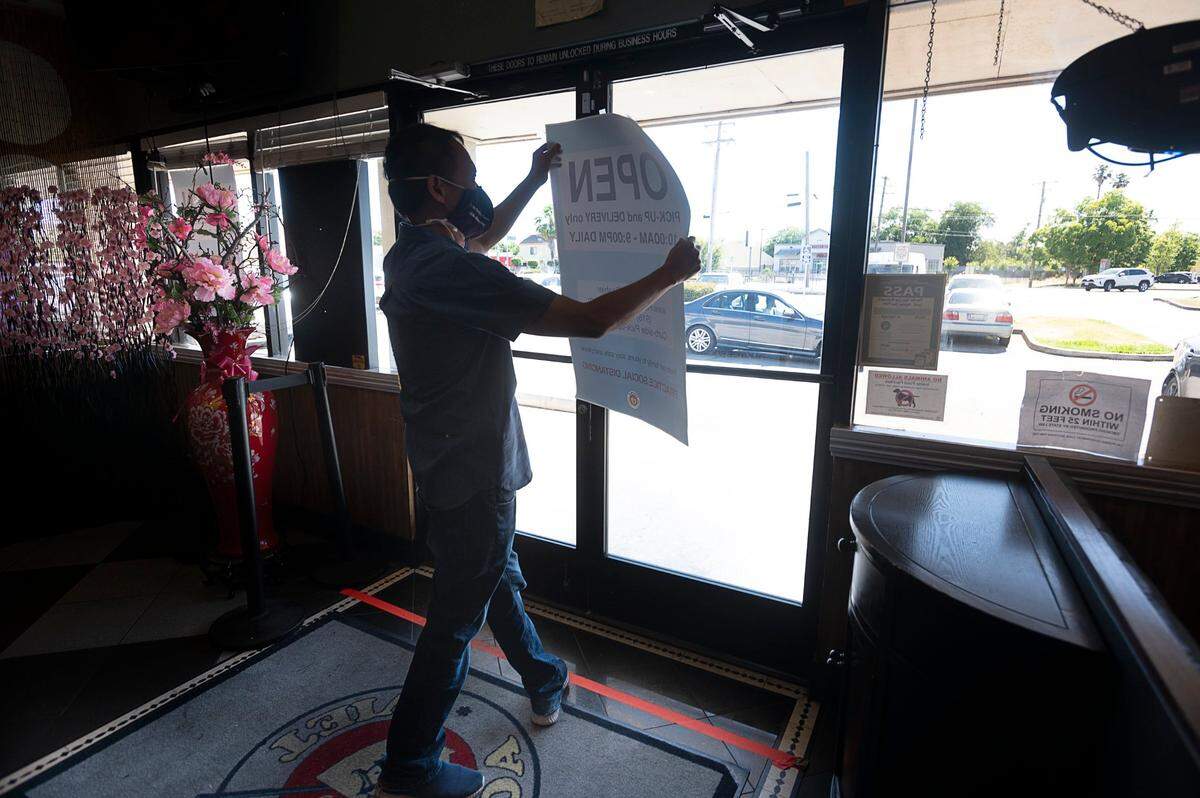
It was lunchtime, the economy was reawakening, and plenty of businesses were open at Pacific Rim Plaza, a sprawling center in Sacramento’s Little Saigon neighborhood.
Coffee shops sold boba tea and Vietnamese lattes. Restaurants offered banh mi sandwiches, sweet and sour shrimp soup and caramelized catfish. You could buy a wristwatch, car insurance and Chinese herbal supplements, or get your taxes done.
What was missing on this recent weekday, though, was customers returning in droves.
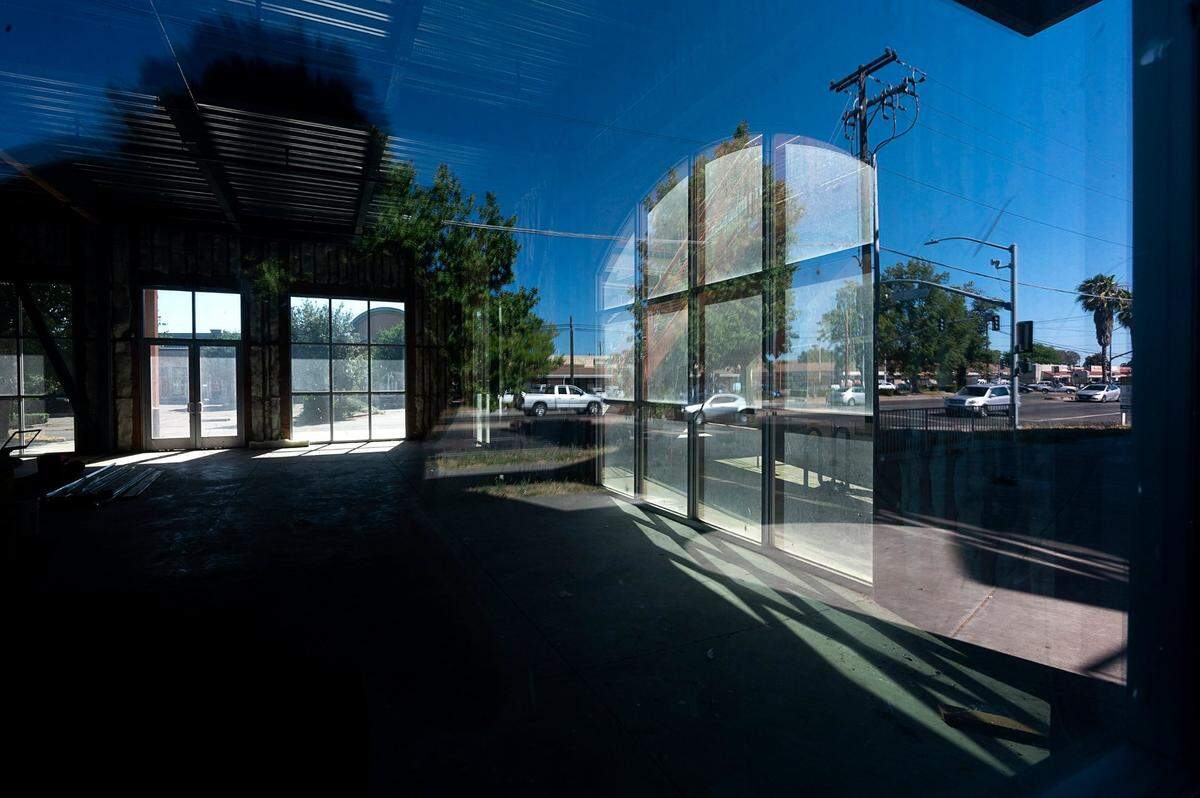
Little Saigon, one of Sacramento’s most celebrated and diverse neighborhoods, is struggling. The business district has been pounded by the COVID-19 economic shutdown, and lingering fear about the coronavirus has dashed hopes of a quick recovery.
“Our community, we tend to be very conservative, to be on the safe side,” said Tony Tran, owner of the Wonder Cafe, a Vietnamese restaurant and karaoke bar in Pacific Rim Plaza. Business “is not quite up to the expectation I was hoping for,” he added.
The Little Saigon district, along two miles of Stockton Boulevard, could lose as many as 25 percent of its restaurants to the economic effects of the virus, said Frank Louie of the Stockton Boulevard Partnership, a business association that represents the area.
“They were struggling prior to the pandemic,” Louie said. “Then this kind of pushed them over.”
Just as the district was starting to wake up from the pandemic shutdown, fears of violence rippled through the community.
The last weekend of May, some of the vandalism that occurred downtown and midtown following the largely peaceful George Floyd protests spread to the Florin Road area, a few blocks south of Little Saigon. Community leaders got wind of a major demonstration expected June 1 on Florin and urged business owners in the area to close early and protect their properties in case of more trouble.
The protest didn’t occur, but a smattering of stores boarded up. It’s amounted to a setback for Little Saigon’s recovery efforts, said Tido Hoang, president of the Vietnamese American Community of Sacramento.
“You had this pandemonium, the jewelry stores afraid of getting looted,” Hoang said.
That’s not to say Little Saigon has become a ghost town. There’s traffic on the street and shoppers hustling in and out of stores.
But for every restaurant that’s relatively busy, there are two or three that sit eerily quiet. For some business owners, “it’s time to think of an exit strategy,” said Anthony Luu, head of the Greater Sacramento Vietnamese American Chamber of Commerce.
Nevertheless, Luu and Hoang believe many of the businesses will do whatever it takes to hang on.
“Our folks are resilient,” Hoang said. “These are refugees and immigrants who came with nothing. That’s the DNA.”
Fear, racism hit Asian community
City Councilman Eric Guerra, who represents Little Saigon, said many businesses in the area didn’t take advantage of available assistance, like the Paycheck Protection Program loans established by Congress when the pandemic struck. One reason, he said, is that the immigrants who own many of Little Saigon’s businesses didn’t have the same access to the program.
“If you’re a large business in the central city and have a long relationship with the bank, the bank is probably calling you saying, ‘I got your stuff filled out, I can help you with PPP,’ ” Guerra said. “If you’re a mom and pop shop on Stockton Boulevard, you probably won’t be getting that.”
Another built-in disadvantage: While restaurants across Sacramento have been struggling since the stay-at-home orders were imposed in mid-March, Louie said some of the Asian restaurants on Stockton Boulevard began losing customers as far back as January, when news reports about the coronavirus sparked a wave of anti-Asian fear and racism.
Still, few business owners seem ready to give up.
“This neighborhood will come back,” said Dam Pham, an employee at Pho City, a Vietnamese restaurant on the boulevard. “Everybody stayed home for too long; they want to get out.”
A half-mile to the south, at Pho Bac Hoa Viet restaurant, owner Dao Ut has adopted a more measured outlook. The near-term goal is “not to have a wildly successful operation,” he said. Instead, he’s trying simply to keep the doors open.
“It will be three to six months at the earliest before we see any bounce-back,” he said. “We’re looking at it like opening a new business — when you open a new restaurant, it takes six months ... to establish yourself.”
So will Pho Bac Hoa Viet make it? Absolutely.
“We’re prepared to fight,” he said. “We don’t have a choice.”
Sacramento embraces Little Saigon
It was a moment of celebration at normally staid Sacramento City Hall.
On the night of Feb. 2, 2010, about 200 members of the Vietnamese-American community crammed into City Council chambers. A group of young women from Cosumnes River College performed a traditional Vietnamese dance.
And a neighborhood was officially born.
The council voted unanimously to designate the Little Saigon business district — the stretch of Stockton Boulevard between Fruitridge Avenue and the city line at Riza Road.
“The American Dream, that’s what Little Saigon represents,” businessman Kevin Nguyen told the council.
The Sacramento County Board of Supervisors approved a similar designation a week later to take in the remaining blocks of the neighborhood that spill over the city line into the unincorporated county.
The surrounding neighborhood is far more diverse than the name Little Saigon suggests.
Of the 32,000 residents who live in the census tracts around Little Saigon, about 2,200 were born in Vietnam — compared to 3,400 born in Mexico. Indeed, many of the 23,000 Vietnamese refugees who live in Sacramento County actually live further south than Little Saigon; there’s a sizable population in Elk Grove.
Still, the Little Saigon designation is a recognition of the imprint — and investments — made by Vietnamese Americans since the 1980s. While there have been a few notable failures — a four-acre shopping center called Little Saigon Plaza was completed just before the 2008 market crash and has never opened — business owners beam with pride about the neighborhood.
“Before we came, it was empty. We came in and built,” said Neo Trinh, owner of Bodhi Print Center, a print shop in a strip center called Little Vietnam Plaza.
Bodhi sits along block after block of commerce, well over 200 businesses in all — bank branches and budget motels, lawyers and dentists, used-car lots, and a kung fu academy.
Practically every shopping center has a beauty salon, a tax-preparation office and multiple restaurants. There’s one of the city’s largest card rooms — Parkwest Casino Lotus, temporarily closed for COVID-19 — and a seemingly nonstop card game that springs up daily in front of Sam’s Cafe, in Lemon Hill Plaza.
For practically everyone, the past few months have been rough. Trinh prints menus, fliers and posters for many of the shops and restaurants in Little Saigon, and “if they run out of business, I run out of business,” he said. “Everybody is hurt, suffering from the virus.”
It’s a reminder that many of Little Saigon’s businesses went into the pandemic with little margin for error — and, for all the money that’s been spent on development, the neighborhood around Little Saigon is lower middle class. Median household income is considerably lower than the Sacramento County median of $63,902 in all three of the ZIP codes that surround the business district.
What’s more, economic progress in the area has been strikingly uneven. The southern end of the strip has seen tens of millions of dollars in development, including spots like Pacific Rim Plaza, which opened in 2004.
The northern end is still dominated by older, run-down centers. The tile in front of the stores at China Town Plaza still bears the name of the prior anchor tenant, a Stop ‘n’ Shop supermarket that closed years ago.
Guerra, whose City Council district includes the northern end of the strip, wants to transform the area. He envisions turning Stockton Boulevard into a tourist destination similar to Chinatown in San Francisco, a place where people can stroll around after dinner.
“I think Little Saigon is such a cultural attraction and amenity that if we made infrastructure efforts, people would come to Sacramento and go, ‘I wanna visit Little Saigon for culture, food and art,’” he said.
Is this Sacramento’s ‘dumping ground?’
Stockton Boulevard has miles to go before then.
The boulevard is a four-lane thoroughfare, teeming with vehicle traffic and not particularly pedestrian-friendly. It’s one of the hot spots for fatal crashes, a city study shows. There are no bike lanes, and the area isn’t served by light rail. Crime is a problem; sex workers are known to walk the boulevard at night.
Last year, in an effort to make the area less “car-centric,” the council took the controversial step of banning any additional auto body shops and storage facilities on the boulevard. Mayor Darrell Steinberg has said he wants to use some of the millions of dollars in revenue generated by the Measure U sales tax increase to revitalize commercial corridors such as Little Saigon.
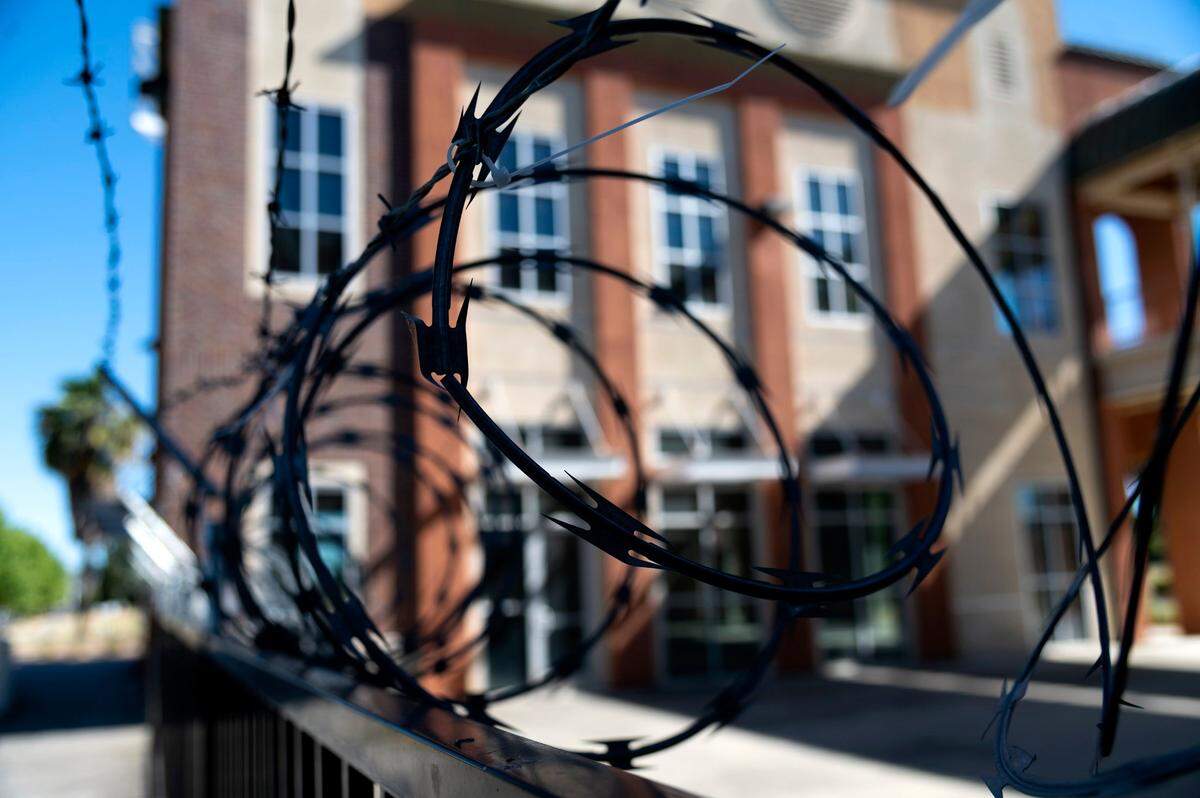
Officials have taken some steps toward cleaning up the area. Sheriff’s deputies last year uprooted a massive homeless encampment on a vacant lot in the unincorporated area near Fruitridge Road, the northern boundary of Little Saigon. The move was controversial and triggered a federal civil rights lawsuit that says homeless people can camp outside if there’s no available shelter space for them. The suit is pending.
The Sacramento Housing and Redevelopment Agency plans to build affordable housing on the site. But that development is expected to take years, and in the meantime, some business leaders are skeptical of the city’s commitment to fixing the north end of the strip.
James Musgrave, who manages the Beck’s shoe store just south of Fruitridge, said the area has long been “a dumping ground for the city.” Beautification efforts amount to little more than “they put up a few palm trees.”
He applauded the removal of the homeless camp and acknowledged that some progress has been made — a new shopping center anchored by a CVS pharmacy is underway near his store. But now he’s worried that Little Saigon has been knocked back on his heels — just when it was developing momentum.
“It seems like something always gets in the way, slows it down,” he said.
Pandemic shutdown weighs heavy
This is just a small sample of the food you can buy at Gold Star Supermarket in China Town Plaza: crackers from Singapore, ginseng coffee from Malaysia, canned herbal jelly from Taiwan, woks made in South Korea, chili oil from China, sesame oil from Japan, coconut syrup from the Philippines and Pho soup ingredients from Vietnam.
Gold Star’s competition includes five other Asian supermarkets and a Mexican grocery. The restaurants serve Vietnamese, Thai, Hmong and Chinese. There’s a Laotian restaurant and sports bar, plus two Mexican restaurants, a Cajun place and a pizza parlor. A smattering of fast-food joints populate the boulevard as well.
It’s not just food that makes Little Saigon so diverse. Roopam Sarees sells Indian clothing. Deportes Azteca sells soccer jerseys and shoes. New Saigon Auto Collision sits across the street from the American Auto Wreckers junkyard and two cemeteries, including Home of Peace, the city’s Jewish cemetery.
And if you really want to see Little Saigon’s diversity personified, go see Fiona Duong.
Duong, 46, was born in Vietnam, to parents of Chinese descent. At her restaurant, Happy Garden, the cuisine is strictly Cantonese.
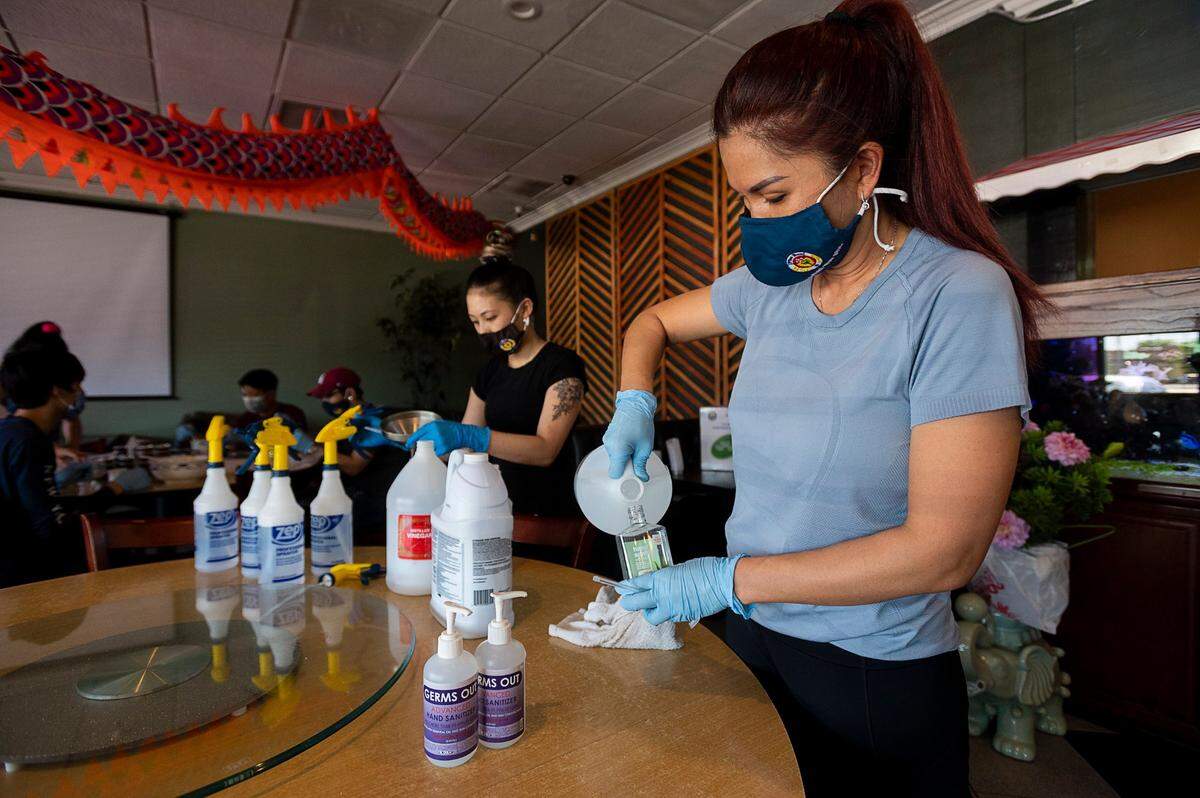
Now, like much of the neighborhood she loves and rarely leaves, Duong foresees a long, painful recovery from three months of lockdown. She said people are eager to get out of the house but still wary of venturing into a restaurant.
Customers “are not confident to come out and sit and eat,” she said. That might not change until “there’s an antidote for the virus.”
Happy Garden needs lots of customers for the business to succeed. It’s a spacious restaurant that serves as one of the neighborhood banquet halls. Over the course of a year, it hosts weddings, anniversaries — and the annual dinner of the Sacramento Asian Peace Officers Association. The Sacramento Chinese of IndoChina Friendship Association’s lunar festival banquet was in February.
Right now, Duong has 19,000 square feet of space to fill, and $26,000 in monthly rent to pay, and no large banquets in sight.
She has gotten some rent deferred by her landlord, and a PPP loan from the federal government to help get her through the summer. But she said her business won’t revive until the health crisis is truly resolved and large gatherings are permitted. She’s afraid that could be two years away.
“Wedding receptions are the biggest part of paying rent,” she said. “This facility is made for large groups. If large groups aren’t happening, I can’t pay the rent.”
Correction: The name of Pho Bac Hao Viet restaurant, misspelled in several captions, was corrected Monday, June 15.
This story was originally published June 11, 2020 at 5:00 AM.