
Sacramento’s suburbs, foothills are growing rapidly in the pandemic. Here are the hot spots
Check out more our stories in the Tipping Point series. Click here.
• • •
Urban living in Sacramento and Northern California has seriously lost luster in the last year. Suburbia and the rural hill country are trending.
That’s the verdict from new data charting who moved where in the Sacramento region during the first year of the COVID-19 pandemic.
Sacramento’s new-edge suburban cities – notably Roseville and Folsom, as well as some foothill enclaves and mountain resorts – saw an influx of arrivals in 2020, according to new U.S. Postal Service change of address data.
At the same time, central Sacramento neighborhoods, including downtown, lost population.
The data, provided to The Sacramento Bee by CBRE, a national real estate services company, confirm that thousands of San Francisco, San Jose and Los Angeles refugees who landed in Sacramento in the last year were not interested in replicating their former urban lifestyles.
Instead, they fanned out across the region, moving into suburban areas where new subdivisions are popping up, as well as heading for the foothills and high mountains.
Those migration patterns aren’t exactly new. But the suburban and rural flow appears to have accelerated during the pandemic as the telework trend allowed more workers to leave higher-cost areas for less dense areas with more available housing stock.
COVID MIGRATION

Roseville and Folsom among hot spots
The burgeoning western flank of Roseville and Folsom’s sprawling new south of Highway 50 were the region’s move-to spots, drawing not only people from the Bay Area, but also from other parts of the Sacramento region.
Rancho Cordova, also home to new housing subdivisions, continued to add newcomers, the data show. Other areas that saw substantially more people moving in than out included El Dorado Hills, Woodland, the Truckee area, South Lake Tahoe and the Nevada City and Grass Valley area.
“People want newer homes, larger homes, bigger backyards, and to feel like they are close enough to downtown if necessary for work, but far enough away to feel slightly more secluded,” said local real estate analyst Ryan Lundquist. “People have really been pulling the trigger on homes in more outlying areas where they might feel like they are closer to nature and further from traffic.”
Meanwhile, central city Sacramento faced a net loss of more than 1,000 residents. Central Sacramento arguably was hardest hit by COVID-19 business and entertainment shutdowns. The office closures made it less necessary for some residents to live close to work.
“The positive draws about living (in downtowns) were literally closed – the proximity to offices, to nightlife, live music, restaurants, places to gather indoors,” said Jeffrey Tucker, a real estate economist for Zillow.
But not everyone moving to a new place in the Sacramento suburbs last year was doing it in response to COVID-19 or to escape urban life.
Ronald Lafradez and his family moved just a couple miles up the hill from an older Rancho Cordova home to the sprawling new Folsom subdivisions near Highway 50 for traditional Sacramento reasons. He wanted to live in a new house, get his son into a better school, live a bit closer to his Folsom engineering job and be near the Palladio area of Broadstone in Folsom where the family likes to recreate.
“I’ve been wanting to do this long before COVID,” he said. “When Folsom Ranch opened, I figured, it’s my time.”
Welcome to Nevada County, our ‘Green Acres’
The Sacramento region also is seeing a bit of a “Green Acres” moment, with some former urban dwellers seeking rural patches and a lifestyle change (like Eddie Albert and Eva Gabor in the 1960s’ sitcom, where the theme songs goes: “Keep Manhattan, just give me that countryside!”)
Nevada County is among the rural areas seeing an influx and unusually high sales prices. “The higher end of the market, every time, it’s a Bay Area buyer,” said Brian Melsheimer, a Nevada County real estate appraiser and analyst.
Those buyers no longer are retired Baby Boomers, says Mimi Simmons of Century 21 Cornerstone Realty in Nevada City. They are working families often looking for a lifestyle that may include a five-acre wooded site with a barn or guest house, some goats and chickens, a food garden and, if they are in the right spot on the hill, decent internet coverage.
“We’re seeing younger buyers than we ever have before,” Simmons said.
The issue in Nevada County, similar to other areas, is the lack of available housing. It’s driven the median price above $500,000, Melsheimer said, and prompted sometimes intense competition among buyers.
Culture in Truckee
The arrival of Bay Area emigrees has both heartened and worried residents and community leaders in rural communities.
In Truckee, officials are holding a series of community forums for new arrivals, many of them from San Francisco, to introduce them to the culture of the area in hopes of averting problems before they arise. The events also show newcomers how to become productive members of the mountain culture.
Lynn Saunders, CEO of the Truckee Chamber of Commerce, said that includes discussions on how the town’s many traffic roundabouts work and what a harrowing experience it can be heading downhill on icy Northwoods Boulevard in winter.
“Change is going to happen. We are trying to steer it in the right direction,” Saunders said. “It is very important in a small town to understand our community and culture. We are sharing who we are.”
The upside is that many newcomers are full-time residents with families who want to contribute financially and with their skills in the community. A recently arrived Bay Area attorney has offered his services free for needy local families.
Inner suburbs are hit and miss
The data also highlights an ongoing trend in central Sacramento that had been underway prior to COVID.
Several older and less affluent core neighborhoods, North Sacramento and south Natomas, as well as the Parkway/Valley Hi area in south Sacramento saw substantial outflows of residents in 2020. The data also show that more people were leaving those areas in 2019 than moving in.
One inner-city neighborhood notably bucked the out-flow trend: East Sacramento gained 180 net new residents in 2020, due in main part to construction and sales of homes in the new Sutter Park subdivision on the site of the former Sutter Memorial hospital.
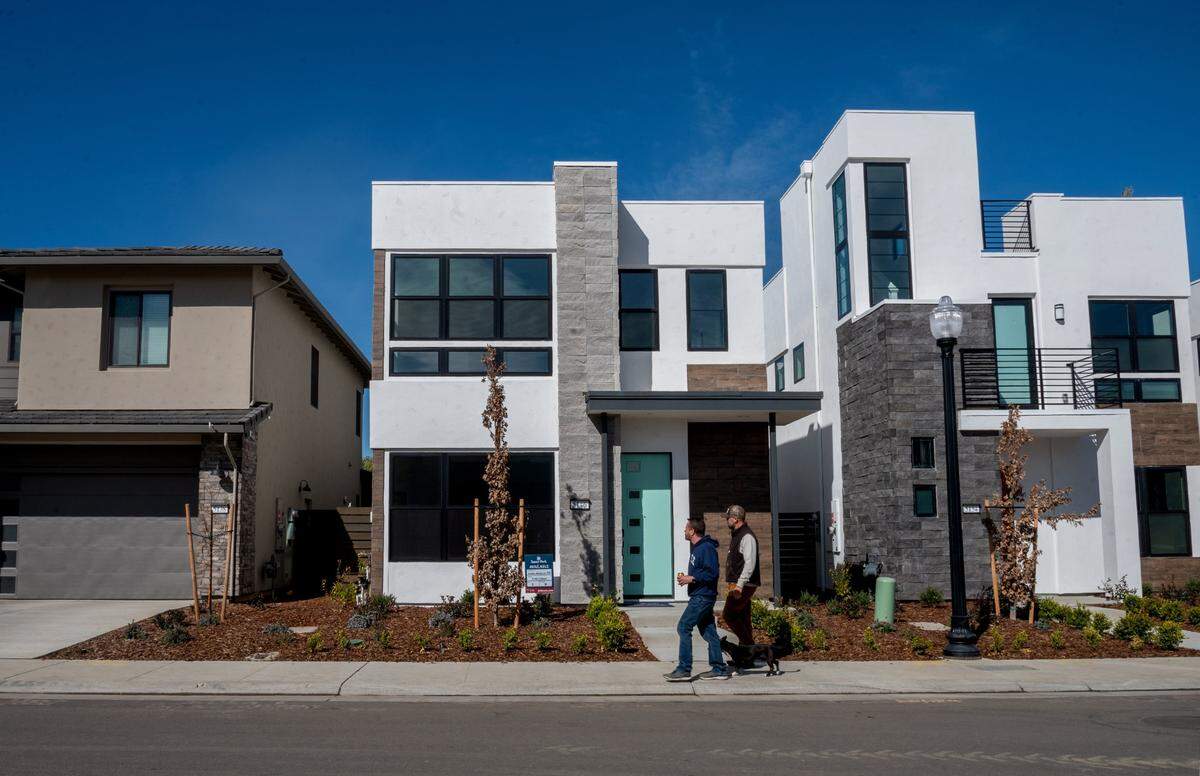
Results were mixed in Sacramento’s older, second-ring suburbs: Fair Oaks lured more new arrivals in 2020, as did Arden Arcade, but adjacent suburban enclaves Carmichael and Citrus Heights both saw more people move out than in.
Those second-ring areas, many of them developed post-World War II, are beginning to rejuvenate as younger families move in, but also are losing some residents to newer housing tracts farther out on the suburban fringe.
Will urban areas rebound?
Much of the Sacramento region’s influx of new residents came from coastal California. The Sacramento four-county region gained a net 10,000 new residents in 2020 from San Francisco and Oakland.
It gained another net 3,400 from the San Jose area and 1,500 from Los Angeles.
Although the CBRE analysis shows many have gone suburban, it does not suggest a long-term bias against central city living, said analyst Eric Willett, CBRE’s Director of Research and Thought Leadership in the southwest United States.
“When offices reopen, there will be that pull backwards, back to the urban centers,” Willett said. That will mean that some people, notably renters, who moved to Sacramento to telework in 2020 will filter back to the Bay Area.
But many will not, he said. The big millennial generation, now ages 25 to 40, has reached the years when its members are coupling up and starting families, which makes suburban living and less expensive mid-sized areas like the Sacramento region more attractive.
This story was originally published April 27, 2021 at 5:00 AM.