
Folsom keeps growing. But will the city have enough water to meet its grand ambitions?
On the surface, the city of Folsom would seem to be water rich.
Perched at the foot of Folsom Lake, where snowmelt funnels into the Sacramento Valley, the city taps into large intake pipes plumbed deep into Folsom Dam’s inner face to send cool water to nearby homes and businesses.
That easy access is turning into a mirage.
After two dry winters, the reservoir has shriveled to its second-lowest level for July in nearly 50 years. It’s lower than it was in July 2014 and July 2015, when the last drought was raging, California ordered mandatory water cutbacks, and Folsom residents had to swallow a 32% reduction in usage.
With a new drought sweeping the state, the Folsom City Council in May called on customers to cut water use by 10%, and the city’s water chief said Folsom could make that cutback mandatory if the reservoir drops lower than expected this summer or fall. Mandatory cuts would require a reversal of Folsom residents’ recent habits: In April 2017, after the last drought had ended, Folsom residents used an average of 104 gallons of water a day per person. This April, the most recent month for which records were available, usage hit 147 gallons per day.
The increasingly dire situation has rekindled a simmering debate about one of the Sacramento area’s fastest-growing suburbs: Are Folsom’s lofty growth ambitions putting residents at risk of becoming water poor as climate change reduces the region’s already tight water supply?
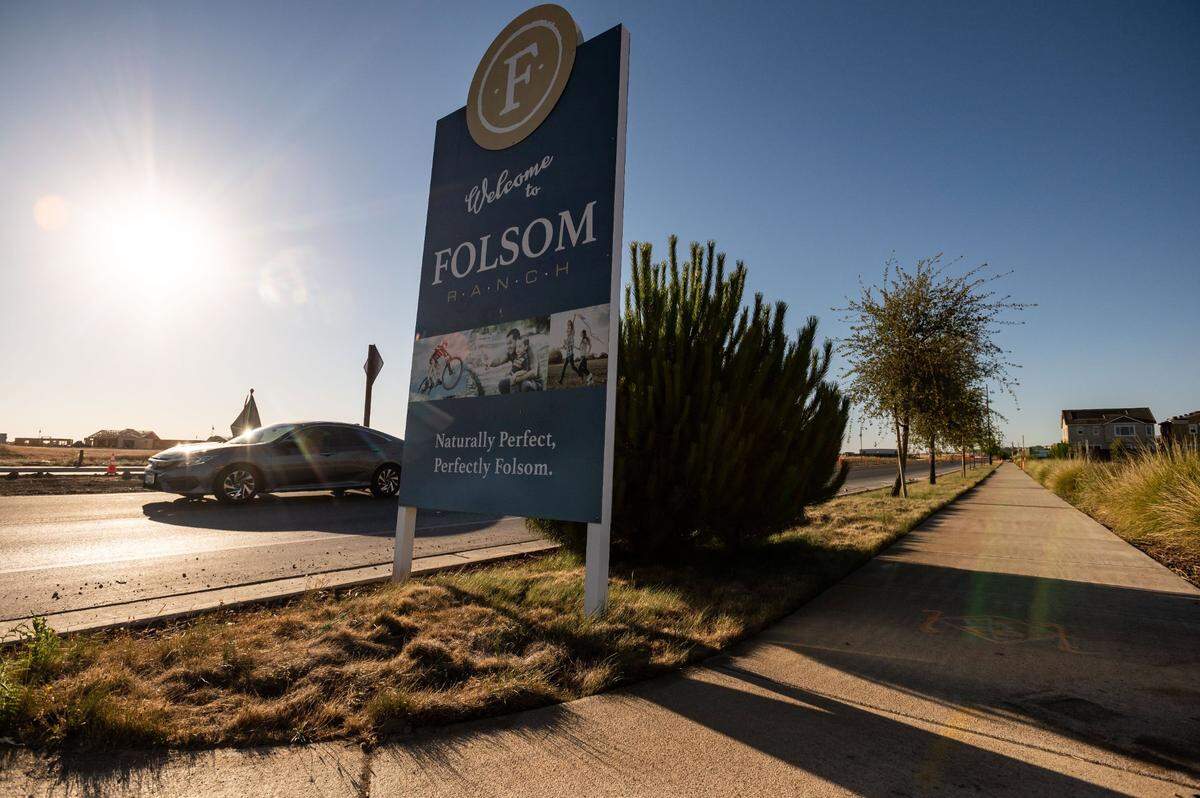
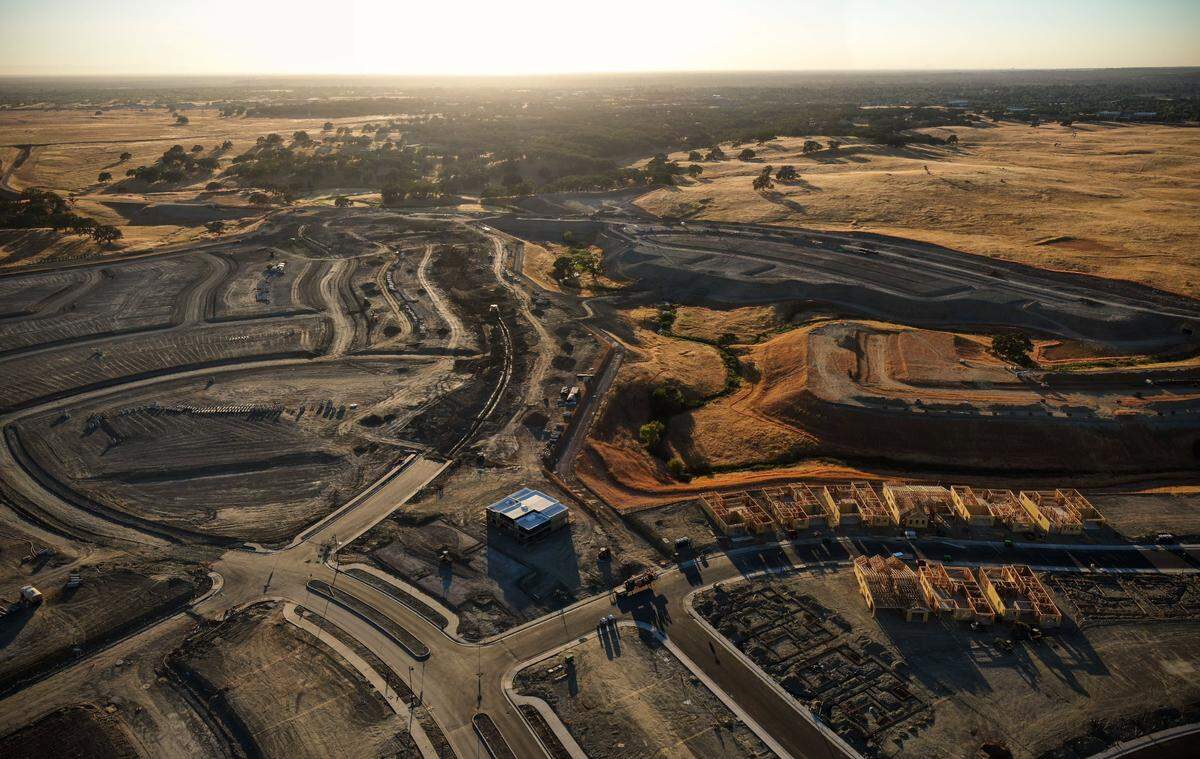
Folsom has added roughly 9,000 residents in the last six years. And California’s latest drought arrives as the city is in the early stages of building a subdivision that some day will include 11,000 homes: Folsom Ranch south of Highway 50. State officials have already questioned the city’s ability to supply that development.
The debate is extending throughout Sacramento’s booming foothills and suburban landscape, where communities are finding themselves on a tightrope, balancing limited water supplies with the pressure to add housing.
Sacramento and Roseville, two cities that get water from Folsom Lake, have called for voluntary 10% cutbacks. The San Juan Water District, straddling Placer and Sacramento counties, asked customers to limit landscape watering. Fair Oaks Water District officials, calling this summer “unprecedented” and “dire,” asked their water customers to cut back by 20%.
Now that Gov. Gavin Newsom has called on Californians to cut water usage by 15%, Folsom Mayor Mike Kozlowski said the City Council may ask Folsom residents to do the same. “Being responsible Californians, we should try to hit that mark.”
Area water officials say Folsom and other Sacramento-area cities and water districts are likely to have enough water to avoid mandatory cutbacks this summer. But with California in the midst of one of the worst droughts ever, they aren’t certain.
Despite its proximity to the lake, Folsom’s situation is arguably among the more precarious in the long run. Many water agencies can access groundwater under their feet, but most of the city of Folsom sits on large slabs of granite that block drilling into the water table below. The few groundwater wells at the city’s disposal, near the Aerojet industrial property, produce contaminated water — usable for some purposes, but not drinkable.
Kozlowski said he is well aware that some residents are concerned. “I get asked about water frequently.”
His message, he says, is that the city has rights to more than sufficient water now and in the immediate future. But he also offers a cautionary outlook: “We have very little control over snowmelt and how much water will flow through Folsom reservoir in a given year, and that is reason for concern,” he said.
“That is why we have asked residents to do some self-reflection and use less water, like everybody in California should be doing.”
Growth concerns in Folsom
Folsom’s water rights are not expected to grow in the coming decades. Folsom, however, continues to expand.
The quickly developing Folsom Ranch subdivisions south of Highway 50 have welcomed 1,000 new residents in the past two years and are expected to burgeon with 30,000 people during the next quarter century. In addition, the city expects to open another area nearby, called Nimbus, in 2025. It’s supposed to house 12,000 residents eventually.
The city is also still building big home sites on the hills north of Highway 50 in the Broadstone area.
In the meantime, Folsom and other communities are coming to grips with the region’s troubled water situation. One advantage they have is that their record on conservation has been good.
“In our region, water use has remained steady over the past 20 years even as our population has increased 37%,” said Jim Peifer, who heads the Regional Water Authority, an umbrella organization.
Other regional water experts are less confident. Jessica Law, executive director of the Sacramento Water Forum, says the balance between the region’s water supply versus its growth ambitions is unclear, especially given the uncertainties posed by climate change.
“We are undeniably in the midst of massive shifts in water availability,” she said. “The world is becoming much more challenging, and climate change is certainly driving that.”
And Ron Stork, senior policy advocate at Friends of the River, said he believes Folsom is courting trouble as the new south area expands.
“The more that Folsom expands, the more risky it is for the city if things go awry,” he said. “You’re more vulnerable to these supply disruptions.”
The State Water Resources Control Board took critical notice of Folsom’s growth plans and its water savings program a few years ago. The state issued Folsom a caution in 2017, warning it to expect future droughts and saying Folsom may not be conserving enough water to meet the city’s growth goals.
“It is premature to conclude that there are enough long-term savings to support the Folsom South Area when there are ongoing changes occurring in the City’s existing service area, such as new housing units and/or new commercial projects,” the agency’s enforcement division wrote in a letter to the city.
Evert Palmer, the city manager at the time, responded with a seven-page missive asserting the city’s right to grow. He warned that “limiting new housing construction in Folsom would only serve to harm Folsom’s housing opportunity and local economy.”
Folsom Lake ‘dead pool’ fears
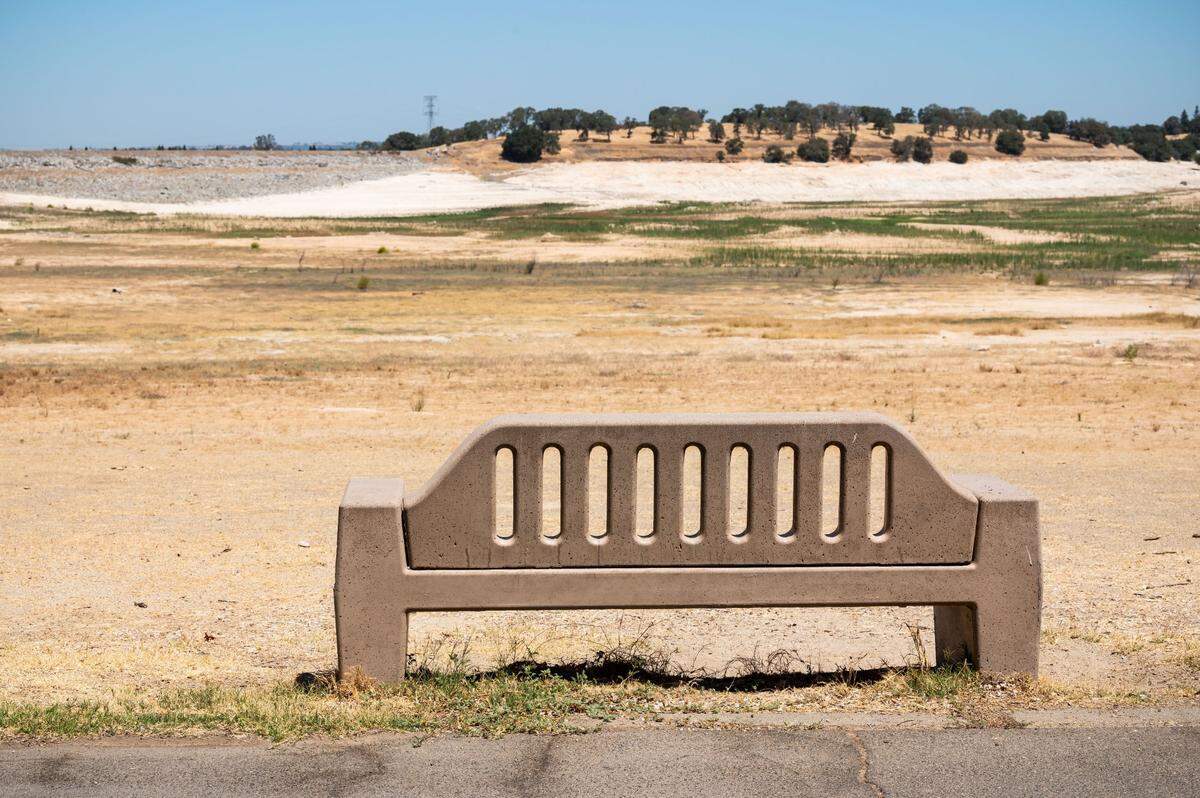
In Folsom this summer, all eyes are on the reservoir. It’s not a comforting sight.
“We drive by the lake and holy moly! I’ve never seen it this low,” said Folsom resident Selina Rasmussen. “It’s scary,” said her husband Eric.
Folsom Lake is the ninth-largest reservoir in California, capable of holding 977,000 acre-feet of water — but is just over a quarter full as one of the hottest summers on record drags on.
Between senior water rights that predate the construction of the reservoir in 1956, a contract with the Bureau of Reclamation and other agreements, the city has access to as much as 38,350 acre-feet of water a year from a variety of sources, according to Folsom’s just-published Urban Water Management Plan, which forecasts the city’s consumption during the next quarter century. An acre-foot is 326,000 gallons.
Those supplies far exceed the 20,000 acre-feet the city of Folsom used last year — and the 25,519 acre-feet the city projects it will need to serve its residents in 2045.
But the amount available to the city can vary dramatically from year to year, depending on rain and snowfall. Under an agreement the city signed two decades ago with a group called the Sacramento Water Forum, the city could conceivably be cut back to as little as 18,000 acre-feet per year “in the driest years,” according to the water management plan. The Water Forum agreement is a treaty between area water districts and environmentalists over management of the region’s water supplies.
The bottom line: In future years, Folsom could be in the position of borrowing groundwater from neighboring agencies in dry years, then paying those agencies back in wet years.
While the city is expected to have enough water to meet its residents’ needs this year, it could face an unusual problem as early as this summer. There’s a risk the water level could fall below the spot on the dam where Folsom, Roseville and the San Juan Water District have their intake pipes, leaving those intakes high and dry — what’s known as a “dead pool.”
That would occur if the reservoir is holding less than 100,000 acre-feet. The lake fell to 150,000 acre-feet in 2014, the last time fears of a “dead pool” arose. This year, the lake was at 268,000 acre-feet and dropping as of Tuesday — down considerably from 361,000 just a month earlier, and it continues to drop.
The Bureau of Reclamation said it is setting up a temporary pumping system on barges in the reservoir that will pull water up to the intake valves “as a contingency for dry fall hydrologic conditions to meet water supply needs beginning end of October through December.”
Can Folsom conserve enough water?
Folsom and other Sacramento-area cities have long been among the biggest water users per capita in the state. That’s due in part to the area’s hot temperatures. But it’s also the result of a land-development ethic driven by large lawns and swimming pools.
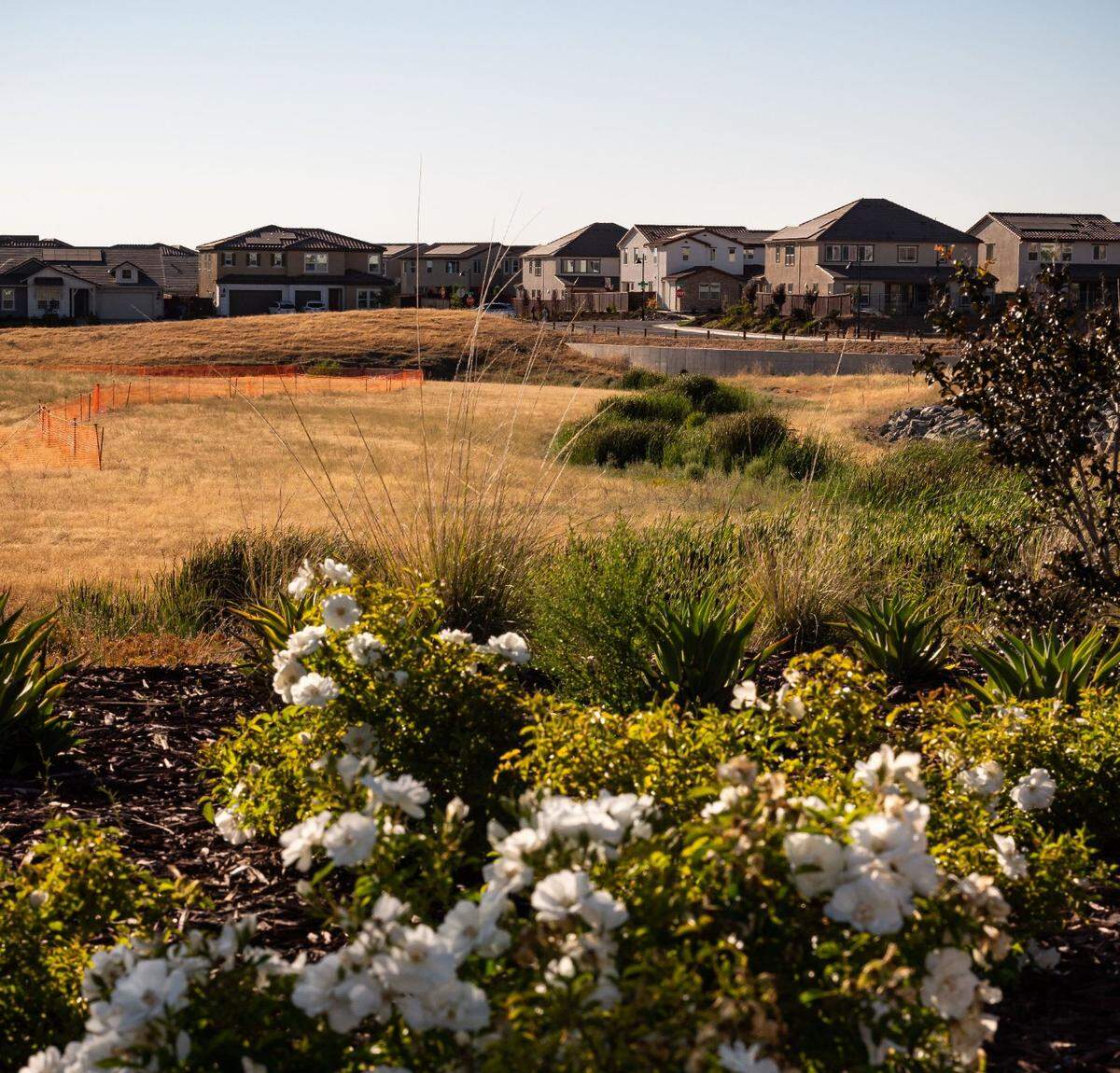
That is changing. The new Folsom homes south of Highway 50 are being built typically on smaller lots. Lawns, which are intense water users, are tiny — and many have drought-resilient landscapes instead of grass. Early data suggest residents in the new areas south of Highway 50 are using less water per capita than residents in the rest of the city.
When Eric and Selina Rasmussen moved into their new home last year in the new Folsom Ranch subdivision off Mancini Parkway, one of the first things they did was replace their front lawn with artificial turf. They also planted a row of cacti and a palo verde desert tree.
“I got tired of (sprinkler) water washing into storm drains,” Eric Rasmussen said. “We need to rethink lawns and plantings that use a lot of water.”
Marcus Yasutake, Folsom’s director of environmental and water resources, said the city has cut water consumption more than 20% in the past 10 years. A big part of that involves city water system upgrades.
In 2016, the city reported it was “losing” 29% of its water through system leaks, pipe breaks, thefts and issues with water meters. That loss dropped to 12% by 2020, city reports show. Folsom officials said those savings essentially amount to 90% of the water needed to serve the new “south of 50” area.
The city’s water waste investigation recently found and fixed a major water leak. The Willow Hill mainline was leaking 1 million gallons a day, having lost chunks of the bottom portion of the pipe. “There were physical pieces of the pipe missing,” Yasutake said.
Folsom also appears to have gotten a handle on a rash of much publicized pinhole leaks in copper water pipes reported by 1,000 homeowners last year.
After a consultant concluded the water supply was low in alkalinity — which caused the defects in the pipes — the city added a chemical called orthophosphate to its supply. While some leaks are still being reported, the problem seems to have abated, Yasutake said.
Climate change impacts water supply
The biggest unknown is how severe the long-term impacts of climate change will be.
In their new water analysis and projections, Folsom water officials say climate change is not directly affecting their water sources or usage enough to alter projections for the city’s water supply and demand for the next 25 years.
Folsom’s recently-released Urban Water Management Plan quotes from a 2020 study of the American River basin, funded in part by the city, that concluded the effects of climate change will be “largely seen closer to the end of the century,” and not within the 25-year timeline covered by the city’s management plan.
That 2020 study offers a bleak assessment of climate change’s impacts, however. Summer temperatures could be 7% hotter by the end of the century, and snowfall will drop by 50% to 85%. The decreased snowfall will make it harder to manage water supplies because the mountains traditionally serve as natural reservoirs for storing water.
Yasutake said the city is not disregarding climate change. “The city is working through the Regional Water Authority on how we can make ourselves more resilient to climate change,” he said.
Are there limits to water conservation?
Yasutake said he believes the recent increase in Folsom residents’ water use was caused by the dry winter, which prompted residents to begin watering their lawns earlier than usual.
But city water users may be hitting a point where they are as water-efficient as they are able or willing to be.
“The city and customers have made significant investment to squeeze as much as we can out of the water that we have,” Yasutake said. “I don’t know how much further (we can go to conserve); I think we might have room for another 10%.”
The biggest advances now will come from regional cooperation among the Sacramento area’s several dozen water districts in creating better pipe system “interties” that allow agencies to shift water back and forth as part of a mutual aid system.
“Investments are needed to be more reliant and resilient, for current and future customers,” Yasutake said.
Folsom hopes to launch a study this year with Roseville, San Juan Water and federal officials to see if there is another place, possibly downstream of the dam, for the cities to draw their water in years when Folsom reservoir levels hit extreme lows.
Eric Rasmussen, standing in his small Folsom Ranch front yard last week, noted that new housing tracts are booming in every direction around his neighborhood, almost of all them planned before the recent series of droughts hit.
He asked whether the city is willing to rethink its projections about how much water it will have annually, and rethink its growth ambitions as well.
“What is normalcy anymore? What happens if we don’t get back to a better seasonality of water?” he said. “I wonder, when do you stop developing?”
This story was originally published July 18, 2021 at 5:00 AM.