
How the economic response to coronavirus will harm Sacramento’s black communities
Editor’s note: This story is part an ongoing series of journalism produced as part a collaboration between The Sacramento Bee, Sol Collective and other community organizations called the “Community to Newsroom Pipeline.” To learn more or to contribute, email us at voices@sacbee.com.
***
The current ordinance creating a moratorium on evictions and foreclosures (which is scheduled to end May 31), coupled with the unemployment insurance and various economic relief efforts seem to be insulating the real impact of the COVID-19 pandemic on our economy, creating a nominal economic reality. However, we immediately realize the disproportionate impact this pandemic will have on the livelihoods of economically sensitive populations.
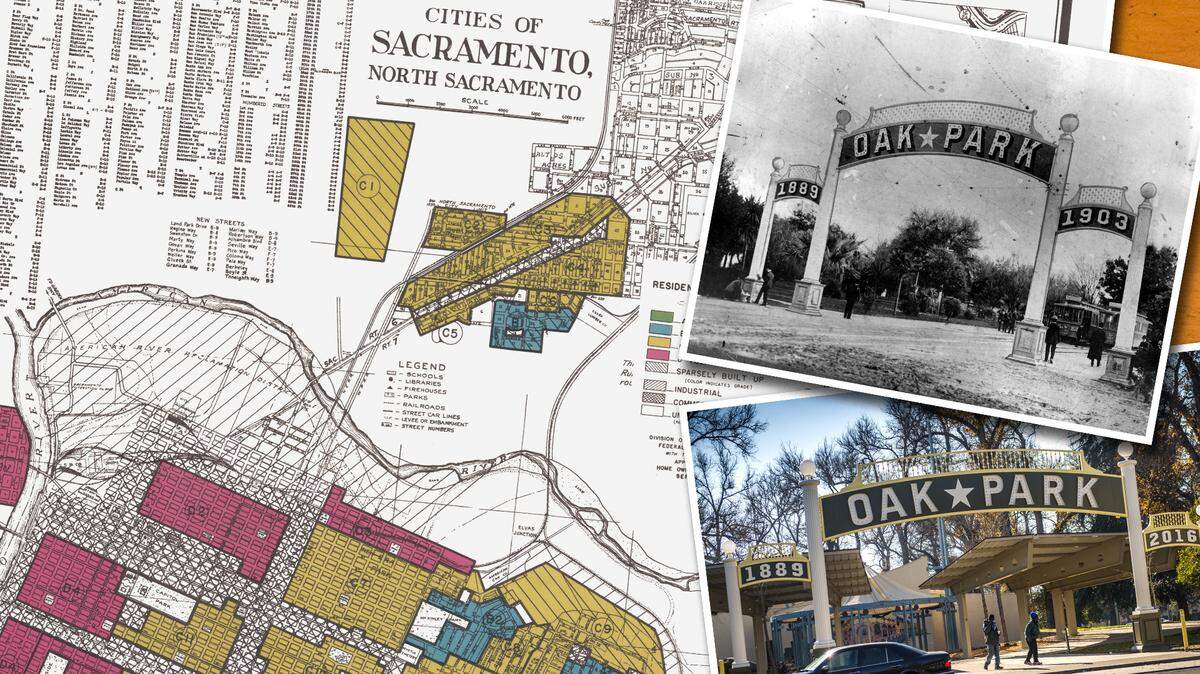
Black communities are especially sensitive to disruptions in economic operations as we already have minimal economic security. My favorite African politician, Kwame Nkrumah of Ghana, characterized this relationship as neocolonialism, meaning our communities’ economic power stems from external actors who consequently diminish our own political power. This principle can be examined when conducting a study of Oak Park and its characteristics of gentrification in the most northern area of the jurisdiction.
The financial crisis in 2008 reduced the wealth of the black community significantly. With a great deal of the crisis centered around housing, the rates of homeownership would starkly decline – with black homeowners at an even steeper rate of regression. This created a vacuum that would be filled by investors and developers.
Economists have simplified the process of gentrification as only being within the principles of the laws of supply and demand. What they won’t say, however, is that financial crises are a direct bi-product of neoliberal economics. Not to mention one of the reasons the wealth gap is as wide as it is currently is a result of historic redlining, in which the remnants of this practice shows only nominal signs of progression.
Redlining was the practice of relegating black and white residents within jurisdictions to different neighborhoods, thereby segregating the two populations. Redlining burgeoned the usage of an appraisal system by the Home Owners Loan Corporation (HOLC), a government sponsored corporation. HOLC appraisers aggregated census data and survey results in order to predict how homes would appreciate. The data collected would be used to create a categorized color-coded risk aversion map of neighborhoods.
The categories were, A(green), B(blue), C (yellow), and D(red). Neighborhoods categorized as green were the most desirable and were homogeneously white, while red neighborhoods were largely black. The banking industry also utilized these maps to create residential security maps, referring to this “tool” when deciding where to lend. Arbitrarily drawing borders through redlining relegated Black people to be able to only live in certain areas within metropolitan areas. The effects of redlining are still felt to this day, and will only continue to play a part in the widening of the wealth gap.
The immediate financial impacts of COVID-19 are already being seen. As of Aril 29, unemployment filings had reached roughly 3.7 million in California. The stay at home order mandated by Gov. Gavin Newsom resulted in the shutdown of many businesses in order to curb the spread of the virus and save lives.

In Sacramento, the stay at home order, combined with the closure of restaurants, hotels, shopping centers and the cancellation of major events, are all expected to have a significant impact on the city’s sales tax, transient occupancy tax (TOT), parking revenues and business operations tax (BOT) receipts. It is estimated that the revenue loss for the 2019-20 fiscal year will be approximately $32.8 million and another $59 million in 2020-2021 (Link to Proposed Budget).
This is an example of how insulated we currently are to the real effects of this economic disruption in the long run. The individuals who will feel the worst impact of this crisis will be ones who reside in economically sensitive populations.
On Nov. 6, 2018, Sacramento voters approved a new version of the city’s Measure U sales tax, extending it and raising it from a half-cent to a full cent. This tax was intended to be directed towards inclusive economic development efforts, which was supposed to offset the implications of an increased tax on communities in the periphery of the city’s economy. And while there is much speculation over where the expenditures will actually land, the pandemic’s effect on city revenue, and development in underinvested communities, will present another burden disproportionately affecting the black community.
Initiatives like the City’s Cannabis Opportunity Reinvestment and Equity (CORE) program is an example of inclusive economic development that is intentional about incorporating communities who live on the margin of economic calculation into the center of the economy. However, the Office of Innovation and Economic Development has their own guidelines to facilitate inclusive economic development within the city of Sacramento.
Sacramento created a COVID-19 relief fund to mitigate the financial effects of the virus on our community. One hundred and one small businesses were selected to receive zero-interest loans from its $1 million COVID-19 economic relief fund. My analysis of the list shows a disproportionate amount of relief going to District 4.
Numerically, District 4 received $551,750 between 55 businesses, and District 3 received $104,992 between 8 businesses. District 3 and District 4 are home to some of the most affluent neighborhoods in Sacramento, including Land Park and The Fab 40s. The reality is worsened for black businesses as they already face challenges accessing upfront capital to start businesses, and now face trouble accessing relief funds during a crisis. ABC News released an article highlighting how black business owners aren’t able to access funds from the most recent round of funding from the CARES Act, which includes $60 billion in set-asides for minority and other underserved borrowers.
From my studies of gentrification, one of the earliest signs of its encroachment is the shutting down of local family owned businesses who have been residing in the community for at least a decade. Once they close, they normally do not come back and are replaced either by a chain company, or a more “urban” or “hipster” location whose aesthetic euphemistically modernizes the landscape.
This dynamic creates friction as a heavily capitalized demographic realizes the investment potential of an area with a decreasing black population that has been subject to underinvestment and over-policing. So as small black businesses do not get the much-needed support during a crisis, we will see yet another vacuum be filled by developers and investors.
Or as they will call it, “the laws of supply and demand.”
Khalil Ferguson is a native of Richmond, California and a graduate from Sacramento State University. He is a political economist, guerilla intellectual, and Author of “Subservience: Political and Economic Decisions that Created a Global Black Underclass,” which is available on Amazon. Khalil is working towards his goal of earning a PhD in International Political Economy.
This story was originally published May 29, 2020 at 4:10 PM.