Truxel bridge design OK’d by Sacramento City Council as car-free advocates urge different path
The Sacramento City Council voted Tuesday night to proceed with a $227 million bridge over the American River, a half-mile from Interstate 5 linking South Natomas to the city’s core.
The council voted 7-1 to move ahead with the proposal with Councilmember Mai Vang abstaining. Councilmember Lisa Kaplan, who represents North Natomas, voted against the current plan, pointing to climate goals and the dangers of more car infrastructure.
“I just can’t support another bridge with vehicles,” Kaplan said. “Our streets are not safe.”
Of the 56 people who made public comments, 38 pleaded with the council to consider a car-free option, which they argued would be cheaper to build.
“What is this aspirational dream we have that we can spend money that we don’t have?” Alyssa Lee asked the council, citing both construction and ongoing maintenance costs. “We’re facing $77 million of cuts this year.”
Personal vehicles cause more wear and tear to roads than transit, bicycles and pedestrians, and the city estimated in 2024 that it had nearly $800 million in deferred infrastructure maintenance costs.
The bridge would span from Sequoia Pacific Boulevard to Truxel Road over the river, the second such crossing to Natomas besides Interstate 5. Councilmember Karina Talamantes, who represents South Natomas, had argued that the bridge was necessary for emergency access.
The next step for the bridge proposal is an environmental review.
Kaplan and many residents also raised concerns about the city’s greenhouse gas reduction commitments.
“We’re in the middle of the climate emergency. We just watched L.A. burn,” said Michael Hutnick. “Build a city of the future.”
Fedolia “Sparky” Harris, the project planner, previously said that because the city rejected a car-free bridge proposal 12 years ago, Public Works staff could not revisit that option without new direction from the council.
Harris also noted that allowing cars on the bridge would increase traffic on Truxel Road, part of the city’s “high-injury network” — streets with the most severe and fatal crashes.
More traffic on that road, advocates argued, would make it even more dangerous in a city where 32 people died on city streets last year.
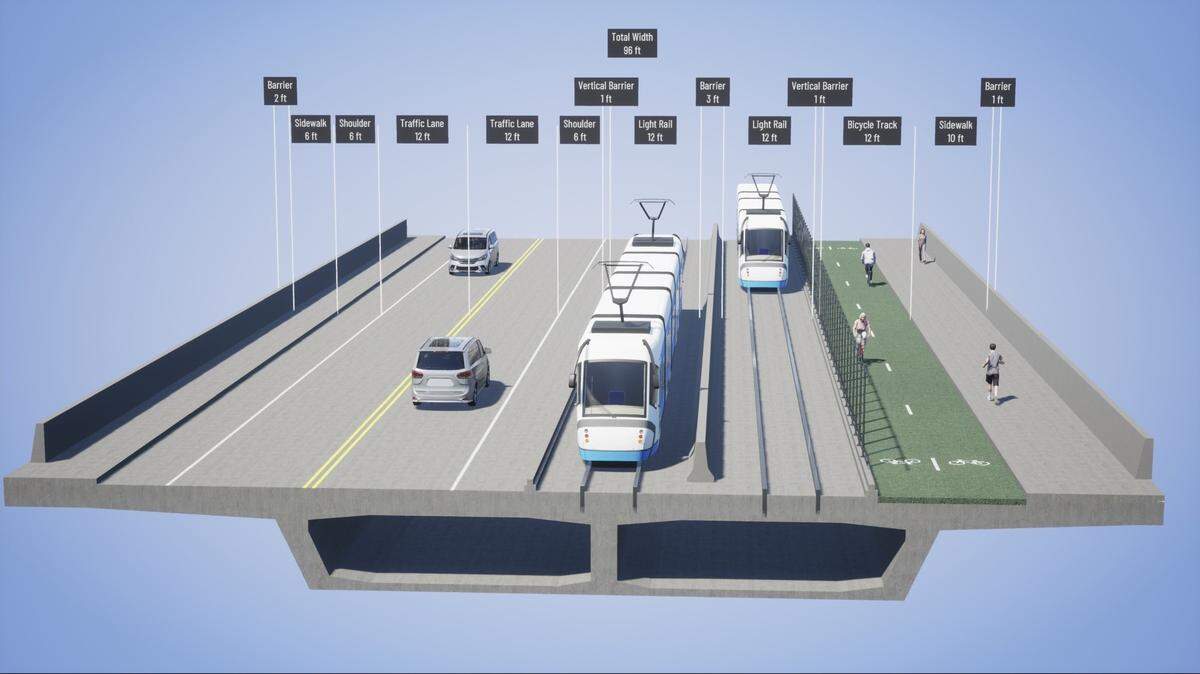
The council approved the proposal recommended by the Department of Public Works known as Alternative 3B. The bridge option would give cyclists, pedestrians and light rail trains their own dedicated spaces, while accommodating two lanes of vehicle traffic.
The Active Transportation Commission, a city advisory panel, had urged the council to reject all four proposed options until a fifth, car-free option had been considered.
This story was originally published February 19, 2025 at 5:00 AM.