Can Sacramento’s climate plan keep roads and riders safe? Residents can weigh in
Sacramento officials have drafted a plan to prepare transportation networks for the intensifying effects of climate change, and they’re seeking public comment on the document.
The SacAdapt plan outlined the risks to the transportation system and the people who use it, along with strategies for mitigating those risks. Residents can comment on the draft online until Feb. 12 at sacramento.konveio.com/sacadapt.
Climate change has already made summers in the California capital more likely to be blisteringly hot. Previous Bee reporting has shown that seven of the 10 hottest Sacramento summers on record happened in the last 10 years. Extreme heat can affect transportation in many ways: warping asphalt on the roads during heat waves and even warping light rail tracks at temperatures of 104 degrees or higher; causing blackouts that wipe out light rail service and traffic signals; and making life miserable — even dangerous — for cyclists and pedestrians in the direct sun, particularly those with no other transportation options.
Increasing wildfires degrade air quality, which is particularly harmful to people who walk or bike. Researchers also found that climate change increased the likelihood of major storms, which could lead to power outages, discomfort and flooding — ranging from minor street flooding to major inundation from the city’s rivers.
A central strategy in the plan is the expansion and maintenance of Sacramento’s famed urban canopy and updating landscaping standards. By providing shade, these urban trees make walking and cycling safer in the heat, and they cool down whole neighborhoods; landscaped areas help decrease the “urban heat island effect.” The plan proposes expanding access to drinking fountains or water bottle refilling stations in public areas, particularly for vulnerable populations in areas with more heat and less shade. The plan calls for the city to step up pruning to help keep the canopy healthy and prevent power outages — a fallen tree or even a downed branch could take out a power line, and a power line that serves light rail could have particularly significant consequences.
Under the plan, the city would prioritize undergrounding power in new developments.
One of the most expensive strategies in the plan was to retrofit all bridges in the capital to current seismic standards and elevate roads and bridges to make them more resilient to flooding events.
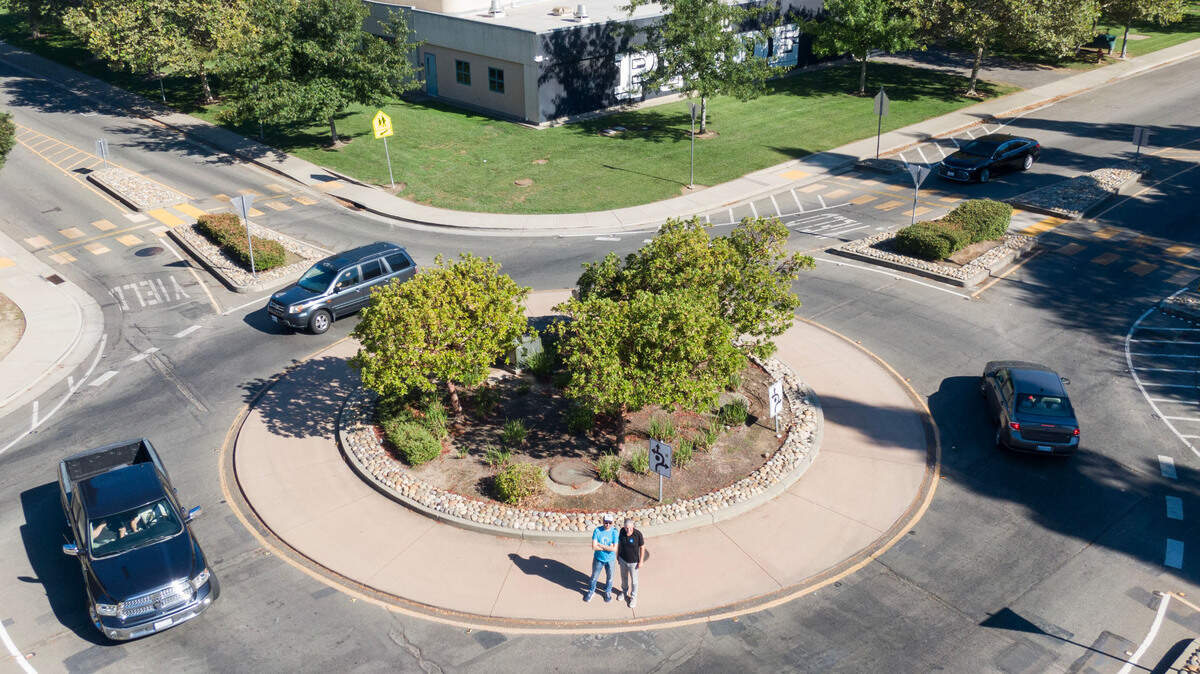
A number of the strategies outlined in the plan could help the city achieve its road safety goals, but one in particular stands out: SacAdapt says, “Consider roundabouts instead of traffic signals during street (re)construction projects.” The Federal Highway Administration identified roundabouts as a “proven safety countermeasure.” They primarily make intersections safer by physically forcing drivers to slow down; by eliminating left-hand turns, which tend to carry more risk of a crash; and by eliminating red-light-running and its attendant reckless driving maneuvers.
Because roundabouts don’t rely on signals, they are also fully functional during power outages.