California cut funding for bikes and pedestrians. What did neighborhoods want?
California drastically reduced the funding for a popular grant program for projects that make travel safer for bicyclists and pedestrians. The funding cuts to the Active Transportation Program — which went into effect for the 2024-25 grant cycle — have not been reversed.
The state poured money into the Active Transportation Program during flush times, but in the face of dire budget projections, the Legislature and Gov. Gavin Newsom opted to claw much of the funding back.
It’s had a profound effect on which projects move forward.
In the 2022-23 grant cycle, the California Transportation Commission gave out money to Active Transportation Program applications that scored 89 points out of 100 or higher. In the 2024-25 cycle, after losing $400 million of funding, small urban and rural applicants had to score 95 points and urban applicants had to score 96 to be considered. That meant that a project could be exceptional and still be rejected.
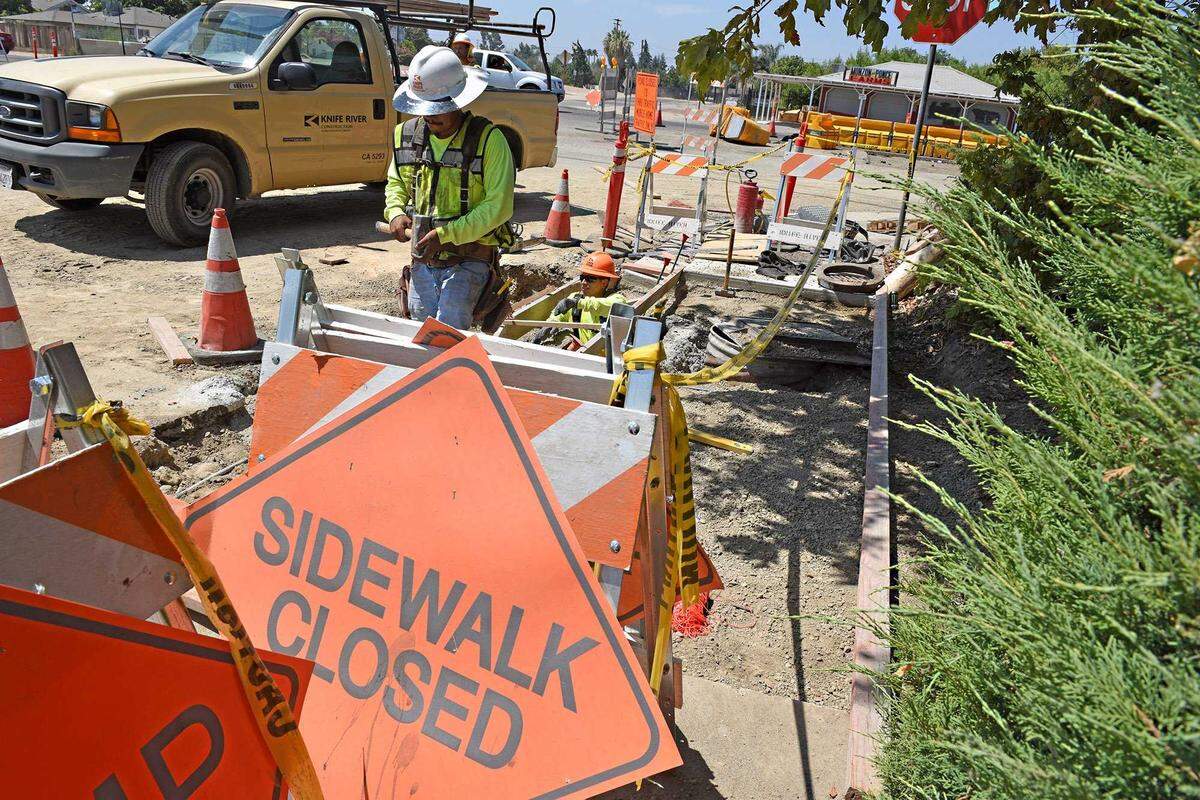
The Sacramento Bee requested the applications that local transportation agencies submitted to the commission. Here are 13 of the highest-scoring projects, three of which were in the city of Sacramento, that did not win state funding.
$12.9 million: Bike lanes and sidewalks for Stockton children
Stockton scored 96 points out of 100 in its request for $12.9 million to build bike lanes and construct or improve 2,801 feet of sidewalks in Van Buskirk, a neighborhood in the southwestern part of the city. Five schools would have been served by the improvements. On one of the streets in question — Manthey Road, a designated trucking route with lanes up to 20 feet wide and no lighting in this area — staff said that 85% of the corridor had no sidewalks even though a significant portion of drivers traveled at or above 50 mph.
Despite the loss in the Active Transportation Program, this is one of the projects that will be partially implemented. A representative for the city said that the Department of Transportation created a “pared-down” version of the $12.9 million request. Staff submitted the request to the local metropolitan planning organization for the regional segment of the Active Transportation Program and won $6.5 million.
$4.4 million: Bike lanes and sidewalks in El Monte after four deaths
El Monte, a city of 100,000 people about 13 miles east of downtown Los Angeles, scored 95 out of 100 on its request for $4.4 million to reduce the space for cars on Valley Boulevard, upgrade sidewalks and add almost seven miles of dedicated bike lanes, including some bike lanes separated from vehicles by physical barriers.
Four pedestrians were fatally struck by drivers in the area in four years, and more than 30 crashes injured people walking or biking. Multiple teenage boys had been hit by cars on Valley Boulevard. Staff wrote that 12 schools were within a one-mile radius of the project — the closest are Shirpser, Columbia and Payne elementary schools, and El Monte High School.
$19 million: Bike lanes and sidewalks for Coachella streets where kids got hit
The low desert city of Coachella scored 95 in its request for $19 million to build, among other things, a 3.6-mile fully separated bike and pedestrian path and 1.4 miles of sidewalks; the project would also add shade structures to help people during the hot summer months.
Between 2013 and 2023, staff wrote, 28 people under 19 were hit by cars while walking or biking in Coachella. The improvements were planned for an area that had five schools within a half-mile radius: Valle del Sol, Martin Van Buren, Cesar Chavez and Palm View elementary schools and Bobby Duke Middle School.
Celina Jimenez, the director of economic development for the city, said that Coachella found some funding for design but has no money for construction. Coachella plans to resubmit the project to the Active Transportation Program.
$2.5 million: Bike lanes and sidewalks for elementary students in Chula Vista
Chula Vista, sandwiched between San Diego and the border with Mexico, scored 94 in its request for $2.5 million to fund a plan for 2,490 feet of new sidewalks as well as construct ramps at each crossing within the project’s limits.
Children at Harborside Elementary School could have used the sidewalks on segments of Industrial Boulevard and Anita Street; additionally, staff said that people in the neighborhood could have walked to a nearby trolley station, or ridden in new bike lanes.
Patrick Moneda, a principal civil engineer for the city, said that after the rejection, the project received partial funding for preliminary engineering in the regional competition for the Active Transportation Program.
$8 million: Pedestrian improvements in a dangerous LA-area neighborhood
Los Angeles County scored 94 in its request for $8 million to improve sidewalks and crosswalks in Willowbrook, which sits along the Interstate 105 freeway between Lynwood and Compton. Staff wrote that the unincorporated community of about 30,000 people faces “some of the region’s highest rates of fatal and severe injury collisions.” Street racing had become a common concern for residents.
In Willowbrook, 17% of households did not have access to a car. The project, staff said, would have benefitted children at Ritter Elementary School and King/Drew Magnet High School, as well as employees and patients at Martin Luther King Jr. Hospital. Staff looked at data over the 11 years prior to the application and saw that 239 collisions involved pedestrians or bicyclists in Willowbrook; in total, almost 200 of those crashes caused injuries. Nine people died and 33 people were severely injured.
$11.6 million: Sidewalks for Olivehurst children
Yuba County scored 94 out of 100 in its request for $11.6 million to put in sidewalks, bike lanes, crosswalks and ramps near two schools, Olivehurst Elementary School and Yuba Gardens Intermediate School.
Two streets near the schools had significant gaps in the sidewalk, and the existing sidewalks, staff wrote, were not compliant with the Americans with Disabilities Act. “In many areas,” staff wrote, “open roadside ditches, power poles, mailboxes, parked vehicles, and fences force pedestrians and bicyclists into the (travel) lane.”
In these areas, there had been 35 collisions that led to injuries in 10 years, including 11 collisions that injured pedestrians or cyclists.
$30.7 million: A safer bike and pedestrian path to bus and BART in Oakland
Oakland scored 94 out of 100 for its $30.7 million proposal to make access to regional transit hubs safer for cyclists and pedestrians in East Oakland with a landscaped, fully separated path. Most of the work would have run along 73rd Avenue between MacArthur Boulevard and International Boulevard, converting the existing median into a path. South of International, the project would have detoured to a side street to ferry riders and pedestrians all the way to BART’s Coliseum Station.
In addition to the bike and pedestrian path, the project would have also added new sidewalks, crosswalks and lighting.
From 2017 to 2021, staff wrote, 39 collisions involved cyclists and pedestrians along the corridor. Of those, 15 occurred at one intersection: 73rd and International. Because the lanes, at 12 to 14 feet across, were disproportionately wide, some drivers traveled over 60 mph. The posted speed limits are already lethal in the event of a collision with a pedestrian: They vary from 30 to 40 mph.
Kent Bravo, a spokesperson for the city, said that Oakland had used local money for the design phase but does not have the money for construction. The Department of Transportation plans to reapply to the Active Transportation Program in Cycle 8.
$13.5 million: A new cycle track in busy downtown Oakland
Oakland scored 94 out of 100 for its proposal to use $13.5 million to install a new 0.8-mile two-way separated cycle track on Franklin Street. The project would start near the 12th Street BART on Franklin and head toward the intersection where Franklin reaches Broadway at 22nd Street, and then continue across Broadway for one block to Telegraph Avenue. Telegraph already has bike lanes separated from traffic by barriers and parked cars.
The project would have also constructed two raised crosswalks, which keep pedestrians safer and slow down traffic, as well as seven curb extensions, in which the sidewalk is designed to protrude somewhat farther into the roadway to increase pedestrian visibility and to reduce the amount of time that pedestrians share space with cars.
Over 10 years, more than 40 collisions in the area involved pedestrians or cyclists, staff wrote, and one crash killed a person.
Oakland spokesperson Bravo said that the Franklin Street project had been “rescoped” so that the city could put in a facility for bike riders when the city repaves the road with local funds. They will now have “a one-way separated bike lane on the east side of Franklin between 11th and Broadway,” rather than the two-way separated track. It will not extend onto 22nd Street.
$13.3 million: Closing sidewalk gaps and adding a path after Redding crashes
Redding scored 94 out of 100 for its $13.3 million proposal to install new sidewalks where none existed, a fully separated bike and pedestrian path, as well as roundabouts at two intersections where drivers traveled dangerously fast. The project was slated for parts of Victor Avenue, Old Alturas Road, Dana Drive and Bradford Way, where the posted speed limits vary from 30 mph to 40 mph, speeding is common and pedestrians are, in some sections, forced to walk inches away from cars.
In the area of the project, staff wrote that from 2012 to 2023, two pedestrians were struck by drivers and injured while crossing at locations that lacked proper crosswalks. Seven cyclists were also injured in that time — most of them broadsided.
$2.2 million: Wider sidewalks and new bike lanes on a treacherous Vallejo road
Solano County and the city of Vallejo worked together on a proposal to improve a half-mile stretch of Benicia Road, scoring 93 out of 100 for their pitch. They sought to decrease the number of lanes, add bike lanes, widen sidewalks and install enhanced crosswalks that shortened pedestrians’ crossing distance. Without the project, residents on the high-traffic road just west of Interstate 80 had to cross 60 feet of four busy lanes.
The thoroughfare, staff wrote, is very dangerous. Looking at the number of crashes per mile, staff found Benicia Road’s collision rate was 41 times higher than the county average. Recently, a driver struck and killed a pedestrian.
Ultimately, the project won $1.6 million from the pot of money that the program sends to metropolitan planning organizations — 72% of the initial grant request. The Solano County Public Works engineering manager, Matt Tuggle, said that his department was currently in the design phase.
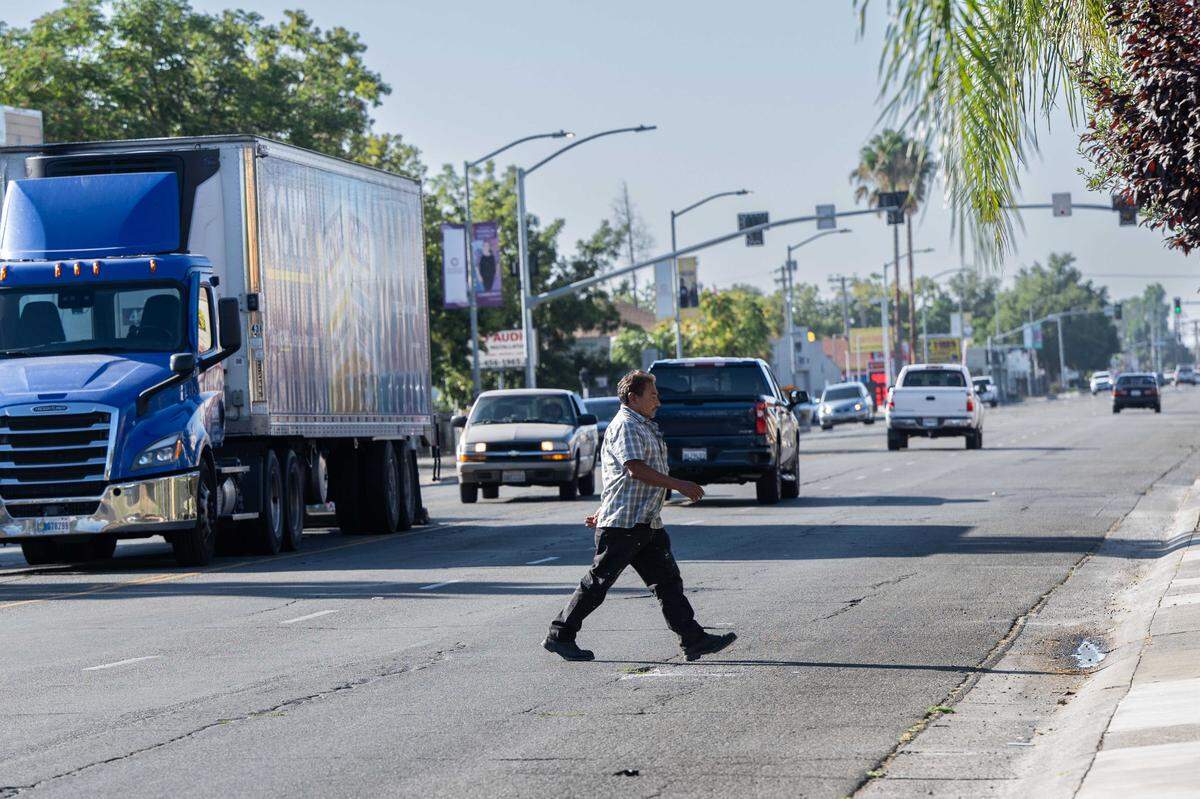
Sacramento’s three high-scoring projects did not win funding
Freeport Complete Streets Corridor Project: Sacramento requested $2 million for the environmental clearance phase of this project to improve intersection safety, add pedestrian refuge islands, narrow the space for vehicles and add fully separated bike paths to a dangerous stretch of Freeport Boulevard where multiple pedestrians and cyclists have died. The improvements are planned between Blair Avenue near Sacramento Executive Airport and Sutterville Road. The city’s application scored 92 out of 100. Gabby Miller, a spokesperson for the Department of Public Works, confirmed that it is still unfunded.
Northgate Boulevard Complete Streets Project: Sacramento requested $1.9 million for the environmental clearance phase of a project to narrow the space for cars on Northgate Boulevard and add separated bike lanes and sidewalk improvements. The application scored 91 out of 100. The project is planned between Del Paso Boulevard and Interstate 80. Sacramento ultimately received funding from SACOG, the Sacramento Area Council of Governments, which will become available in the 2026-27 fiscal year.
Envision Broadway in Oak Park: Sacramento requested $14.9 million toward narrowing Broadway from four lanes to two between Martin Luther King Jr. Boulevard and Franklin Boulevard, adding new buffered bike lanes, new signals and new crosswalks and widening the median. The proposal scored 90 out of 100. Construction on the larger project is still unfunded. Staff did find the money for a small piece of this larger project: The city will construct a permanent version of the quick-build improvements at the intersection of Second Avenue and Broadway.