Is one death enough to fix a dangerous Sacramento County road?
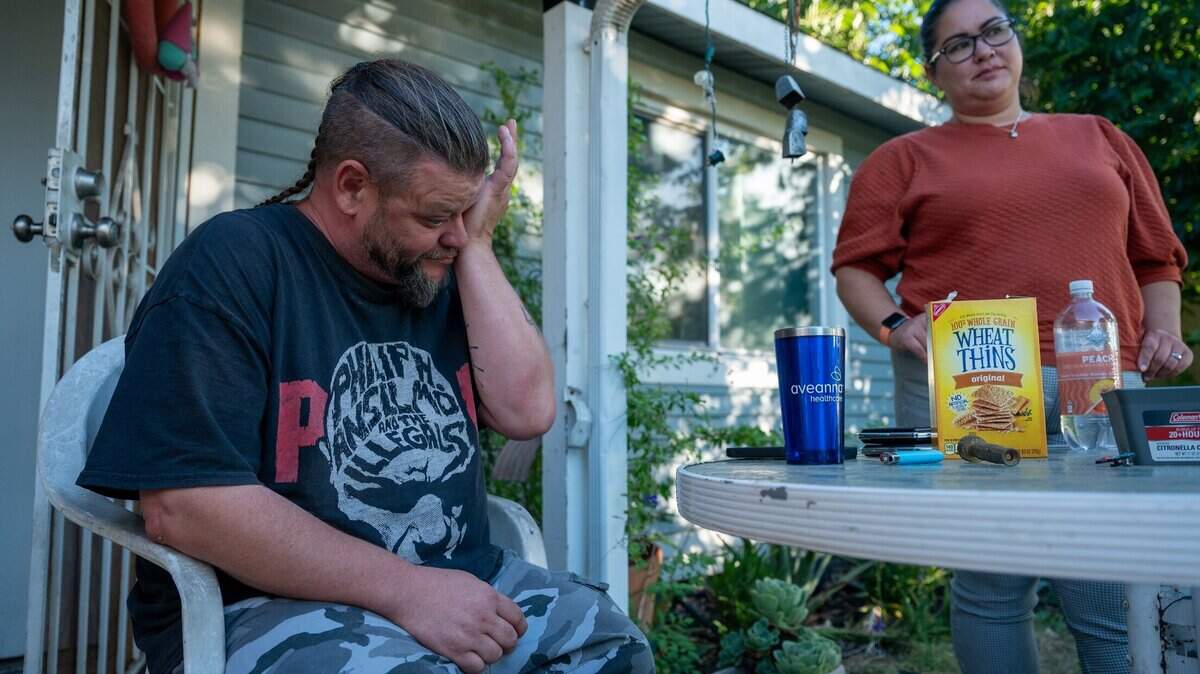
Two years after a North Highlands teen was fatally struck while walking on a dangerous stretch of road with no sidewalk, experts and the teen’s family are challenging Sacramento County’s contention that the roadway cannot be improved.
The California Highway Patrol report shows that a driver veered into Shawn Jordan, 18, on Walerga Road in the early evening of June 15, 2024. At the time of the hit-and-run, the purple-haired teenager was walking home from the bus stop in an area of the viaduct with no sidewalk. He died of his injuries in the hospital five days later.
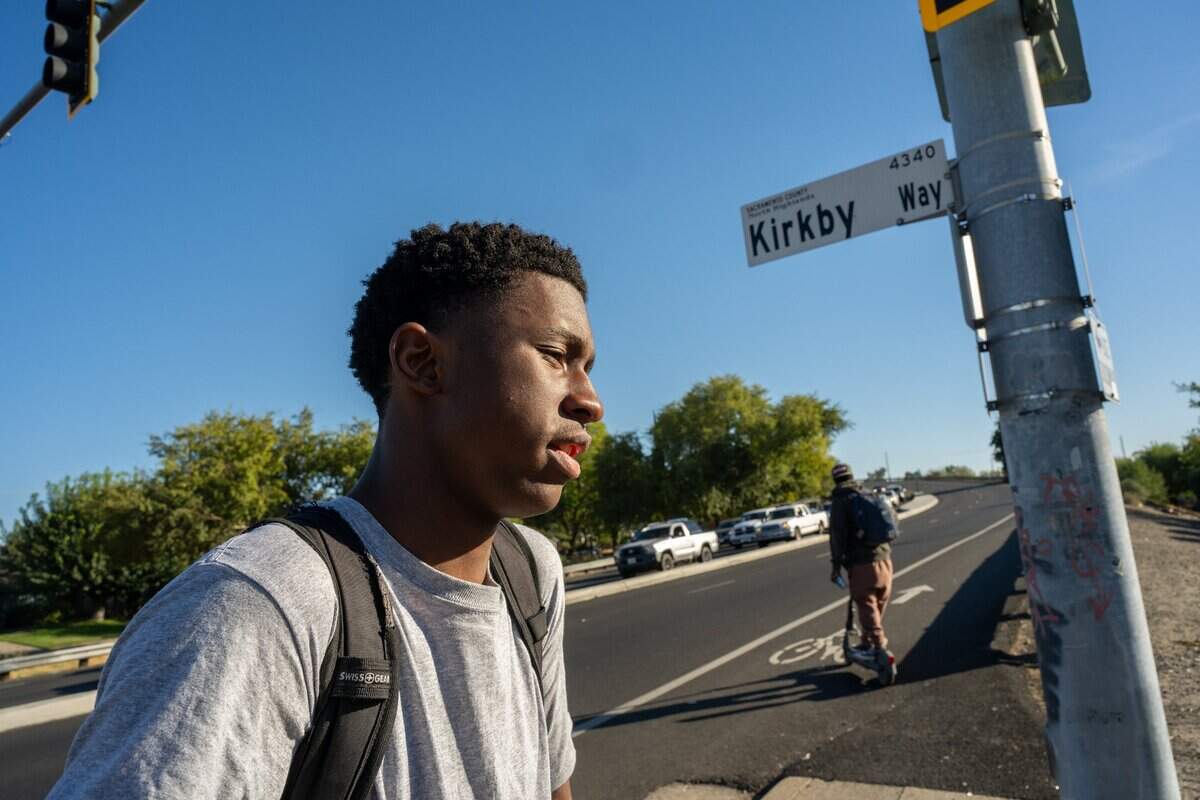
Since the death of the aspiring musician, his parents have advocated for the county to install pedestrian safeguards on the Walerga Road overpass in North Highlands, which many children use to get to and from a cluster of schools north of the train tracks. There is no sidewalk along most of the bridge, which was built in the 1960s. Pedestrians walk in a “multi-modal” bike lane with just a painted white line between them and vehicles.
The legal limit on the road is 40 mph — a speed that research has shown is likely to kill a person on foot in the event of a crash.
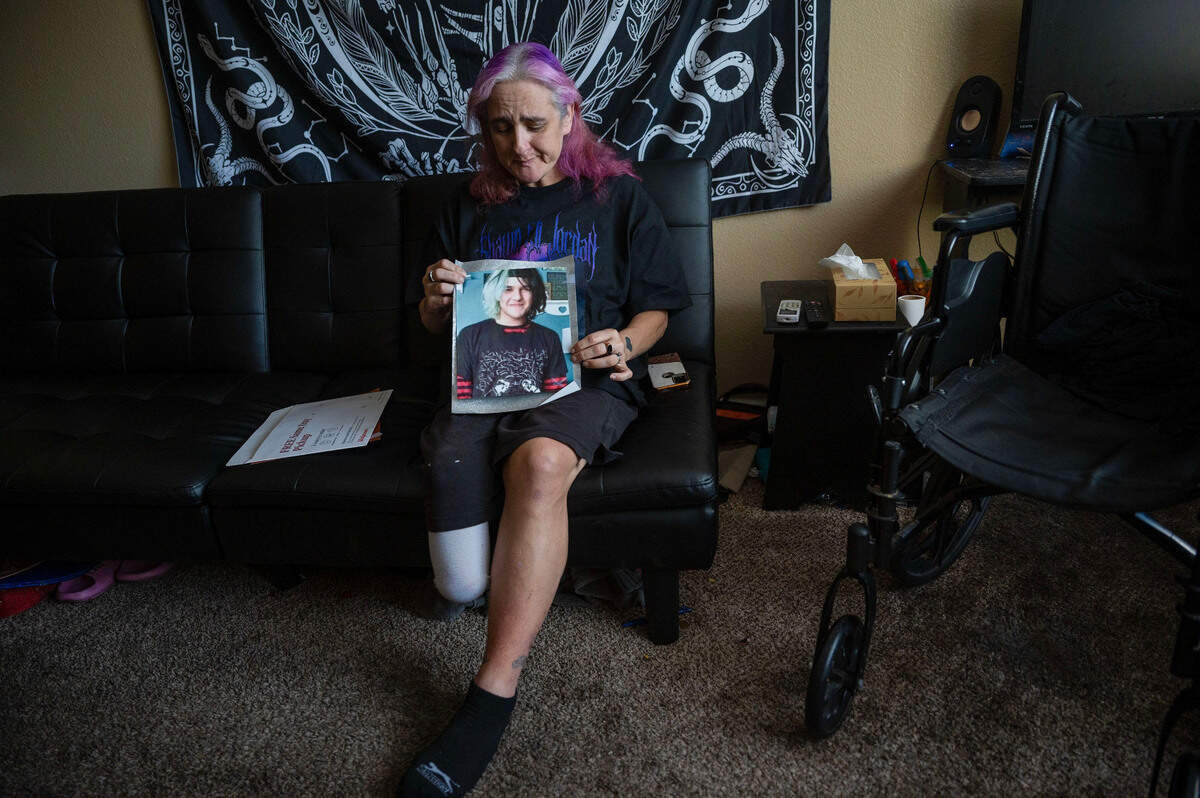
At a memorial for Jordan on June 20, 2025, his father, Seth Jordan, and his stepmother, Aubrey Fong, displayed a posterboard with smiling photos of the purple-haired young man. Next to the photos, they wrote a message to local officials urging them to take action.
In large letters, they wrote, “Nobody else should have to die.”
A spokesperson for the Sacramento County Department of Transportation, Matt Robinson, said that any change to the roadway would require a large, expensive construction project. He said that because there are so many dangerous roads in the county, engineers would need to see more deaths or injuries before prioritizing Walerga Road for intervention.
“We haven’t had a string of fatalities on that road; we’ve just had one,” he said. “One is too many, but in the grand scheme of things, is it enough to bump it up?”
Experts said that statement exposed faulty logic. They said they believed the injury and death rates were only low because most pedestrians and cyclists would go miles out of their way to avoid walking right next to high-speed cars on the bridge — just as Jordan did most of the time, Fong said, by taking a less direct bus route.
“People see the risk, and if they have any alternative at all, they’ll take it,” said Amelia Neptune, director of the Bicycle Friendly America program at the League of American Bicyclists. “That’s a failure.”
Rebecca Sanders, who has a PhD in transportation planning and has extensively researched street safety, said, “They’re sort of relying on the fact that this is so dangerous that people are self-selecting out to justify not doing anything.”
On the two-year anniversary of his son’s death, Jordan’s father thought about the county’s explanation for doing nothing to improve the bridge. He blamed the county more than the hit-and-run driver who killed his son.
“If there was a barrier,” he said, “my son would be alive.”
Does bridge have space for pedestrian safety?
The as-built plans for the viaduct show that the vehicle travel lanes are 12 feet wide. Jerry Champa, a retired Caltrans engineer who now advocates for street safety, said that’s the lane width often used for freeways. Passenger vehicles on a surface street, he said, simply don’t need that much space.
Robinson said the county couldn’t remove a lane to slow down traffic and to reallocate the space to pedestrians — the traffic volumes, he said, are too high. Beyond that, the lanes on the overpass must be wide enough to accommodate semi trucks, he said, which are allowed to use the road.
But Champa said that “for decades,” engineers have found it acceptable to leave one lane wide enough for trucks while narrowing inside lanes. It was “awfully conservative,” he said, to suggest that all four lanes in this mostly residential area needed to be wide enough to accommodate a semi.
Champa added that narrowing just one lane in each direction by a foot or two would give the county more space to allocate to vulnerable road users and to potentially add in physical protections such as the concrete Jersey barriers or K-rails often seen shielding construction workers on road projects. A Jersey barrier, Sanders said, typically requires 18 inches of road width — one and a half feet.
After reviewing the as-built plans, Champa suggested eliminating the painted median and narrowing the inside lane to 11 feet, 6 inches; trucks could use the far-right lane on each side. The median alone was 4 feet and an “optional” element. Champa said his recommendation was based on “standard practice.” Before adding in a physical barrier, the county would have to analyze whether the bridge could withstand the weight, but certain barriers or curbs with vertical separation could improve the status quo, too.
Putting safety over lane width was possible, he said. For creative, evidence-based engineering, he liked to point people to the safety-over-lane-width redesign of the Golden Gate Bridge.
How did Golden Gate stop deadly crashes?
Sacramento County has pointed to engineering guidelines about lane size to explain why the lanes cannot be narrowed to give more of the space on the viaduct to people outside cars. An engineer from the Golden Gate Bridge told The Bee that such guidelines can be flexible when human lives are on the line.
John Eberle, the district engineer for the Golden Gate Bridge, said that more than a decade ago, engineers decided to narrow lanes to prevent deadly head-on crashes. On that bridge, the engineers ultimately reallocated the space they took away from cars to a physical median separating north- and southbound traffic.
Up until 2015, the Golden Gate had six 10-foot lanes — two feet narrower than the lanes on Walerga. It has long had a speed limit of 45 mph — 5 mph faster than the limit on Walerga. The 10-foot lanes were standard in the 1930s when the bridge was originally constructed. Although speeds had increased dramatically since the ’30s, the roadway lacked a median.
“The speed limit was 45 mph, but you just had a little plastic tube between northbound traffic and southbound traffic,” Eberle said.
The plastic tubes were a visual cue, but they couldn’t actually stop a drifting vehicle. Repeatedly, drivers would cross over the line and end up in devastating head-on collisions.
The district decided to act.
In order to install a one-foot-wide solid median to stop head-on collisions, the engineers made a plan to shave six inches off of the inside lanes, bringing them down from 10 feet wide to 9 and a half feet wide. The 10-foot width was already pretty slim, and engineers wanted to cut them down even more.
Those narrower lanes would go against design standards, and the board of directors for the bridge district had to review the plan to make a formal exception at a public meeting. The board weighed the pros and cons.
“The pros — having a safety barrier — outweighed the cons of having a 9 and a half foot lane,” Eberle said. “The pros are, since we installed the barrier, we haven’t had one crossover incident. And a crossover incident — they can be very bad.”
The cons, Eberle said, didn’t seem as important: He expected people might sideswipe the barrier in the narrowed center lanes, and that they might increasingly sideswipe other drivers. Those crashes would be unfortunate but much less serious than any head-on collision.
Did narrower lanes cause more problems?
The bridge sees close to 100,000 vehicle crossings a day. But despite the high volume of traffic and the engineers’ predictions about the tradeoff they made, Eberle said that the “cons” of taking away space from cars never materialized.
“We really haven’t seen an increase in people on the roadway either impacting the barrier itself or sideswiping other vehicles,” he said. He attributed it to drivers paying more attention due to the obviously narrower space for their cars.
“You’re in a nine-and-a-half foot lane, and you know that,” he said. “So they’re taking care.”
The results delighted him.
“This project here, it really was very successful, in that there was an issue that was identified, people came together and agreed that something should be done,” he said. “You look out there now and say, ‘How could we have had a 19-inch cone, spaced 25 feet, as the only barrier?’”
Two years after Jordan’s death, Robinson confirmed that Sacramento County engineers had looked at the Golden Gate model. He said they determined that on the northbound side of the bridge, the lanes could be narrowed between one and two feet without getting into a major, costly construction project. However, in general, he said that “narrowing the width would cause problems for larger vehicles” and thus was not possible.
Neptune, the cycling advocate who’s lobbied for safer infrastructure nationwide, was not surprised by that type of thinking.
“It is not uncommon in the U.S. for transportation engineers and planners to solely be thinking about people in cars,” she said. “Instead of starting with safety, we’re continuing to start with and lead with vehicle volumes.”
Neptune said she wished that county officials would take a walk along that viaduct right next to 50 mph traffic so they could see the conditions that children on their way to school continue to face — and that Jordan experienced the day he never made it back to his dad’s house.