
Are more people getting abortions? New data shows change in what was a 30-year trend
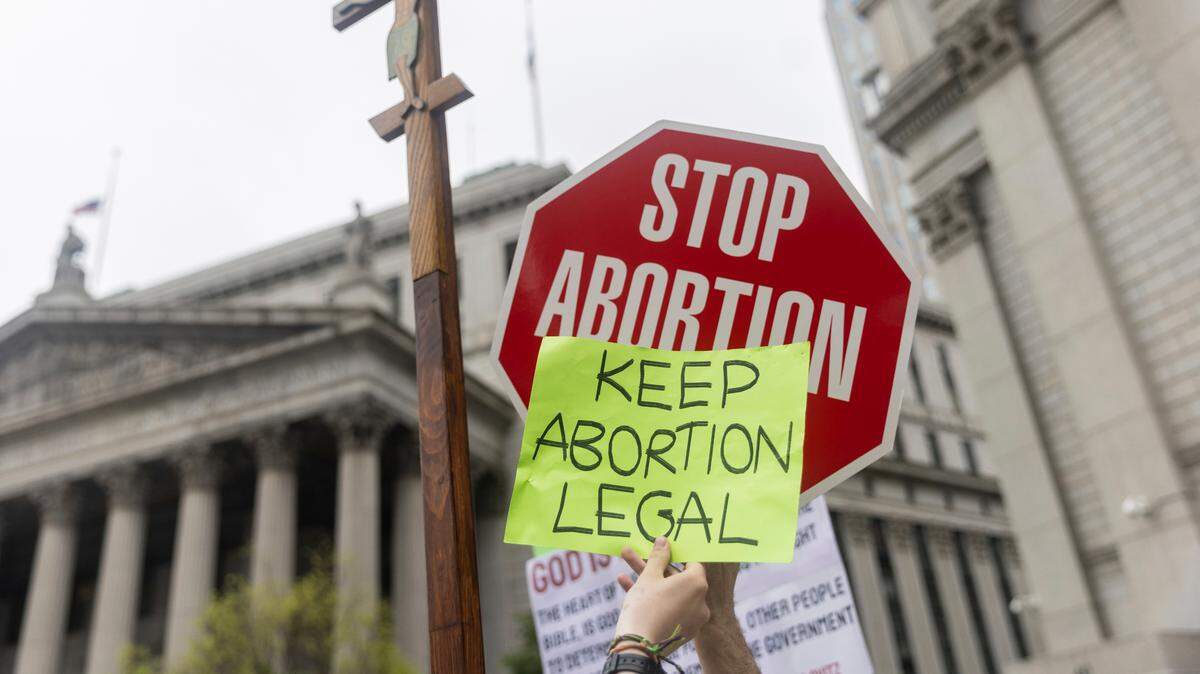
For 30 years, data showed a “long-term decline” in the number of people getting abortions across the U.S.
New findings show a change in that trend.
There were 930,160 abortions performed across the country in 2020 — an 8% increase from the 862,320 abortions received in 2017, according to the Guttmacher Institute, an organization that works to advance sexual and reproductive rights.
This new finding is “underscoring that the need for abortion care in the United States is growing just as the US Supreme Court appears likely to overturn or gut Roe v. Wade,” the organization said in a June 15 analysis.
If Roe V. Wade is overturned, the legality of abortion would fall to the states, McClatchy News previously reported. The court is expected to rule on this decision this summer.
The Guttmacher Institute cites the increase in people getting abortions as a reason to “protect their right to bodily autonomy.” This is contrary to many abortion opponents who use rising abortions data to argue for more restrictions.
What other abortion trends does the data show?
“In 2020, about one in five pregnancies ended in abortion,” the Guttmacher Institute estimates. “More specifically, the abortion ratio (the number of abortions per 100 pregnancies) increased from 18.4% in 2017 to 20.6% in 2020, a 12% increase.”
There was also a 6% decline in births over those three years, according to the report. Patterns show fewer people are getting pregnant, and of those who did, more chose to end their pregnancies.
While the increase in abortions was evident across the U.S., analysts say the Western region had the highest rise at 12% between 2017 and 2020. The West was followed by a 10% increase in the Midwest, an 8% increase in the South and a 2% increase in the Northeast.
Nationally, the study found there were about 13.5 abortions per 1,000 women ages 15 to 44 in 2017 — and 14.4 per 1,000 women in 2020. That’s a 7% increase.
Illinois, Mississippi and Oklahoma in particular saw “substantial increases in the number of abortions,” the data shows, while Missouri, Oregon and South Dakota saw “substantially fewer abortions” when comparing 2020 with 2017.
Why are more people getting abortions?
“While abortion increased nationally, there was substantial variation across, and even within, states between 2017 and 2020,” the research group said. “A number of developments over that period may have had differential impacts across states.”
For example, some states expanded Medicaid to cover abortion care, potentially meaning more people could afford an abortion.
Former President Donald Trump’s administration’s “domestic gag rule” also meant patients in the Title X program could not get contraception from places like Planned Parenthood, according to the Planned Parenthood Action Fund. Title X family planning clinics offer “family planning and preventive health services.”
“This meant that many people in some states lost access to low- or no-cost contraceptive care,” the Guttmacher Institute said. “In turn, this may have resulted in more unintended pregnancies and greater need for abortion care.”
During this time frame, more abortion services and funds were made available, according to the National Network of Abortion Funds. The Guttmacher report argues these efforts helped to counterbalance the more than 150 provisions passed to curb abortion access, which often occurred in states with strict rules already in place.
While nearly everything was put in disarray in 2020, researcher Rachel Jones, co-author of the study, told Reuters they do not consider the COVID-19 pandemic as a primary reason for an increase in abortions.
“The COVID-19 pandemic disrupted health care systems across the United States,” the report says. “Some states attempted to ban abortion access early in the pandemic, falsely claiming it was not essential health care. Abortion access was also disrupted in some states supportive of abortion rights because health care providers were dealing with outbreaks of COVID-19 among their families and communities. Still other states were able to maintain steady access to abortion care, including for people from states where it was not accessible due to the pandemic.”
How was this data collected?
The Guttmacher Institute performs its Abortion Provider Census every three years, using facility-provided data, state health department data and estimates for facilities in which data was not available or shared.
“Notably, most of the facilities for which we had to make estimates were hospitals, which typically perform only a small number of abortions annually,” the organization said. “In total, 84% of the abortions we counted were based on information provided by health care facilities directly.”
This story was originally published June 15, 2022 at 12:21 PM with the headline "Are more people getting abortions? New data shows change in what was a 30-year trend."