Your chances of hitting a deer while driving go up next week, officials say. Here’s why
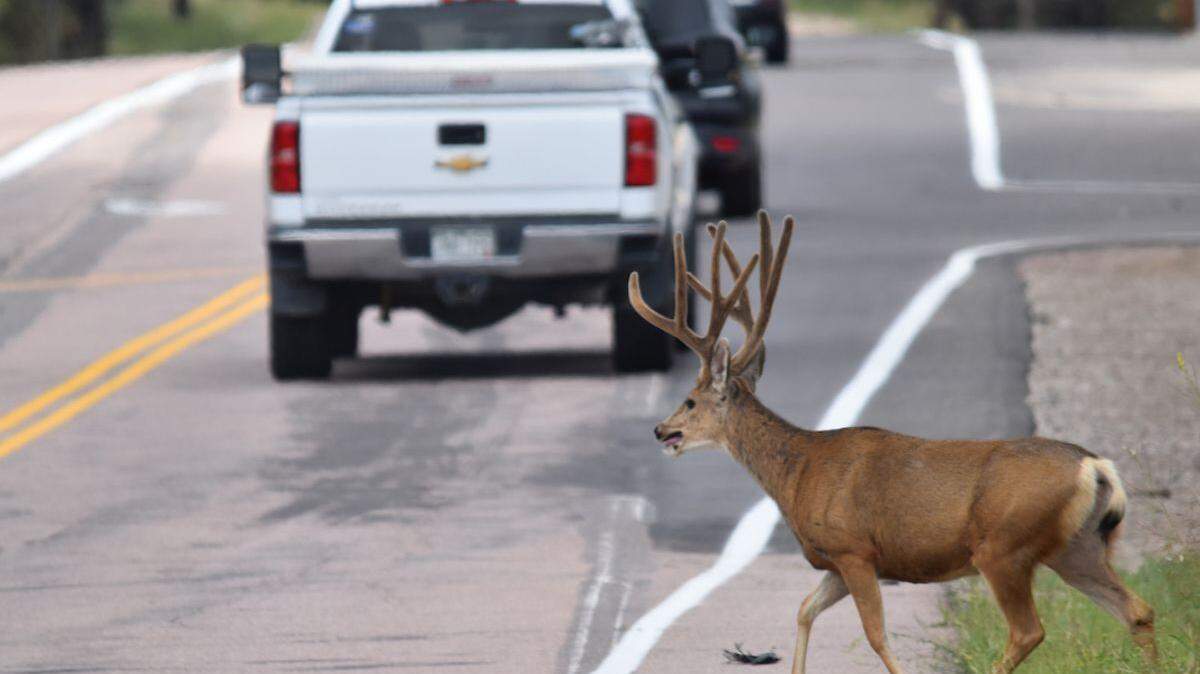
Drivers should be extra careful next week during dawn and dusk commutes, Colorado wildlife officials say.
Because of the change from daylight saving time to standard time, drivers are more likely to be out on the road at the same time as wildlife that are migrating for winter and mating seasons, Colorado Parks and Wildlife said in a news release.
Officials are asking drivers to stay alert and share the roads with wildlife during darker commutes. Autumn is the peak seasonal mating and migration time for many species, and winter storms often push wildlife from “the high country” into lower grounds, officials said.
Colorado transportation officials and a team of biologists are also urging drivers to be careful and avoid accidents with or caused by wildlife — and not just in Colorado.
November usually sees more car accidents with wildlife than any other month, especially in the week or two after daylight savings time ends, researchers wrote in a study published Wednesday, Nov. 2 in Current Biology.
“We saw these huge, abrupt shifts in human activity associated with the timing of sunrise and sunset, so it got us thinking if humans are responding to clock time, whereas animals are responding to the daylight time, does that then create more opportunities for human-wildlife conflict?” biologist Calum Cunningham told WBTV.
Cunningham’s team from the University of Washington in Seattle used data from the U.S. Department of Transportation to analyze over one million crashes between cars and deer, the outlet reported.
Their research showed collisions are 14 times more frequent in the two hours after sunset than before sunset, the report said. The researchers also found that car collisions with deer increase by about 16% in the week after the autumn clock change.
The possibility of crashing into a deer remains higher during standard time, the researchers found.
Collisions with deer start spiking in late October through November in about 23 states.
Another reason is because the time change coincides with deer rutting season, when bucks wander around searching for mating opportunities. The time change also shifts driver’s commutes into darker hours, WWLP reported.
The researchers argue that making daylight savings time permanent would reduce collisions and save lives. Colorado wildlife and transportation officials said the departments want to implement more “wildlife mitigation features” to highway improvement projects, such as overpasses, underpasses, high fences with escape ramps and wildlife guards along highways.
Steve McClung, Colorado Parks and Wildlife’s assistant area wildlife manager, emphasized the importance of obeying speed limits.
“With the changing seasons and snow already in the mountains, we are seeing a lot of deer and elk across our highways that motorists need to look out for,” McClung said. “Remember that many of our highways have reduced speed limits from dusk until dawn to help prevent collisions with wildlife. Drivers should be aware of animals in town, on county roads and on highways and keep their eyes on the road and shoulders to help prevent dangerous collisions.”
Daylight savings time ends at 2 a.m. on Sunday, Nov. 6. So remember not only to set clocks back one hour, but also be more careful during any morning or nighttime commutes.