Apex predator’s population explodes in Texas coastal waters, study says. Here’s why

Young bull sharks are becoming more abundant in the warming coastal waters around Texas and Alabama, new research shows.
Texas A&M-Galveston professor of marine biology Philip Matich and his colleagues used a 40-year survey to analyze how a changing climate, particularly warming coastal waters, is altering the migratory patterns of young bull sharks.
In some places along the Gulf of Mexico, young bull sharks are up to eight times more abundant today than they were 40 years ago, researchers said said in a Texas A&M Today article summarizing the study’s results.
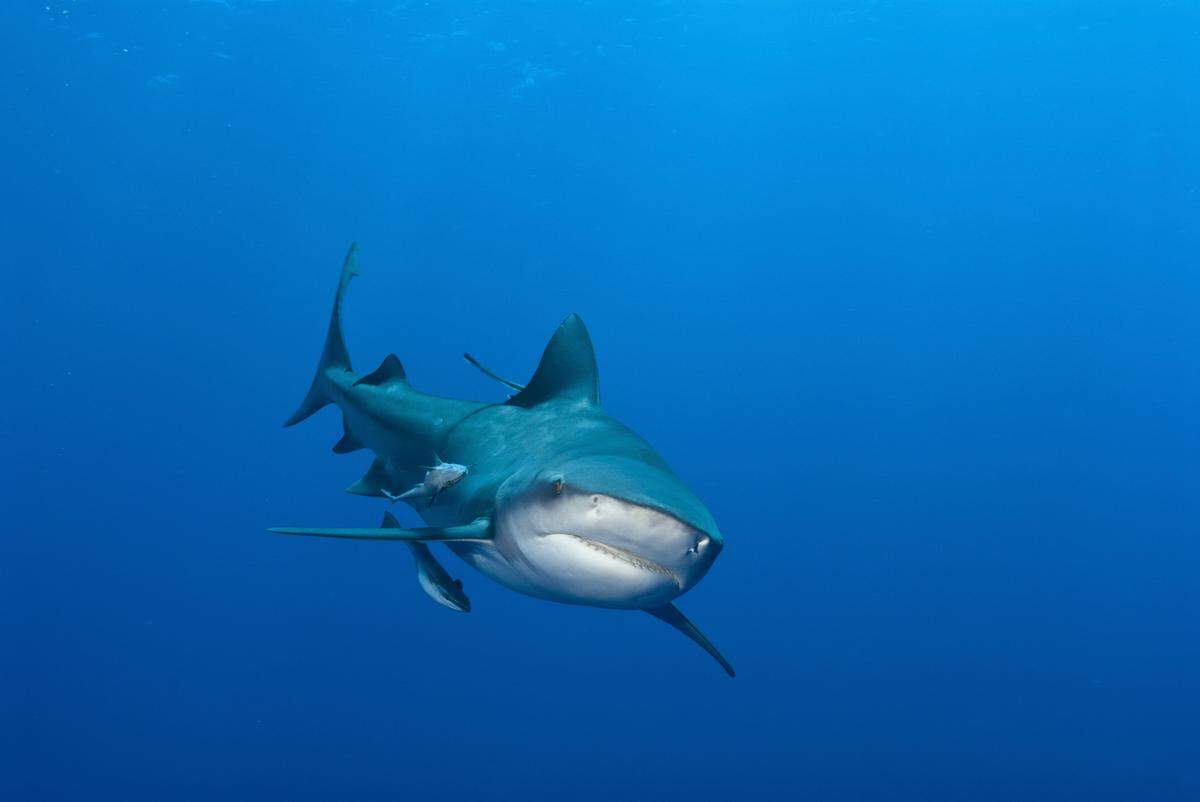
Researchers documented a fivefold increase in baby bull sharks in Mobile Bay, Alabama, since 1982.
An eightfold increase was documented in estuaries along coastal Texas between Matagorda Bay and Sabine Lake, the study published July 17 in the Journal of Animal Ecology showed.
While many marine species are struggling to adapt to warmer waters, baby bull sharks are thriving in it, for now, researchers suggest.
Freshwater nurseries are warming
Unlike most shark species that spend their entire lives in the ocean, bull sharks use freshwater estuaries, areas where rivers or streams meet the ocean, as nurseries for their young, researchers said.
Because there is no physical barrier separating these bodies of water, estuaries are susceptible to the impacts of warming ocean water due to climate change. As the coastal waters warm, so do these estuaries.
Water temperatures in the Gulf of Mexico have risen more than 3 degrees between 1982 and 2021, researchers said.
Researchers believe warmer estuary temperatures, often not favorable for many marine species, reduced the population of striped mullet — an important food source for baby bull sharks.
With a more limited food supply, researchers observed that bull sharks in their first year of life stayed in their estuary nurseries longer to accumulate energy reserves and reach optimal sizes before migrating to the Gulf of Mexico for the winter, the study showed.
More time in the estuaries increases their survival for their next stage of life, researches said.
Today, bull shark migrations out of their estuary nurseries happen up to 36 days later than in 1982, according to the study.
While a one-month delay may not seem significant, winter migrations could cease altogether over the next 50-100 years based on current trends, researchers said.
Such a shift could have substantial implications for estuary ecosystems and food webs, the study outlined.
Vital threads in the food web
“Like a spider web, food webs are connected by many intersecting threads. The more threads, the stronger the web,” researchers said.
Bull sharks strengthen food webs by traveling between and thereby linking and stabilizing freshwater and saltwater ecosystems, researchers said. Without that migration, both environments can become unbalanced.
Researchers said it is unclear if estuary food webs will be able to support the changing residency patterns of baby bull sharks as their food sources struggle to adapt to warming waters.
Bull sharks and humans
Bull sharks are responsible for 26 fatal unprovoked attacks on humans and 93 non-fatal unprovoked attacks, according to the Florida Museum’s International Shark Attack File which records incidents dating as far back as 1580.
However, researchers say baby bull sharks, those up to 1 year old, don’t have fully developed skills to hunt larger prey and therefore pose less of a threat to humans.
This story was originally published July 23, 2024 at 1:24 PM with the headline "Apex predator’s population explodes in Texas coastal waters, study says. Here’s why."