Was there life on Mars? A meteorite found in the Moroccan desert could provide clues
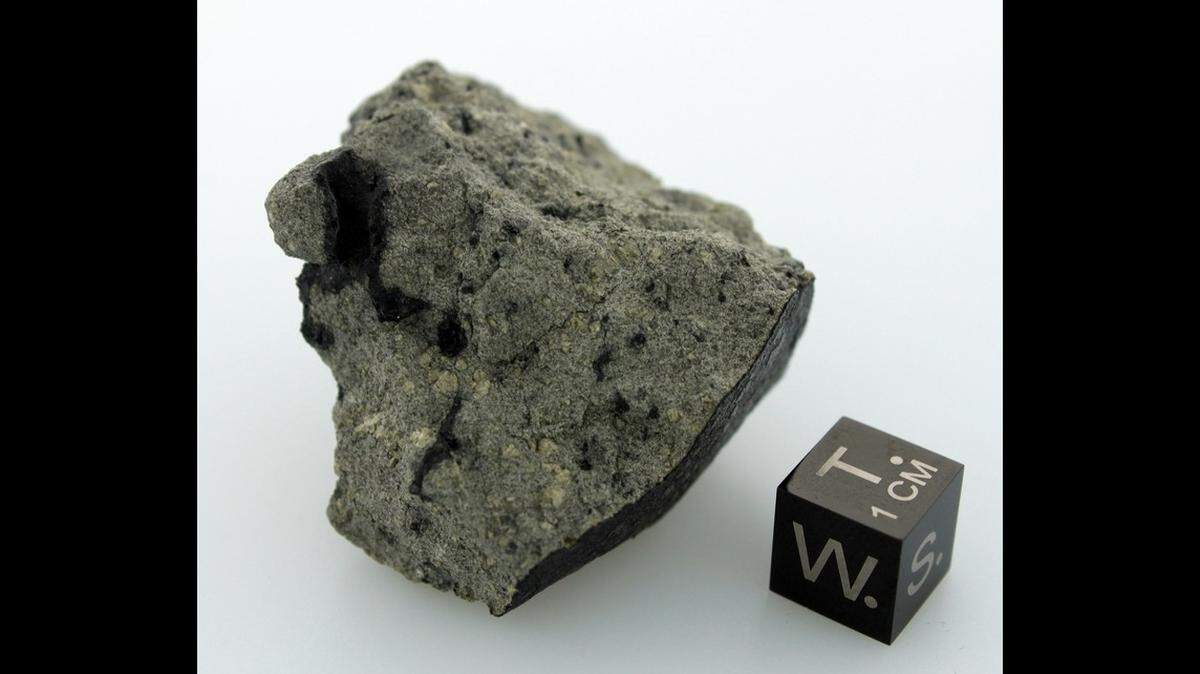
Eleven years ago, a meteorite was seen falling to Earth over the town of Tissint in Morocco. The rock, formed hundreds of millions of years ago, is one of only five meteorites from Mars to have been spotted falling to Earth.
It may also help scientists get one step closer to answering one of their big questions: Was there ever life on Mars?
In a recent study published Jan. 11 in Science Advances, researchers have analyzed the Tissint meteorite and created one of the most comprehensive catalogs of the geochemistry of the red planet. From that catalog came two major finds.
“Mars and Earth share many aspects of their evolution,” study author Philippe Schmitt-Kopplin said in a news release from the Carnegie Institution for Science. “And while life arose and thrived on our home planet, the question of whether it ever existed on Mars is a very hot research topic that requires deeper knowledge of our neighboring planet’s water, organic molecules, and reactive surfaces.”
For a molecule to be “organic,” it has to have a carbon base and be bonded to other atoms. These molecules can also hold elements like nitrogen and sulfur, like the molecules found in our atmosphere.
Scientists generally consider organic molecules to be the building blocks of life, and these molecules are plentiful on Earth, contributing to the planet’s vast diversity.
The Tissint meteorite “shows a rich internal mineral diversity,” including multiple organic compounds. The researchers found abiotic organics, meaning compounds that don’t need oxygen, that could have only been created from the interaction between rock and water.
That’s not all. One of the organic compounds had never been discovered from Mars samples before, according to the release.
That compound is called organomagnesium, and it was found in the veins and crystalline structures of the meteorite. The high levels of magnesium point to a carbon cycle, the process that moves carbon through an ecosystem from minerals in the dirt, to plants, to organisms and back to the ground. The finding suggests a carbon cycle played a part in the formation of minerals throughout Mars’ history, according to the research.
While the study cannot conclusively answer whether there was life on Mars, the organic inventory that was collected and cataloged provide a blueprint for future Mars science missions.
“Understanding the processes and sequence of events that shaped this rich organic bounty will reveal new details about Mars’ habitability and potentially about the reactions that could lead to the formation of life,” co-author Andrew Steele said in the release.
Tissint is about 235 miles southeast of Marrakech.
This story was originally published January 19, 2023 at 9:17 AM with the headline "Was there life on Mars? A meteorite found in the Moroccan desert could provide clues."