Elephants use gestures intentionally — just like humans, new evidence shows
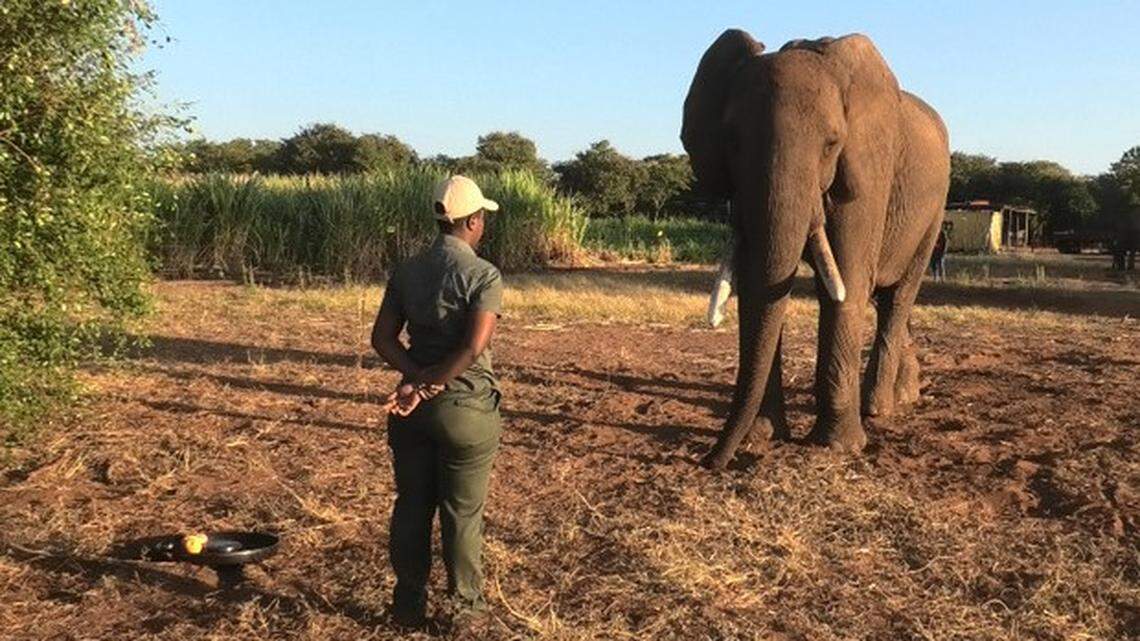
For the first time, researchers have collected evidence that African elephants intentionally and creatively use gestures to signal what they want — a method of communication associated with human language.
The team found that elephants can recognize when someone is paying attention or not, persist with gesturing when their desire is only partially filled, and make their gesturing more elaborate when their first attempts are unsuccessful, according to a study published July 9 in the journal Royal Society Open Science.
These are the main criteria for a behavior called “goal-directed intentionality,” and, outside of human communication, it has only been widely documented in primates, with some individual exceptions in non-primate species, according to the study.
The study was conducted using semi-captive elephants on reserves in the in Victoria Falls area of Zimbabwe.
During the experiment, researchers put a desirable item — a tray full of apples — and a non-desirable item — an empty tray — just out of reach of 17 elephants, creating a scenario in which they can gesture to a human to request the desired item, referred to as their goal.
The team documented 38 unique gestures used by the elephants. They did not waste their time gesturing when it appeared the researchers were not paying attention, and their gestures were directed only at the tray full of apples. One of the most interesting findings is that elephants pivoted their approach when they weren’t 100% successful.
Researcher Vesta Eleuteri told Science some elephants got “insanely creative” with their gestures when experimenters only gave them a portion of what they wanted, saying one threw sand, another drummed on the ground with a stick, and a third blew a leaf into the air with his truck.
This demonstrates their ability to adapt their communication strategy and recognize when a previous tactic wasn’t quite working.
Future studies should explore whether free-ranging elephants gesture intentionally to each other to communicate in the same way, researchers said.
The research team included Vesta Eleuteri, Lucy Bates, Yvonne Nyaradzo Masarira, Joshua M. Plotnik, Catherine Hobaiter and Angela S. Stoeger.
This story was originally published July 14, 2025 at 7:20 AM with the headline "Elephants use gestures intentionally — just like humans, new evidence shows."