
Are reparations ‘evil’? Here’s why these Californians say they could be necessary
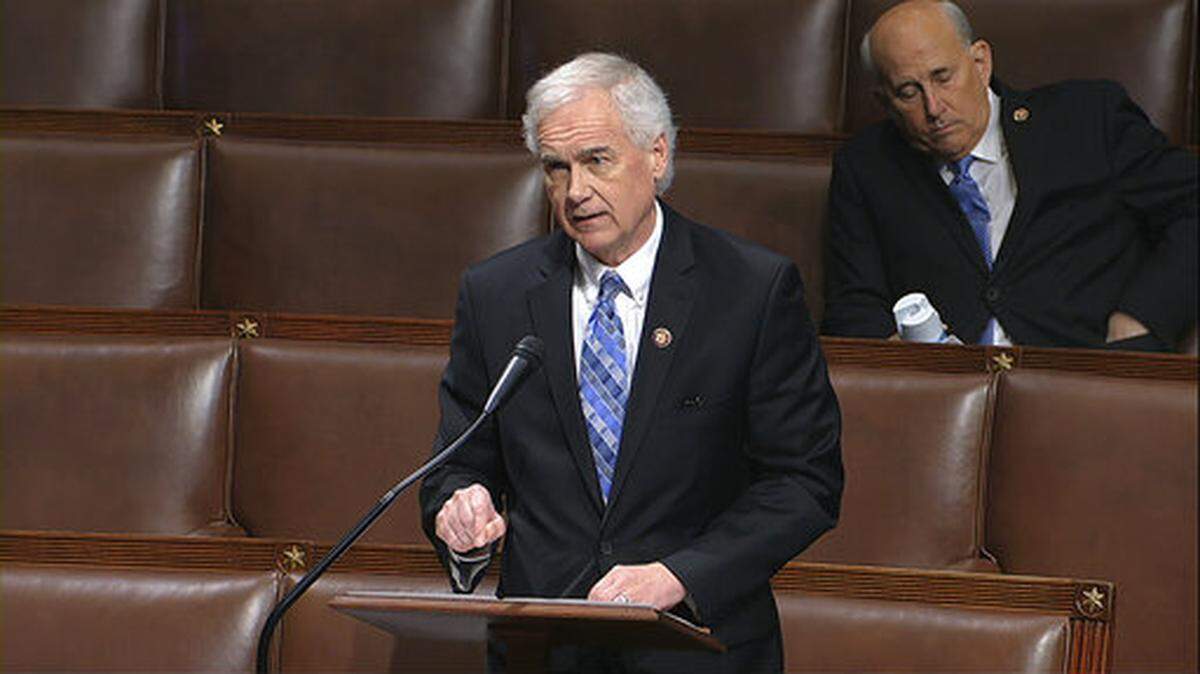
Rep. Tom McClintock sees the effort to study reparations for African Americans whose ancestors endured slavery as bitterly divisive.
“It’s designed to reach into the dead past, revive its conflicts and then reintroduce them into our age,” the California Republican said. “I think all Americans of goodwill regardless of their race have had enough of this nonsense. Please stop tearing this country apart.”
Rep. Zoe Lofgren had a very different take.
“It’s not about who’s to blame...it’s about who was denied opportunities, and how do we look at making sure everybody in America is treated fairly. That’s what this commission is about,” the California Democrat said.
Their split reflected the stark division between Republicans and Democrats over the reparations issue. The House Judiciary Committee took an historic step late Wednesday when it approved legislation to create the commission.
The Judiciary Committee, which approved the bill, 25-17, has seven Californians. Republicans McClintock and Rep. Darrell Issa voted no. Democrats Lofgren, Ted Lieu, Lou Correa, Karen Bass and Eric Swalwell voted yes.
This is an unusually delicate issue, even for some Democrats. It’s unclear when it could come to a full debate and vote in the Democratic-run House.
The reparations debate began in Congress 32 years ago, but never got this far. The committee’s action was prompted by the outrage over the death of George Floyd last year while in Minneapolis police custody, as well as other incidents involving police and unarmed Black men.
In California, Gov. Gavin Newsom signed into law in September legislation calling for a task force to make recommendations on how reparations could be made.
It can also suggest how to end state laws and policies that may encourage discrimination and whether to issue a formal apology for “gross human rights violations and crimes against humanity” to African slaves and their ancestors.
“We’re asking for people to understand the pain, the violence, the brutality, the chattle-ness of what we went through,” said Rep. Sheila Jackson Lee, D-Texas, the bill’s chief sponsor. “And of course we’re asking for harmony….to come together as Americans.”
Lee’s bill would create a commission but the legislation does not specify how reparations could or would be paid, or precisely to whom. It is labeled House Bill 40, a reference to the unsuccessful government bid to provide 40 acres of land and a mule to freed slaves as the Civil War ended.
The new panel would “examine slavery and discrimination in the colonies and the United States from 1619 to the present and recommend appropriate remedies.”
Republicans thought all this was largely unnecessary.
“It is evil in its effect, if not in its intent,” McClintock said during the committee debate Wednesday night.
It’s “holding people of one age responsible for the ills of another based not for their conduct but on their race,” he said.
Until recently, McClintock said, the country had been making tremendous progress towards a colorblind society.
But, he said, “it’s true that very damaging and unwise policies have disproportionately impacted black communities.”
So “the answer is to change those policies, not to excuse them because they’re ideologically pleasing to the left,” he said.
The commission, McClintock argued, could be divisive. “You say this is healing? It’s precisely the opposite,” he said.
Issa cited practical concerns. What about others from racial and minority groups who have been hurt by discrimination?
The challenge of a commission, Issa said, is that supporters “have already decided the outcome of the commission.”
What about trying to figure out just who might qualify? He cited Vice President Kamala Harris, whose heritage is both Black (her father is Jamaican) and South Asian (her mother came from India).
“How will that be calculated?” he asked.
Democrats urged colleagues to see the bigger picture.
Lofgren told the committee how her father, the son of an immigrant and military veteran, was able to buy a “little tiny house” with a GI loan after World War II. Black people often “did not get to buy the little houses like my dad did.”
Remember, she said, the commission is “about who was denied opportunities and how do we look at making sure everybody in America is being treated fairly. That’s what this commission is about,” she said. “We don’t know what the answer may be.”
This story was originally published April 16, 2021 at 5:00 AM.
.jpg)