Rep. Valadao faces re-election challenge as Medi-Cal cuts affect Central Valley
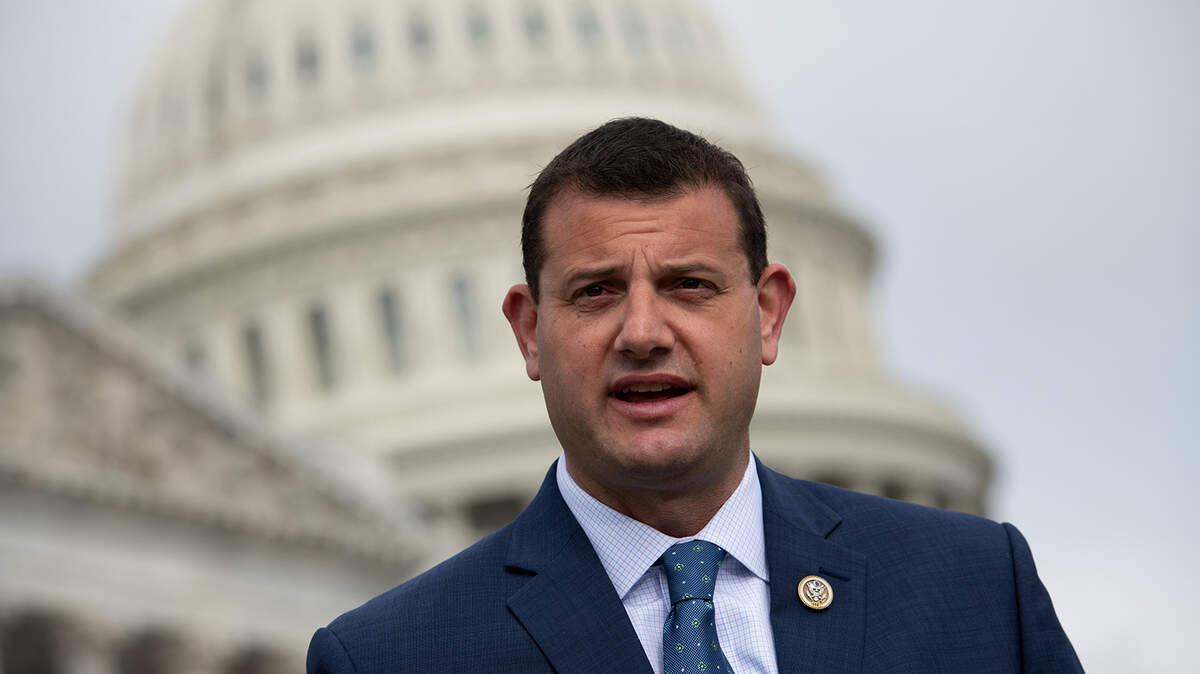
Much of the changes are yet to take effect. But almost a year after casting a deciding vote to slash the Medicaid coverage, Republican Rep. David Valadao continues to draw scrutiny from his political opponents and constituents.
The vote came as part of a sweeping federal policy bill passed last summer that included more than $1 trillion in spending reductions on Medicaid, a health care system largely for lower income people. The legislation tightened eligibility requirements, restricted some state funding mechanisms and added new administrative requirements.
Criticism of Valadao is hardly a surprise given the distinct makeup of his district, which covers parts of Kern, Kings and Tulare counties. By several measures, his constituents rank among the most reliant on Medi-Cal, California’s version of Medicaid.
About two-thirds of all residents or 527,000 people, are enrolled in the service. That is the highest enrollment rate in California and of any Republican seat in the nation. Reliance is even more pronounced among children, with 87% of them enrolled.
Third Way, a self-described center-left think tank in Washington, D.C., estimated that five hospitals in Valadao’s district alone would lose nearly $90 million annually as a result of the Medicaid cuts.
“In the Central Valley, Medi-Cal isn’t just a program, it’s the foundation of health care access for many families,” said Kiyoshi Tomono, a marketing and partnership executive for Adventist Health, one of the largest providers of Medi-Cal in Valadao’s district.
Opponents and some residents have characterized Valadao’s vote as betrayal, one that they argue should cost him a seat in Congress. Whether he can justify the decision to constituents — particularly as the effects begin to materialize — remains an open question. Valadao was already running in a swing district.
“His vote really twisted my decision to never let this guy in office ever again,” said Rodolfo Morales-Ayon, a 22-year-old who lives in the district and advocated against Valadao’s looming final vote last year.
Valadao did not respond to a request to be interviewed — an approach he has taken repeatedly since his vote last summer. Instead, through a campaign spokesperson, Valadao said he is focused on ensuring Central Valley families can afford health care by supporting local providers, protecting Medicaid for vulnerable residents and strengthening the program.
‘Our own representatives become a barrier’
Valadao voted in favor of President Donald Trump’s favored One Big Beautiful Bill Act, H.R. 1, in July despite expressing earlier concerns about reductions in Medicaid coverage for vulnerable populations.
Less than two weeks before the final vote, Valadao and other Republican members authored a letter that they would not support a bill with severe cuts.
“Slashing Medicaid would have serious consequences, particularly in rural and predominantly Hispanic communities where hospitals and nursing homes are already struggling to keep their doors open,” the June 2025 letter said.
Valadao later defended his final vote by saying, even though he still had concerns, there were assurances that $50 billion would be available to support rural hospitals nationwide. He also cited tax break provisions, which economists say will mostly benefit the ultra-wealthy.
“No piece of legislation is perfect, but this bill ultimately reflects the priorities of CA-22,” Valadao said in July.
Opponents have argued the exact opposite, citing a district made up of small Central Valley towns and working class communities that rely heavily on lower cost health care. Roughly 23% of people in the district are living below the poverty line, which is double the average rate in America, according to the latest U.S. Census data.
Bakersfield resident and community advocate Audrey Chavez, 59, still struggles to grasp Valadao’s vote. She supported him in 2012 — during his first congressional campaign — after he visited her family business and asked for support.
Chavez recalled Valadao as a candidate who was accessible, articulate and represented the needs of the farmworker community. Years later, however, Chavez said she was disappointed with his support of H.R. 1. Chavez protested outside Valadao’s office in Fresno repeatedly last year, hoping that the congressmember would change his position.
She called his final vote “devastating” and now plans to vote for one of Valadao’s Democratic challengers this November.
“Every year, there are different types of concerns, problems, frustrations or barriers, but when our own representatives become a barrier to the needs and to accessing services that we have paid into, then it’s time for them to go,” Chavez said.
‘The timing couldn’t have been worse’
Valadao’s left-leaning district has long been a prime target for Democrats.
This year, the district, like others held by Republicans in California, has been redrawn by last year’s Proposition 50 to include more likely Democratic voters. Valadao’s chances are rated a tossup by the Cook Political Report and Sabato’s Crystal Ball, two non-partisan organizations that analyze election races.
But winning in a swing district is not new to Valadao. He first won his seat in 2012 and has since won five of the six subsequent elections. His only loss came in 2018, when Democrats across the country leveraged Republican attacks on health care.
Democrats have vowed to use similar tactics this year. His two leading Democrat challengers, Assemblymember Jasmeet Bains and Visalia school board Trustee Randy Villegas, have repeatedly bashed the incumbent since his vote on H.R. 1, according to previous reporting from The Sacramento Bee.
Anna Elsasser, a spokesperson for the Democratic Congressional Campaign Committee, said in a statement last week that the “voters are already feeling the impact of Valadao’s betrayal, and we will continue to remind them of it from now to election day.”
Mike Madrid, longtime Republican political consultant and a co-founder of the anti-Trump political action committee, The Lincoln Project, said health care is likely a defining issue for California Latino voters this election. Nearly 75% of the residents in Valadao’s district are Hispanic, according to census data.
In a survey released last week by the Latino Working Class Project, which is an initiative commissioned by Madrid, the cost of health care ranked as the second most important issue for Latino voters — behind the cost of living. Madrid said this is the first time in a decade health care costs have surpassed the cost of housing in importance for Latino voters.
“His vote, I think, is going to be critical to the outcome of the race,” Madrid said. “The timing couldn’t have been worse, but it was bad public policy, and he’s known it, so he’s gonna have to own it.”
‘Harmful provisions haven’t necessarily taken effect yet’
While the political fallout has been immediate for Valadao, many of the policy’s most significant effects have yet to arrive.
The legislation was designed to take hold in phases, with some provisions already in place and others stretching into the next several years. Early changes included some cuts to providers who offer abortion services and the rollback of a federal rule that would have made it easier for children, seniors and people with disabilities to enroll and maintain coverage, said Hannah Orbach-Mandel, a policy analyst for California Budget & Policy Center.
“I would say the most harmful provisions haven’t necessarily taken effect yet,” Orbach-Mandel said.
Among the changes still ahead are new restrictions that will eliminate coverage for certain immigrant groups beginning later this year, as well as increased eligibility checks and work-reporting requirements set to take effect in 2027. Orbach-Mandel described these as “administrative hurdles” likely to result in people losing coverage.
An estimated 64,000 people are expected to lose Medi-Cal coverage in Valadao district by 2034 as a result of the changes, according to estimates from the U.S. Congress Joint Economic Committee.
At the same time, hospitals are expected to receive less revenue tied to Medi-Cal. This could force cuts to services or staffing and lead to longer wait times, Orbach-Mandel said.
“It’s going to have ripple effects throughout the whole health care system,” Orbach-Mandel said.
Tomono said Adventist Health, which has two hospitals and another portion of a campus in Valadao’s district, does not yet have precise estimates for how the changes will affect patient coverage or hospital finances. Still, he acknowledged growing concern about the long-term stability of rural providers stemming from the federal changes.
“These policy changes could have significant implications for patient access, hospital stability and the long-term sustainability of rural health care infrastructure,” Tomono said.
For Tulare County residents, like Morales-Ayon, the anticipation of what is to come is already reshaping how he thinks about his health. Morales-Ayon attended multiple rallies and called Valadao’s office frequent last year in protest of what he ultimately called a “betrayal.”
Growing up in the small immigrant town of Pixley, Morales-Ayon relied on Medi-Cal to treat asthma. His farmworker parents used the program as their jobs didn’t provide insurance.
“Not to be dramatic, but I seriously don’t know what would happen to me if that wasn’t there to help my family,” said Morales-Ayon, a recent Fresno State graduate.
Now 22, he continues to rely on the program for routine care and medication, as do many of his relatives. The upcoming changes have left him worried about what treatment will be available for them in the coming years.
“I’m fearful for my community,” Morales-Ayon said. “There’s just so much that he (Valadao) could have done but it seems it’s too late.”