
Rep. David Valadao voted to keep health insurance credits but cut Medicaid. Why?
AI-generated summary reviewed by our newsroom.
- Valadao extended enhanced premium subsidies while earlier backing Medicaid cuts.
- He earlier supported the Big Beautiful Bill that included $1 trillion in Medicaid cuts.
- His split votes risk voter backlash in a Prop 50 redrawn Central Valley swing district.
Democrats are giving Rep. David Valadao a rough time over his recent votes on health care. Whether the voters in his Central Valley district buy his explanations could go a long way in determining if he’s back next year.
Last week, the Hanford Republican was one of 17 House GOP members who defied Republican leaders and voted to extend enhanced health care premium subsidies for 1.8 million Californians and 22 million people nationwide.
But last year, Valadao went along with party leaders in backing the Trump-favored Big Beautiful Bill. While the bill extended current tax rates that were due to expire and created new breaks, it also included $1 trillion in spending reductions on Medicaid.
The health care system largely for lower income people, called Medi-Cal in California, serves about two-thirds of the people in Valadao’s current congressional district.
“Rep. Valadao has been walking a tightrope on all of this,” said Thomas Holyoke, professor of political science at California State University, Fresno.
“The Big Beautiful Bill was very high profile and I suspect he feared retribution from the president and perhaps from some of his own constituents if he opposed the president, especially since the BBB was about a lot more than health care,” Holyoke said.
Valadao’s campaign says the votes show the congressman is an independent thinker, unbound by partisan ideology.
Voters understand that way of legislating, said Valadao campaign strategist Robert Jones.
“There’s no single vote that is going to fix the issue of health care affordability,” he said. “We’ve been able to tell the story of the congressman as an independent legislator with a history of evaluating legislation as to how it affects the Central Valley and not his political party.”
New challenges for Valadao
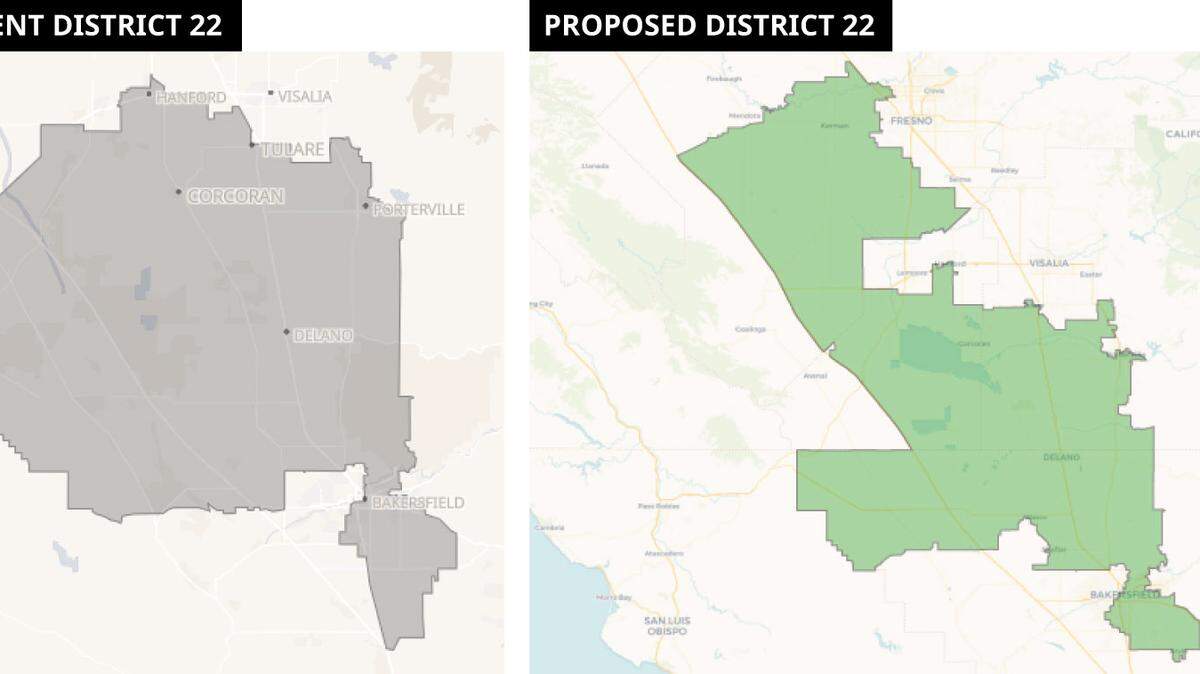
Valadao’s district, like others in California, has been redrawn by last year’s Proposition 50 to include more likely Democratic voters.
His chances are rated a tossup by the nonpartisan Cook Political Report and Sabato’s Crystal Ball. Valadao is one of two GOP California lawmakers in that category. The other is Rep. Darrell Issa, R-Escondido. Rep. Kevin Kiley, R-Rocklin, is also seen as highly vulnerable, but he hasn’t decided where he will run for re-election.
Winning in a swing district is hardly new to Valadao. He won his seat in 2012, then lost it in the Democratic wave of 2018. He won it back in 2020 and easily beat a tough Democratic challenger in 2024.
Last year, he made efforts along with a handful of other House Republicans to warn of problems if Medicaid cuts were too severe.
At one point, before a crucial vote, he and some other GOP colleagues sent a letter to House leaders expressing concerns about Medicaid cuts.
“Slashing Medicaid would have serious consequences, particularly in rural and predominantly Hispanic communities where hospitals and nursing homes are already struggling to keep their doors open,” the letter said.
Valadao told The Sacramento Bee then that the government “needs to do a little better job” and seek alternative ways to lower costs.
The system is good at keeping doctors working and hospitals open but doesn’t “give us enough to do the things we should be better at, such as bringing in specialists.”
He explained he voted for the Big Beautiful Bill after assurances that $50 billion would be available to help rural hospitals nationwide. The National Republican Congressional Committee is touting that aid, with spokesman Christian Martinez saying Thursday Valadao is “focused on delivering real solutions and strengthening access to care for Central Valley families who depend on these hospitals.”
Valadao said of the bill, “it does preserve the Medicaid program for its intended recipients — children, pregnant women, the disabled and elderly. “ He also supported its tax cuts, notably extending tax reductions first enacted during the first Trump administration in 2017.
Democrats are highly critical
To Democrats, Valadao’s votes show he’s unreliable on health care issues.
“While David Valadao turns a blind eye to the health care crisis he created, Central Valley families will continue to suffer,” Anna Elsasser, spokeswoman for the Democratic Congressional Campaign Committee, said Wednesday.
“From gutting Medicaid to forcing hardworking Californians to pay skyrocketing premiums, voters are taking note that Valadao has done nothing but make their lives worse,” she said.
Valadao’s challengers piled on.
“Valadao’s role is too little, too late. He can’t undo the damage he’s caused, the trust he’s broken, or the fact that he repeatedly sold the Valley out,” said Dr. Jasmeet Bains, one of the Democrats challenging the congressman this year.
“If he was really serious about keeping our health care affordable, he would have fought to lower costs before these critical tax credits expired,” said Randy Villegas, another Valadao challenger.
The latest blow-up involves the House vote last week to extend the enhanced credits, which expired December 31, for three years.
Valadao explained that while that plan “isn’t perfect…it helps move the conversation forward.”
He said “making health care more affordable and accessible for families I represent remains my top priority.”
Senators from both parties have been trying for weeks to agree on a compromise plan, but so far nothing has emerged and nothing is likely anytime soon. The Senate plans a 10-day recess beginning late Thursday and ending January 26.
How Valadao’s efforts are perceived could be crucial to his re-election hopes.
“I think he may be in damage control mode as the reality of cuts to health care financial support is starting to be felt in his district,” Holyoke said.
“I suspect he knows he needs to focus hard now on the healthcare needs of his constituents without worrying about the larger GOP agenda in order to be re-elected, especially after Prop. 50 changed his district.”
.jpg)