
Remembering Parkland + D.C.’s spending bill + handy contact list
Happy Valentine’s Day! Thanks for subscribing. I want to hear from you — what do you like about the newsletter, and what would you like to see more of?
REMEMBERING PARKLAND
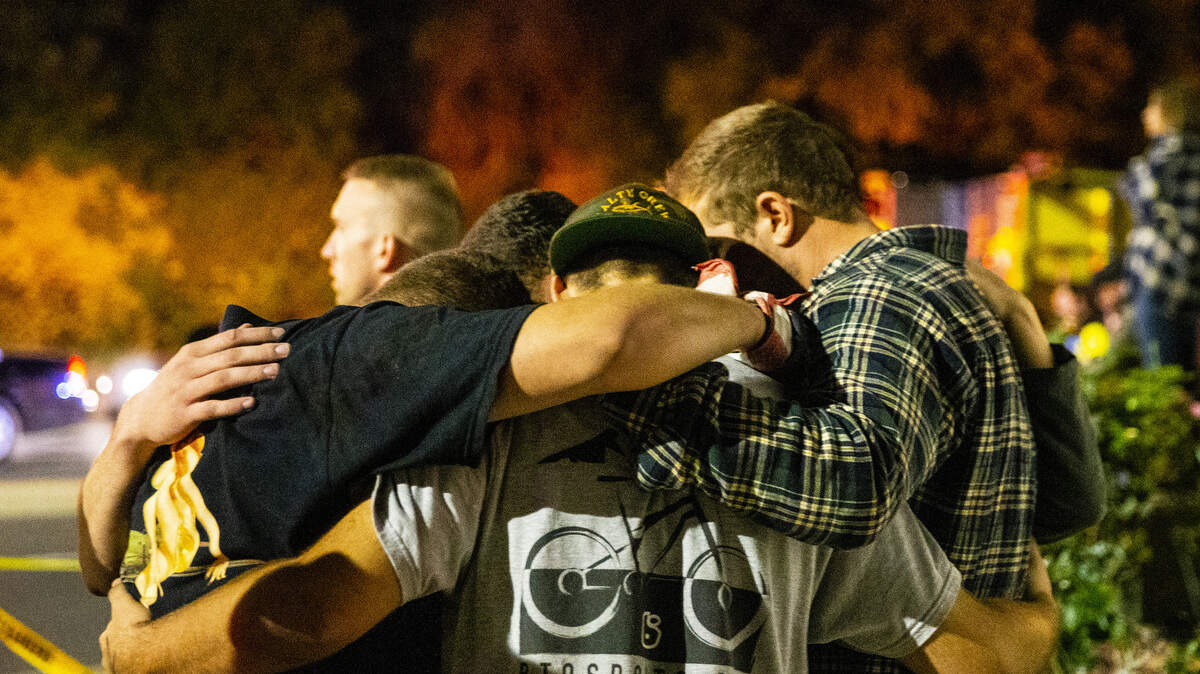
It’s been one year since 17 students and faculty were killed during a mass shooting at Marjory Stoneman Douglas High School in Parkland, Fla.
The massacre was far from the first of its kind. It’s unfortunately not been the last.
But survivors of the Parkland shooting have helped ignite a national movement to end gun violence and have pushed state lawmakers to take up the issue in their legislative efforts.
The Associated Press aggregated 2018 gun law data from the nonprofit group Everytown for Gun Safety. Legislatures in 40 states passed firearm legislation, whether to restrict or expand gun rights, the AP found. California passed eight bills last year, though two were vetoed by former Gov. Jerry Brown and five were introduced prior to Parkland.
Three notable signed restriction measures:
AB 1968 — Permanently prevents anyone hospitalized for suicide prevention twice in one year from owning a gun.
SB 1100 — Raised the age to buy handguns and rifles from 18 to 21.
AB 2103 — Established an eight-hour training minimum to obtain a concealed carry permit.
Nine days until the legislative filing deadline.
CALIFORNIA LAWMAKERS TELL TRUMP...
You’re not touching OUR disaster recovery funds.
The country is still recovering from the 35-day government shutdown that ended in January, and lawmakers in D.C. have since diligently worked on a bipartisan agreement to get a spending bill in front of President Donald Trump before another shutdown on Friday.
This week they accomplished a breakthrough, and as of Wednesday evening, were waiting for Trump to sign off on the deal.
The bill authorizes $1.375 billion to be used for more than 50 miles of additional border fencing, a considerable downgrade from Trump’s demand of $5.7 billion to build a steel wall. But, as the White House Chief of Staff Mick Mulvaney noted, Trump will likely sign this deal and then “go off and find the money someplace else, legally, in order to secure that southern barrier,” Mulvaney said.
The Bee reported in January that Trump could be eying defense spending to make up the rest of the money. That includes cash out of the Army Corps of Engineers flood-control projects in California and Puerto Rico.
U.S. Rep John Garamendi, D-Calif., on Tuesday introduced HR 1137, which would prohibit Trump from doing that. Fifteen fellow California House Democrats signed on to the bill.
“Taking recovery funds from disaster victims as ransom for a border wall would be a new low, even for this President,” Garamendi said.
PUMPING THE (TRAIN) BRAKES, MAYBE?
CALL ME, BEEP ME
Our team is working hard to bring you the most up-to-date Capitol coverage. We’ve added new staff members in the last few months. Our updated list is below, and our lines are open.
Amy Chance
Political editor
achance@sacbee.com
@Amy_Chance
Adam Ashton
Capitol Bureau chief
aashton@sacbee.com
@Adam_Ashton
Bryan Anderson
Politics, Capitol Alert, California Nation podcast
banderson@sacbee.com
@BryanRAnderson
916-326-5538
Sophia Bollag
Policy and politics
sbollag@sacbee.com
@SophiaBollag
916-326-5545
Jason Pohl
Criminal justice
jpohl@sacbee.com
@pohl_jason
916-326-5512
Andrew Sheeler
Breaking news, California
asheeler@thetribunenews.com
@andrewsheeler
805-781-7934
Wes Venteicher
State agencies
wventeicher@sacbee.com
@wesventeicher
916-321-1410
Hannah Wiley
Legislature, Capitol Alert
hwiley@sacbee.com
@hannahcwiley
916-321-1387
Facebook @capitolalert
Twitter @CapitolAlert
TWEET OF THE DAY
Sen. Scott Wiener, D-San Francisco — @Scott_Wiener “Stay in your lane, Congressman. #HighSpeedRail is definitely going somewhere - specifically, San Francisco & Los Angeles.”
MUST-READ: 12 months, nearly 1,200 deaths: the year in youth gun violence since Parkland by Kevin G. Hall