
Recall ballot takes shape + Enforcing the privacy law + Court shoots down ‘bill of rights’
Good morning, and welcome to the A.M. Alert!
A CLEARER RECALL BALLOT TAKES SHAPE
Via Lara Korte...
Every day, we get a little closer to knowing what the recall ballot will look like come September.
We know there will be at least 41 candidates. We know 21 of those candidates will be Republican, eight will be Democrat, nine will be NPP, two will be of the Green party, and one will be Libertarian. As of Monday, we know the order candidates will appear in: X, K, T, V, F, N, R, G, J, Y, Z, L, M, B, A, Q, H, D, I, E, P, C, W, S, O, U, with the order rotating in all 80 Assembly districts, so as to ensure no candidate is “top of the ticket” throughout the entire state.
We also know Gov. Gavin Newsom won’t have a “D” next to his name.
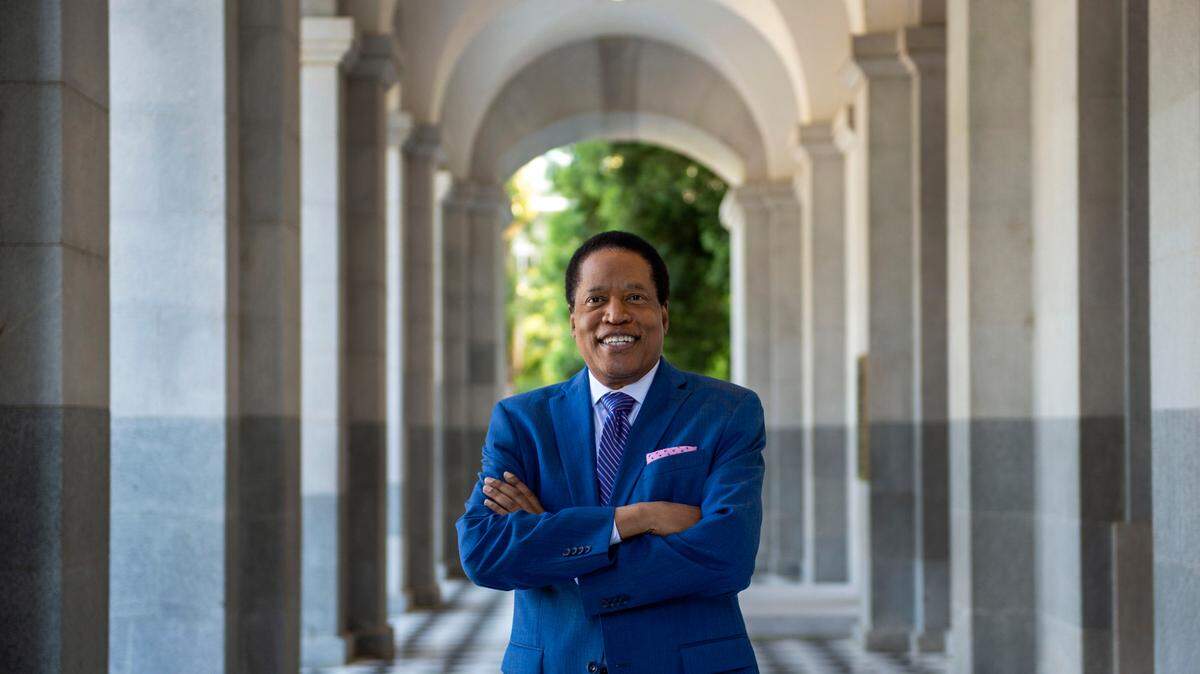
Whether Larry Elder, the SoCal conservative talk radio host, makes it to the final ballot is still unclear. Elder has spent the last few days on a social media tear against Democrats and Secretary of State Shirley N. Weber for his omission from the first tally of candidates.
Elder, clad in a bathrobe, delivered a message via Twitter video on Monday, saying “I’ll see you in court,” though his campaign did not confirm that any lawsuit has yet been filed.
His competitors want him on the ballot, too.
“Let @larryelder in!” tweeted Caitlyn Jenner.
“Let Larry on the ballot and let’s get on with this election,” said Assemblyman Kevin Kiley.
Meanwhile, we’re also waiting to see if former San Diego Mayor Kevin Faulconer can get his title of choice on the ballot. According to Faulconer’s campaign, the secretary of state took issue with his title of “retired” mayor. Faulconer on Monday announced he will sue the Secretary of State over the matter.
Kevin Paffrath, the Democrat with nearly 1.7 million YouTube subscribers, says he also plans to sue the secretary of state for the option to add his nickname, “Meet Kevin,” to the ballot.
AG GIVES UPDATE ON PRIVACY LAW ENFORCEMENT
A majority of businesses, when caught violating the California Consumer Privacy Act, moved to come into compliance within 30 days, according to Attorney General Rob Bonta, who provideded an updated on the law one year after enforcement of it began.
According to Bonta, 75% of businesses contacted for violating the law came into compliance within 30 days, with the remaining 25% of businesses being either still under the 30-day statutory cure period or under active investigation.
“We’re happy to announce that we are seeing great progress with our CCPA enforcement, but there’s more work to be done,” Bonta said in a statement. “Plain and simple: Exercise your rights under the CCPA. Any Californian is empowered to opt out of the sale of their personal information online.”
Bonta also unveiled a new online tool that allows consumers to directly notify businesses that do not have a clear and easy-to-find “do not sell my personal information” link on their websites, as required under California law.
That tool is available here. It can be used to trigger a 30-day period for the business in question to cure its violation of the law.
Under the California Consumer Privacy Act, Californians have the right to request that a businesses tell them what specific personal information they have collected, shared or sold about them and why. They also have the right to request that a business delete personal information collected, with some exceptions, and to opt out of having the business sell their personal information.
Finally, the law prohibits selling the personal information of minors under 16 without their permission or minors under 13 without parental consent.
Businesses are prohibited from discriminating against consumers who exercise their rights under the law.
STATE COURT SHOOTS DOWN ‘LGBTQ SENIOR BILL OF RIGHTS’
The California Third District Court of Appeals has issued a decision striking down a provision of Sen. Scott Wiener’s 2017 “LGBTQ Senior Bill of Rights” that requires nursing home staff to use the correct names and pronouns for transgender and nonbinary patients.
The unanimous three-judge ruling found that such a rule “violates staff members’ rights to free speech, free exercise of religion, and freedoms of thought and belief, and is vague and overbroad.”
Wiener responded to the decision with the following statement:
“The Court’s decision is disconnected from the reality facing transgender people. Deliberately misgendering a transgender person isn’t just a matter of opinion, and it’s not simply ‘disrespectful, discourteous, or insulting.’ Rather, it’s straight up harassment. And, it erases an individual’s fundamental humanity, particularly one as vulnerable as a trans senior in a nursing home. This misguided decision cannot be allowed to stand.”
The decision also was criticized by Rick Chavez Zbur, executive director of Equality California, which sponsored Wiener’s bill. Zbur called the court’s decision “beyond disappointing.”
“Let’s be clear: refusing to use someone’s correct name and pronouns isn’t an issue of free speech — it’s a hateful act that denies someone their dignity and truth. Study after study has shown that trans people who are misgendered face alarming and life-threatening rates of depression and suicidal behavior. And older LGBTQ+ people face feelings of isolation, poor mental health and extreme vulnerability to communicable diseases like COVID-19. California’s nursing home patients deserve better than this — and we’ll be fighting until this decision is overturned,” Zbur said.
QUOTE OF THE DAY
“If they weren’t afraid of your voice, they wouldn’t be coming after it. Don’t underestimate the power that your vote has, especially against those who try to weaken it.”
- Secretary of State Shirley Weber, via Twitter.
Best of the Bee:
As COVID-19 cases in California rise, Gov. Gavin Newsom avoided answering a question Monday about whether he might impose a new statewide mask mandate, instead stressing the importance of vaccinations, via Sophia Bollag.
The 41 candidates in California’s gubernatorial recall campaign make money from book deals, real estate, cattle farms, and event planning companies. Their incomes span a wide range, from those whose income strayed into negative territory to those who earned several million dollars, according to tax documents posted Sunday on the California Secretary of State’s Office website, via Lara Korte and Dale Kasler.
California law enforcement unions are contributing tens of thousands of dollars to influential Democratic lawmakers as the Legislature advances a controversial police reform bill that would allow departments to strip badges from officers with serious misconduct records, via Hannah Wiley.