
Plastics and tobacco, betting and the arts: Four questions on California’s November ballot
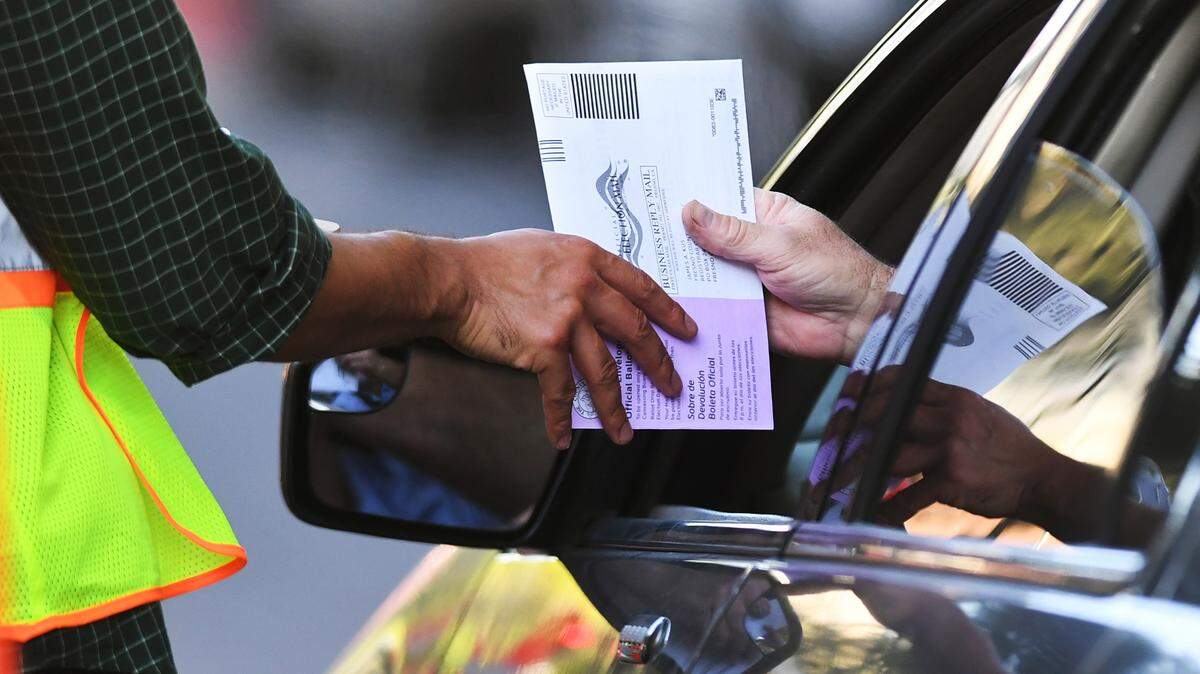
California’s general election ballot is likely not complete, but big money and attack ads are swirling around the four questions that have qualified so far for spots in November.
California voters will be asked to make decisions on the environment, sports betting, tobacco bans and arts funding in schools.
Four ballot propositions — three initiatives and one referendum — have qualified for the general election, and organizations in support and opposition have gathered tens of millions of dollars. The internet is flooded with attack ads and supporting websites alike.
Other propositions are in the process of gaining signatures and support. Initiatives — new laws or constitutional amendments, must be qualified by June 30. Referenda — measures to approve or reject existing or proposed state laws — can be added to the ballot up to 31 days before the general election.
Here’s what is currently set to be on your ballot on November 8.
A battle over single-use plastics
Environmental and public health groups are pushing for the California Recycling and Plastic Pollution Reduction Act, which would require single-use plastic packaging and food ware to be reusable, recyclable or compostable in the next 18 years. The measure would also ban styrofoam food containers and fund recycling programs.
“We’re in a plastic pollution crisis,” said Jay Ziegler, director of policy and external affairs for The Nature Conservancy in California.
“Fundamentally, there is an increasing body of research that is showing plastics almost everywhere in the environment. Today, in California, while plastics represent, by volume, about 12 percent of our overall waste stream, it is the most complicated, it is the unregulated loophole that is exploited for increased consumption.”
The Nature Conservancy is joining other organizations, including Oceana, the Ocean Conservancy, the Natural Resources Defense Council and Californians Against Waste to campaign for the measure.
It faces massive opposition from the business sector, which has already spent hundreds of thousands of dollars. Joshua Baca, vice president of plastics at the American Chemistry Council, told the LA Times that he expected the initiative to cost producers and distributors close to $4.3 million annually.
Strong business pushback has scuttled proposed legislation, Ziegler said. November will test who the general public sides with.
In November, a “Yes” vote will support policy that would limit single-use plastic packaging. A “No” vote would work against this policy.
Bases loaded with sports betting initiatives
Four years after the Supreme Court overturned a federal ban on sports betting, several parties are competing for dominance in the lucrative industry.
A proposition already on the ballot, the California Legalize Sports Betting on American Indian Lands Initiative, would grant control to the state’s tribal casinos. The Pechanga, Barona, Agua Caliente and Yocha Dehe Tribes put forth the measure in late 2019. It would allow any Native American tribe to operate in-person sports betting on tribal lands. According to Politico, $31 million has already been spent in support, $26 million against it.
Competitors take issue with a provision that would allow the casinos to sue gambling centers not on tribal lands, like card rooms, for not complying with law.
One initiative yet to officially qualify would empower online platforms.
The California Solutions to Homelessness and Mental Health Support Act would require companies wishing to enter the industry to pay a $100 million fee. Eighty-five percent of tax and licensing revenues left after regulatory costs would go toward homelessness programs, 15 percent to non-gaming tribes.
In November, a “Yes” vote on the California Legalize Sports Betting on American Indian Lands Initiative would support the legalization of sports betting on tribal lands; it would also allow dice and roulette games at tribal casinos. A “No” vote would support current law, in which this is illegal.
Repealing a ban on flavored tobacco
California Democrats passed SB 793, a ban on flavored tobacco products, two years ago. The industry has mobilized, however, collecting enough signatures to place a referendum on the November ballot.
Driving the campaign is the innocuously-named California Coalition for Fairness, backed by tobacco giants like R.J. Reynolds. Because the measure is a referendum, SB 793 was suspended immediately after it qualified for the ballot in late January, leaving voters to decide in November whether or not the ban will continue.
The Coalition notes that the products banned by the bill are FDA-authorized alternatives to cigarettes and that the prohibition would cause “lasting damage to tobacco harm reduction goals.”
“SB 793 criminalizes the sale of menthol cigarettes preferred by people of color and creates special exemptions for products preferred by the wealthy—allowing the sale of expensive flavored cigars and pipe tobacco, in addition to hookah, to remain legal,” the Coalition wrote in a press release.
According to the California Secretary of State’s website, the coalition spent just over a quarter-million dollars between January 1 and March 31 of this year. The group has reported $14.6 million in total contributions during that same period.
By contrast, the Committee to Protect California Kids, funded primarily by nonprofit health organizations, has spent $1.3 million in that time span. It has just over $67,600 in total contributions.
On Friday Gov. Gavin Newsom, who signed SB 793 into law, urged Californians to fight its repeal.
“Big Tobacco has been targeting our kids, trying to hook our kids on tobacco products, killing literally a generation,” Newsom said in a video.
In November, a “Yes” vote would mean keeping the ban in place, while a “No” vote would support repealing the ban.
Arts funding in schools
Californians for Arts and Music Education in Public Schools, a coalition pushing for a hike in arts funding across the state, is advocating for the California Art and Music K-12 Education Funding Initiative. If passed, it would provide over $900 million annually to Pre-school-12 arts and music education.
Proponents emphasize that the proposition would not raise taxes. Money would come directly from the state’s General Fund, which is sitting on an unprecedented surplus. Supporters also stress that funds would be allocated strategically, with more diverted to schools with high-proportions of Black and Latino students.
“We will not displace any other spending,” said Austin Beutner, architect of the measure and former Los Angeles Unified School District Superintendent. “Currently, in California, that’s an important piece because lots of people are feeling the pressure. We see headlines about inflation and pressures in people’s pocketbooks. This allows us to help kids without raising taxes.”
Supporting the initiative is an array of actors, musicians and business people, from CEOs to Katy Perry. Unlike other initiatives on the table in November, this one hasn’t drawn significant public opposition.
“In Los Angeles Unified, I visited literally hundreds of schools, and always asked what I could do to help,” Beutner said. “Invariably, near the top of everybody’s list, whether it was a school family, a student in the school or a teacher, they said ‘we need more arts and music.’”
In November, a “Yes” vote would support an increase in arts funding. A “No” vote would not.
Here’s what could also make the cut
Other propositions have attracted significant support, but haven’t officially qualified yet. Here are a few:
Minimum wage: Six years after the legislature voted to gradually increase the California minimum wage to $15 an hour, one proposed ballot initiative would raise it to $18 over the next four years. It was filed by investor Joe Sanberg and is supported by former Assemblywoman Lorena Gonzalez Fletcher.
The campaign has collected over $10 million, and in May its sponsors said they had exceeded 1 million signatures. But for $18 an hour to land on the November ballot, these signatures will need to be verified in the next two weeks.
Repealing PAGA: News broke on Thursday that the Supreme Court limited the reach of the Private Attorneys General Act, California’s key piece of worker-protection legislation. Lawmakers are expected to come to PAGA’s defense, but a campaign is brewing in support of the California Employee Civil Action Law and PAGA Repeal Initiative, which would scrap PAGA altogether.
The effort is driven by pro-business organizations, including the California Chamber of Commerce. It will likely face pushback from labor organizations and unions, which support PAGA. The referendum has collected more than enough signatures, but has not yet qualified.
Wealth tax: Lyft, the California State Association for Electrical Workers and California Environmental Voters are supporting a proposed income tax increase for those with personal income above $2 million.
The increased revenue would go toward wildfire prevention as well as subsidies and infrastructure supporting zero-emission vehicles. Lyft alone has already chipped in over $8 million to the initiative, which had obtained over 900,000 signatures by mid-May.
This story was originally published June 20, 2022 at 5:00 AM.