
Democrats thought Placer County could turn blue in 2022. It was another mirage
Will Placer County turn blue?
Democrats seem to get their hopes up every two years, outspending Republicans in congressional races and eyeing an influx of new residents from the Bay Area as a potential source of left-leaning voters.
But the results haven’t worked as Democrats hoped, with the GOP holding its ground in the foothill community despite the heavy spending by their opponents and the region’s demographic change.
It happened again in the fall, when Democrats pinned their hopes on Kermit Jones in a contest against Republican Kevin Kiley for the county’s congressional seat. Once again, the Republican won.
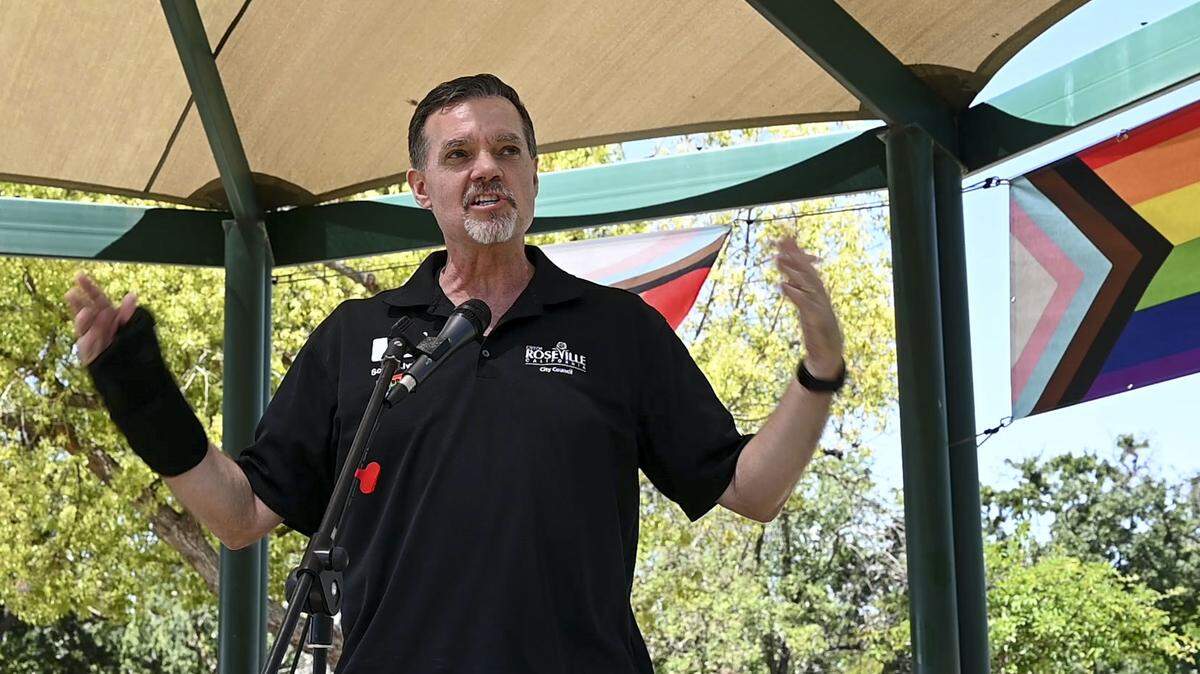
Republicans mostly swept local races, too, including for an open spot on the Placer County Board of Supervisors. Democrats backed Scott Alvord, a Roseville city councilman with name recognition in the community. Republicans got behind Shanti Landon, a candidate who had not held elected office.
Republican Landon won the race for the board seat.
The results did not surprise political consultants who work campaigns in the community.
“Placer County has grown but I think the conventional wisdom that migration has changed its politics, I think that’s wrong and the numbers don’t bear it out,” said Republican consultant Dave Gilliard, who worked on Kiley’s campaign.
To be sure, voter roll data and polling data shows growing Democrat support in the Republican stronghold. Like much of California, Placer County is losing Republicans and gaining Democrats.
In 2004, about 52% of Placer County voters registered as Republicans, while 29% registered as Democrats and 15% declined to state a party preference.
Today, about 40% of Placer County voters are registered as Republicans, while 32% are registered as Democrats and 20% decline to state a party preference.
Gilliard argues those percentages can be misleading. He said Republicans are more active voters in Placer County than Democrats and independents, helping Republicans maintain their advantage.
“The voter base hasn’t changed as much as conventional wisdom might think,” he said.
Gilliard pointed to Kiley’s win over Jones by 23,000 votes — a wider margin than Republican Congressman Tom McClintock had won by in past elections for a similar district— as proof that the GOP has a big edge in enthusiasm.
The race for the California’s 3rd Congressional District received widespread attention, and polls seemed to indicate a close contest between Jones and Kiley. Early voting results also showed Jones edging out over Kiley, potentially delivering an upset.
But, that was not to be. Kiley is set to be sworn as a congressman next month.
GOP advantage in local races
Aldo Pineschi, a Democratic political consultant who has worked on Democratic and Republican campaigns in Placer County, said Placer Democrats are typically more moderate than liberals in other parts of the state. He added that voters Placer are laser-focused on quality of life issues.
“I think it’s on the path to purple. It’s in flux and continues to change,” he said. “The Democrats in my world are very moderate. My crowd are business Democrats who are interested good schools, sense of community and want it to be safe.”
Democratic candidates face a number of significant challenges, he said. The first being that most Democrats lack name recognition, often a prerequisite for getting elected.
Kathleen Crawford, chair of the central committee of the Placer County Democratic Party, said recruiting candidates to run for local, nonpartisan races has been an “uphill battle.” The committee lacks the funding to run multiple campaigns, especially for city and county positions.
Leading up to the Nov. 8 election, the committee had raised about $50,000 from individual donors, which was “not enough” to support a slew of candidates, Crawford said.
“We don’t have a lot of victories to report,” she said.
By comparison, Republican Landon alone raised more than $285,000 in her bid to become District 2 Supervisor, according to campaign finance documents.
What happened in Roseville?
Alvord, a registered Democrat and Roseville city councilman, received 44% of the vote in his bid to become Supervisor in Placer County’s 2nd District, which encompasses west Roseville and Lincoln. In the final tally, he trailed opponent Shanti Landon by 4,000 votes.
Alvord is well-known in Roseville, having served in a nonpartisan office on the City Council since 2016 and as a member of the business community for decades. In 2020, Alvord easily won reelection, beating his Republican opponent with 65% of the vote, indicating constituents approved of his policy positions and voted him in for another four-year term.
A self-described moderate Democrat, Alvord said his neighborhood in west Roseville is growing more purple as families from urban areas move in to new developments. And those families, he said, tend to hold more liberal views.
But Placer County Democrats have to run very different campaigns than their counterparts in Sacramento because of the larger share of Republican voters.
“A lot of the party is run by progressives and it’s tough because you can’t run a progressive candidate in Placer County,” Alvord said. “You have to run a moderate because you have to pull votes from independents and the right.”
That rings especially true in light of Placer County’s redistricting after the 2020 census. In the new district maps that went into effect this election cycle, Roseville, which is the county’s largest urban center, was split into three separate districts, decentralizing the largest concentration of Democratic voters.
Landon, who worked as a county district director before running for office, said she spent 60 days knocking on doors ahead of the Nov. 8 election. In that time, she said, most voters are not as interested in party-line issues. Rather, they’re interested in roads and housing. They’re interested in how their communities are growing and changing, she said.
“We just want our potholes fixed,” she said.
“I had doors slammed in my face,” she added. “. . . But overall, people are open to talking. I saw that people are craving bipartisanship.”
This story was originally published December 27, 2022 at 5:30 AM.