California plan for food assistance to the undocumented not moving fast enough, advocates say
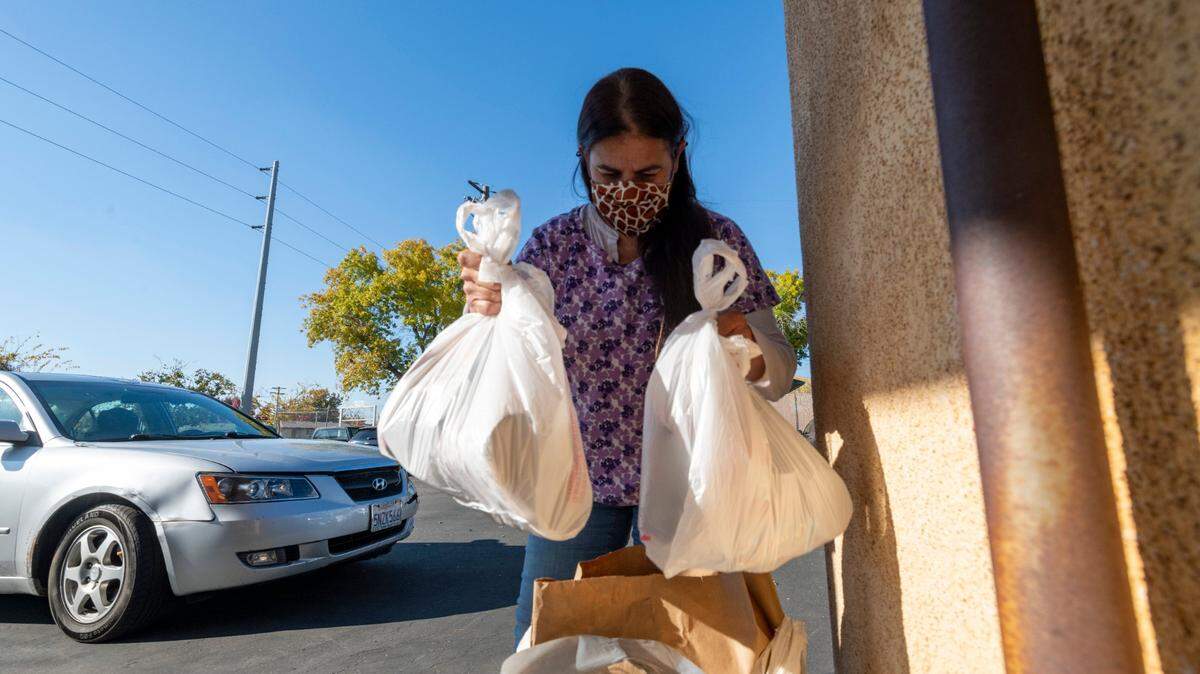
It’s been nearly a year since California made history with an agreement in the state budget to provide undocumented residents over age 55 with food assistance benefits.
The commitment was seen as the first step in expanding the benefit to all undocumented immigrants, regardless of age or status. But since then, advocates say, the state has moved farther away from that goal, with delays in funding and implementation.
Last month, Gov. Gavin Newsom released a proposed budget that would defer the rollout as his administration seeks to close a projected $22.5 billion deficit. Advocates also point to the lack of new investments to cover all low-income, undocumented immigrants.
The 2022-23 budget included $35.2 million to expand to undocumented residents over 55. The funding is expected to increase to $113.4 million annually in 2025-26.
In response, Sen. Melissa Hurtado, D-Sanger, re-introduced the Food For All act, SB 245, which would provide state-funded food benefits to all Californians currently ineligible due to their immigration status. Nearly half of undocumented Californians deal with food insecurity, according to an April 2022 report by Nourish California.
“We need to do more to make sure that everyone, regardless of where you come from, should have access to food,” Hurtado said.
Over the last two years, Hurtado has led the fight for a similar bill that has been held in the Assembly’s Appropriations Committee.
This time, she has support on the Assembly side. Last month, Assemblyman Miguel Santiago, D-Los Angeles, introduced an identical version of Hurtado’s bill called AB 311.
“It’s incredibly important and urgent that we have conversations on both sides of the houses to make sure there’s food assistance for all,” Santiago said.
Neither of the two bills include dates for implementation.
Newsom’s budget proposal now says benefit distribution is estimated to begin Jan. 1, 2027. But the two legislators and advocates of the Food4All campaign — a coalition pushing for expanded food assistance — called for the date to be moved up.
“When we got 2027, that was a shock to me,” said Betzabel Estudillo, director of engagement at Nourish California.
Expansion has been contingent on the state converting to a single system, known as the California Statewide Automated Welfare System migration. That process is estimated to be complete by October 2023.
It led some advocates, including Estudillo, to believe the program would begin in 2024. About 75,000 people were expected to start receiving benefits by 2025-26, according to a Feb. 2022 report by the Legislative Analyst’s Office.
“All the reasons that they’ve laid a hold of why there’s a proposal delayed are just unacceptable because families are really struggling right now..asking them to wait this long and an additional five years since this investment has been made is cruel,” Estudillo said.
When asked about the delayed timing, the governor’s office provided an email statement from Scott Murray, a deputy director for California’s Department of Social Services. Murray said the plan remains the same, but will take longer because of the transition to the automated welfare system.
“Implementation planning is ongoing. Providing needed nutrition through CalFresh/CFAP expansion to all low-income older adults, regardless of status, remains an administration commitment,” Murray said.
This push for expanded food assistance follows a decades-long campaign in California’s Capitol to build a social safety net for the state’s roughly 2.3 million undocumented immigrants. The milestones include driver’s licenses, protections from deportation, tax breaks, COVID-19 pandemic relief and Medi-Cal access.
Hurtado said she does not understand the pushback or delay with food assistance given the recent expansion of healthcare.
“Food is at the foundation of a healthy life…so to focus on one and not the other is flawed because they really go together,” she said.
The state Republican Party opposes giving any social benefits to people who do not have legal status, according to the party’s platform.
This story was originally published February 15, 2023 at 6:00 AM.