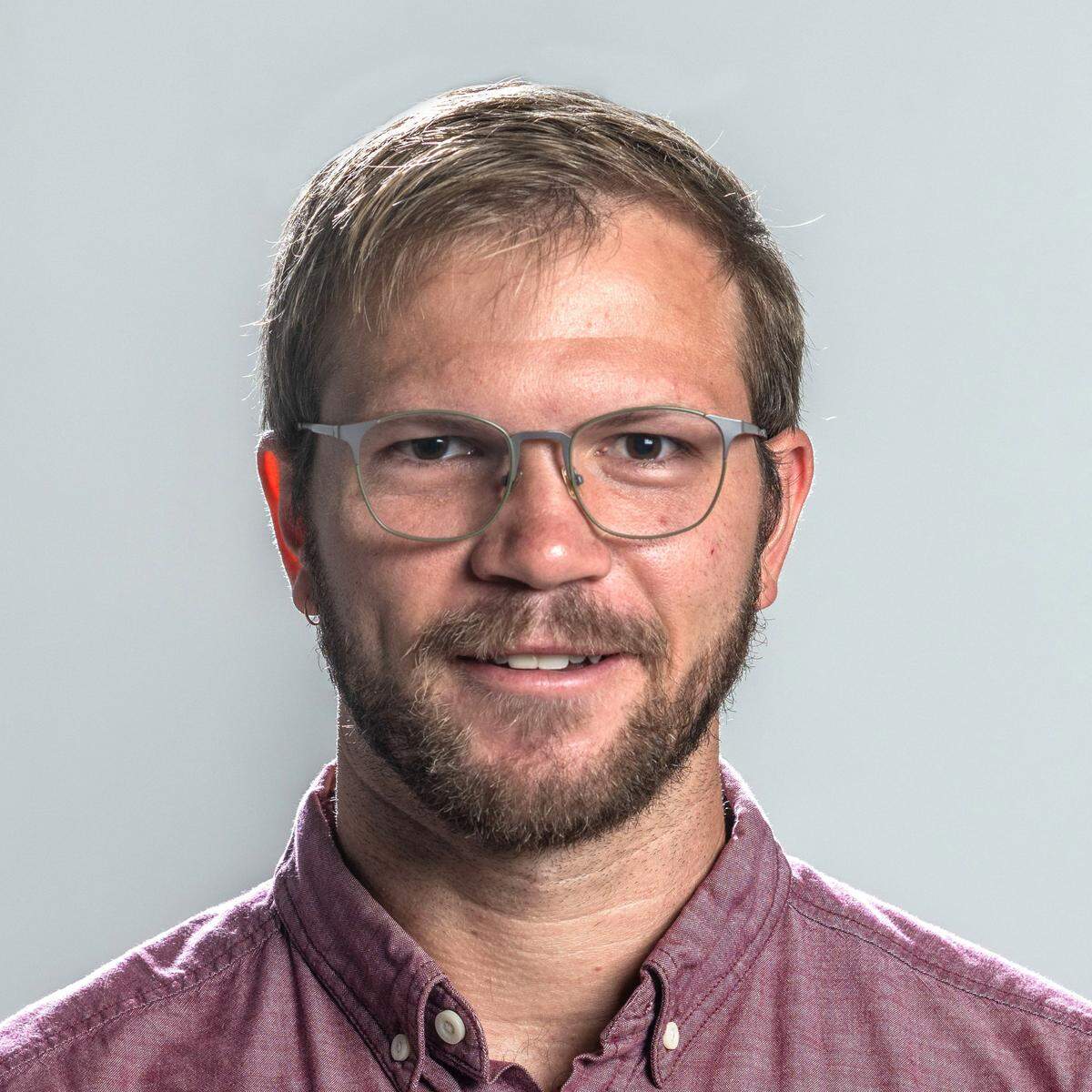
Can this former rock star help California resist Trump as the second-in-command?
Good morning and welcome to the A.M. Alert!
CALIFORNIA (ONE)REPUBLIC
Is the Golden State ready for its first alternative rock star politician?
Founding member of the pop rock band OneRepublic and political outsider Tim Myers thinks so.
Announcing his campaign for lieutenant governor, Myers said California leaders need to more forcefully stand up to President Donald Trump’s attacks on the state. His business experience running a music label and a hyper-focus on affordability are the way to do that, Myers said.
The singer-songwriter previously launched a bid to challenge Republican Rep. Ken Calvert for his Inland Empire seat in Congress. Myers is dropping out of that crowded race to run for lieutenant governor.
Myers, a Democrat, said he is shifting races because he sees California’s second-in-command as a better position to oppose the Trump administration.
“Next year we have to change course, it’s urgent,” Myers, 40, said in an interview. “If we don’t, I’m honestly really, really concerned about where our state is going to be.”
Myers said he hasn’t seen his opponents in the lieutenant governor’s race come out strongly enough against the Trump administration’s attacks against California. The post Myers is running for is not a powerful one, but it has served as a stepping stone for multiple previous governors.
Myers lives in Hidden Hills and plans to raise money to finance his campaign.
Myers joins a slew of other candidates in the race to replace Lt. Gov. Eleni Kounalakis.
Other Democrats running include California State Treasurer Fiona Ma, former Stockton Mayor Michael Tubbs, Sausalito city councilmember Janelle Kellman, the governor’s Chief Service Officer Josh Fryday and California State Board of Equalization member Mike Schaefer.
After parting ways with OneRepublic, Myers went on to start the label Palladium Records, where he said a major focus was to give artists a “fair shake” in a notoriously unfair industry.
While on tour with the “Apologize” band, Myers said he witnessed how difficult it was for struggling musicians across the country to make ends meet.
“In California we’re seeing the same thing, we’re seeing people leave the state,” Myers said. “It’s just too unaffordable for most folks.”
Myers grew up in Corona, where his father was a pastor. Before finding success as a musician, Myers said he worked as a janitor to make ends meet.
But the California of his youth has become out of reach for too many people, he said. The state has become prohibitively expensive. Climate change has created too much uncertainty for the state’s residents, who are living in near constant fear of wildfires, he said.
Affordability is one of Myers’ top concerns. Myers pitched two proposals to address California’s sky-high housing costs for residents: Building housing for teachers on state land and offering first time homebuyers a $25,000 tax credit.
“When I was starting off, I was working as a barista, playing in three bands and going to college,” Myers said. He said he knows what it’s like to work hard “and barely get by.”
SUMMER BREAK APPROACHES
Via Kate Wolffe…
The Fourth of July is behind us. The budget’s done. The allure of recess is in the air.
Lawmakers have two weeks of hard work until their month-long break begins on July 18.
The 18th is the deadline for policy committees to pass bills. Legislative staff, lobbyists and advocates are in for a busy two weeks as final details get hammered out.
Some things I’ll have my eye on include:
▪ A spate of immigration reform bills, like Senate Bill 48 (Lena Gonzalez) and Senate Bill 81 (Jesse Arreguín) which would prohibit schools and hospitals from allowing Immigration and Customs Enforcement into certain areas and bar them from sharing sensitive documentation. These bills are a priority of some Democrats, who say the state must do all it can to get in the way of Trump’s mass deportation agenda
▪ The fate of some social media and AI bills, including Assembly Bill 56 (Rebecca Bauer Kahan), which would add a black box warning to social media sites to prevent the endless scroll. On the AI front, Assembly Bill 316 (Maggy Krell) and Senate Bill 243 (Steve Padilla) are particularly interesting. The former would clarify liability for AI harming someone, the latter would prohibit companion chatbots from employing addictive strategies, and ensure they have a protocol if a user is experiencing suicidal ideation.
▪ “Affordability” initiatives, which were deemed an administrative priority at the start of session. Senate Bill 254 (Josh Becker), for instance, would attempt to shrink the size of Californians’ electricity bills and pulls many of its wide-ranging proposals from priorities introduced during an electricity affordability oversight hearing held earlier this session
▪ Bills that were part of the Black Legislative Caucus’s “Road to Repair” package: Assembly Bill 7 (Isaac Bryan) would allow CSUs and UCs to “consider providing a preference in admissions to an applicant who is a descendant of slavery,” and Assembly Bill 503 (Akilah Weber Pierson) would make AI companies that make healthcare tools ensure they’re not being discriminatory.
▪ A few particularly contentious measures. Remember the dust-up over Maggy Krell’s Assembly Bill 379, to prohibit loitering and solicitation of a 16 or 17 year old? What about Assembly Bill 942 (Lisa Calderon), which would change the benefits for owners of rooftop solar in the state? I have a suspicion we haven’t seen the end of the drama over those.
These bills made it past their house of origin, but nothing’s guaranteed.
After recess, the fiscal committees will have its say, and then the bills will need to pass on the floor.
The Legislature’s study recess will begin on Sept. 12, and Newsom will have until Oct. 12 to sign or veto the bills that make it to his desk.
QUOTE OF THE DAY
“Issuing work permits would allow our undocumented workforce to continue to hold legal, tax-generating jobs, and for the U.S. to remain competitive in the global economy.”
— State Sen. Rosilicie Ochoa Bogh, R-Yucaipa, wrote in a letter to President Donald Trump and other federal leaders last week asking them to fast track a permitting process that allows undocumented immigrants to continue working in essential sectors like agriculture.
Best of The Bee:
▪ House passes Trump tax and spending bill. How California may be impacted, via David Lightman
▪ California legislators propose bipartisan immigration principles amid federal tension, via Kate Wolffe
▪ Can Gavin Newsom connect in South Carolina? A trip this week may tell, via Lia Russell