
Here’s what to watch as California lawmakers reconvene in 2026
California lawmakers enter 2026 in a precarious fiscal position. Despite a surge in AI-driven tax revenue, the state faces an $18 billion shortfall, and previous solutions of borrowing from rainy day funds and other reserves may be tapped out.
At the same time, they’re bracing for the effects of cuts in federal funding as a result of Trump’s “Big Beautiful Bill” that changes eligibility for Medi-Cal, shaves down food assistance, and cancels grants for universities.
The upcoming session also marks two major milestones: Governor Gavin Newsom’s final budget cycle and the debut of state Sen. Monique Limón, D-Santa Barbara, as Senate President pro Tempore. The position is one of the most powerful in the Legislature, and Limón is the first Latina woman and mother to hold the role. San Diego Democrat Toni Atkins was the first woman to serve as pro tem, having held the position from 2018 to 2024.
Here are the Capitol Bureau’s top-line questions as the new legislative session gets underway:
How will ‘The Big Three’ balance the budget?
How Newsom, Assembly Speaker Robert Rivas, and Limón will address the budget is the marquee question on the minds of the myriad groups that receive state funding, and budget committee hearings are likely to be lively affairs.
According to a recent Legislative Analysts’ Office report, the outlook is bleak: The state’s expenditures have gone up, anticipated savings haven’t materialized, and federal cuts will force the state to pay billions more to maintain programs like CalFresh and MediCal at their current level. A deficit of $18 billion is on track to balloon to $35 billion annually in the coming years.

Earlier this month, lawmakers heard from strained food banks, and during a separate briefing, Rivas, D-Hollister, said “Californians should be very alarmed about health care.”
Last year, when Senate budget leaders punted cuts to 2027, Sen. Akilah Weber, D-La Mesa, said she and her colleagues were hoping for “a miracle” to prevent the cuts from going into effect. If that miracle was exuberance around the state’s fast-growing artificial intelligence industry, much of that revenue has already been spoken for due to California’s budget formula.
“Outside of reducing structural increasing expenditures, the only thing we’ve got is hope for increased revenues,” said Senate budget committee vice chair Roger Niello, R-Fair Oaks. “And hope is not a great planning tool.”
Indeed, the legislature might take matters into their own hands to generate more revenue. Discussion is percolating around new taxes on the ultra-rich and corporate taxes to make up for the cuts on the federal level.
Newsom is set to give his first proposal on the budget on Jan. 9.
Will lawmakers continue to be all-in on AI legislation?
Another arena where the federal government looms large is on the question of regulating artificial intelligence.
California legislators have been making a name for themselves putting forward legislation on everything from regulating frontier models to requiring more transparency on data center resource usage. Some of that has passed, as Newsom tries to balance federal inaction against concerns that action against A.I. would stifle the industry’s growth.
A.I. companies rarely attended the hearings, but behind the scenes, they’ve spent big on lobbying and began putting money into political action committees intending to fight the growing patchwork of state laws.
Earlier this month, President Donald Trump signed an executive order, Ensuring A National Policy Framework for Artificial Intelligence, which targets “the most onerous and excessive laws emerging from the States.”
Although experts say the order lacks teeth, and leaders including state Sens. Jerry McNerney and Scott Wiener, and Assemblymember Rebecca Bauer-Kahan say they’re not cowed, the antagonism could have a chilling effect on the scope of legislation that’s introduced.
Will Democrats move the needle on affordability?
“Affordability” remains the word du jour for Democrats.
Even before the word took the national stage by storm, Rivas said it should be the California Legislature’s north star. In practice, most of his efforts last year went toward housing affordability – the Assembly brought forward 19 bills meant to streamline housing production in the state.
Rivas also put together four “affordability” committees in April to address food access, child care costs, housing financing, and transportation costs. As of the end of December, three out of four committees have only met once for informational hearings. The committee to address child care costs met three times, but attendance was thin.
In recent weeks, Rivas has signaled that lowering costs is still a main priority for him.
However, Niello said the affordability committees have little to show for their efforts thus far. Of the state’s limited options, he said decreasing regulations would be a wise move.
“We need to ease up on regulatory requirements so that the cost of meeting regulations goes down,” he said, blaming regulations for high costs of gasoline, utilities, and housing production.
“There never is much appetite on the part of the majority party to do any fundamental change with regard to regulations.”
How will Gov. Gavin Newsom cement his legacy?
2026 will be Newsom’s last legislative session as governor.
According to lobbyist and political science professor Chris Micheli, the governor has worked well with the Legislature, and together they’ve accomplished a lot of significant policy, including on climate change and CEQA reform.
However, Micheli notes there have also been places where the governor hasn’t gotten his way, including on the Delta Conveyance Project, which he repeatedly has tried to jam into the budget process.
“Until he finishes acting on his last bill, he is definitely not a lame duck,” said Micheli. “The fact that he is being viewed as a potential presidential aspirant also helps ensure that he will exit the governorship with a very strong hand.”
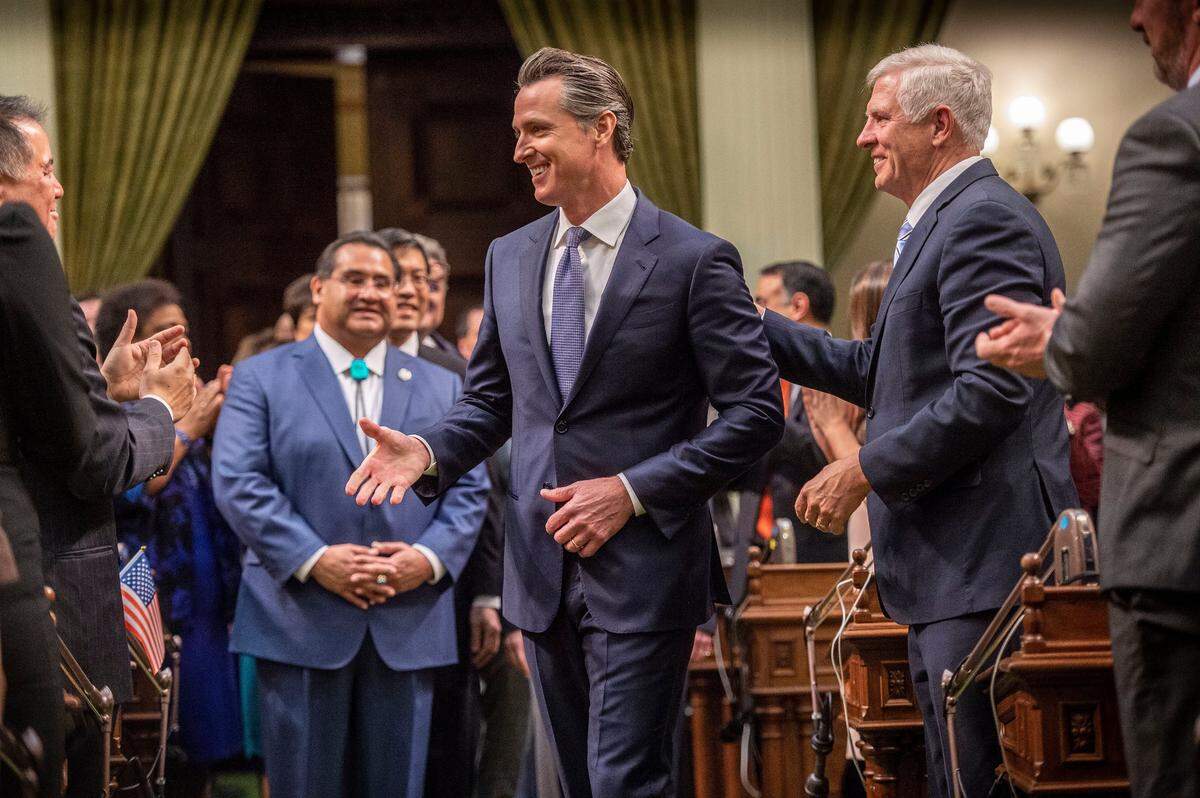
Newsom will deliver his State of the State before lawmakers on Jan. 8. It will be the first time he’s delivered the speech in Capitol chambers since 2020.
What mark will new Senate President pro Tempore Monique Limón make?
Although she took the helm during the fall recess, state Sen. Monique Limón, D-Goleta, will be officially sworn in on Jan. 5, when the Legislature reconvenes. The 46-year-old lawmaker is the first Latina woman, and first mother (she has one young daughter) to hold the position.
Leaders in each chamber get to select committee chairs that are aligned with their policy priorities and determine what bills come to the floor for a full vote.
Limón’s reputation has been as a climate hawk and good collaborator, although she raised eyebrows at the end of session due to a peculiar carve-out that seemed to exempt a proposed apartment building in her district from changes to the California Environmental Quality Act.
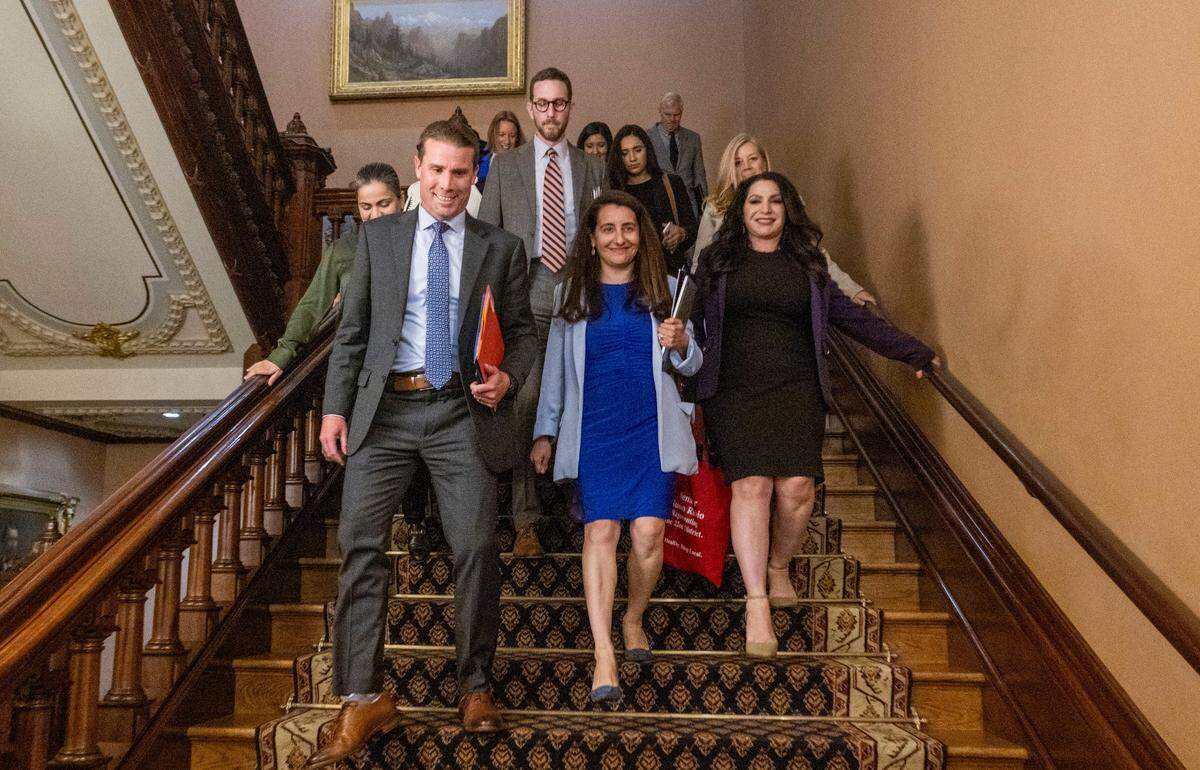
In advance of the Legislature’s reconvening, Limón has said she’s laser-focused on balancing the budget.
“While the Legislative Analyst forecasts a budget shortfall, the upcoming January and May forecasts will also inform the Senate’s work in crafting a responsible state budget that protects core programs, including education, childcare, safety net, health care, and public safety,” she wrote in response to the LAO’s budget forecast in October.
Her close ally, state Sen. Angelique Ashby, D-Sacramento, said Limón’s experience dealing with tough budgets and serving at different levels of government will help her.
“I’m sure people will be upset with her, no matter what she chooses to do, but the truth is, she’s a person who will think deeply about it, and she’ll spend a lot of time contemplating how people’s lives will be impacted by the decisions that we make.”