Rep. Doug LaMalfa remembered as ‘no-nonsense conservative,’ advocate for rural CA
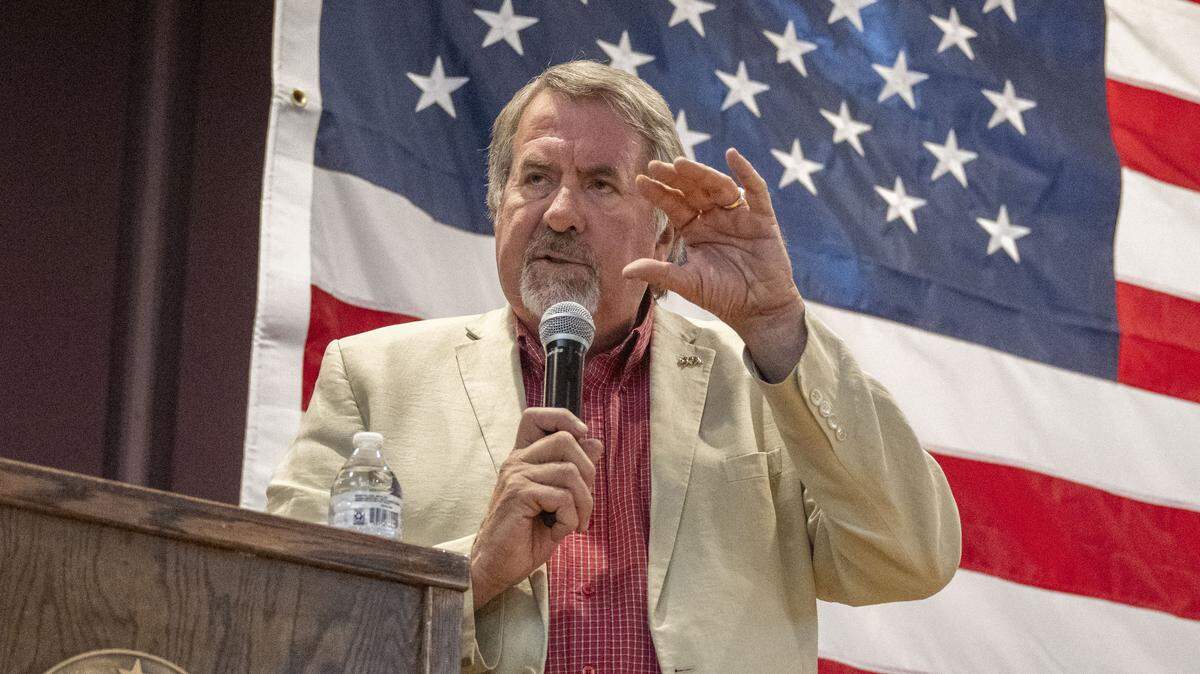
Rep. Doug LaMalfa, R-Oroville, was remembered as a staunch advocate for gun rights, farmers, and the interests of rural Californians far removed from Sacramento after he unexpectedly died Tuesday at age 65.
The 4th-generation rice farmer from Richvale first entered politics in 2002. That year, he won a crowded Republican primary to represent the 2nd Assembly district after Richard Dickerson stepped down to run for state Senate.
LaMalfa went on to serve in the Assembly until 2008, when he stepped aside due to term limits. He served a single term in the Senate from 2010 to 2012, after which he was elected to Congress, representing the state’s 1st District. Rep. Wally Herger endorsed LaMalfa as his successor after announcing his retirement in January 2012.
For the next 13 years, LaMalfa was a reliably conservative voice in the House, easily winning reelection in race after race. He most recently coasted to victory in 2024 with 65.3% of the vote.
“Doug LaMalfa’s firm beliefs are that government should do no harm, and that limited government means government should do only what people cannot do for themselves, in the most efficient manner possible,” his congressional biography read. He also sat on committees for agriculture, transportation and infrastructure, and natural resources, where he chaired a forestry subcommittee.
He sided with President Donald Trump so often that the president said he never had to badger him with 3 a.m. calls to persuade him to vote to advance the White House agenda.
“You know, he voted with me 100% of the time,” Trump said during a speech at the Kennedy Center on Tuesday. “He was with us right from the beginning.”
LaMalfa is survived by his wife Jill and four children.
LaMalfa described as a ‘no-nonsense conservative’
As chairman of the Western Congressional Caucus, LaMalfa advocated for wildfire victims as major blazes became a regular occurrence in his district, which encompassed much of the north state up to the Oregon border. In the wake of the 2018 Camp Fire, he negotiated alongside Gov. Gavin Newsom for victims to receive tax-free federal aid.
Sen. Megan Dahle, R-Bieber, called LaMalfa a “no-nonsense conservative” who was willing to overlook differences and work with those across the aisle on behalf of people in the north state.
“He also had the patience it takes to get anything done in Washington,” she said in a social media post. “He worked tirelessly and loved the communities he represented. It was not at all rare for him to spend a week in Washington and then drive 200 miles from his home for a firefighter appreciation dinner in Siskiyou County on Saturday night.”
Fighting for rural voters
Last fall, Newsom campaigned to redraw California’s congressional districts and shore up House Democrat seats via Proposition 50. The successful measure redrew LaMalfa’s district to include parts of the North Bay, which LaMalfa told The Sacramento Bee would disenfranchise rural voters by grouping them with more urban residents with different priorities.
“So now, as a Bay Area representative, are you going to care that much that the wolves are devastating the wildlife and the livestock in Modoc and Sierra and Lassen County?” he said. “Are they going to care that much? Or are they going to listen to Marin constituents and say, ‘Well, wolves are great. They’re wonderful.’”
“As a farmer, Congressman LaMalfa understood that water is the lifeblood of the Valley that allows our farmers to feed the nation,” Westlands Water District general manager Allison Febbo said in a statement. “His commitment to practical solutions and advocacy for growers and rural communities will leave a lasting impact.”
A ‘humble and dedicated public servant’
In a statement, Assemblymember James Gallagher, R-Yuba City, called LaMalfa a brother figure and mentor, saying the news of his death “shocked” him.
“Doug LaMalfa was a one of a kind, humble and dedicated public servant. I’m lost and can’t imagine life, public service or politics without Doug,” Gallagher said.
“He traversed the district, going to every dinner and community event. He demanded answers from bureaucrats. He pushed hard for the things his people needed.”