California was first to require ethnic studies class. But it hasn’t gone into effect

California was the first state in the nation to require students to take an ethnic studies class as a condition of graduation.
But that requirement has not yet gone into effect.
That requirement, created by California Assembly Bill 101, was signed into law by Gov. Gavin Newsom in 2021. It added completion of a one-semester course in ethnic studies to the graduation requirements for students graduating in the 2029-30 school year. Districts would be required to offer an ethnic studies course beginning with the 2025-26 school year.
However, the law also made the requirement contingent upon state funding.
The Senate Appropriations Committee estimated in 2021 that the requirement would cost $276 million annually. The state allocated $50 million in one-time funding in the 2021-22 budget, divided among California’s approximately 420 districts including high schools that serve approximately 453,624 graduating high-schoolers to implement the ethnic studies requirement, but no additional funding followed.
No funding was included in the 2025-26 budget.
H.D. Palmer, a spokesperson for the state’s Department of Finance, said the requirement was not funded because the state has “limited available ongoing resources” as it tries to close a budget shortfall estimated at $2.9 billion.
The ethnic studies requirement remains contingent upon a future funding appropriation, Palmer said.
Jose Medina, a former Democratic assemblymember representing Riverside and now a supervisor for Riverside County, authored the bill after working as a teacher for more than 30 years. He said he taught ethnic studies and Chicano studies and that students benefited from “curriculum that was reflective of them.”
Outside his classes, he said there was little teaching on non-white groups of people throughout history.
Then-Gov. Jerry Brown vetoed a bill to develop a curriculum in 2015. Assemblymember Luis Alejo’s bill AB 2016 developing a curriculum passed in 2016.
“I thought, well, we shouldn’t just let the curriculum sit on the shelf,” Medina said.
Medina said he thinks the bill passed at a crucial time in the country, just a year and a half after George Floyd was killed by a police officer in Minneapolis during an arrest on May 25, 2020. He said the country is again at crucial point, referencing the deaths of Alex Pretti and Renee Nicole Good, both of whom were shot and killed by immigration officers at anti-ICE protests in Minneapolis this month.
“Given the events in Minneapolis again, last weekend, again, I think it shows why we need ethnic studies even more,” Medina said.
Medina cited the results of a study from Stanford researchers in 2021 that showed students who took an ethnic studies class in ninth grade showed increased engagement in school and higher rates of attendance, graduating and enrolling in college.
“All students would benefit if they were exposed to this curriculum,” Medina said.
Brown vetoed an earlier version of the ethnic studies graduation requirement bill in 2018, saying he was “reluctant to encourage yet another graduation requirement” for “overburdened” students. Gov. Gavin Newsom also vetoed an earlier version of the bill in 2020, saying the curriculum still needed revision.
Medina said he is “deeply disappointed” that the bill was not funded after enduring vetoes to get passed.
Assemblymember Al Muratsuchi, D-Torrance, voted for the ethnic studies graduation requirement bill in 2021 and is the chair of the Assembly education committee. He said he was “proud” to support AB 101 and echoed Medina that he was “disappointed” in its lack of funding.
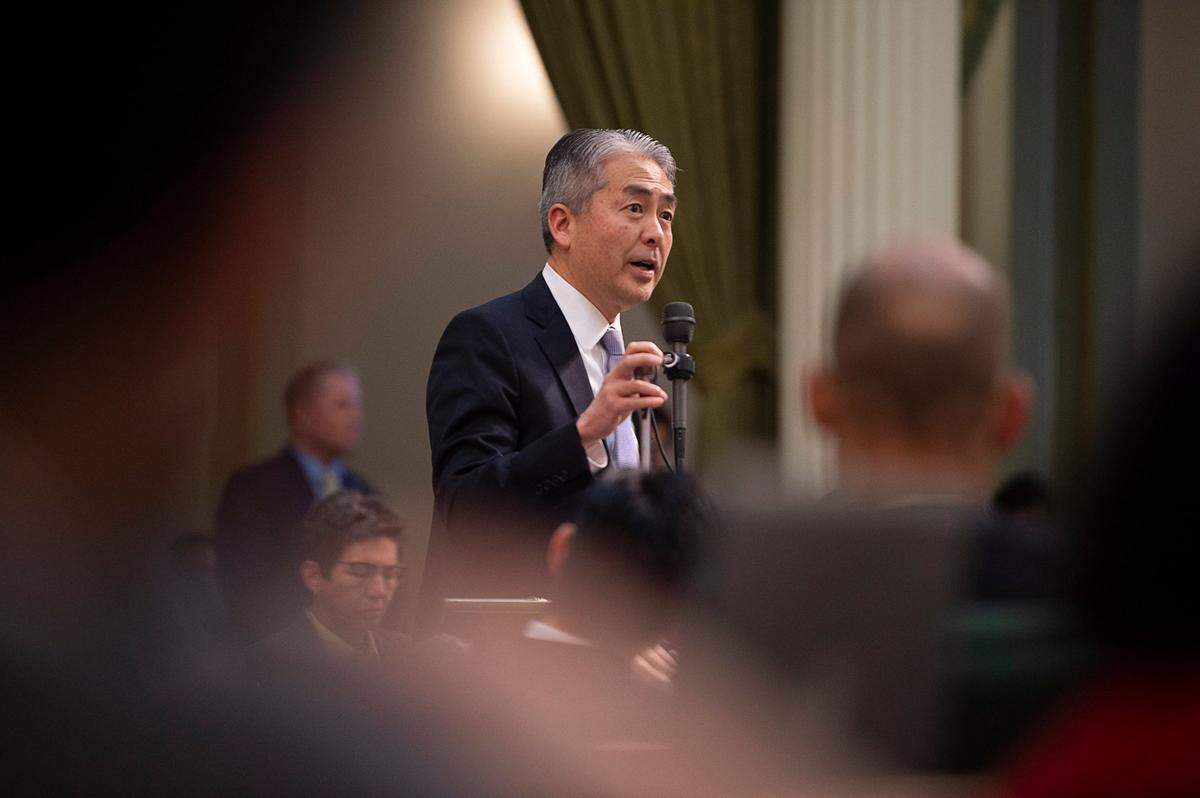
He said he has been working to get the ethnic studies requirement funded.
“I‘ve been calling upon my legislative set of colleagues, including working with the AAPI (Asian American and Pacific Islander), Latino, Black and Native American caucuses of the California Legislature to support funding ethnic studies so that we can fulfill the promise of AB 101,” Muratsuchi said.
Medina said he is inspired by districts that have implemented or are implementing an ethnic studies graduation requirement despite the lack of funding, including his home district, Riverside Unified School District.
Elk Grove Unified School District, the fourth-largest district in the state and the second-most diverse, is adding the requirement in the 2026-27 school year, the district said in an announcement earlier this month.
This course will replace the district’s world geography graduation requirement, according to Stacey Greer, a program specialist for EGUSD who has overseen the ethnic studies course in the curriculum and professional learning department.
Greer said the state’s one-time funding allocation “is sufficient to cover initial and ongoing professional development costs for teachers for several more years.” After the funding runs out, the district will pay for the program through its regular budget. The district is able to afford that since staffing levels will not change, and the textbook costs less than the materials used for the eliminated world geography course, Greer said.
Sacramento City Unified School District has already implemented the ethnic studies class. The district first approved the requirement in 2015, according to previous Bee reporting. Los Angeles Unified School District, which is the largest district in the state with over 516,000 enrolled students, required ethnic studies be taken beginning with the class of 2027. California Community Colleges added an ethnic studies requirement in July 2021.
Medina said he has hope that the budget will have funding for the requirement this year.
“There’s the saying that as California goes, so the nation goes. I very much thought that California could be the leader in implementing ethnic studies,” Medina said. “To see that all that work that went into it hasn’t come to fruition yet, is very disappointing.”